.png)
Red light therapy uses specific wavelengths between 630 and 940 nm to penetrate skin and stimulate mitochondria directly inside your cells. The proven benefits of red light therapy include faster recovery, smoother skin, deeper sleep, less inflammation and sharper focus, all without drugs and with a safety profile that holds up across hundreds of clinical studies.
- The seven evidence-backed benefits of red light therapy, from skin and recovery to sleep and brain function.
- How red light triggers ATP production at cytochrome c oxidase inside mitochondria.
- Which wavelengths (630, 660, 810, 850 nm) do what, and why panels combine them.
- How long it takes to see results and the realistic dose-response curve.
- A safe, simple at-home protocol you can start this week with a quality panel.
- What is red light therapy in 60 seconds?
- How does red light therapy work at the cellular level?
- What are the proven benefits of red light therapy?
- How strong is the scientific evidence?
- How do you use red light therapy at home?
- What should you look for in a red light panel?
- Frequently asked questions
What is red light therapy in 60 seconds?
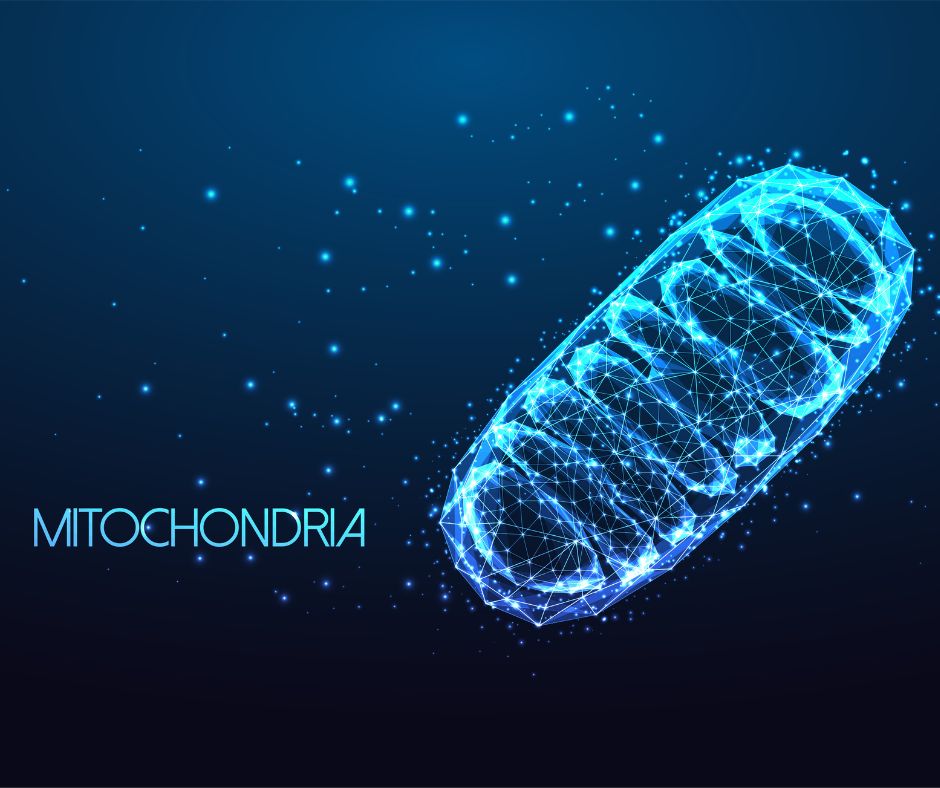
Red light therapy (RLT), also called photobiomodulation (PBM), is the controlled use of red and near-infrared light, typically between 630 and 940 nm, to stimulate biological function. Unlike sunlight, it contains no UV and no heat-producing infrared above 1100 nm. The light is absorbed by mitochondria, the energy factories inside almost every cell, where it kick-starts ATP production and a cascade of healing signals.
The technology is not new. NASA explored red and near-infrared LEDs in the 1990s for plant growth and wound healing in space, and clinical research on photobiomodulation has been published since the 1960s. What changed in the last decade is the price and quality of medical-grade LED panels, which brought clinical doses out of dermatology offices and into homes. For a deeper terminology breakdown, see our article on photobiomodulation vs red light therapy.
Red light therapy is not a single treatment. It is a category of dose-dependent interventions where the wavelength, irradiance, distance, time and frequency all matter. Done right, the same panel can support skin, joints, brain and sleep. Done wrong (too far, too short, or with weak consumer-grade bulbs), it produces little measurable effect.
How does red light therapy work at the cellular level?
Red light therapy works by delivering photons to cytochrome c oxidase (CCO), the fourth complex of the mitochondrial respiratory chain. CCO absorbs red and near-infrared photons, releases inhibitory nitric oxide, accelerates electron transport and increases ATP production. The result is more cellular energy, better signaling and a measurable boost in tissue repair and inflammation control.
That is the short answer. The mechanism deserves three layers of detail, because every claimed benefit downstream depends on it.
Photons, mitochondria and cytochrome c oxidase
Inside almost every cell sit hundreds to thousands of mitochondria. They convert food and oxygen into adenosine triphosphate (ATP), the universal energy currency. ATP powers muscle contraction, nerve firing, immune defense, hormone production and DNA repair. When mitochondria slow down, fatigue, slow healing and brain fog follow.
Red and near-infrared photons in the 600 to 900 nm range are uniquely tuned to be absorbed by cytochrome c oxidase, the enzyme that catalyzes the final step of cellular respiration. This wavelength window is sometimes called the optical window of tissue: shorter wavelengths are blocked by melanin and hemoglobin, longer ones are absorbed by water. Red and NIR slip through skin, fat and even bone with minimal loss.
For the chemistry of why this matters at a deeper level, see how mitochondria produce energy (ATP) and our deep dive on red light, mitochondria, ATP and deuterium-depleted water.
ATP, nitric oxide and cellular signaling
When CCO absorbs a red photon, two things happen in milliseconds. First, nitric oxide that was blocking the enzyme is released, freeing oxygen to bind. Second, electron transport speeds up, and more ATP is generated per cycle. Within minutes the cell holds more energy, vasodilation improves blood flow, and a controlled, low-level burst of reactive oxygen species (ROS) triggers protective and repair pathways via Nrf2 and other transcription factors (Hamblin, 2018, PMC5844808).
This is why red light therapy is sometimes described as biological exercise without movement. It nudges cells into a brief, mild stress that activates the same repair, antioxidant and anti-inflammatory pathways as exercise, fasting and cold exposure, with none of the strain.
The most effective wavelengths: 630, 660, 810, 850 nm
Not every red wavelength is equal. Decades of in-vitro work and clinical trials converge on a small number of peak action wavelengths:
- 630 nm (red): skin surface, collagen, fine lines.
- 660 nm (deep red): dermis, wound healing, hair follicles.
- 810 nm (near-infrared): deep muscle, joints, brain.
- 830 to 850 nm (NIR): deepest penetration, tendons, recovery.
Quality panels like the Mitochondriak Maxi combine red and near-infrared diodes in a single device so one short session can address surface and deep targets at the same time. Consumer-grade bulbs that emit a broad red glow without these specific peaks deliver only a fraction of the documented dose.
What are the proven benefits of red light therapy?
The proven benefits of red light therapy include faster skin healing and collagen production, accelerated muscle recovery, reduced pain and inflammation, improved hair growth, better sleep quality, sharper brain function and faster wound repair. Each of these benefits is supported by peer-reviewed clinical trials, not just user testimonials.
Below is a benefit-by-benefit map of where the evidence is strongest, what wavelengths and doses are typically used, and how it ties to the cellular mechanism explained above.
1. Skin, collagen and anti-aging
Red light at 630 and 660 nm stimulates fibroblasts to produce more collagen and elastin, the two structural proteins that keep skin firm and smooth. A landmark trial by Wunsch and Matuschka (Photomed Laser Surg, 2014) showed measurable improvements in skin complexion, feeling and collagen density after 30 sessions, with no adverse effects (PMC3926176).
For a deeper look at the mechanism, see our guide on red light and skin: what photobiomodulation can do for collagen, wrinkles and acne.
2. Muscle recovery and athletic performance
Photobiomodulation applied before or after training reduces creatine kinase, lactate and muscle soreness while improving strength gains in repeat-exposure trials (Ferraresi, Hamblin and Parizotto, 2012, PMC3635110). Near-infrared wavelengths around 810 and 850 nm penetrate deep enough to reach large muscle groups like quads, hamstrings and lats.
Many strength and endurance athletes now integrate a 10-minute panel session into their warm-up or cool-down. Read more in red light and recovery after exercise.
3. Pain relief and inflammation
Photobiomodulation is one of the best-documented non-drug tools for chronic and acute inflammation. Hamblin's 2017 review (PMC5523874) summarized over 40 mechanistic studies showing that red and NIR light shift macrophages toward the anti-inflammatory M2 phenotype, reduce pro-inflammatory cytokines like TNF-alpha and IL-6, and dampen NF-kB signaling. Clinically this translates to lower joint pain in osteoarthritis, faster recovery from tendinopathies and reduced post-exercise inflammation.
See our step-by-step explainer on photobiomodulation and inflammation.
4. Hair growth and scalp health
Low-level red light at 650 to 680 nm stimulates hair follicle stem cells and prolongs the anagen (growth) phase. A 2014 systematic review by Avci et al (Lasers Surg Med, PMC3970444) confirmed statistically significant hair density and thickness gains in both men with androgenetic alopecia and women with female-pattern hair loss, with no serious side effects.
For a realistic look at protocols and results, see hair loss and red light: what really works.
5. Sleep and circadian rhythm
Unlike blue light, red and NIR wavelengths do not suppress melatonin. They can be used in the evening to wind the nervous system down. A trial by Zhao et al (J Athl Train, 2012, PMC3499892) showed improved sleep quality and serum melatonin in female basketball players after 14 days of 30-minute evening red light sessions.
For a complete evening protocol, see red light therapy before bed.
6. Brain function, mood and cognition
Transcranial photobiomodulation (red and NIR delivered to the forehead and scalp) has been studied for cognitive performance, depression, Alzheimer's, Parkinson's, traumatic brain injury and stroke. Salehpour et al (Mol Neurobiol, 2018, PMC6041181) reviewed dozens of human and animal studies and reported consistent improvements in working memory, executive function and mood, with the strongest effects at 810 nm applied to the prefrontal cortex.
Explore the brain angle in red light and the brain.
7. Wound healing and tissue repair
Red and NIR light accelerate wound closure, scar remodeling and post-surgical recovery. The mechanism combines higher ATP, controlled ROS signaling, increased nitric oxide release and faster fibroblast and keratinocyte proliferation (de Freitas and Hamblin, 2016, PMC4933529). This is the original NASA use case and still one of the most reproducible clinical findings in photobiomodulation.
How strong is the scientific evidence?
The scientific evidence for the benefits of red light therapy is strong for skin, hair, muscle recovery, pain and wound healing, moderate but growing for brain and sleep, and still early-stage for metabolic and hormonal effects. Over 700 clinical trials on photobiomodulation are indexed on PubMed, with major reviews authored by Michael Hamblin's team at Harvard and MIT.
The key limitation is not the existence of evidence, but dose standardization. Studies use different irradiance, distance, total joules per cm² and session frequencies, which makes meta-analyses harder. The takeaway: pick a medical-grade panel with verified irradiance, follow a published protocol and stay consistent for at least 8 to 12 weeks.
How do you use red light therapy at home? A practical protocol
A safe, effective at-home red light therapy protocol uses a medical-grade panel at 15 to 30 cm distance, for 10 to 20 minutes per area, 4 to 6 days per week, with bare skin facing the panel. Most people notice changes in skin, sleep or recovery within 4 to 8 weeks of consistent use.
Distance, dose and session length
- Distance: 15 to 30 cm for systemic and skin effects, 5 to 10 cm for targeted spot treatment.
- Session length: 10 to 20 minutes per area.
- Total dose target: 10 to 60 J/cm², depending on goal (lower for skin, higher for deep muscle and joints).
- Frequency: 4 to 6 sessions per week.
- Stack approach: full body 4 days, targeted area (joint, scalp, face) 2 days.
Best time of day
Morning sessions support cortisol awakening response and circadian alignment. Evening sessions can help with wind-down and sleep, because red light does not suppress melatonin. Avoid sessions in the last 30 minutes before bed if you are very light-sensitive, otherwise evening use is fine.
Safety and contraindications
Red light therapy is extremely safe when used as directed. It contains no UV and does not damage DNA at recommended doses. Caution is warranted with photosensitizing medications (some antibiotics, retinoids, isotretinoin), active skin cancer, pregnancy without medical clearance and direct eye exposure to high-power NIR panels. Use the included goggles or simply close your eyes for sessions facing the panel.
What should you look for in a red light therapy panel?
The quality of your panel determines whether you actually get the documented benefits of red light therapy. Cheap consumer bulbs deliver maybe 5 to 10 % of clinical dose. A serious panel hits these specs:
- Wavelengths: a combination of red (630 to 660 nm) and near-infrared (810 to 850 nm), ideally with 940 nm for deepest penetration.
- Irradiance: at least 100 mW/cm² at 15 cm, verified by third-party measurement.
- EMF: low electromagnetic field at typical use distance.
- Flicker: minimal flicker (DC drivers, not pulse-width modulation that strains the eyes).
- Coverage: for full-body benefits, a panel like the Mitochondriak Maxi covers torso and one limb per session.
- Build quality, warranty and service: at least 2 years warranty, EU service.
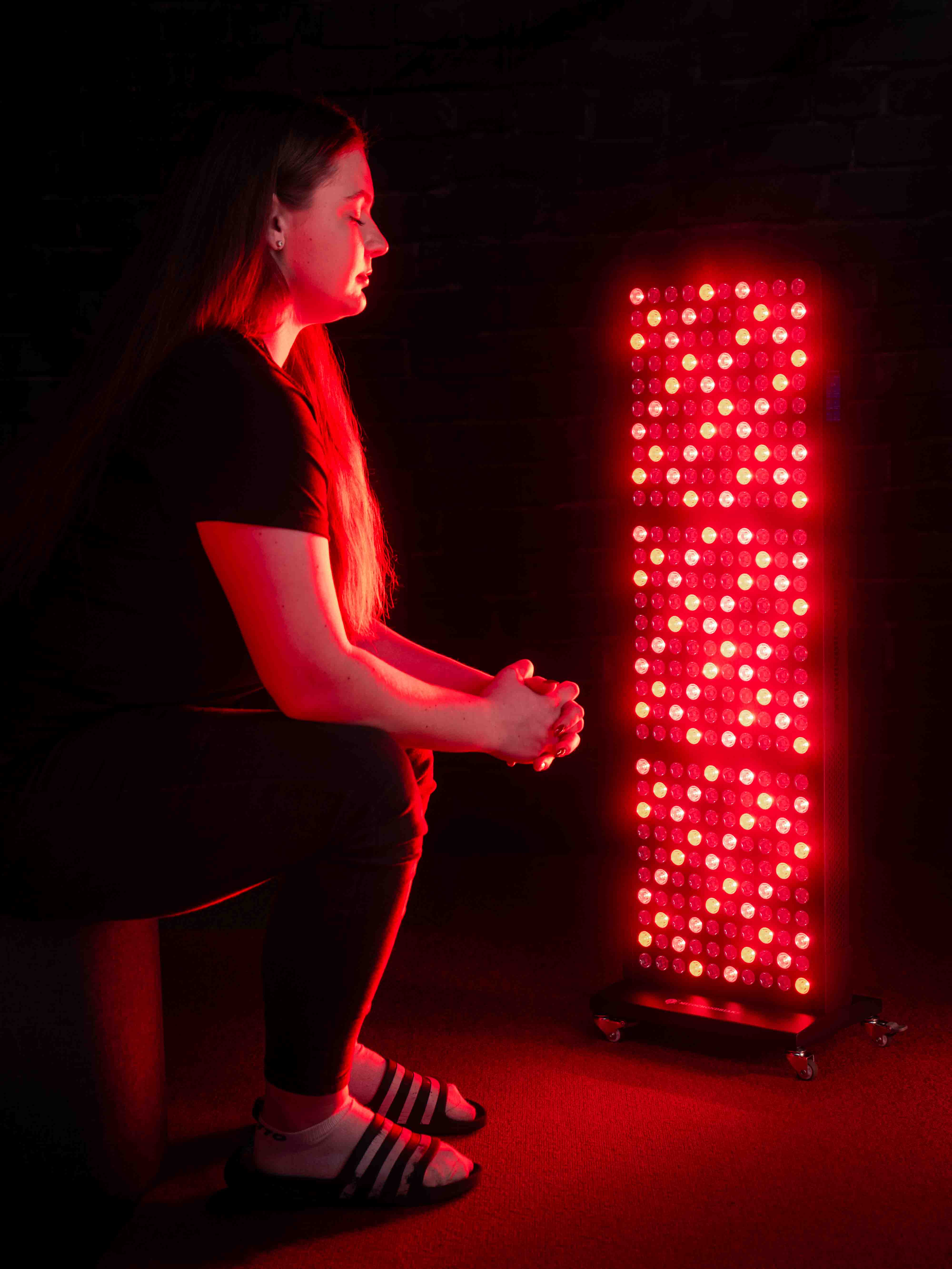
If you want a smaller, desk-friendly device for face and upper body, the Mitochondriak panel range includes options tailored to office, travel and full-body use.
Frequently asked questions about red light therapy
What are the proven health benefits of red light therapy?
The proven benefits of red light therapy include improved skin tone and collagen density, faster muscle recovery, reduced pain and inflammation, better sleep quality, increased hair growth, sharper cognitive performance and accelerated wound healing. These outcomes are supported by hundreds of peer-reviewed clinical trials, especially for skin, hair and recovery, where the evidence base is strongest.
How does red light therapy work on cells?
Red and near-infrared light penetrate skin and are absorbed by cytochrome c oxidase (CCO) inside mitochondria. This releases nitric oxide, accelerates electron transport and increases ATP production. The cell gets more energy, blood flow improves and protective gene pathways (Nrf2, anti-inflammatory cytokines) are activated, which drives the downstream healing and performance benefits.
What wavelengths of red light are most effective?
The most effective wavelengths fall into four well-studied peaks: 630 nm for skin surface and collagen, 660 nm for dermal repair and hair, 810 nm for brain and deep muscle, and 830 to 850 nm for joints and tendons. Quality panels combine red and near-infrared wavelengths so one session covers both shallow and deep targets.
How long does it take to see results from red light therapy?
Most people notice initial changes within 4 to 8 weeks of consistent use, 4 to 6 sessions per week. Skin texture and recovery improvements appear first. Hair growth, joint comfort and sleep changes typically need 8 to 16 weeks. Consistency matters more than long single sessions, the dose-response curve is biphasic and overuse can blunt benefits.
Is red light therapy safe for daily use?
Yes, red light therapy is safe for daily use at recommended doses. It contains no UV, does not damage DNA and has an excellent safety profile across thousands of clinical sessions. Use eye protection or close your eyes during near-infrared sessions, follow the manufacturer's distance and time guidelines, and consult a doctor if you take photosensitizing medications or have active skin cancer.
Can red light therapy help with sleep?
Yes. Unlike blue light, red and near-infrared wavelengths do not suppress melatonin and can support evening wind-down. Clinical trials show improved sleep quality and higher serum melatonin after 14 days of evening red light sessions. Best practice: schedule sessions 30 to 60 minutes before bed and pair them with dim ambient light for maximum benefit.
Does red light therapy actually work for skin and wrinkles?
Yes, red light therapy improves skin elasticity, collagen density and fine wrinkle depth. The Wunsch and Matuschka 2014 trial documented measurable, blinded improvements after 30 sessions at 630 and 830 nm. Effects are gradual and cumulative, expect visible changes after 8 to 12 weeks of consistent use with a medical-grade panel, not a consumer red bulb.
Is at-home red light therapy as effective as clinical treatments?
A high-quality at-home panel can match clinical results if it delivers verified irradiance above 100 mW/cm² at 15 cm and covers enough body surface. Clinical lasers offer higher precision for targeted dermatology, but home panels win on consistency, full-body coverage and total weekly dose, which is what drives the biggest outcomes for skin, recovery and sleep.
Sources and references
This pillar guide on the benefits of red light therapy is built on peer-reviewed research from PubMed, PubMed Central and major photobiomodulation reviews. The references below are the primary studies and reviews behind the claims in this article.
- Hamblin MR. Mechanisms and applications of the anti-inflammatory effects of photobiomodulation. AIMS Biophys. 2017;4(3):337-361. PMC5523874
- Hamblin MR. Mitochondrial Redox Signaling in Photobiomodulation. Photochem Photobiol. 2018;94(2):199-212. PMC5844808
- de Freitas LF, Hamblin MR. Proposed Mechanisms of Photobiomodulation. IEEE J Sel Top Quantum Electron. 2016;22(3):348-364. PMC4933529
- Avci P, Gupta A, Sadasivam M, et al. Low-level laser (light) therapy (LLLT) in skin. Semin Cutan Med Surg. 2013;32(1):41-52. PMC4126803
- Wunsch A, Matuschka K. A controlled trial to determine the efficacy of red and near-infrared light treatment in patient satisfaction, reduction of fine lines, wrinkles, skin roughness, and intradermal collagen density increase. Photomed Laser Surg. 2014;32(2):93-100. PMC3926176
- Glass GE. Photobiomodulation: A systematic review of the existing evidence for use in dermatology. Aesthet Surg J. 2021;41(6):723-738. DOI: 10.1093/asj/sjab025
- Salehpour F, Mahmoudi J, Kamari F, et al. Brain Photobiomodulation Therapy: A Narrative Review. Mol Neurobiol. 2018;55(8):6601-6636. PMC6041181
- Ferraresi C, Hamblin MR, Parizotto NA. Low-level laser (light) therapy (LLLT) on muscle tissue. Photonics Lasers Med. 2012;1(4):267-286. PMC3635110
- Avci P, Gupta GK, Clark J, Wikonkal N, Hamblin MR. Low-level laser (light) therapy (LLLT) for treatment of hair loss. Lasers Surg Med. 2014;46(2):144-151. PMC3970444
- Zhao J, Tian Y, Nie J, Xu J, Liu D. Red light and the sleep quality and endurance performance of Chinese female basketball players. J Athl Train. 2012;47(6):673-678. PMC3499892
Editorial note: this article is reviewed by the Mitochondriak® scientific guarantor. We update the source list as new high-quality reviews are published.