.png)
Red light therapy uses specific wavelengths of visible red and near-infrared light to energize your mitochondria, the tiny power plants inside every cell. The result can be faster recovery, better skin, and more cellular energy, all without a single pill or invasive procedure.
arch, practical protocols, and safety guidance.
- Red light therapy exposes your body to red (630 to 670 nm) and near-infrared (810 to 940 nm) light that penetrates skin and reaches your cells.
- The main mechanism is photobiomodulation: light energizes an enzyme in mitochondria and helps cells produce more energy (ATP).
- Research supports realistic benefits for skin, collagen, recovery, and inflammation, not miracle cures.
- At home, effective use depends on the right wavelengths, distance, and consistency, not just a "big number" on a label.
- It is generally well tolerated, but a few groups should be cautious and follow simple safety rules.
- What is red light therapy and why does it matter?
- How does red light therapy work according to research?
- What benefits and limits can you realistically expect?
- How do you use red light therapy safely in practice?
- What should you watch out for and who should be careful?
- Summary: what should you remember?
- Frequently asked questions
What is red light therapy and why does it matter?
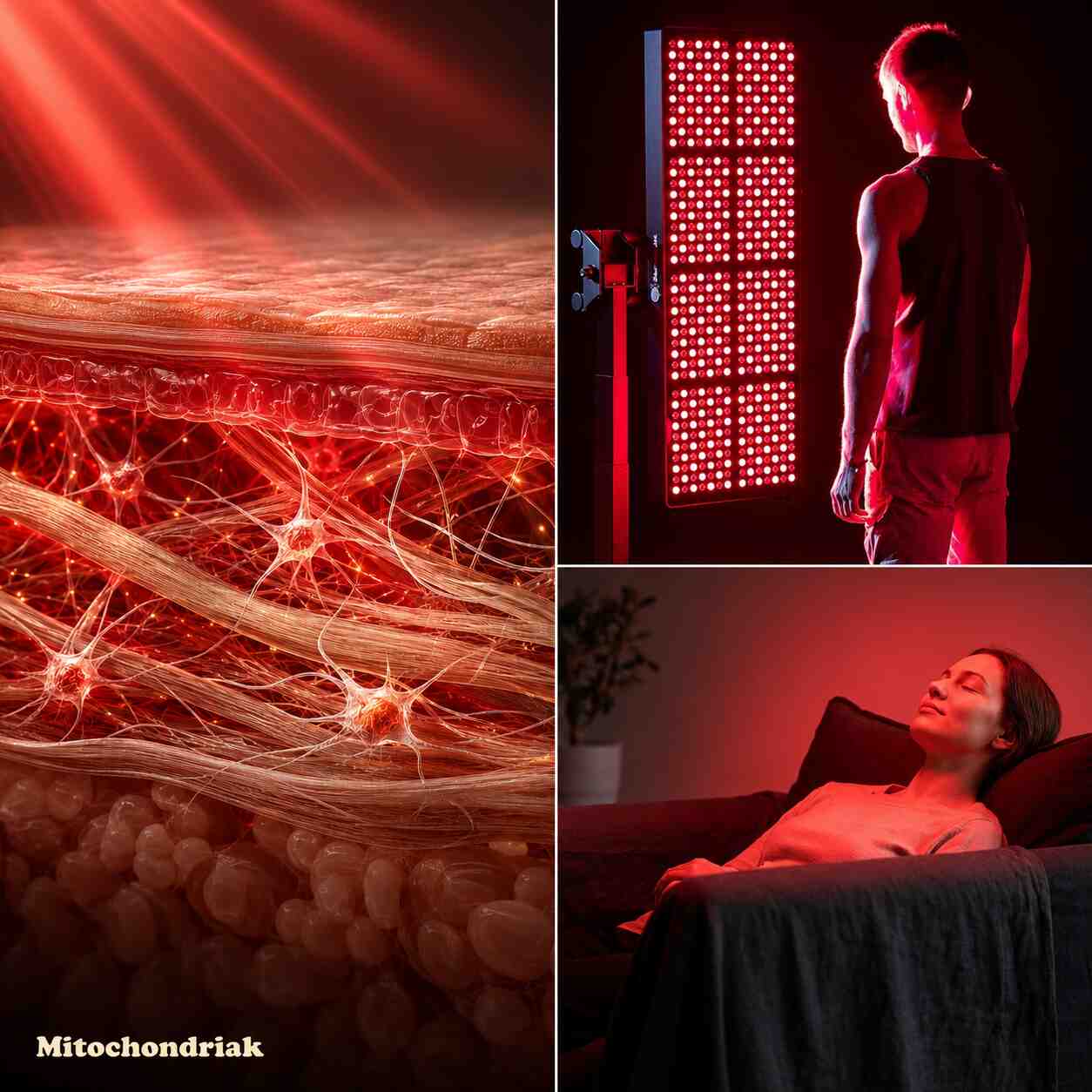
Red light therapy is the controlled use of red and near-infrared light to support how your cells work. Instead of heating tissue like a sauna, specific wavelengths are absorbed inside cells and gently stimulate energy production. It matters because modern indoor life strips away most of the natural light our biology evolved with, and this deficit affects our mitochondria.
If you patch this deficit, you support the engine that powers everything from skin repair to muscle recovery. That is the core idea behind photobiomodulation, the scientific term for how light influences living tissue. It is not magic and it is not a drug. It is a targeted way to give your cells a form of light they can actually use.
The wavelengths matter enormously. Red light in the range of roughly 630 to 670 nm works mostly on the skin surface and just below it, supporting the complexion, collagen, and superficial tissue. Near-infrared light, around 810 to 940 nm, penetrates deeper and reaches muscles, joints, and connective tissue. A quality panel combines several of these wavelengths on purpose, because each one has a distinct, documented biological effect rather than being chosen just to print an impressive figure on a box.
At Mitochondriak®, our philosophy is simple: light shapes life. Sunlight was our original source of these frequencies, but most of us now spend the day under artificial lighting that lacks red and infrared entirely. Red light therapy is one practical way to reintroduce a slice of that missing spectrum into daily life, whether you are an athlete chasing recovery or someone who simply wants healthier skin and steadier energy.
How does red light therapy work according to research?
According to research, red light therapy works mainly through photobiomodulation: photons of red and near-infrared light are absorbed by an enzyme called cytochrome c oxidase (CCO) inside your mitochondria. This absorption helps cells produce more ATP, the molecule that fuels almost every cellular process, and it can influence signalling molecules that affect inflammation and repair.
Let's unpack that chain of events in plain language. Your mitochondria are the energy factories of the cell, and CCO is a key protein in their energy-production line. When light of the right wavelength reaches CCO, it appears to nudge this process along, effectively removing a bottleneck. The cell then has more usable energy to do its job, whether that job is knitting collagen fibres, calming an inflamed joint, or repairing muscle after a hard workout.
Alongside more ATP, the light also modulates reactive oxygen species and the release of nitric oxide. In the right dose these signals help regulate inflammation and improve local blood flow, which is why so many studies focus on healing and recovery. The overall picture is not one dramatic effect but many small, coordinated improvements at the cellular level.
Two decades of laboratory work laid the groundwork here. Researcher Tiina Karu at the Russian Academy of Sciences described the mitochondrial mechanisms behind these light-tissue interactions. [R] Michael R. Hamblin of Harvard Medical School has also published extensively on the anti-inflammatory effects of photobiomodulation. In a detailed 2017 review, Hamblin summarised how photobiomodulation can dampen inflammatory signalling across different tissues. [R]
Human skin studies add practical weight to the mechanism. A controlled trial led by Alexander Wunsch in 2014 tested red and near-infrared light on volunteers and assessed changes in fine lines, skin roughness, and collagen density. [R] Earlier work reviewed by Pinar Avci in 2013 mapped out how low-level red and near-infrared light can stimulate, heal, and help restore skin tissue. [R]
One crucial nuance is the concept of a biphasic dose response: more light is not automatically better. There is a sweet spot where the effect is strongest, and going far beyond it can reduce the benefit. This is exactly why distance, time, and consistency matter more than raw intensity, a theme we return to when we look at practical use. If you want a deeper technical breakdown, our article on how photobiomodulation works at a cellular level goes further into the biochemistry.
What benefits and limits can you realistically expect?
Realistically, you can expect gradual, measurable support for skin quality, collagen density, muscle recovery, and localized inflammation, not overnight transformations or cures. The strongest evidence sits in skin health and tissue repair, while other applications range from promising to preliminary. Think of red light therapy as a consistent nudge toward better cellular function, not a switch that flips your biology.
Let's start with the area where the science is most convincing: skin and collagen. In the controlled trial led by Alexander Wunsch, participants using red and near-infrared light showed improvements in fine lines, skin roughness, and collagen density over the study period. [R] The earlier review by Pinar Avci mapped out multiple mechanisms by which low-level red and near-infrared light can stimulate skin repair and restoration. [R] If skin is your main goal, our dedicated guide on red light therapy for face and skin covers this in more depth.
For recovery and inflammation, the picture is also encouraging. The 2017 review by Michael R. Hamblin summarised how photobiomodulation can dampen inflammatory signalling across various tissues, which helps explain why athletes and active people report faster recovery and less soreness. [R] If training recovery is your focus, you may find our article on red light and recovery after exercise useful.
Now for the honest limits. Red light therapy is not a treatment for disease, it will not replace medical care, and results depend heavily on dose, consistency, and the quality of the device. Effects build over weeks of regular use, not in a single session. Some claims circulating online, from dramatic fat loss to curing serious conditions, run far ahead of the actual evidence. A grounded expectation is steady, cumulative improvement in the areas backed by research.
It is also worth remembering the biphasic dose response we mentioned earlier: piling on more time or standing closer does not equal better outcomes. Beyond a certain point, extra exposure can actually reduce the benefit. This is why a well-designed panel with the right wavelengths (630 to 670 nm and 810 to 940 nm) and a sensible protocol matters more than chasing the highest possible intensity.
How do you use red light therapy safely in practice?
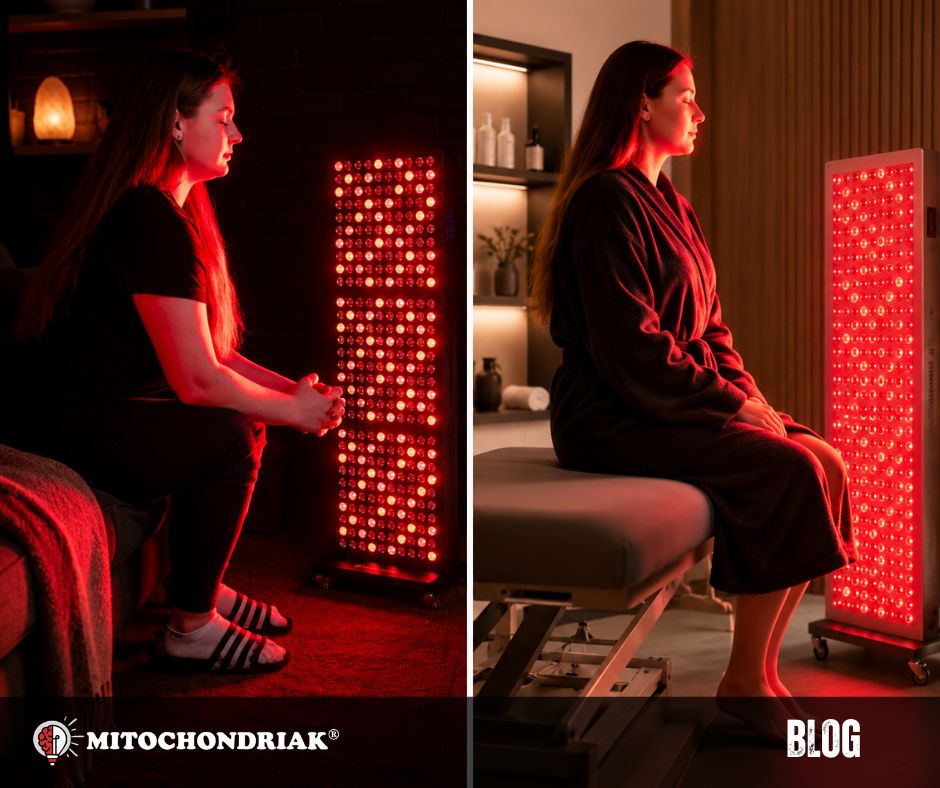
In practice, safe and effective red light therapy comes down to three things: the right distance, a sensible session time, and consistency over weeks. For classic mains-powered panels, keep a distance of at least 30 cm, run sessions of roughly 10 to 20 minutes on a given area, and aim for several sessions per week rather than one marathon session.
Distance is the parameter most people get wrong. With a classic (mains-powered) panel such as the Mitochondriak® Maxi Upgraded, you should never sit closer than 30 cm, partly for comfortable, even coverage and partly to keep EMF exposure low. A typical working range is around 30 to 60 cm for general use, with larger panels often used a little further back. Always check the specific guidance for your exact model rather than guessing.
Session length follows the biphasic principle. Somewhere in the region of 10 to 20 minutes per body area is a reasonable, commonly used window, and longer is not automatically better. Many people treat one region per session, for example the face, the back, or a sore knee, and rotate through areas across the week. Bare skin exposed to the light works better than treating through clothing, which blocks and scatters the wavelengths.
Consistency is the real multiplier. Because the effects are cumulative and cellular, three to five sessions a week over several weeks will do far more than an intense burst followed by nothing. Building it into an existing routine, such as a morning stretch or a post-workout wind-down, is the easiest way to stay regular. If you are weighing up whether to invest in a home device or visit a studio, our comparison of red light therapy at home versus a clinic lays out the trade-offs.
Choosing the right device also matters. A compact option like the Infrapanel Mitochondriak® mini suits targeted use and travel, while a full-body panel is better if you want to treat larger areas efficiently. The key is that the device delivers genuine therapeutic wavelengths rather than just glowing red, which brings us to the cautions worth knowing before you start.
Bring real red and near-infrared light into your home
Modern indoor life strips away the red and infrared spectrum our cells evolved with. A well-designed panel puts a slice of that light back into your day, with the right wavelengths and honest specifications, so consistent sessions actually deliver on the science.
What should you watch out for and who should be careful?
Red light therapy is generally well tolerated, but you should watch out for a few things: eye protection, overuse, poor-quality devices, and specific health situations. Most people can use it without issues, yet a handful of groups should check with a healthcare professional first and everyone benefits from a little common sense.
Start with your eyes. While red and near-infrared light is far gentler than UV, staring directly into a powerful panel is uncomfortable and unnecessary. Simply close your eyes or wear suitable goggles when treating the face, and never look straight into the LEDs. This small habit removes the most common source of discomfort.
Be cautious with overuse and device quality. Remember the biphasic dose response: more is not better, so resist the urge to double session times. Cheap devices are another pitfall, since many lower-quality panels on the market do not disclose their real spectral output, meaning you may not get the therapeutic wavelengths you paid for. This is one reason we publish exact specifications and combine several documented wavelengths on purpose.
Certain groups should be extra careful and seek personalised advice. This includes people who are pregnant, anyone taking photosensitising medication (some antibiotics, acne treatments, or St John's Wort), those with active skin cancer or undiagnosed lesions, and people with light-triggered conditions such as certain forms of lupus or epilepsy. If you have a specific medical condition or take regular medication, a short conversation with your doctor is the sensible first step before starting.
Summary: what should you remember?
Red light therapy is a practical, science-supported way to give your cells a form of light they can actually use. It works through photobiomodulation: red (630 to 670 nm) and near-infrared (810 to 940 nm) light is absorbed by cytochrome c oxidase in your mitochondria, helping cells produce more energy and modulate inflammation. The most robust evidence sits in skin health, collagen, recovery, and localized inflammation, with steady, cumulative results rather than overnight miracles.
To get real value, focus on the fundamentals rather than marketing numbers. Use a device with genuine, disclosed therapeutic wavelengths, keep a sensible distance of at least 30 cm from classic panels, run sessions of roughly 10 to 20 minutes, and stay consistent across several weeks. Respect the biphasic dose response, protect your eyes, and if you fall into one of the cautionary groups, check with a healthcare professional first. Done this way, red light therapy becomes a simple, sustainable habit that supports your energy, skin, and recovery from the cellular level up.
Frequently asked questions
How long does it take to see results from red light therapy?
Most people notice gradual changes over several weeks of consistent use rather than after a single session. Because the effects are cumulative and cellular, three to five sessions per week for four to eight weeks is a realistic window to assess skin, recovery, or comfort improvements. Patience and consistency matter far more than intensity.
What wavelengths are best for red light therapy?
The most useful ranges are red light around 630 to 670 nm, which works on the skin surface and just below it, and near-infrared around 810 to 940 nm, which penetrates deeper to reach muscles and joints. Quality panels combine several of these wavelengths on purpose, because each has a distinct, documented biological effect rather than being chosen for marketing.
Is red light therapy safe to use at home?
For most people, home use is safe and well tolerated when you follow basic guidelines: keep a distance of at least 30 cm from classic mains-powered panels, limit sessions to roughly 10 to 20 minutes per area, and avoid staring into the LEDs. Pregnant women, people on photosensitising medication, and those with specific conditions should consult a doctor first.
How close should I sit to a red light panel?
With a classic mains-powered panel, never sit closer than 30 cm, both for even coverage and to keep EMF exposure low. A typical working range is around 30 to 60 cm for general use, with larger panels often used slightly further back. Always check the specific guidance for your exact model instead of guessing.
Can red light therapy help with muscle recovery?
Evidence suggests it can support recovery by modulating inflammation and improving local blood flow. The 2017 review by Michael R. Hamblin summarised how photobiomodulation dampens inflammatory signalling across tissues, which helps explain why active people report less soreness and faster recovery when they use it consistently after training.
Is more light or longer sessions always better?
No. Red light therapy follows a biphasic dose response, meaning there is a sweet spot where the effect is strongest, and going far beyond it can reduce the benefit. Standing closer or doubling session times does not improve results and may work against you. A sensible distance, moderate session length, and consistency deliver the best outcomes.
Sources and references
- Avci. 2013. Low-level laser light therapy in skin: stimulating, healing, restoring pubmed.ncbi.nlm.nih.gov
- Wunsch. 2014. A controlled trial to determine the efficacy of red and near-infrared light treatment in patient satisfaction, reduction of fine lines, wrinkles, skin roughness and collagen density increase pubmed.ncbi.nlm.nih.gov
- Hamblin. 2017. Mechanisms and applications of the anti-inflammatory effects of photobiomodulation pubmed.ncbi.nlm.nih.gov
- Karu. 1999. Primary and secondary mechanisms of action of visible to near-IR radiation on cells pubmed.ncbi.nlm.nih.gov