
.png)
Red light therapy for the face works by sending specific wavelengths of light deep into your skin, where they switch on your cells' energy factories and kickstart collagen production. The result over time is firmer skin, softer wrinkles and a more even tone, all without needles or downtime.
- How red light therapy actually works on facial skin at the cellular level
- Which wavelengths matter most for skin, including 630, 670 and 850 nm
- The real anti aging benefits: collagen, wrinkles, tone and texture
- A safe, practical protocol for distance, time and frequency
- Realistic before and after expectations and how long results take
What is red light therapy for the face and how does it work?
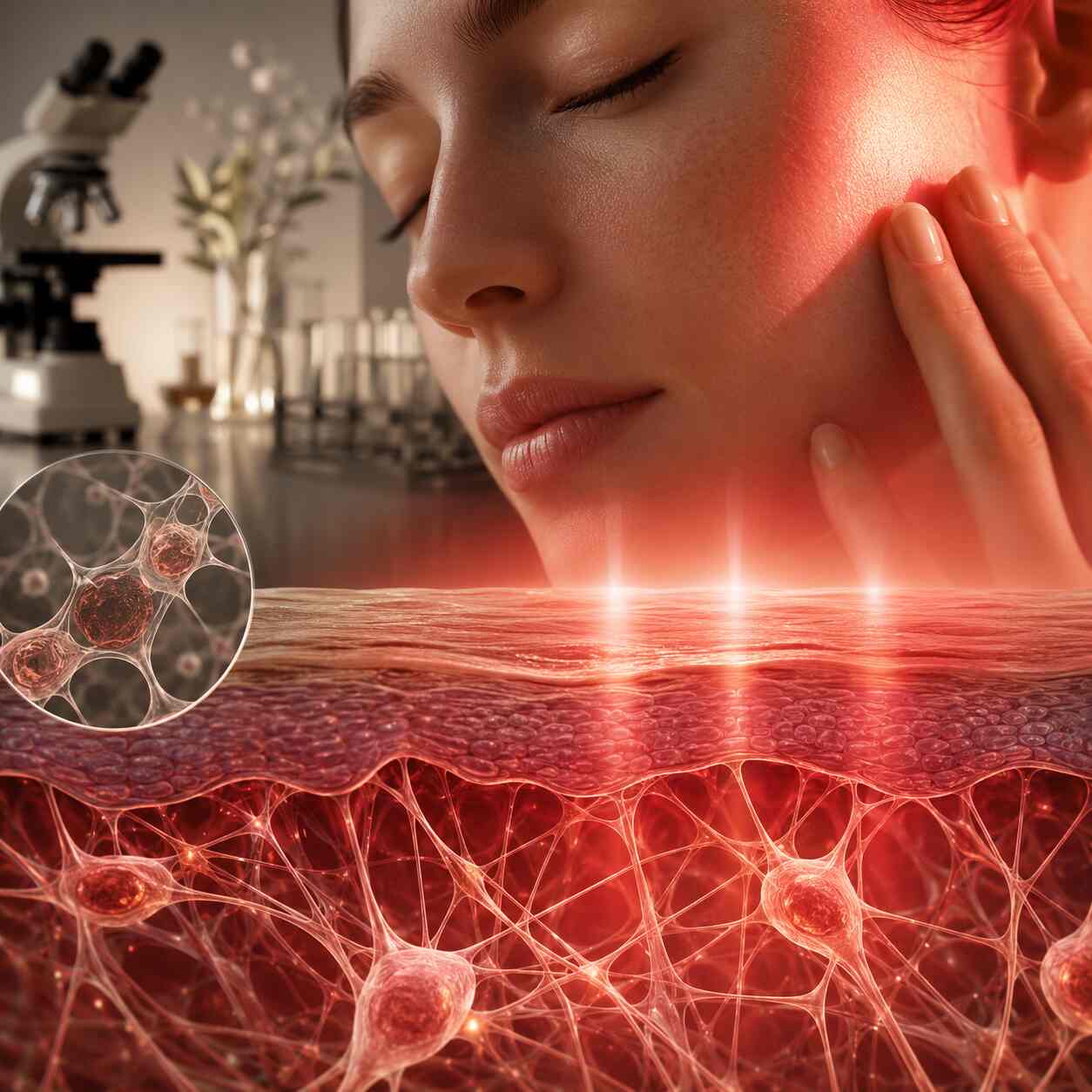
Red light therapy is a treatment that uses red and near infrared wavelengths of light to stimulate your skin cells. The light is absorbed by an enzyme in your mitochondria called cytochrome c oxidase (CCO), which increases cellular energy in the form of ATP. With more energy, skin cells repair and renew more efficiently.
This process is known scientifically as photobiomodulation. Unlike lasers or intense pulsed light that work by heating or wounding the skin, red light therapy is gentle and non thermal. It does not burn, peel or cause downtime. Instead, it nudges your cells to do what they already do, only better and faster.
For the face specifically, this matters because the key cells in your skin, the fibroblasts, are responsible for producing collagen and elastin. When you energise these cells with the right wavelengths of light, you give them the fuel to rebuild the very structures that keep skin looking young. According to a major review by P. Avci and colleagues at Harvard Medical School, low level light therapy can stimulate, heal and restore skin tissue through exactly these mechanisms. [R]
If you are completely new to the topic, it is worth understanding the foundations first. Our guide on how red light therapy works and what its health benefits are explains the science behind these wavelengths in more depth.
Which wavelengths are best for facial skin?
For facial skin, the most effective wavelengths sit in two ranges: red light around 630 to 670 nm and near infrared light around 850 nm. Red wavelengths act mostly on the surface layers where collagen forms, while near infrared penetrates deeper to support cellular energy and circulation. The combination gives the most complete skin benefit.
Here is why each part of the spectrum matters for your face:
- 630 nm: A shallow penetrating red wavelength that targets the upper layers of the skin, supporting tone, texture and surface renewal.
- 670 nm: A deeper red wavelength strongly linked to fibroblast activity and collagen synthesis, which is central to reducing fine lines.
- 850 nm: A near infrared wavelength that reaches deeper tissue, supporting circulation, repair and the energy supply that drives skin regeneration.
Research backs this up. A study led by S. Lee found that 633 nm red light increased the proliferation of fibroblasts and boosted collagen synthesis in skin cells. [R] This is why quality devices combine red and near infrared rather than relying on a single wavelength.
All Mitochondriak® panels are built to deliver clinically relevant wavelengths in the 630 to 940 nm range, so you get both the surface and deep tissue benefits in one session. If you want to dig into the spectrum side of things, our article on what photobiomodulation can do for collagen, wrinkles and acne is a useful next read.
How does red light therapy boost collagen in the skin?
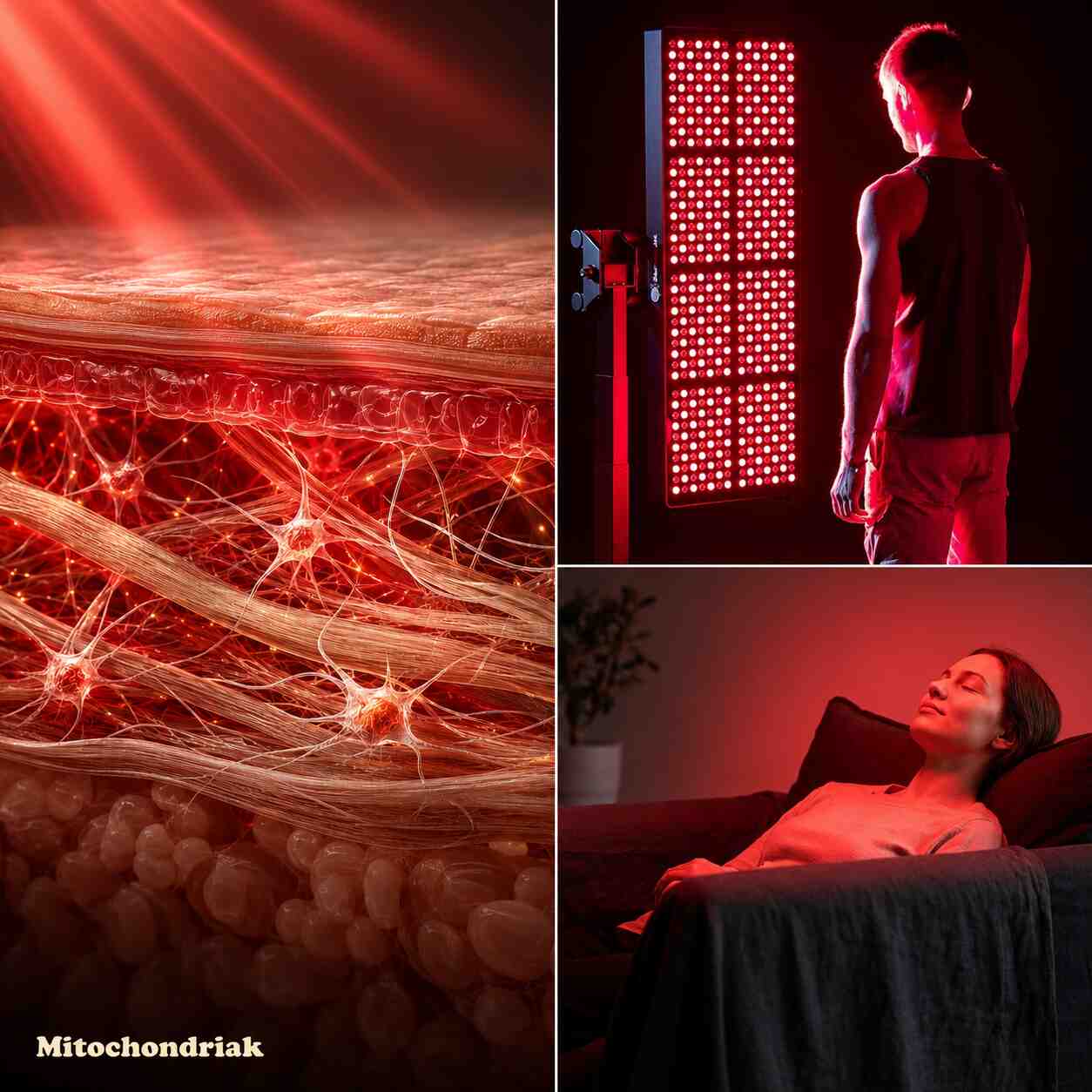
Red light therapy boosts collagen by energising fibroblasts, the cells that manufacture collagen and elastin. When red and near infrared light is absorbed by these cells, ATP production rises, and the cells ramp up the synthesis of new collagen fibres. More collagen means firmer, plumper and more elastic skin over time.
Collagen is the structural protein that keeps your skin looking smooth and full. From your mid twenties onwards, natural collagen production gradually declines, which is one of the main reasons skin starts to thin, sag and form wrinkles. Red light therapy works by addressing this decline at the source, rather than just masking it on the surface.
A systematic review by A. Barolet on photobiomodulation for skin rejuvenation confirmed that consistent light exposure supports collagen density and overall skin quality. [R] The key word here is consistent, because collagen rebuilding is a slow biological process that rewards regular use rather than occasional sessions.
If collagen is your main interest, our deeper dive into red light and collagen, including the mechanism, studies and protocol breaks down the evidence step by step.
Red light therapy delivers several anti aging benefits for the face, the most established being reduced wrinkles, improved skin elasticity and a more even tone and texture. Because it works at the cellular level, the changes are gradual but genuine, building on the renewed collagen and improved circulation that consistent sessions create.
Let us be realistic and specific about what the science actually supports. A systematic review and meta analysis led by J. Kim looked at red light therapy for facial skin rejuvenation and found measurable improvements in wrinkles and skin elasticity across multiple studies. [R] These are not overnight transformations, but they are consistent and well documented.
Here are the main anti aging benefits you can reasonably expect from regular facial use:
- Softer wrinkles and fine lines: As collagen and elastin rebuild, fine lines around the eyes, mouth and forehead become less pronounced.
- Improved firmness and elasticity: Denser collagen gives skin more structure, so it feels and looks tighter rather than slack.
- More even tone and texture: Better cellular turnover and circulation can smooth rough patches and help even out blotchiness.
- Calmer, less reactive skin: Red light has a soothing effect that can reduce visible redness and support a healthier looking complexion.
- Faster recovery and healing: The same mechanisms that build collagen also help the skin repair after blemishes or minor irritation.
It is worth being honest about what red light therapy does not do. It is not a facelift, it will not remove deep static folds in a single month, and it does not replace sun protection or a sensible skincare routine. What it does is steadily improve the underlying quality of your skin. For a focused look at the wrinkle side specifically, our article on red light for wrinkles and what really works is the natural companion to this guide.
How do you use red light therapy on your face?
To use red light therapy on your face, sit or stand in front of a quality red and near infrared panel for around 10 to 20 minutes per session, with clean, bare skin facing the light. Keep a comfortable distance, stay consistent with three to five sessions per week, and protect your eyes if the light feels too bright.
The single most important factor for safety and comfort is the distance from the panel. For classic mains powered panels such as the Mitochondriak® Maxi range, you should always keep a distance of at least 30 cm, and a typical comfortable range for facial use is around 30 to 60 cm. This distance ensures even coverage and keeps electromagnetic exposure low while still delivering an effective dose of light.
A simple, practical facial protocol looks like this:
- Prep: Cleanse your skin and remove makeup, sunscreen and heavy serums so the light can reach the skin directly.
- Distance: Position your face 30 to 60 cm from a classic panel. Closer than 30 cm is not recommended for mains powered panels.
- Time: Start with around 10 minutes per session and build up to 15 to 20 minutes as your skin adapts.
- Frequency: Aim for 3 to 5 sessions per week. Consistency matters far more than long, infrequent sessions.
- Eyes: The light is non thermal and gentle, but if it feels too bright, simply close your eyes or use suitable eye protection.
- After: Apply your usual moisturiser or serum. Skin is well primed to absorb products after a session.
Always confirm the exact distance and timing recommendations for your specific device, as these can vary slightly between models. If you want to combine your skin routine with the wider benefits of light, our protocol for red light therapy before bed for better sleep shows how an evening session can support both your skin and your circadian rhythm.
Bring professional grade red light home
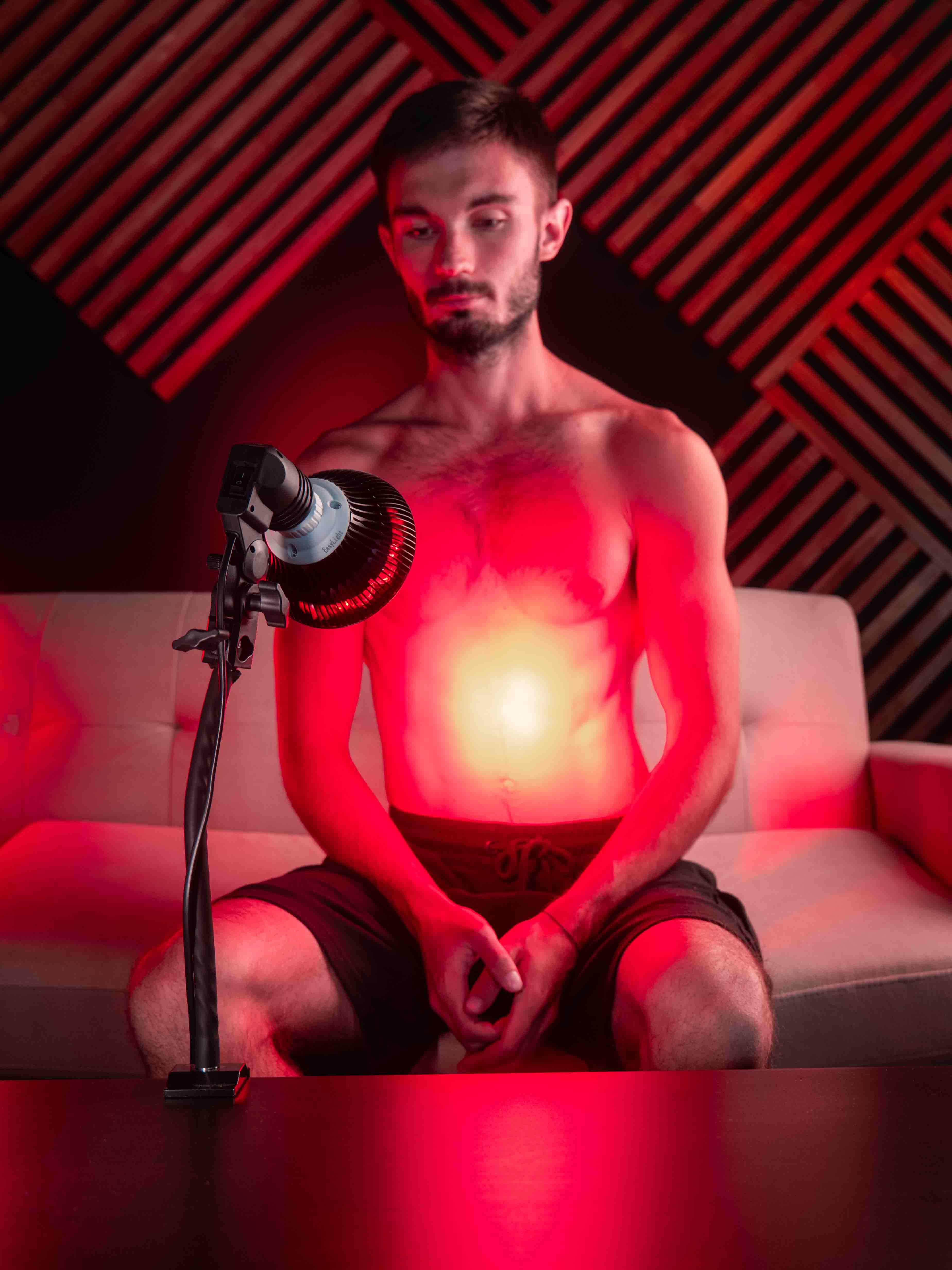
If you want firmer, smoother skin without expensive clinic visits, a full spectrum panel makes daily facial sessions effortless. The Mitochondriak® Maxi Upgraded delivers the full red and near infrared range your skin needs, in one powerful at home device.
How long until you see results from red light therapy?
Most people start to notice subtle changes in skin smoothness and a healthy glow within four to six weeks of consistent use. More meaningful improvements in wrinkles, firmness and tone typically appear after 8 to 12 weeks, because building new collagen is a slow biological process that simply takes time.
The realistic timeline reflects how your skin actually works. In the first few weeks, improved circulation and hydration often create an early glow. Over the following months, the deeper structural changes from new collagen begin to show as firmer, smoother skin. This is why red light therapy is best thought of as a long term habit rather than a quick fix.
Setting honest expectations is important. Results vary based on your age, skin condition, the quality of your device and, above all, how consistently you use it. Someone who does three to five focused sessions a week will see far more than someone who uses a panel occasionally. There is no credible before and after that comes from a single session, so be wary of any product that promises one.
Summary: what should you remember?
Red light therapy for the face is one of the most accessible and well researched tools for supporting younger looking skin from the inside out. By delivering red wavelengths around 630 to 670 nm and near infrared light around 850 nm, it energises your skin's fibroblasts, boosts collagen production and gradually improves wrinkles, firmness and tone, all without needles, heat or downtime.
The two factors that decide your results are quality and consistency. A panel that delivers the full clinically relevant spectrum, used at a safe distance of at least 30 cm for 10 to 20 minutes, three to five times a week, gives your skin everything it needs to rebuild itself over the coming weeks and months. Treat it as a steady habit, keep your expectations realistic, and let the slow biology of collagen work in your favour. A reliable at home panel such as the Mitochondriak® Maxi Upgraded turns this into a simple part of your daily routine.
Sources and references
- S. Lee. 2015. The effect of 633 nm red light on the proliferation of fibroblasts and the synthesis of collagen pubmed.ncbi.nlm.nih.gov
- A. Barolet. 2019. Photobiomodulation for skin rejuvenation: a systematic review pubmed.ncbi.nlm.nih.gov
- J. Kim. 2021. Efficacy of red light therapy in facial skin rejuvenation: a systematic review and meta-analysis pubmed.ncbi.nlm.nih.gov
- P. Avci. 2013. Low-level laser (light) therapy (LLLT) in skin: stimulating, healing, restoring pmc.ncbi.nlm.nih.gov