
.png)
Preparing your skin for summer does not start at the beach, but weeks before your first intense sun exposure. Red and near infrared light can strengthen skin at the cellular level, boost collagen production and accelerate recovery after sun exposure. Discover why photobiomodulation is the ideal first step towards a healthy summer tan.
- Why preparing your skin for summer matters more than protection during tanning
- How red light stimulates collagen production and strengthens skin cells before UV exposure
- What studies say about the protective effect of photobiomodulation against UV damage
- How to incorporate Mitochondriak® infrared panels into your summer skin routine
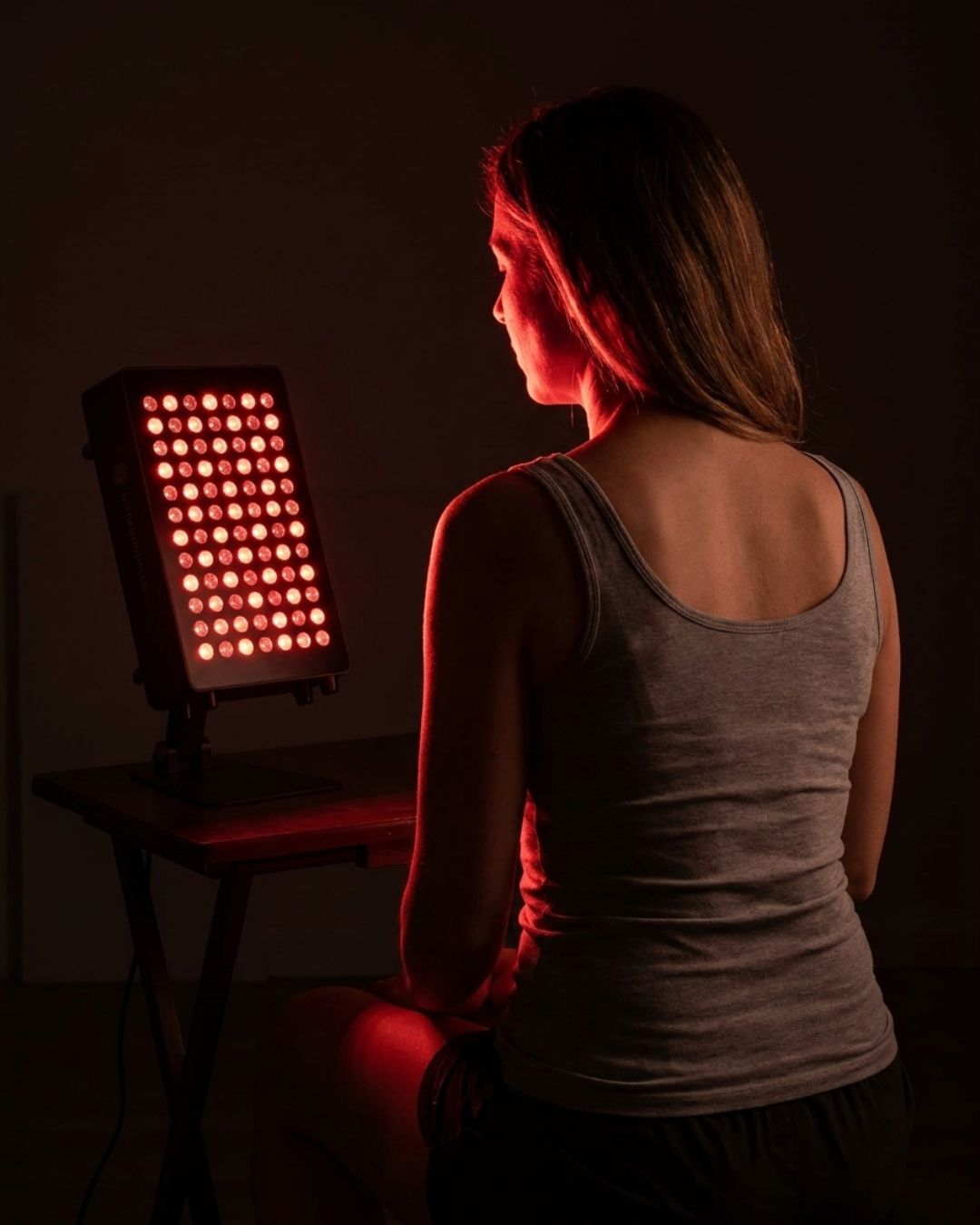
Why is it important to prepare your skin for summer?
Preparing your skin for summer begins with gradual adaptation to sunlight and strengthening the cells that form your first line of defence. Skin that has not seen the sun all winter reacts to the first intense UV radiation with inflammation, redness and increased susceptibility to damage. That is why it is far smarter to start the preparation process before you find yourself out in the sun.
Our body has a natural ability to adapt to UV light. Through gradual exposure, the skin builds what is known as a solar callus, a thickened layer that acts as a protective shield. However, this process takes weeks and requires regular, short exposures.
Red and near infrared light significantly complements this process. Rather than merely protecting the skin from the outside, photobiomodulation strengthens it from within, at the level of the mitochondria. Cells with higher ATP production regenerate faster, produce more collagen and better resist the oxidative stress caused by UV radiation.
How does red light strengthen skin before tanning?
Red light acts on the skin through photobiomodulation, the stimulation of cellular processes by light of specific wavelengths. When red and near infrared photons enter a cell, they are absorbed by the enzyme cytochrome C oxidase in the mitochondria, triggering increased energy production.
A 2024 study (Cho et al.) demonstrated that red LED light therapy protects skin from damage caused by UVB radiation while simultaneously supporting the repair of skin tissue. The researchers found that cells exposed to red light before UV stress showed less DNA damage and faster recovery. [R]
Further research (Ziveh, 2025) confirmed that red light increases type I collagen production while reducing levels of the enzyme MMP-1, which breaks down collagen. MMP-1 is one of the main culprits behind premature skin ageing caused by excessive sun exposure. [R]
A clinical study by Couturaud et al. (2023) further showed that regular red light photobiomodulation visibly reversed signs of skin ageing, including fine wrinkles and uneven skin tone. The effects persisted for up to a month after the therapy ended. [R]
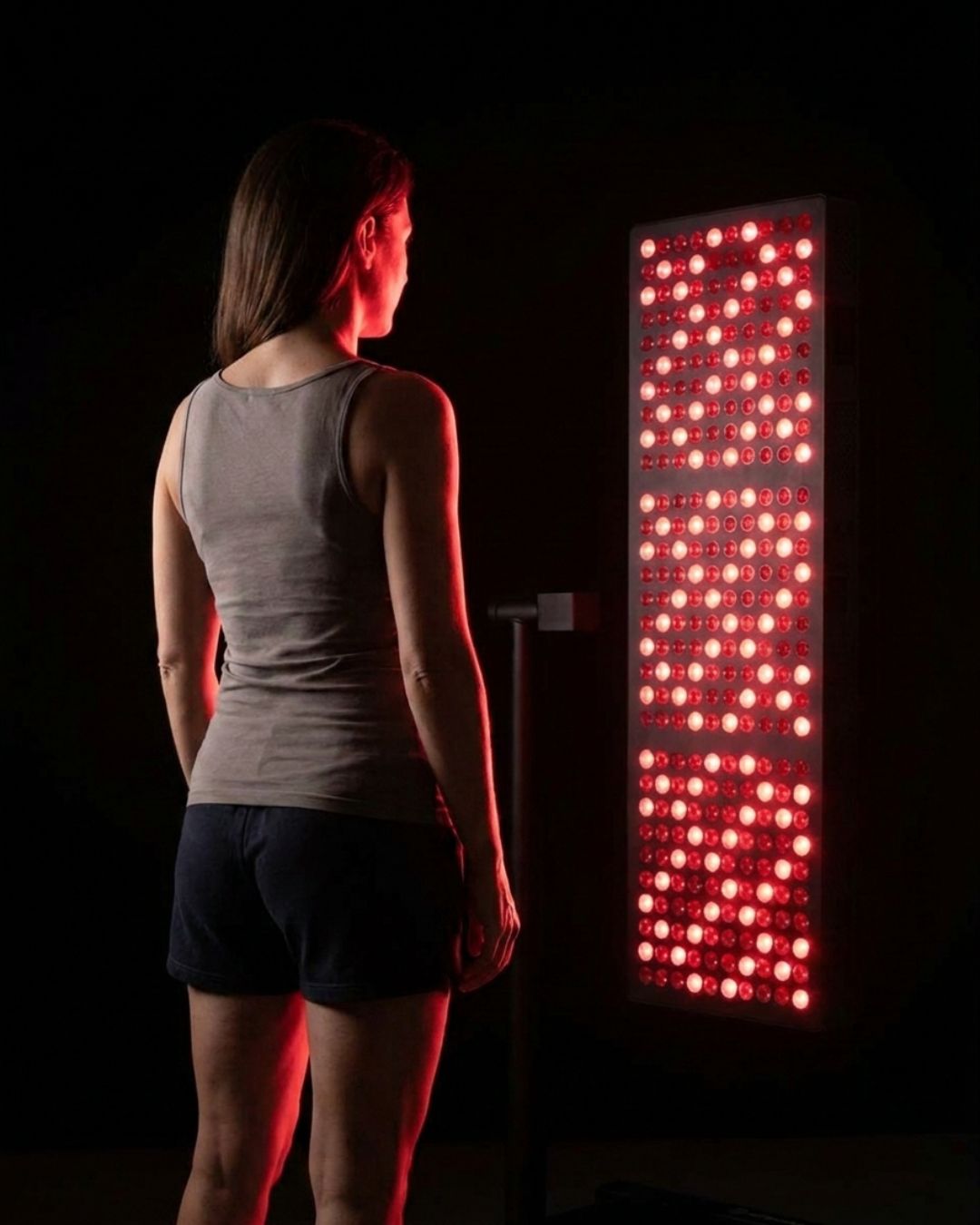
Mitochondriak® Maxi Upgraded devices feature 7 wavelengths (630, 670, 760, 810, 830, 850 and 940 nm), covering the full spectrum validated by research. The combination of red light from 630 to 760 nm and near infrared from 810 to 940 nm works synergistically: red wavelengths target the surface layers of the skin, while near infrared penetrates deeper into the tissues.
How to incorporate red light into your summer routine?
An ideal summer skin routine combines gradual sun adaptation with regular photobiomodulation. Use red light as a complement to natural solar callus building, not as a replacement. Both methods reinforce each other.
A practical guide to preparing your skin for summer:
- Morning sunlight: Start your day with 10 to 20 minutes outdoors during the early morning hours, when UV intensity is lower. This allows the skin to gradually adapt without the risk of sunburn.
- Red light therapy: Regular sessions with a Mitochondriak® infrared panel before the summer season support collagen, strengthen cellular metabolism and prepare the skin for more intense sun exposure.
- Antioxidant rich diet: Seasonal fruits and vegetables such as strawberries, cherries and tomatoes provide the skin with carotenoids and vitamin C, which boost its resistance to oxidative stress.
- Grounding: Contact between bare feet and the earth supports the body's overall antioxidant potential. Learn more about grounding in our dedicated article.
If you are planning a seaside holiday after months spent indoors, start your preparation at least 3 to 4 weeks in advance. The combination of morning sunlight and regular photobiomodulation gives your skin enough time to build its natural protection. For more on this topic, read our guide to building your sun tolerance.
Prepare your skin for summer with Mitochondriak®
Mitochondriak® infrared panels are designed for daily red and near infrared light therapy in the comfort of your home. Whether you are looking for a compact panel for your office or a full body solution, we have the right choice for you:
- Mitochondriak® Maxi Upgraded with 300 LEDs and 7 wavelengths for full body sessions
- Mitochondriak® Office Upgraded for localised therapy of the face and neckline
- Mitochondriak® Maxi UVB Upgraded (pre-order with a 20% discount) for those who also want to support vitamin D production at home
Also read: Red light and collagen: mechanism, studies, protocol
Frequently asked questions
How many red light sessions do you need before summer?
Ideally, start 3 to 4 weeks before your planned intense sun exposure. Regular sessions several times a week give the skin enough time to strengthen the collagen network and increase cellular resilience.
Can red light replace sunscreen?
Red light is not a substitute for sensible sun exposure habits. It works on a different level, strengthening cellular metabolism and regeneration. The best protection is gradual skin adaptation to sunlight, smart timing of your exposure and seeking shade during prolonged periods in intense sun.
Is red light therapy safe for sensitive skin?
Yes, photobiomodulation with red and near infrared light is considered safe even for sensitive skin. Red light does not contain a UV component, does not overheat the skin and has no known adverse effects when recommended protocols are followed.
What is the difference between an infrared panel and the sun for skin?
The sun provides the full spectrum of light, including UV, which stimulates vitamin D and melanin production. An infrared panel delivers targeted red and near infrared wavelengths that strengthen mitochondria and support regeneration. Both forms ideally complement each other. Learn more about vitamin D in our article Vitamin D: why a tablet isn't enough.
Sources and references
- Cho EC et al. (2024). Protective Effect of Red Light-Emitting Diode against UV-B Induced Skin Damage. PMC. [R]
- Ziveh T et al. (2025). Biological and Therapeutic Responses of Human Skin to Light. PMC. [R]
- Couturaud V et al. (2023). Reverse skin aging signs by red light photobiomodulation. PMC. [R]
- Wunsch A, Matuschka K (2014). A Controlled Trial to Determine the Efficacy of Red and Near-Infrared Light Sources for Skin Rejuvenation. PMC. [R]