
.png)
Grounding
Grounding (also known as earthing) is the direct conductive contact of the human body with the Earth's surface. When you touch grass, soil, sand, or damp concrete with your bare foot, palm, or any exposed skin, your body electrically connects with the planet and begins absorbing free electrons. This simple act has a surprisingly profound impact on cellular energy, inflammatory processes, and nervous system function.
- What grounding is from a biophysics perspective and why it works
- How free electrons from the Earth affect mitochondria and ATP production
- What effects of grounding have been confirmed by peer-reviewed studies (inflammation, sleep, cortisol, blood)
- Why grounding is an inseparable part of a circadian lifestyle
- Practical ways to ground yourself, even in the city
- What is grounding and why is everyone talking about it?
- How does grounding work from a biophysics perspective?
- How does grounding affect mitochondria and ATP production?
- What effects of grounding have been confirmed by scientific studies?
- Why is grounding part of a circadian lifestyle?
- How to practice grounding in everyday life?
- Is there a difference between grounding and earthing?
- When and how long should you practice grounding?
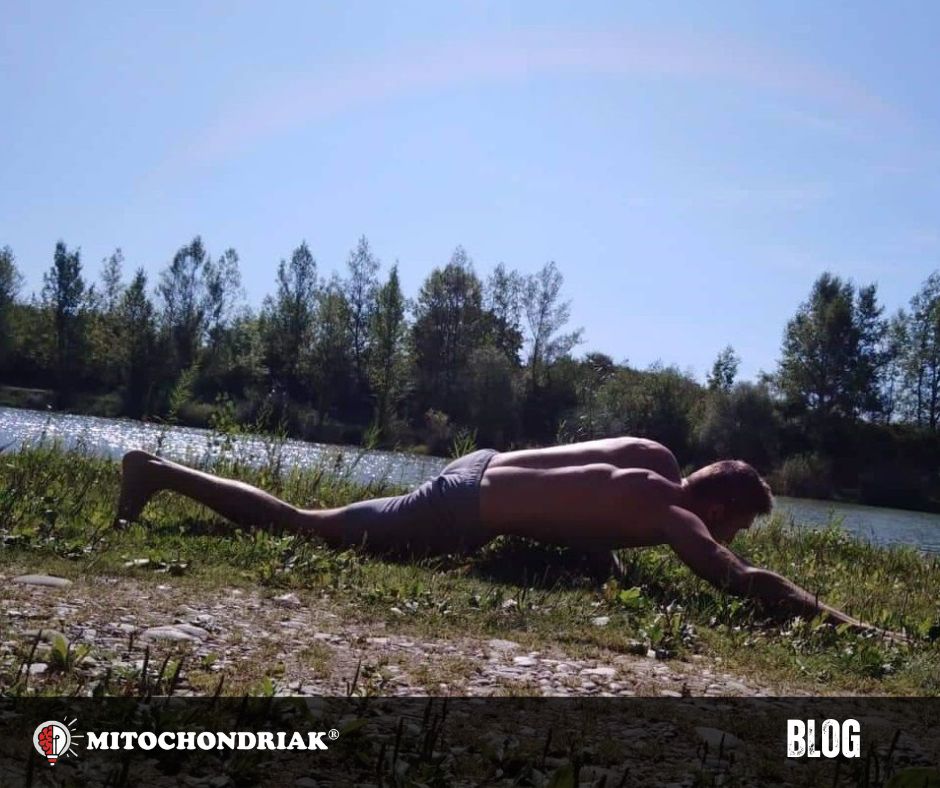
What is grounding and why is everyone talking about it?
Grounding is the direct physical contact of the body with the Earth's surface, during which free electrons transfer from the planet into the organism. This is not esoteric thinking. It is a fundamental biophysical phenomenon that humanity utilized for millions of years completely unconsciously, simply by walking barefoot.
Modern humans are disconnected from the Earth. Rubber soles, asphalt sidewalks, high-rise buildings, and continuous time spent indoors have created a situation where many of us do not touch the Earth's surface for entire weeks or months. Researchers such as Clint Ober, Stephen Sinatra, and Gaétan Chevalier began systematically investigating what happens when this contact is restored over the past two decades. The results were remarkable.
How does grounding work from a biophysics perspective?
The Earth's surface carries a permanent negative electrical charge. This charge is maintained by atmospheric electricity, lightning (approximately 5,000 lightning strikes occur on the planet every minute), and solar radiation. When a conductive part of your body (your skin) touches the Earth's surface, an equalization of electrical potential occurs.
Free electrons from the Earth pass into the body and act as natural antioxidants. They neutralize reactive oxygen species (ROS), or free radicals, which arise during inflammatory processes, metabolic stress, exposure to electromagnetic fields, and even during normal cellular respiration in mitochondria.
The research team of James Oschman described this mechanism in a peer-reviewed study from 2015: grounding demonstrably reduced markers of inflammation, influenced the count of circulating neutrophils and lymphocytes, and altered levels of several chemical factors in the blood (Oschman et al., 2015).
Put simply: the Earth functions as a massive reservoir of electrons. When you connect with it, your body receives what it needs to neutralize oxidative stress.
How does grounding affect mitochondria and ATP production?
From a cellular energy perspective, grounding is a direct complement to proper light hygiene. Mitochondria produce ATP through the electron transport chain (ETC), where electrons are progressively transferred through complexes I through IV on the inner mitochondrial membrane.
The supply of free electrons from the Earth's surface helps maintain the correct electrical potential of cells. When the body is chronically disconnected from the Earth while simultaneously exposed to artificial lighting, electromagnetic smog, and a lack of sunlight, mitochondria operate under suboptimal conditions. More reactive oxygen species are generated than the body can neutralize.
Grounding helps correct this imbalance. It is not a replacement for quality sleep, sunlight, or photobiomodulation, but it is their inseparable complement. The combination of grounding, morning sunlight exposure, and minimizing artificial blue light after sunset forms the foundation of what we at Mitochondriak® call mitohacking.
What effects of grounding have been confirmed by scientific studies?
Grounding is not just traditional wisdom. Over the past 20 years, several dozen peer-reviewed studies have examined its physiological effects. Here are the most important findings:
Reduction of chronic inflammation
Sinatra et al. (2023) described grounding as a "universal anti-inflammatory remedy." Free electrons from the Earth neutralize free radicals at the site of inflammation and reduce oxidative stress. Thermographic images showed a significant reduction in the inflammatory response after just 30 minutes of grounding (Sinatra, 2023).
Improved sleep quality and cortisol normalization
Chevalier et al. (2012) showed in their pioneering work that sleeping on a grounded mat normalized nocturnal cortisol secretion. Participants reported faster sleep onset, fewer nighttime awakenings, and a feeling of deeper rest. Grounding helps synchronize the circadian rhythm by supporting the parasympathetic nervous system (Chevalier et al., 2012).
Reduced blood viscosity
One of the most surprising findings was that grounding reduces blood viscosity (thickness). A reduction in the zeta potential of red blood cells causes them to clump less, which improves microcirculation. This has a direct impact on the delivery of oxygen and nutrients to tissues and the removal of metabolic waste.
Pain relief and accelerated recovery
Koniver (2022) described practical applications of grounding in a clinical review, including pain relief after surgical procedures, reduction of post-exercise muscle soreness (DOMS), and accelerated wound healing. Her conclusion was clear: "Grounding may play a role not only in improving the body's natural ability to function but also in treating disease" (Koniver, 2022).
Parasympathetic support and stress reduction
Measurements of heart rate variability (HRV) showed that grounding shifts the autonomic nervous system toward parasympathetic dominance. This means better digestion, deeper recovery, and lower levels of stress hormones.
Why is grounding part of a circadian lifestyle?
Grounding is not an isolated "hack." In the context of quantum biology and chronobiology, it is one of three fundamental pillars on which a healthy circadian lifestyle rests:
- Light : morning sunlight sets the biological clock via the suprachiasmatic nucleus (SCN). In the evening, we minimize artificial blue light.
- Grounding : direct contact with the Earth delivers free electrons, reduces inflammation, and supports the parasympathetic nervous system.
- Temperature and seasonality : exposure to cold, heat, and natural seasonal changes maintains metabolic flexibility.
When these three pillars work together, mitochondria operate more efficiently, melatonin is produced at the right time and in the right amount, and the body maintains its capacity for regeneration.
In practice, it looks simple: in the morning, go outside, stand barefoot on the grass, and expose yourself to sunlight. This ritual takes 10 to 20 minutes and combines two of the three pillars at once.
How to practice grounding in everyday life?
There are several proven ways to practice grounding in daily life:
Walking barefoot on a natural surface
The simplest and most effective form. Grass, soil, sand, stone, and even concrete (not asphalt!) are conductive surfaces. Ideally in the morning, when dew and moisture increase conductivity. A minimum of 15 to 20 minutes daily.
Grounded barefoot shoes
If the environment does not allow barefoot walking (city, winter, debris), there is a solution in the form of grounded barefoot shoes with a conductive sole. These shoes combine the natural biomechanics of barefoot footwear with a conductive element that ensures electrical contact with the ground even during regular walking.
Touching the ground with bare hands
Simply touching the ground, a tree, a stone, or sitting on the grass is enough. Contact through the palms or forearms is also effective.

Is there a difference between grounding and earthing?
No. In the context of health and biohacking, the terms grounding and earthing are synonyms. Both refer to the same phenomenon: the conductive connection of the body with the Earth's surface. The term "earthing" was popularized by Clint Ober in his book Earthing: The Most Important Health Discovery Ever! (2010). In scientific literature, "grounding" or "biological grounding" is used more frequently.
When and how long should you practice grounding?
The optimal time for grounding is in the morning after sunrise, when you are simultaneously receiving morning sunlight rich in red and infrared wavelengths. This combination sets the circadian rhythm while simultaneously supplying free electrons.
According to available studies, positive effects are measurable after just 30 minutes of grounding. For long-term benefits (sleep, inflammation, HRV), regular practice is recommended, ideally 20 to 40 minutes daily.
There is no upper limit. Our ancestors were grounded virtually continuously. The more time you spend in contact with the Earth, the better.
Related glossary terms
- Mitochondria : cellular organelles where grounding supports more efficient energy production
- ATP : the universal energy currency whose production grounding indirectly optimizes
- Circadian rhythm : the biological rhythm that grounding helps synchronize
- Photobiomodulation : light therapy that, together with grounding, forms the foundation of mitohacking
- Melatonin : the sleep hormone whose nighttime production grounding supports
Grounded Barefoot Shoes by Mitochondriak®
Grounding does not have to end in your garden. Our grounded barefoot shoes with a conductive sole allow you to absorb free electrons from the Earth with every step. The natural biomechanics of barefoot footwear also support proper posture and strengthen the muscles of the foot.
- Grounding is the conductive contact of the body with the Earth, during which we absorb free electrons that act as natural antioxidants
- Studies have confirmed reduced inflammation, cortisol normalization, improved sleep, and reduced blood viscosity
- Grounding supports mitochondria and more efficient ATP production by reducing oxidative stress
- It is most effective in the morning, barefoot on grass, combined with morning sunlight
- Grounded barefoot shoes enable grounding even during regular walking
Sources and References
- Oschman, J. L., Chevalier, G., Brown, R. (2015). The effects of grounding (earthing) on inflammation, the immune response, wound healing, and prevention and treatment of chronic inflammatory and autoimmune diseases. Journal of Inflammation Research, 8, 83–96. PMC4378297
- Chevalier, G., Sinatra, S. T., Oschman, J. L., Sokal, K., Sokal, P. (2012). Earthing: Health Implications of Reconnecting the Human Body to the Earth's Surface Electrons. Journal of Environmental and Public Health, 2012, 291541. PMC3265077
- Sinatra, S. T., Oschman, J. L., Chevalier, G., Sinatra, D. (2023). Grounding – The universal anti-inflammatory remedy. Biomedical Journal, 46(1), 11–18. PMC10105021
- Koniver, L. (2022). Practical applications of grounding to support health. Biomedical Journal, 46(1), 41–47. PMC10105020
- Sinatra, S. T., Oschman, J. L., Chevalier, G., Sinatra, D. (2017). Electric Nutrition: The Surprising Health and Healing Benefits of Biological Grounding (Earthing). Alternative Therapies in Health and Medicine, 23(5), 8–16. PubMed 28987038