
.png)
Most people take vitamin D in a pill and believe the problem is solved. But a pill bypasses the entire biological process the body needs to properly utilize this vitamin. It raises the 25(OH)D level in the blood, yet the body then cannot efficiently produce the active form 1,25(OH)D. What happens instead? Calcium is released into the blood, but not where it belongs. There is another way to replenish vitamin D naturally and safely.
- Why most people suffer from vitamin D deficiency despite taking supplements
- How the entire vitamin D production cascade works in the skin, from cholesterol to active hormone
- What a vitamin D pill can never give you and why it may do more harm than good long-term
- The difference between natural and supplemented vitamin D at the 25(OH)D and 1,25(OH)D level
- How to replenish vitamin D naturally, even when the sun is not shining
- What is vitamin D and why is it essential for health?
- Vitamin D deficiency: symptoms most people overlook
- How is vitamin D produced in the skin? From cholesterol to active hormone
- Vitamin D from a pill vs. natural vitamin D: the big comparison
- How to replenish vitamin D naturally: a practical protocol
- Frequently Asked Questions about vitamin D
- Scientific studies and sources

What is vitamin D and why is it essential for health?
Vitamin D is not a classic vitamin but a steroid hormone that regulates over 200 genes in the human body. Its biological role extends far beyond bone health. It is involved in immune system regulation, calcium and phosphorus metabolism, hormonal function, muscle performance, and even protection against certain types of cancer. [R]
For vitamin D to fulfill all these functions, it must go through several steps in the body. And this is exactly where the whole story unfolds. Because a pill and the sun trigger these steps in entirely different ways.
Vitamin D deficiency: symptoms most people overlook
Vitamin D deficiency is one of the most widespread nutritional deficits in Europe and North America. The optimal 25(OH)D blood level is 40 to 60 ng/ml, yet most people in northern latitudes hover between 15 and 25 ng/ml, well below optimum. Symptoms of deficiency tend to be subtle, and people attribute them to other causes.
The most common include:
- Chronic fatigue and a feeling of exhaustion even after sufficient sleep
- Bone and muscle pain, especially in the lower back
- Frequent illness and recurring respiratory infections
- Depressed mood, particularly in winter months
- Slow wound healing and increased inflammation
The consequences of long-term deficiency are even more serious. A large-scale study examining cancer incidence across different regions of the US demonstrated a 2-fold increase in cancer mortality in northern areas where residents had less sun exposure. This particularly affected cancers of the digestive tract and reproductive organs. [R] Vitamin D also plays a role in regulating immune responses, which is why some studies show its comparable effect to vaccination in flu prevention.
Who is most at risk of vitamin D deficiency?
The most at-risk groups include office workers who spend most of their day under artificial lighting, seniors (the amount of 7-dehydrocholesterol in the skin decreases with age), people with darker skin (melanin slows UVB penetration), and statin users. Statins block cholesterol production, and with it the precursor 7-dehydrocholesterol, from which vitamin D is produced in the skin.
How is vitamin D produced in the skin? From cholesterol to active hormone
Vitamin D production in the skin is a multi-step process that begins with cholesterol and ends with an active hormone in the kidneys. It is not a simple reaction but an entire cascade of transformations involving the skin, liver, kidneys, magnesium, mitochondrial water, and vitamin D receptors (VDR).
The human body uses cholesterol to produce vitamin D, as cholesterol forms the backbone of the vitamin D molecule. In the skin, cholesterol is converted to 7-dehydrocholesterol, which is found in the highest concentrations in the two lower layers of the epidermis: the stratum basale and stratum spinosum. [R]
The entire cascade looks like this:
| Step | What happens | Where in the body | What is needed |
|---|---|---|---|
| 1 | Cholesterol → 7-dehydrocholesterol | Skin (epidermis) | Sufficient cholesterol, healthy skin |
| 2 | 7-DHC → previtamin D3 | Stratum basale and spinosum | UVB light (290 to 315 nm) |
| 3 | Previtamin D3 → cholecalciferol (D3) | Skin | Heat, time, magnesium, mitochondrial water |
| 4 | Cholecalciferol → calcidiol (25(OH)D) | Liver | Enzymes, magnesium |
| 5 | Calcidiol → calcitriol (1,25(OH)D) | Kidneys | Enzymes, healthy kidneys, VDR receptors |
7-dehydrocholesterol most efficiently absorbs UV light at wavelengths between 290 and 315 nm, the UVB range. In Central Europe, these wavelengths are available approximately from late February to the end of October. During winter months, the UV index is too low and vitamin D production in the skin practically stops.
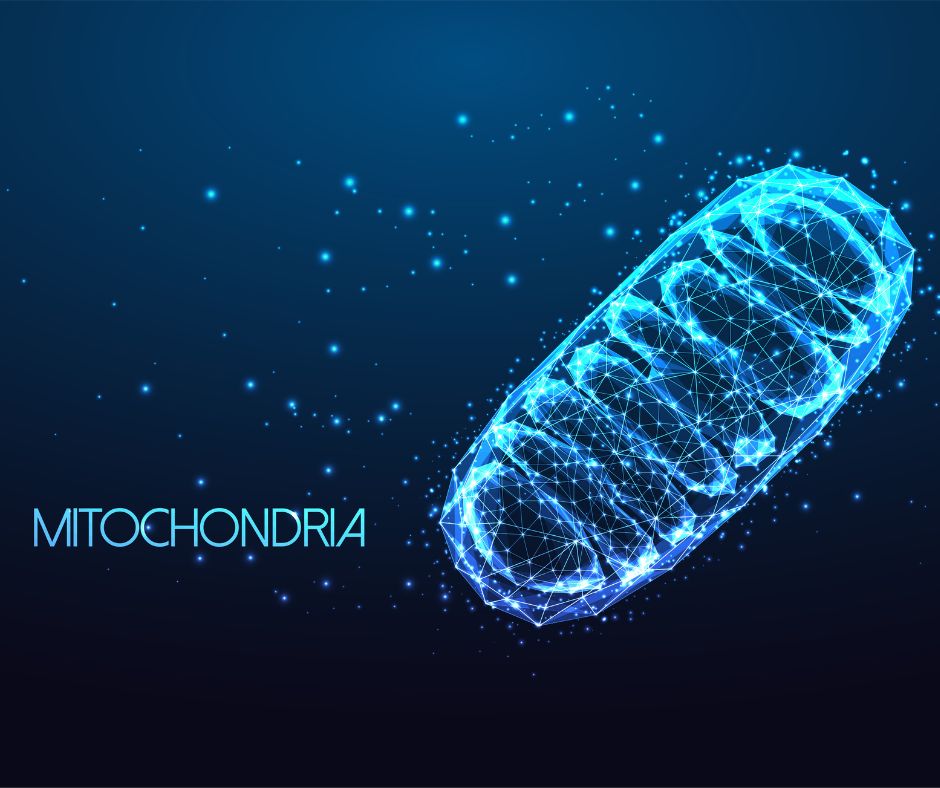
What is crucial about this entire process is that it requires a magnesium atom, mitochondrial water, and a rapid electron flow. Mitochondrial water is important because it donates hydrogen to the molecule. The resulting cholecalciferol then travels to the liver, where it is converted to calcidiol (25(OH)D), the form measured in blood tests. Calcidiol subsequently moves to the kidneys, where it is transformed into the active form calcitriol (1,25(OH)D), which is involved in calcium absorption and the regulation of hundreds of other processes.
Vitamin D from a pill vs. natural vitamin D: the big comparison
A vitamin D3 pill bypasses the entire process described above. After swallowing, cholecalciferol is absorbed in the intestine, enters the bloodstream, and raises the 25(OH)D level. At first glance, this looks fine, since the number on the blood test goes up. But the problem lies in what happens next.
When vitamin D3 enters the body through a pill, it bypasses the skin, cholesterol, the UVB reaction, and mitochondrial water. The body receives a "semi-finished product" without all the accompanying signals. The result? The 25(OH)D blood level does rise, but the body is subsequently unable to efficiently produce sufficient amounts of the active form 1,25(OH)D. Moreover, supplementation increases calcium absorption in the intestines, but without the complete cascade, calcium may be improperly distributed, including being deposited in blood vessels instead of bones.
In the long run, a person who relies exclusively on pills may do more harm than good. Natural vitamin D production through UVB light is therefore the most optimal path.
As Jaroslav Lachký, founder of Mitochondriak®, aptly put it (in Slovak): "Expecting the same benefits from a supplement as from vitamin D produced in the body through sun exposure is like expecting to develop a sculpted back by watching the gymnastics Olympics on TV."
| Parameter | Vitamin D from a pill | Natural vitamin D (sun / UVB) |
|---|---|---|
| Pathway in the body | Intestine → blood → 25(OH)D | Skin → liver → kidneys → 1,25(OH)D |
| Active form 1,25(OH)D | Body produces it less efficiently | Complete cascade = optimal production |
| Blood calcium | Increased absorption, risk of vascular deposits | Regulated absorption, calcium directed to bones |
| Nitric oxide (NO) | None | Yes, lowers blood pressure, improves circulation |
| Melanin / solar callus | None | Yes, builds natural skin protection |
| Serotonin + beta-endorphins | None | Yes, the "feel-good effect" after sun exposure |
| Vitamin D sulfate | None | Yes, water-soluble form, circulates longer |
| Risk of overdose | Yes (above 10,000 IU long-term) | Impossible, the body self-regulates production |
| Year-round availability | Yes | No (UV index < 3 = no production) |
What a vitamin D pill can never give you: nitric oxide and benefits beyond D
Solar UV radiation triggers processes in the body that are not directly related to vitamin D but are equally important for health. One of these is the release of nitric oxide (NO) in the skin, which dilates blood vessels, lowers blood pressure, and improves organ perfusion. [R]
A 2024 study by Kühn et al. compared UV exposure with vitamin D3 supplementation. The result? The UV-exposed group had higher nitric oxide levels and lower cholesterol compared to the supplement-only group. Vitamin D3 supplementation simply does not deliver these cardiovascular benefits. [R]
The same applies to weight management. Sunlight and sun exposure can help with weight regulation, but supplemental vitamin D does not offer these benefits. The reason? It is the interplay of vitamin D, its receptors, and the full spectrum of sunlight, not just an isolated molecule.
When are vitamin D supplements still necessary?
It would be unfair to claim that pills serve no purpose. Vitamin D supplements are a safety net for situations when the sun simply is not enough:
- Winter months (October to March), when the UV index drops below 3 and vitamin D production in the skin stops
- Seniors, whose declining 7-dehydrocholesterol levels in the skin reduce the ability to produce D
- People with darker skin, where higher melanin levels slow UVB penetration
- Chronically ill and immobile patients without access to sunlight
But supplements should not be the first and only choice. They are a substitute, not a replacement for the entire solar process. Whenever you have the opportunity, prioritize natural vitamin D production.
How to replenish vitamin D naturally: a practical protocol
Morning and midday sun: when, how long, how much skin to expose
In Central Europe, UVB light is available approximately from late February to the end of October. The most efficient vitamin D production occurs when the UV index is 3 or higher, typically between 10:00 and 14:00. The more skin you expose, the more vitamin D you produce.
To know exactly when the UVB window is open at your location and when you can actually produce vitamin D, we recommend using the Mitochondriak® app. It displays solar conditions anywhere on Earth: sunrise and sunset, UVA and UVB windows, potential vitamin D production on a given day, and you can even log your own blood tests. Based on your current 25(OH)D level, the app evaluates how to reach your target vitamin D level, whether through sun exposure or with a UVB panel.
It is important to start gradually. In spring, 10 to 15 minutes with exposed arms, forearms, and face is sufficient. In summer, you can extend exposure to 20 to 30 minutes with a larger area of exposed skin. Never burn. Do not use sunscreen during short exposures, as it blocks UVB penetration into the epidermis and prevents vitamin D production. Paradoxically, despite rising sunscreen sales year after year, melanoma rates continue to climb while population vitamin D levels continue to fall.
Remember that near-infrared light is key to better tolerating and absorbing UV. Morning sunlight contains a large amount of near-infrared light that prepares the skin for UV. Learn more about building a solar callus on our blog.
Mitochondriak® Maxi UVB Upgraded panel for year-round vitamin D production at home
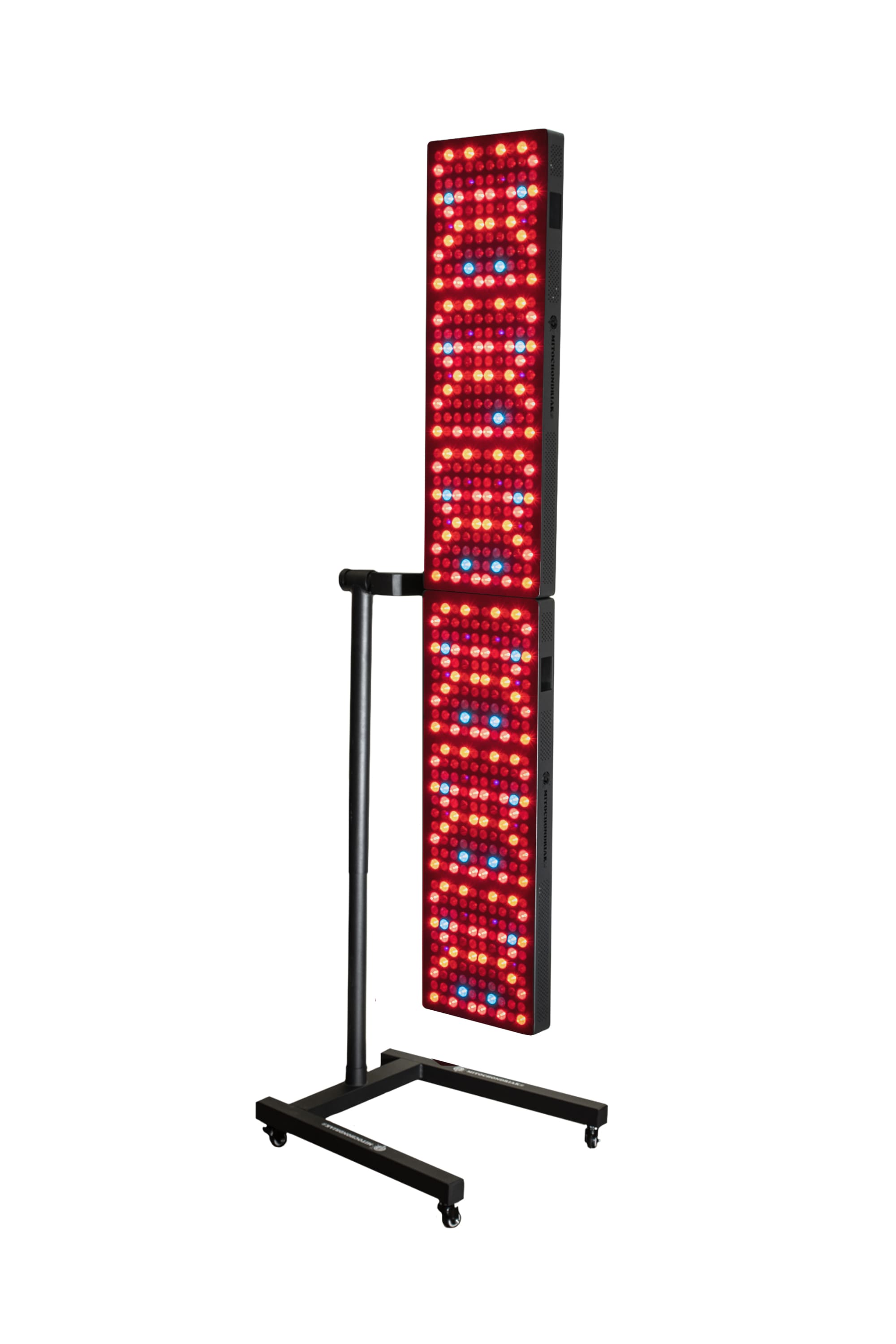
What do you do when the sun is not shining, it is overcast, or you simply cannot be outside? This is exactly what the Mitochondriak® Maxi UVB Upgraded panel is designed for. It is the most advanced multi-wavelength panel on the market, combining red, near-infrared, and UVB light in a single device.
The Maxi UVB contains up to 9 wavelengths, including UVB light that falls precisely in the 290 to 315 nm range where 7-dehydrocholesterol absorbs UVB most efficiently. This means a single session triggers the entire natural cascade of vitamin D production, just like the sun.
The advantage over pure sunbathing is that the Maxi UVB combines UVB with near-infrared light. NIR light prepares the skin and increases its UV tolerance, red light supports regeneration, and UVB triggers vitamin D and melanin synthesis. All in one step, anytime during the year, regardless of the weather.
Vitamin D-rich foods: a supplementary source, not a primary one
Vitamin D is naturally found in fatty ocean fish (salmon, mackerel, sardines), egg yolks, liver, and certain types of mushrooms. But even with an optimal diet, you cover at most 10 to 20 percent of your daily needs. Food is therefore a supplementary source, not a solution to deficiency.
Produce vitamin D naturally, anytime during the year
The Mitochondriak® Maxi UVB Upgraded panel contains up to 9 wavelengths, including UVB light for vitamin D production. NIR light prepares the skin, red light supports regeneration, and UVB triggers the entire vitamin D production cascade, just like the sun.
View Mitochondriak® Maxi UVB Upgraded
Frequently Asked Questions about vitamin D
What is the difference between vitamin D from a pill and from natural production?
A vitamin D3 pill bypasses the entire biological process. After swallowing, the 25(OH)D blood level rises, but the body then cannot efficiently produce sufficient amounts of the active form 1,25(OH)D. Moreover, the pill releases calcium into the blood, but without the complete cascade, the body distributes it improperly. With sun exposure, the body also gains nitric oxide, melanin, serotonin, and beta-endorphins, which a pill never contains. This is why natural vitamin D production is the most optimal path.
How do I know if I am vitamin D deficient?
The most common symptoms of vitamin D deficiency are chronic fatigue, bone and muscle pain, frequent colds, depressed mood, and slow wound healing. These symptoms are subtle and people often attribute them to stress or lack of sleep. The only reliable method is a 25(OH)D blood test. The optimal level is 40 to 60 ng/ml, but most people in northern latitudes have only 15 to 25 ng/ml.
Can a UVB panel replace the sun for vitamin D production?
Yes. A UVB device with wavelengths in the 290 to 315 nm range stimulates the same biochemical process in the skin as solar UVB radiation, converting 7-dehydrocholesterol into previtamin D3. The Mitochondriak® Maxi UVB Upgraded panel also combines UVB with near-infrared light, which protects and prepares the skin for UV, simulating the natural composition of sunlight.
Is it possible to overdose on vitamin D?
Not through sun exposure or a UVB panel, because the body self-regulates production. Once the skin reaches equilibrium, further production stops. With pills, yes. Long-term intake exceeding 10,000 IU daily without monitoring blood values can lead to hypercalcemia, an elevated blood calcium level that burdens the kidneys and blood vessels. This is exactly why the natural pathway is safer.
Does sunscreen block vitamin D production?
Yes. Sunscreen with high SPF blocks UVB light penetration into the epidermis, preventing the conversion of 7-dehydrocholesterol into previtamin D3. Paradoxically, despite sunscreen sales rising every year, melanoma rates continue to climb while population vitamin D levels continue to fall.
Why is the sun not enough for vitamin D in winter?
In Central Europe and most of North America, from October to March the UV index is too low (below 3). UVB radiation at a low sun angle does not reach the intensity needed to trigger vitamin D synthesis in the skin. During this period, the Mitochondriak® Maxi UVB Upgraded panel is the only reliable way to produce vitamin D naturally. This is where the panel makes the most sense, as it allows you to trigger the entire vitamin D production cascade even in December.
Scientific studies and sources
- Wacker, M. & Holick, M.F. Sunlight and Vitamin D: A global perspective for health. Dermato-Endocrinology. 2013. PMC3897598
- Grant, W.B. & Garland, C.F. The association of solar ultraviolet B (UVB) with reducing risk of cancer. Journal of the National Cancer Institute. 2002. JNCI 97/3/161
- Kühn, J. et al. UV light exposure versus vitamin D supplementation: effects on nitric oxide and cholesterol. Photochem Photobiol Sci. 2024. PMID 39178919
- Juzeniene, A. et al. Beneficial effects of UV radiation other than via vitamin D production. Dermato-Endocrinology. 2012. PMC3427189
- Weller, R.B. Sunlight: Time for a Rethink? Journal of Investigative Dermatology. 2024. PMID 38661623
- Holick, M.F. et al. Evaluation, Treatment, and Prevention of Vitamin D Deficiency: concentrations of 7-dehydrocholesterol in skin layers. Journal of Clinical Investigation. 1985. PMID 3929549
- Lachký, J. How vitamin D is produced in the skin (in Slovak). jaroslavlachky.sk. jaroslavlachky.sk