
.png)
May is the month when the sun finally returns to full strength, and with it comes the opportunity to build your solar callus, your skin's natural protection against UV radiation. Instead of reaching for high-SPF sunscreen in summer, you can gradually prepare your skin for the sun. How do you do it, and how can near-infrared light help?
- What a solar callus is and why May is the ideal time to start building it
- How gradual sun exposure protects your skin from burning in summer
- The role near-infrared light plays in protecting skin from UV damage
- A practical 4-week solar hardening protocol
- How a UVB light therapy device can help you start earlier, even on cloudy days
- What is a solar callus and why do you need one?
- Why is May the ideal month for building a solar callus?
- How does solar hardening work at the cellular level?
- How does near-infrared light protect skin from UV?
- A practical 4-week solar hardening protocol
- When can a UVB panel help with home skin preparation?
- Frequently Asked Questions about solar hardening
- Scientific studies and sources

What is a solar callus and why do you need one?
A solar callus is a natural protective layer of the skin that the body builds through gradual and regular exposure to sunlight. It is not a one-time tan but an adaptation process in which the skin thickens, darkens, and becomes more resistant to UV radiation. The result is skin that does not burn as easily in summer and can better utilize the benefits of sunlight.
A solar callus consists of two main components: melanin (a pigment that absorbs UV radiation) and a thickened outer skin layer (epidermis) that acts as a physical barrier. Together, these components create a protective shield, which is how our grandmothers could spend time in the sun without burning, long before sunscreens existed. If this story intrigues you, read more in our article on what a solar callus is and how it prevents sunburn.
Why is May the ideal month for building a solar callus?
May is ideal for starting solar hardening because the UV index is strong enough to stimulate melanin production, yet not as intense as in July or August. This means the risk of burning is lower and the skin has time to gradually adapt.
The problem for most people is that they spend the entire winter indoors under artificial light, then rush off on a June holiday where their unprepared skin meets intense UV radiation. The result? Sunburn, inflammation, and DNA cell damage. This is exactly why a May start is essential. You give your body 4 to 6 weeks to build its protective mechanism before the summer season.
How does solar hardening work at the cellular level?
Solar hardening is not just about sitting in the sun longer. It is a biological process in which the skin goes through several phases of adaptation:
- Melanin production: UV radiation stimulates melanocytes (pigment-producing cells) to increase melanin production. Melanin absorbs UV photons and converts them into harmless heat, protecting cell DNA from damage.
- Epidermal thickening: With regular UV contact, the outer skin layer thickens slightly, creating an additional physical barrier.
- Vitamin D production: UVB radiation triggers the conversion of cholesterol in the skin into vitamin D, which is essential for immunity, bones, and hundreds of other processes in the body.
- Nitric oxide (NO) release: UV light stimulates the release of NO in the skin, which dilates blood vessels, lowers blood pressure, and improves circulation.
The key is gradual progression and consistency. Short, regular exposures are more effective and safer than long one-time sun sessions.
How does near-infrared light protect skin from UV?
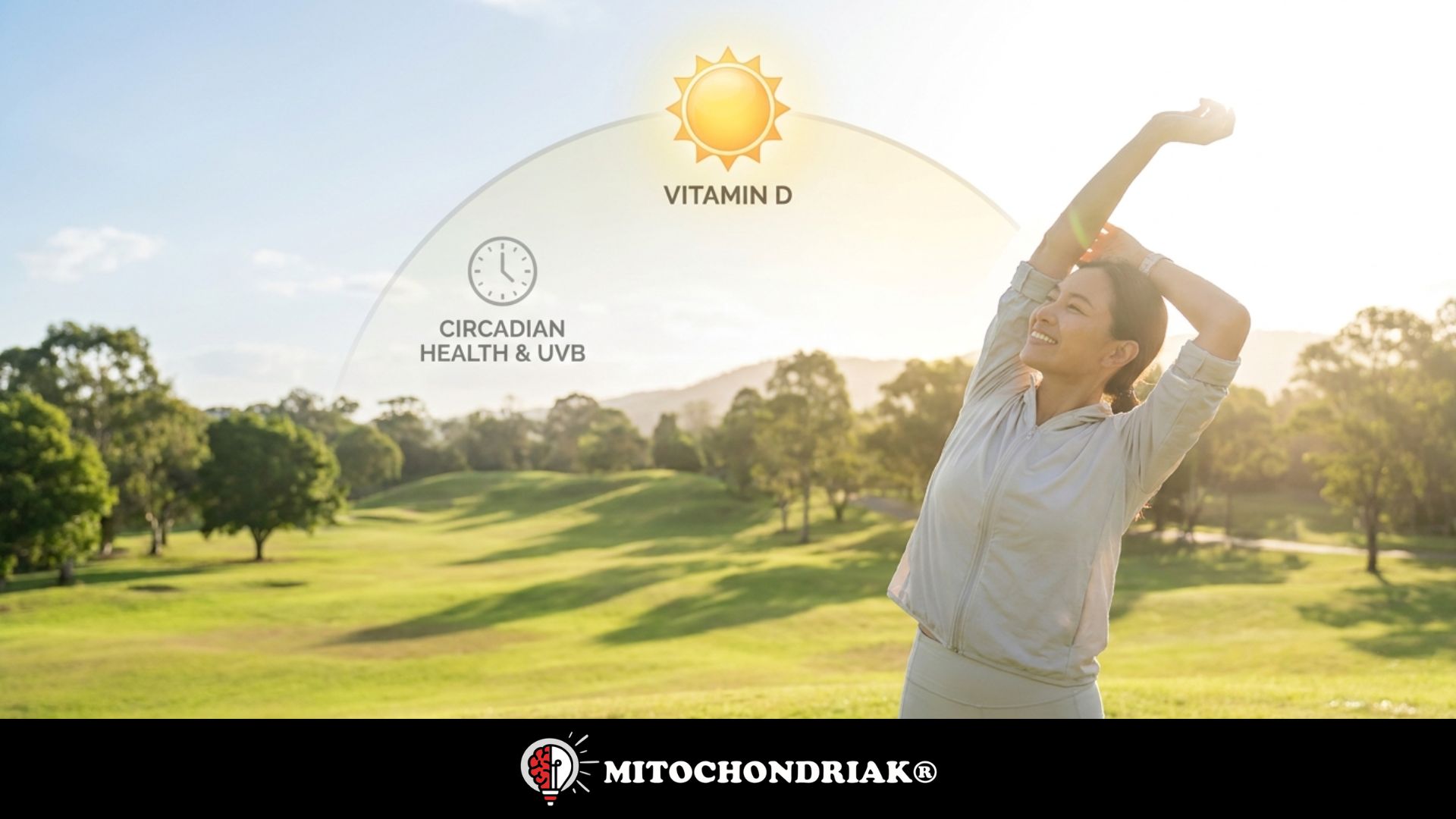
Near-infrared light plays a more important role in solar hardening than you might expect. Natural sunlight is not just UV. It also contains a large amount of near-infrared (NIR) light, which prepares the skin for UV contact before UV photons even reach the cells.
Research suggests that near-infrared light increases antioxidant production in the skin and stimulates melatonin production directly in skin cells. This local melatonin functions as a powerful antioxidant that neutralizes free radicals caused by UV radiation. [R]
This is why the biohacking community recommends a short near-infrared light exposure before extended time in the sun. This "primes" the skin cells so they handle subsequent UV contact better. Mitochondriak® panels combine red and near-infrared light, allowing you to do this preparation conveniently at home before heading outside.
A practical 4-week solar hardening protocol
Here is a simple plan for building a solar callus in May that you can start right away. The protocol is designed for Central European conditions and fair skin (Fitzpatrick scale type I to III). If you have darker skin, you can slightly extend the exposure times.
| Week | Morning exposure (before 10:00) | Body area | Tip |
|---|---|---|---|
| Week 1 | 5 to 10 minutes | Face, hands, forearms | No sunscreen, morning sun only |
| Week 2 | 10 to 15 minutes | + legs, shoulders | Gradually expose more skin |
| Week 3 | 15 to 20 minutes | + back, chest | Monitor skin reaction after 24 hours |
| Week 4 | 20 to 30 minutes | Full body | Skin should be visibly adapted |
Important rules:
- Never burn. If the skin still appears red after 24 hours, reduce the time the next day.
- Morning sun is best. Between 8:00 and 10:00, the ratio of infrared to UV light is most favorable.
- Consistency matters more than duration. 10 minutes daily is better than 2 hours once a week.
- Skip sunscreen during short morning exposures. The solar callus is built precisely through UV contact.
- Add NIR before UV. If you have a Mitochondriak® panel, a short exposure before heading outside supports the skin's protective mechanisms.
When can a UVB panel help with home skin preparation?
A UVB panel is the ideal tool for people who cannot be outside in the morning or live in a region with low sunlight intensity during spring months. A panel with UVB light allows you to stimulate vitamin D and melanin production directly at home, regardless of the weather.
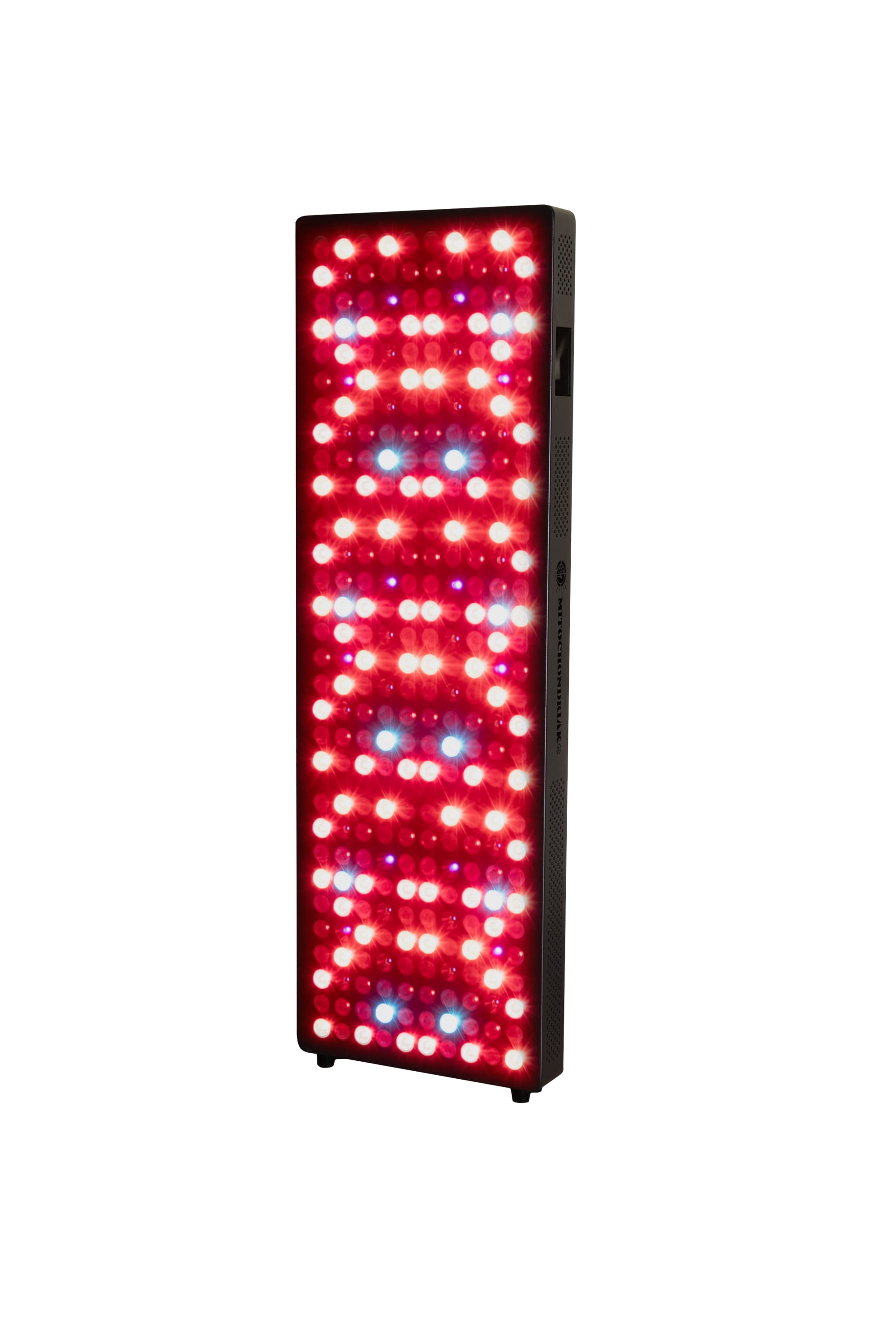
Mitochondriak® panels with added UV light combine red, near-infrared, and UVB light in a single device. This means a single session delivers comprehensive stimulation: near-infrared light prepares the skin, red light supports regeneration, and UVB triggers vitamin D and melanin production. Learn more about what a solar callus is and the benefits of UV light on our blog.
Prepare your skin for summer right at home
Mitochondriak® panels with added UVB light help you build a solar callus and produce vitamin D even on days when the sun is not shining. One investment for year-round skin support.
Browse panels with UV light
Frequently Asked Questions about solar hardening
What is a solar callus and what does it do?
A solar callus is a natural protective layer of the skin that the body builds through gradual sun exposure. It consists of melanin and a slightly thickened epidermis. It serves as a biological shield that protects cell DNA from UV damage and reduces the risk of sunburn in summer.
How long does it take to build a solar callus?
With regular morning sun exposure, a solar callus builds over approximately 3 to 6 weeks. It depends on your phototype (skin color), geographic location, and consistency of exposures. Lighter skin requires more time and a more cautious approach.
Can I build a solar callus on cloudy days?
Partially yes, because clouds let through some UV radiation. But in persistently overcast weather, UV intensity may be insufficient. In those situations, a UVB panel for home use helps, allowing you to stimulate your skin regardless of the weather.
Is solar hardening safe for fair skin?
Yes, as long as you follow the rule of gradual progression. Fair skin (Fitzpatrick type I and II) needs shorter initial exposures (5 to 7 minutes) and slower increases. The key is never to burn, because even a single sunburn can disrupt solar callus building progress.
How does near-infrared light help before sun exposure?
Near-infrared light stimulates antioxidant production and local melatonin directly in skin cells. These substances then neutralize free radicals generated by UV radiation. A short near-infrared light exposure before going into the sun can better prepare the skin for UV.
Why skip sunscreen during solar callus building?
High-SPF sunscreen blocks most UV radiation, which prevents the skin from adapting. During short morning exposures (5 to 20 minutes), UV intensity is low enough to stimulate melanin but not high enough to cause a burn. During extended time in strong midday sun, however, sunscreen remains a sensible protection.
Scientific studies and sources
- Hernández-Bule, M.L. et al. Unlocking the Power of Light on the Skin. Int J Mol Sci. 2024. PMC11049838
- Ziveh, T. et al. Biological and Therapeutic Responses of Human Skin to Light. Photodermatol Photoimmunol Photomed. 2025. PMC12958274
- Razzaghi, Z. et al. Examination of the biological effects of sunlight on the skin. Photodermatol Photoimmunol Photomed. 2025. PMC12958273
- Dompe, C. et al. Photobiomodulation — Underlying Mechanism and Clinical Applications. J Clin Med. 2020. PMC7356229