.png)
Choosing a red light therapy panel can be confusing if you don't know what to look for. In this guide, we'll walk you through 5 key criteria that will help you pick a panel that actually delivers results, not just glows.
- Why wavelengths matter more than wattage and how to tell the difference
- What irradiance (power density) really means and why it should be measured at the right distance
- How to choose the right panel size for targeted or full body therapy
- What to watch out for in terms of safety: flicker, EMF and certifications
- A practical overview of Mitochondriak® infrared panels and who each one is best suited for
Why do wavelengths matter more than just the colour of light?
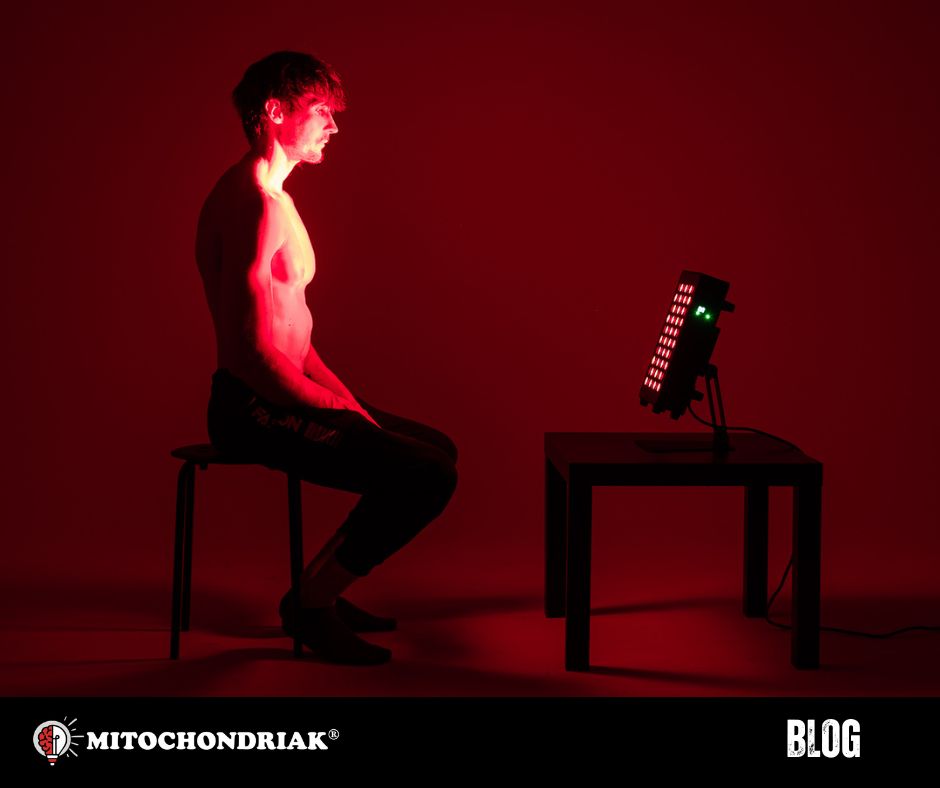
Wavelengths are the single most important parameter of any red light therapy panel. Red light in the range of 630 to 700 nm and near infrared (NIR) light in the range of 700 to 940 nm penetrate to different tissue depths and trigger distinct biological processes. Without the right wavelengths, even the most expensive panel is ineffective.
Research by Professor Tiina Karu from the Russian Academy of Sciences demonstrated that the key target of red and infrared light inside cells is the enzyme cytochrome C oxidase (CCO) in mitochondria. This enzyme absorbs light across several specific bands, not at a single universal wavelength. [R]
That is why a panel with multiple wavelengths covering the full absorption spectrum of CCO delivers a superior therapeutic effect compared to a device with just one or two wavelengths. For example, Mitochondriak® Maxi Upgraded features 7 wavelengths: 630, 670, 760, 810, 830, 850 and 940 nm, covering the entire research validated spectrum, including the 760 nm wavelength that directly targets CCO.
What to look out for when it comes to wavelengths
- A combination of RED + NIR is essential, as red light alone cannot reach deeper tissues
- A panel should contain at least 3 to 5 wavelengths for a comprehensive effect
- Be cautious of cheap panels that list only "660 and 850 nm", as these cover only a fraction of the absorption spectrum
- The more research validated wavelengths a panel includes, the better it covers different biological processes
What is irradiance and why does it matter more than watts?
Irradiance (power density) expressed in mW/cm² measures how much light energy actually reaches your skin. It is a far more accurate indicator of effectiveness than the panel's total wattage, because it depends on distance, LED quality and the optical design of the device.
According to a systematic review by Michael R. Hamblin from Harvard Medical School, the recommended irradiance for most therapeutic applications falls within the range of 30 to 100 mW/cm² at the skin surface. [R] Too low an intensity yields no effect, while too high can cause tissue overheating.
When comparing panels, always compare irradiance at the same distance. Some manufacturers report values from contact distance (0 cm), which is misleading since no one presses a panel directly against their skin. Mitochondriak® Maxi Upgraded achieves an intensity of over 110 mW/cm² from a distance of 30 cm (solarmeter) and approximately 60 mW/cm² from 30 cm (spectrometer), values measured realistically and transparently.
What panel size is right for you?
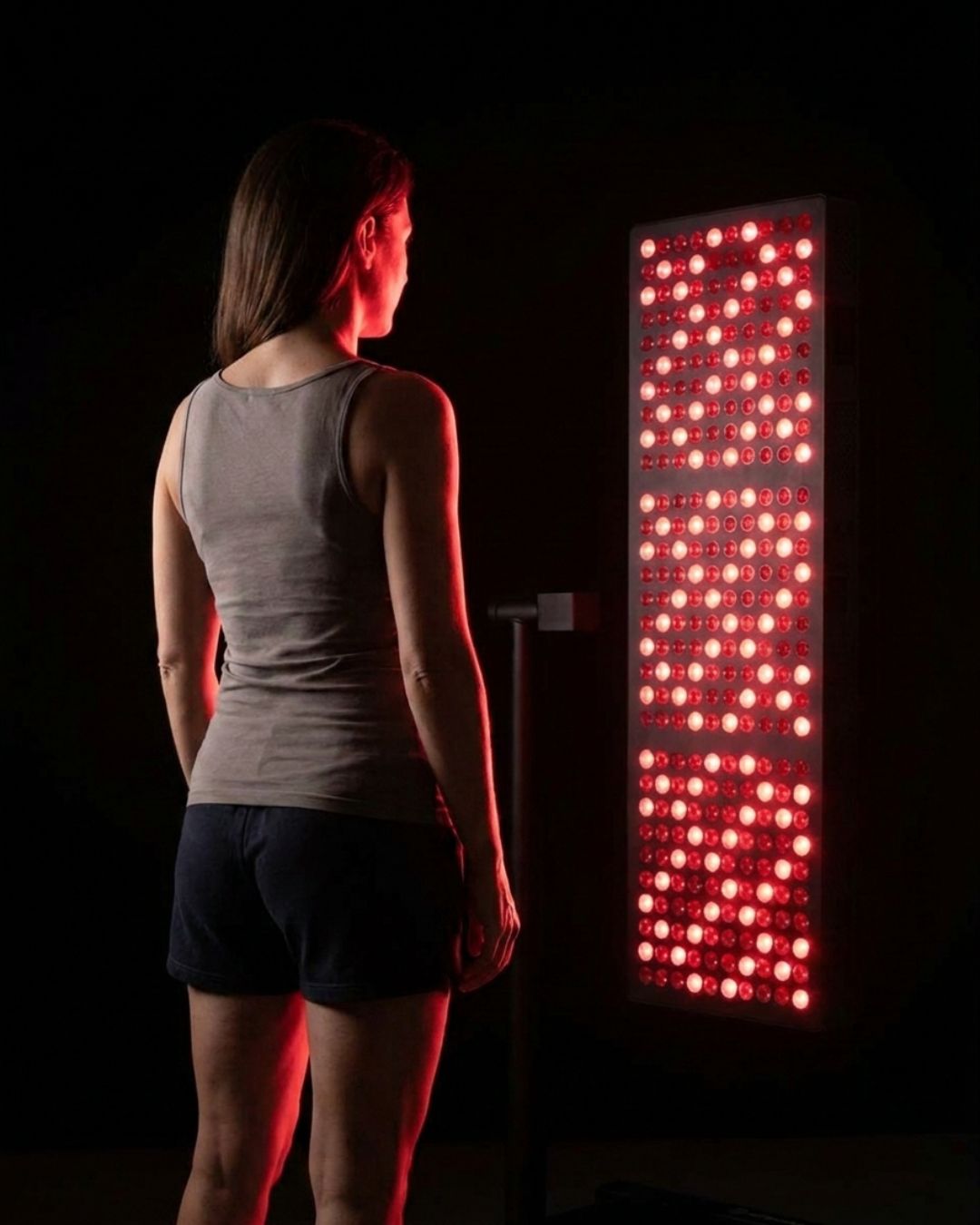
Panel size directly affects how much of your body you can cover in a single session. A smaller panel is perfectly adequate for targeted therapy (face, knee, shoulder), but for a full body session you need a panel with a height of at least 90 cm, ideally combined with a suitable stand.
The right choice depends on how you plan to use the panel:
- Targeted therapy (face, skin, joints, muscles): a compact panel like the Office, measuring around 32 × 22 cm, is practical and portable
- Half body coverage (upper or lower): a panel measuring around 90 × 20 cm can illuminate half of your body in one session
- Full body therapy: a larger panel like the Maxi, measuring 90 × 30 cm, covers a wider area. In two sessions (front and back) it can treat your entire body
It is also important to think about practical considerations: where will you place the panel, whether you need to transport it, and whether you need a stand. Smaller panels fit on a desk, while larger ones require a dedicated space and a floor stand or hanging system.
Flicker, EMF and safety: what should you look out for?
Panel safety is a criterion that many buyers overlook, yet this is exactly where quality devices stand apart from cheap imitations. The two main safety parameters are flicker (invisible blinking) and electromagnetic fields (EMF).
Flicker refers to the rapid blinking of LEDs that is invisible to the naked eye but registered by the brain. It can cause headaches, eye fatigue and poor concentration. High quality panels should have flicker reduced below detectable levels.
EMF (electromagnetic fields) is another factor. All electronic devices produce a certain level of EMF, but during red light therapy, when you stand close to the device for 10 to 30 minutes, it is important that EMF at the recommended distance is kept to a minimum.
Mitochondriak® infrared panels feature reduced flicker and no measurable EMF at the recommended therapeutic distance. You can find more detailed information about safe device use on our FAQ page.
Beyond flicker and EMF, also pay attention to:
- Certifications (CE, RoHS) that confirm compliance with European standards
- Satisfaction guarantee and warranty period, which reflect the manufacturer's confidence in their product
- Transparent irradiance measurements, ideally taken with both a spectrometer and a solarmeter
Which Mitochondriak® infrared panel is right for you?
The right choice depends on your goals, space and budget. Here is a concise overview of currently available Mitochondriak® infrared panels to help you decide:
Mitochondriak® Office is ideal for those who want a compact and portable solution. It is perfect for targeted therapy of the face, skin, joints, or as a supplementary light source in the office. It features a touchscreen with preset programmes and an adjustable stand. A great entry point for anyone beginning their red light therapy journey.
Mitochondriak® Maxi Upgraded is the flagship of the brand. With 300 LEDs and 7 wavelengths (630, 670, 760, 810, 830, 850 and 940 nm) it covers the widest research validated spectrum. Its new touchscreen enables preset programmes and wireless synchronisation. Ideal for full body protocols and serious biohackers. Price: €1,469.
If you are still unsure, check out the interactive product guide, which will help you find the right device based on your needs.
Choose the Mitochondriak® infrared panel that fits your needs
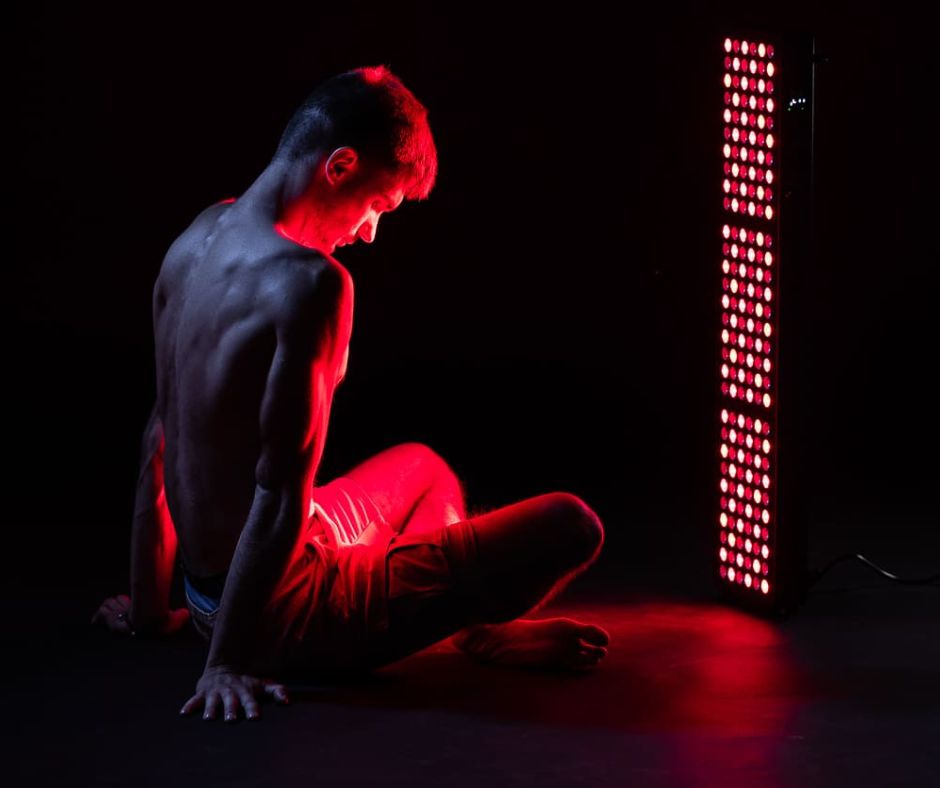
All Mitochondriak® infrared panels feature reduced flicker, no measurable EMF at the recommended distance and a 30-day satisfaction guarantee. Whether you are looking for a compact panel for your desk or a powerful full body solution, you will find it in our range.
Frequently asked questions
What is the difference between red and infrared light in an infrared panel?
Red light (630 to 700 nm) is visible and primarily affects the skin and surface tissues. Infrared light (700 to 940 nm) is invisible and penetrates deeper, reaching muscles, joints and bones. For the best effect, a panel should contain both, because each type of light activates different biological processes in the mitochondria.
How many wavelengths should a quality infrared panel have?
At least 3 to 5 wavelengths to cover the key absorption bands of cytochrome C oxidase. Premium devices, such as Mitochondriak® infrared panels, contain 5 to 7 wavelengths, covering the entire spectrum validated by scientific research.
Is a panel with higher wattage always better?
Not necessarily. Wattage indicates electrical energy consumption, not how much light reaches your skin. What matters is irradiance (mW/cm²) measured at a realistic distance (15 to 30 cm). A panel with lower wattage but higher quality LEDs can deliver greater efficiency.
What panel size do I need for facial therapy?
For facial therapy, skincare or treating localised areas (knee, shoulder), a smaller panel measuring around 30 × 20 cm is sufficient. Mitochondriak® Office is designed precisely for this purpose, it is portable and comes with an adjustable stand.
Is red light therapy safe for daily use?
Yes, red and infrared light therapy is considered a safe and non-invasive method. The key is to follow the recommended distance and session duration. Specific recommendations can be found on our FAQ page or in the "How to use" section on each product page.
Why is it important for a panel to be flicker free?
Flicker (invisible LED blinking) can cause headaches, eye fatigue and discomfort during longer exposure. Quality panels have flicker reduced to undetectable levels, which is especially important during sessions lasting 10 to 20 minutes.
Sources and references
- Karu, T. (2006). Primary and secondary mechanisms of action of visible to near-IR radiation on cells. PubMed
- Hamblin, M. R. (2017). Mechanisms and applications of the anti-inflammatory effects of photobiomodulation. PubMed
- Ferraresi, C., Huang, Y. Y., Hamblin, M. R. (2016). Photobiomodulation in human muscle tissue: an advantage in sports performance? PubMed
- Heiskanen, V., Hamblin, M. R. (2018). Photobiomodulation: lasers vs. light emitting diodes? PubMed