
.png)
A red light therapy panel is an investment in your health, but choosing the right model is not always straightforward. A beginner needs something different from an experienced biohacker who wants full control over wavelengths and pulsation. In this guide, we compare two approaches to choosing an infrared panel and help you find the device that matches your level.
- Why a beginner and an advanced biohacker need different panels
- Which parameters to focus on based on your experience level
- A comparison of two recommended Mitochondriak® models for both types of users
- Step by step: how to choose the right panel based on your goals and budget
- Answers to the most common questions about choosing an infrared panel in 2026
- Why does a beginner need a different panel than an advanced biohacker?
- What parameters matter when choosing a red light panel?
- What is the best panel for a beginner?
- What does an advanced biohacker need from an infrared panel?
- How do the Office and the Maxi compare in practice?
- How to choose a panel step by step?
- Frequently asked questions
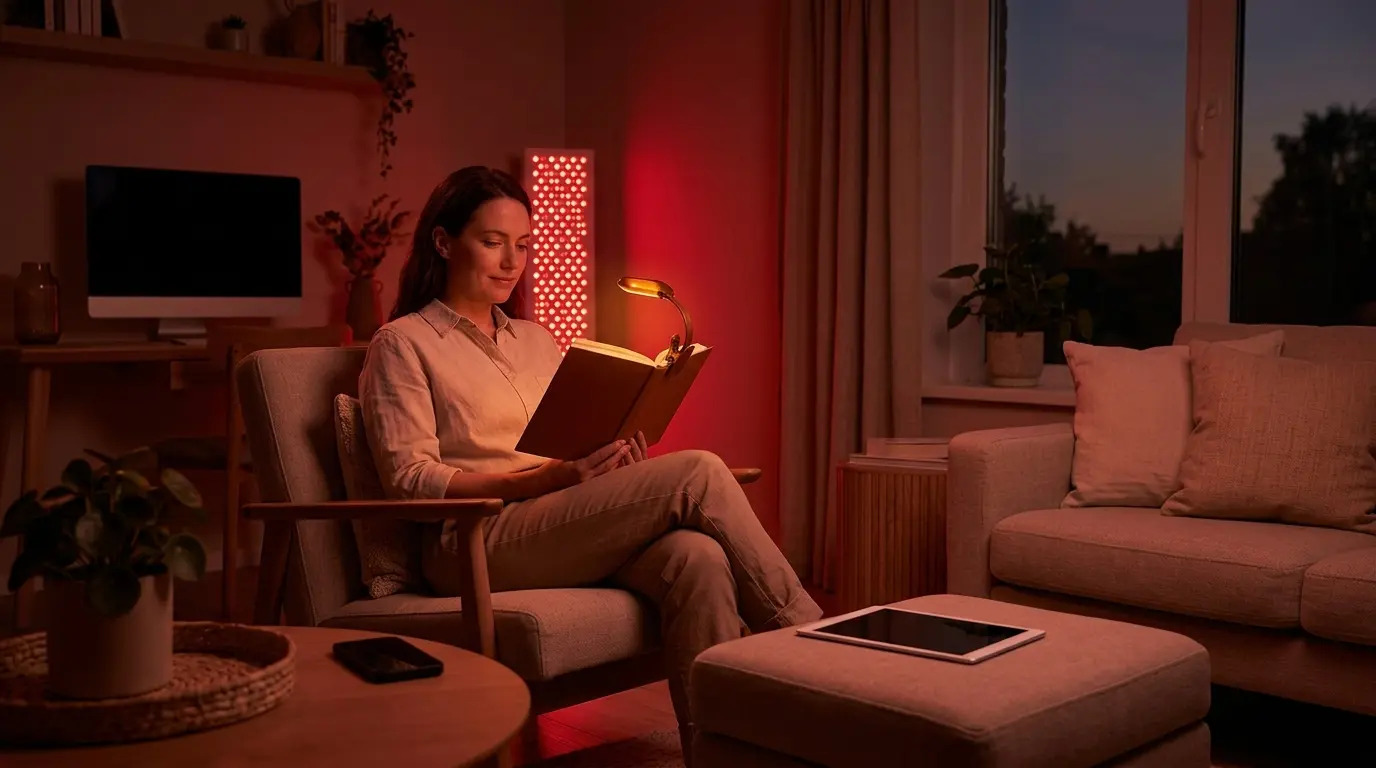
Why does a beginner need a different panel than an advanced biohacker?
A beginner and an advanced biohacker have different goals, budgets and levels of knowledge about photobiomodulation. The beginner typically looks for a simple device for recovery or better skin, while the advanced user wants to fine-tune wavelengths, intensity and pulsation for a specific biological target.
That does not mean a beginner needs a lower-quality panel. They benefit more from a compact model that makes it easy to build a consistent therapy habit without unnecessary complexity. An advanced biohacker, on the other hand, values a panel with a larger illumination area, multiple wavelengths and the ability to individually programme every session.
Researchers Zein et al. (2018) emphasised in their review of photobiomodulation parameters that correct dose, irradiance and wavelength are critical for therapeutic efficacy. An excessive dose can actually diminish the effect, which is why a simpler device is often the better choice for those who are new to red light therapy. [R]
What parameters matter when choosing a red light panel?
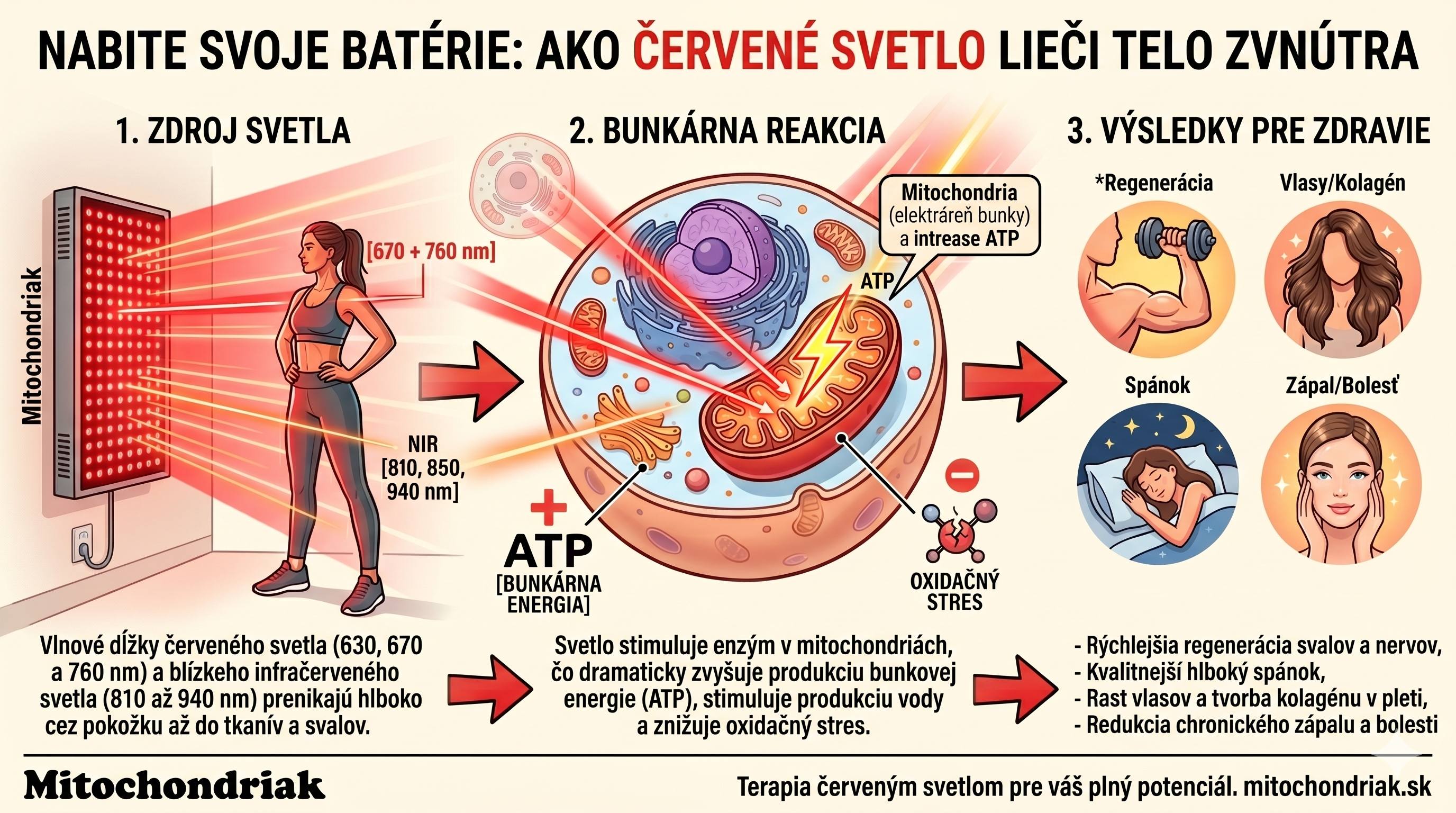
When choosing a red light therapy panel, five main criteria come into play: wavelengths, irradiance (intensity), illumination area, pulsation and ease of use. Each parameter carries a different weight depending on whether you are a beginner or an advanced user.
Wavelengths determine how deeply the light penetrates. Red light in the 630 to 670 nm range acts primarily on the skin, collagen and surface tissues. Near infrared (NIR) light in the 810 to 850 nm range penetrates deeper into muscles, joints and bones. The latest generation of Mitochondriak® panels also includes 760 nm and 940 nm, which broadens the therapeutic spectrum.
Irradiance (measurable intensity in mW/cm²) is decisive for the energy dose your tissue receives. For effective photobiomodulation, experts recommend an irradiance of at least 30 to 50 mW/cm² at the distance from which you actually use the panel.
Illumination area determines how much of your body the panel covers in a single session. Smaller panels are well suited for localised therapy (face, knee, shoulder), while larger panels can illuminate half to your entire body.
What is the best panel for a beginner?
For a beginner, the best panel is a compact device with simple controls, sufficient intensity and a reasonable price. The Mitochondriak® Office Upgraded ticks all of these boxes and is the ideal entry point into the world of light therapy.
The Office panel features 70 high-power LEDs across 7 wavelengths (630, 670, 760, 810, 830, 850 and 940 nm). Although it is a smaller panel measuring 32 x 22 cm, its irradiance reaches 135 mW/cm² at 15 cm (solarmeter), which is more than sufficient for localised therapy targeting the face, neck, shoulders or knees.
What beginners appreciate most:
- Preset programmes on the touchscreen, so you do not need to configure settings manually
- Compact size that fits on a desk, shelf, or travels easily
- Adjustable stand and hanging system included in the box
- A price of €699 that is accessible as a first infrared panel
If you are not quite ready to invest in a panel, an excellent starting point is the LED RED and NIR bulb Mitochondriak® at €129.90, which offers 6 wavelengths and an intensity exceeding 180 mW/cm² at 15 cm. You can learn more in our LED therapy bulb guide for 2026.
What does an advanced biohacker need from an infrared panel?
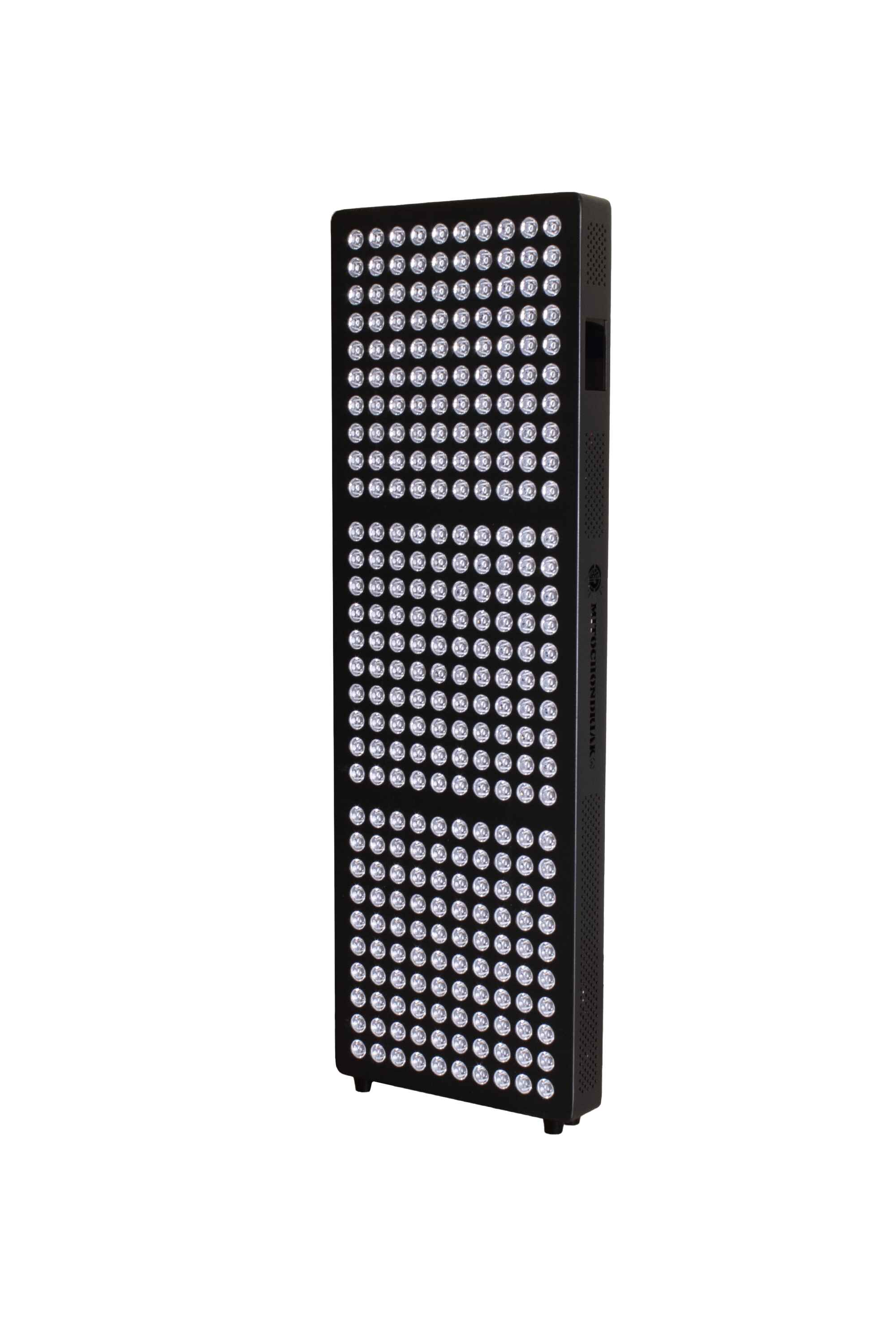
An advanced biohacker needs a panel that provides full control over therapy parameters and covers a larger area of the body at the same time. The Mitochondriak® Maxi Upgraded is exactly that kind of device.
The Maxi features 300 LEDs across the same 7 wavelengths as the Office (630, 670, 760, 810, 830, 850 and 940 nm), but its illumination area of 90 x 30 cm covers half of your body in a single session. Irradiance exceeds 110 mW/cm² at 30 cm, enabling full body therapy in two passes.
What advanced users appreciate:
- Independent intensity control for RED and NIR from 1 to 100 %
- Adjustable pulsation from 0 to 10,000 Hz independently for RED and NIR, allowing you to target specific biological effects (for example, 10 Hz for pain or 40 Hz for neuroplasticity)
- Modular design that lets you connect 2 Maxi panels into the ULTRA configuration for full body coverage
- Preset programmes plus the ability to save custom settings
An expert consensus published in 2025 (Maghfour et al.) confirmed that photobiomodulation is a safe modality for adult patients and that individual adjustment of parameters (including pulsation) can enhance therapeutic efficacy across various indications. [R]
How do the Office and the Maxi compare in practice?
The main difference between the Office and the Maxi is not the quality of the light, but the illumination area and what you expect from your therapy. Both panels share the same wavelengths, the same touchscreen and the same advanced features.
- Office Upgraded: 70 LEDs, 32 x 22 cm, €699, ideal for localised therapy (face, knee, shoulder, neck), travel and beauty salons
- Maxi Upgraded: 300 LEDs, 90 x 30 cm, €1,469, ideal for full body therapy, sports recovery and intensive biohacking
If your primary goal is skincare, localised pain relief or supplementing light exposure at work, the Office panel is an excellent choice. If you plan to pursue full body recovery, hormone optimisation or combining multiple protocols, the Maxi is the logical investment.
Many customers start with the Office and later upgrade to the Maxi once they understand how therapy helps them and want to cover a larger area of the body. Both devices feature zero flicker and no measurable EMF at the recommended distance, which is essential for safe, long-term use.
How to choose a panel step by step?
Choosing the right panel is a systematic process that can be simplified into 4 questions to ask yourself before buying.
1. What is your primary goal?
Localised therapy (face, joints, localised pain) points to a smaller panel. Full body recovery, sport or biohacking points to a larger panel.
2. How often will you use the panel?
Daily or every other day for 10 to 20 minutes is the ideal frequency. The panel should therefore be easy to set up in a room where you will actually use it consistently.
3. Do you need advanced settings?
If you simply want to switch the panel on and go, the preset programmes on both models are more than enough. If you want to experiment with pulsation at specific frequencies, both new-generation models offer that capability.
4. What is your budget?
For an entry into light therapy, the Mitochondriak® Office Upgraded at €699 is the optimal starting point. For maximum effect, the Mitochondriak® Maxi Upgraded at €1,469 is a long-term health investment. If you are looking for the absolute basics, the LED RED and NIR bulb Mitochondriak® at €129.90 is the most accessible entry point.
Choose your Mitochondriak® panel
Whether you are just starting out or are an experienced biohacker, the range includes a device for your exact level. All Mitochondriak® infrared panels feature zero flicker, no EMF and a touchscreen with preset programmes.
Frequently asked questions
Can a beginner buy the larger Maxi panel straight away?
Yes, the Maxi is not reserved for advanced users only. Thanks to the preset programmes on the touchscreen, even a complete beginner can operate it with confidence. The difference lies mainly in the price and in the fact that the Maxi covers a larger body area at once, so if you have the budget and want full body therapy, it is a legitimate choice from day one.
How many wavelengths should a quality panel have in 2026?
A quality panel should contain at least 5 to 7 wavelengths in the 630 to 940 nm range. The latest-generation Mitochondriak® panels feature 7 wavelengths (630, 670, 760, 810, 830, 850 and 940 nm), covering both surface and deep tissues.
Is pulsation important or is continuous light enough?
Continuous light is effective and sufficient for most people. Pulsation offers additional benefits for certain indications. For example, 10 Hz pulsation is being studied in the context of pain relief and 40 Hz in the context of neuroscience. Both Mitochondriak® models allow you to set any pulsation from 0 to 10,000 Hz.
How long does a single session last?
The recommended duration is 10 to 20 minutes per body area from a distance of 30 to 60 cm. With the smaller Office panel you typically target one area at a time, while with the Maxi you can treat half of your body in a single session.
Can you upgrade from the Office to the Maxi later?
Absolutely, and many customers do exactly that. The Office panel then serves as a travel panel or a secondary device for the office, while the Maxi becomes the main home panel.
Is red light therapy safe for daily use?
According to the expert consensus from 2025, photobiomodulation is a safe modality for adult patients. Mitochondriak® panels feature reduced flicker and no measurable EMF at the recommended distance, making them suitable for regular daily use.
Sources and references
- Zein, R. et al., 2018. Review of light parameters and photobiomodulation efficacy: dive into complexity. PMC
- Maghfour, J. et al., 2025. Evidence-based consensus on the clinical application of photobiomodulation. PubMed
- Hernández-Bule, M. L. et al., 2024. Unlocking the Power of Light on the Skin. PMC
- Spongberg, C. V. et al., 2026. What to Look for in Red Light Therapy: A Product Guide Backed by Science. PMC