
.png)
Vitamin D is one of the most important hormones for our health, yet most people are deficient even in summer, despite the sun shining at full strength. How many minutes of sun exposure per day are enough, when is it better to supplement vitamin D with a UVB panel, and why can tablets alone never replace natural skin synthesis? A comparison that will save you both time and health.
- How many minutes of sun exposure per day you need for adequate vitamin D production based on your skin type and latitude
- Why vitamin D tablets alone cannot fully replace sun or UVB synthesis in the skin
- A comparison of three ways to obtain vitamin D: sunlight, supplementation, and a UVB panel
- When and for whom a UVB panel is a more practical alternative than waiting for the summer sun
- How to avoid the most common mistakes when building your vitamin D levels in summer
- How is vitamin D actually produced in the skin?
- How many minutes of sun per day are enough for vitamin D in summer?
- Why are vitamin D tablets not enough?
- Sun versus UVB panel: which is better for vitamin D production?
- When does it make sense to supplement summer sun with a UVB panel?
- What are the most common mistakes when building vitamin D levels?
- Comparison: sun, tablets, and UVB panel
- Frequently asked questions
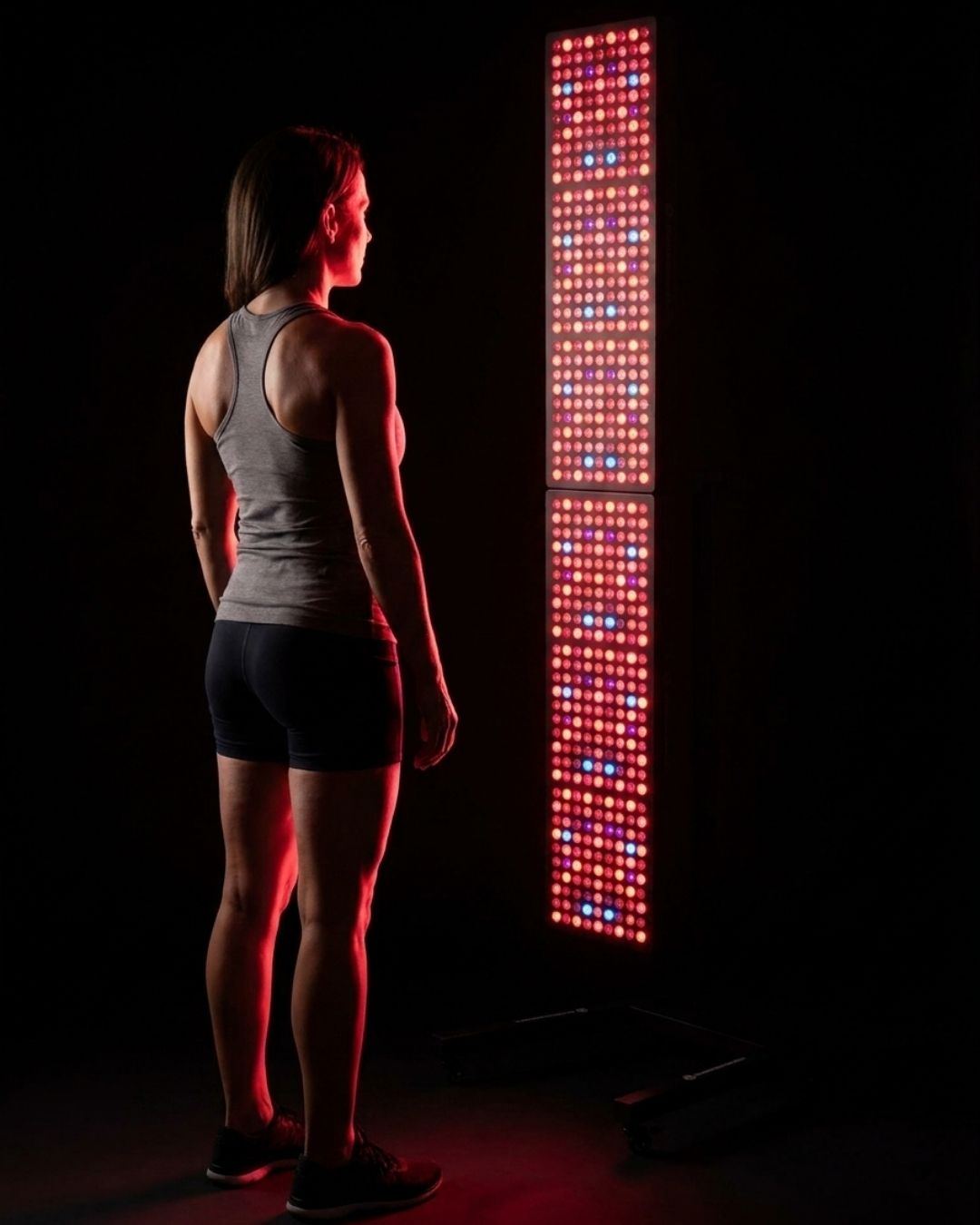
How is vitamin D actually produced in the skin?
Vitamin D is produced directly in the skin when it is exposed to UVB radiation with wavelengths between 290 and 315 nm. This process is physiologically unique because no food or supplement can fully replicate it. That is precisely why sunlight, or more specifically UVB light, is considered the primary source of vitamin D.
When UVB photons penetrate the skin, they convert 7-dehydrocholesterol into previtamin D3, which then isomerises into cholecalciferol (vitamin D3). This molecule travels to the liver and kidneys, where it is activated into its biologically effective form, calcitriol. The entire chain functions optimally only with sufficient UVB exposure, and vitamin D production is maximised at a level of sun exposure that does not yet burn the skin. [R]
It is also important to note that the body has a built-in safety mechanism. If the skin is exposed to UVB for long enough, previtamin D3 breaks down into inactive metabolites. This means that overdosing on vitamin D from natural sunlight is virtually impossible.
How many minutes of sun per day are enough for vitamin D in summer?
To maintain adequate vitamin D levels in summer, most people with fair skin (Fitzpatrick I to III) need to expose their face, hands, and forearms to direct sunlight for 10 to 20 minutes per day, ideally between 10:00 and 14:00, when the UVB component of sunlight is at its strongest. For those with darker skin (Fitzpatrick IV to VI), the required time is significantly longer.
A study by Kift et al. (2024, University of Manchester) calculated indicative exposure times for maintaining 25(OH)D levels above 25 nmol/l depending on latitude, month, and skin type. At the latitude of Central Europe (approximately 48° N), in June under clear skies, a person with skin type II needs roughly 8 to 15 minutes with 35% of their body surface uncovered. [R]
However, these values change dramatically depending on several factors:
- Cloud cover: under overcast skies, UVB intensity drops by 50 to 80%
- Altitude: every 300 m above sea level increases UVB intensity by approximately 4%
- Sunscreen: chemical SPF filters block UVB, and according to research by Gatta et al. (2025), regular use may reduce 25(OH)D levels [R]
- Age: after the age of 60, the skin's capacity for vitamin D synthesis declines
An important note aligned with the Mitochondriak® philosophy: we do not recommend chemical SPF creams as primary protection. Instead, it is more effective to build a solar callus through gradual sun adaptation, time your exposure carefully, and cover up with clothing or shade when the UV index is too high.
Why are vitamin D tablets not enough?
Oral vitamin D supplementation can raise 25(OH)D blood levels, but it cannot replace the entire complex of biological reactions triggered by UVB light in the skin. Sunlight stimulates the production of not only vitamin D but also melanin, nitric oxide, beta-endorphin, and other signalling molecules.
A meta-analysis by Moradi et al. (2020) found that supplementation raises 25(OH)D more effectively than sun exposure in controlled studies (MD: 8.56 nmol/l), yet this result does not account for the broader physiological benefits of sun exposure. [R]
A study by Joh et al. (2020, Harvard Medical School) showed that the combination of sun exposure and low-dose supplementation (500 IU/day) significantly increased 25(OH)D levels, suggesting a synergistic effect of both approaches. [R]
The key difference is that vitamin D from skin synthesis enters the bloodstream bound to D-binding protein and has a longer biological half-life. Vitamin D from tablets is absorbed through the digestive tract, where its bioavailability is influenced by dietary fats, gut health, and genetic factors.
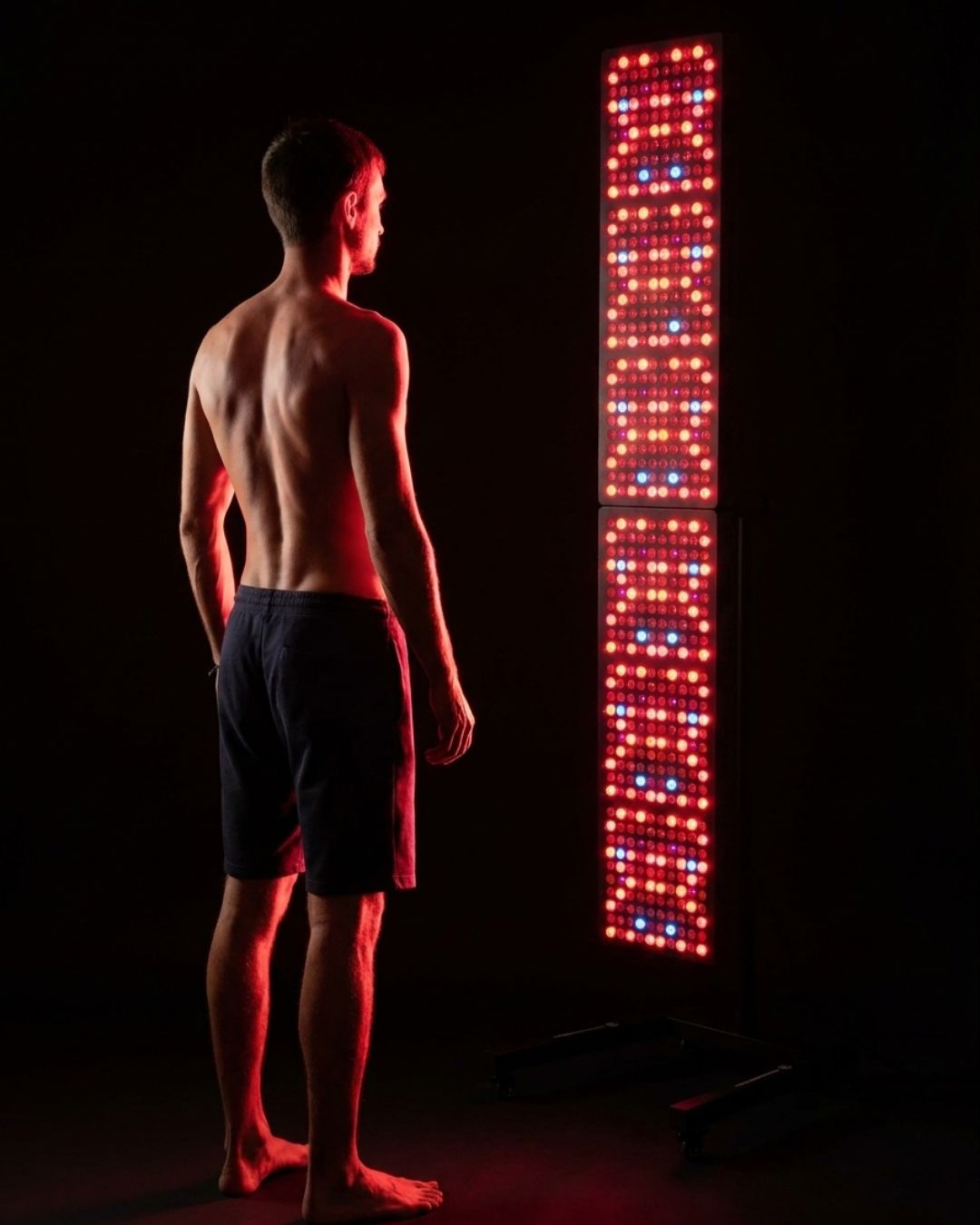
Sun versus UVB panel: which is better for vitamin D production?
Both sources, sunlight and a UVB panel, trigger the same biochemical process in the skin, namely the conversion of 7-dehydrocholesterol into previtamin D3. The difference lies in controllability, availability, and practicality.
Sunlight is free, broad-spectrum, and ideal when used correctly. It provides the full spectrum of light, from infrared to UVA and UVB, and simultaneously stimulates dozens of biological processes. However, its UVB component is available for only a few hours each day and depends on weather, season, and latitude.
A UVB panel is a controlled source of UVB radiation that allows targeted exposure at a precise time and dose. A study by Osmancevic et al. (2015, Sahlgrenska University Hospital) confirmed that exposing a larger area of skin to UVB radiation led to a significantly greater increase in serum cholecalciferol and 25(OH)D3 compared to a small exposed area. [R]
Research by Bogh et al. (2011, Bispebjerg Hospital) additionally demonstrated that vitamin D production depends on the total UVB dose, not on irradiance. This means that even shorter sessions at lower intensity can be just as effective as longer sun exposure. [R]
McCullough et al. (2021, Virginia Commonwealth University) summarised in their review that UVB phototherapy was historically the first tool used to treat rickets, tuberculosis, and psoriasis, precisely through increased vitamin D production in the skin. [R]
When does it make sense to supplement summer sun with a UVB panel?
A UVB panel provides the greatest benefit for people who lack regular access to summer sun during peak UVB hours. This includes office workers, night-shift employees, seniors with limited mobility, and residents of northern latitudes.
Specific situations where a UVB panel outperforms sunlight:
- Office work: If you are indoors from 8:00 to 17:00, you miss the most productive UVB hours (10:00 to 14:00). A panel can be used in the morning or evening.
- Overcast days: In Central Europe, an average of 40 to 50% of summer days are partly to fully overcast, reducing UVB intensity considerably.
- Darker skin: Melanin acts as a natural UVB filter. People with darker skin need several times longer exposure to produce the same amount of vitamin D.
- Older adults: After the age of 60, the concentration of 7-dehydrocholesterol in the skin decreases, reducing the efficiency of skin synthesis.
Mitochondriak® Maxi UVB Upgraded includes a wavelength of 295 nm, which falls directly within the range where the most efficient vitamin D conversion occurs in the skin (290 to 315 nm). Compared to summer sun, it offers a consistent and repeatable dose, independent of weather conditions.
What are the most common mistakes when building vitamin D levels?
The most common mistake when trying to maintain adequate vitamin D is relying exclusively on tablets without any UVB exposure, or conversely, counting on sun exposure through window glass, which blocks UVB radiation completely. Here are the main errors:
1. Sunbathing behind glass. Window glass blocks nearly 100% of UVB radiation. If you are "sunbathing" behind a closed window, you are producing zero vitamin D.
2. All-day SPF application. Chemical sunscreens with high SPF block UVB, and according to scientific data, they may reduce 25(OH)D levels. Instead of applying sunscreen all over, we recommend gradual skin adaptation, building a solar callus, and brief, repeated exposures.
3. Insufficient exposed skin area. The face and palms alone provide too little skin for effective synthesis. Ideally, you should uncover at least 35% of your body surface, including arms, legs, and torso.
4. Poor timing. Early morning and late evening sun (before 9:00 and after 16:00) is excellent for circadian rhythm, but its UVB intensity is insufficient for vitamin D production.
5. Ignoring seasonality. At 48° N (Central Europe), vitamin D synthesis in the skin is only possible from April to September. For the rest of the year, the solar angle is too low.
Comparison: sun, tablets, and UVB panel
To help you make a better decision, we have prepared a comparison table of the three main ways to obtain vitamin D:
| Criterion | Sun | Tablets (D3) | UVB panel |
|---|---|---|---|
| Vitamin D skin synthesis | Yes | No | Yes |
| Melanin stimulation | Yes | No | Yes (295 nm) |
| Year-round availability | No (Apr to Sep in Central Europe) | Yes | Yes |
| Dose control | Limited | Precise (IU) | Precise (time, distance) |
| Additional benefits | IR, NO, beta-endorphin, circadian reset | Vitamin D3 only | UVB + UVA + circadian signal |
| Risk of overdose | None (autoregulation) | Possible (above 10,000 IU/day) | None (autoregulation) |
| Cost | Free | €5 to €20/month | One-time investment |
Verdict: The ideal strategy is a combination. In summer, use direct sunlight as your primary source through short, repeated exposures without sunscreen. If you lack access to regular sunlight, a UVB panel is the most physiological alternative. Tablets have a place only as a supplement during periods when neither of the first two sources is available.
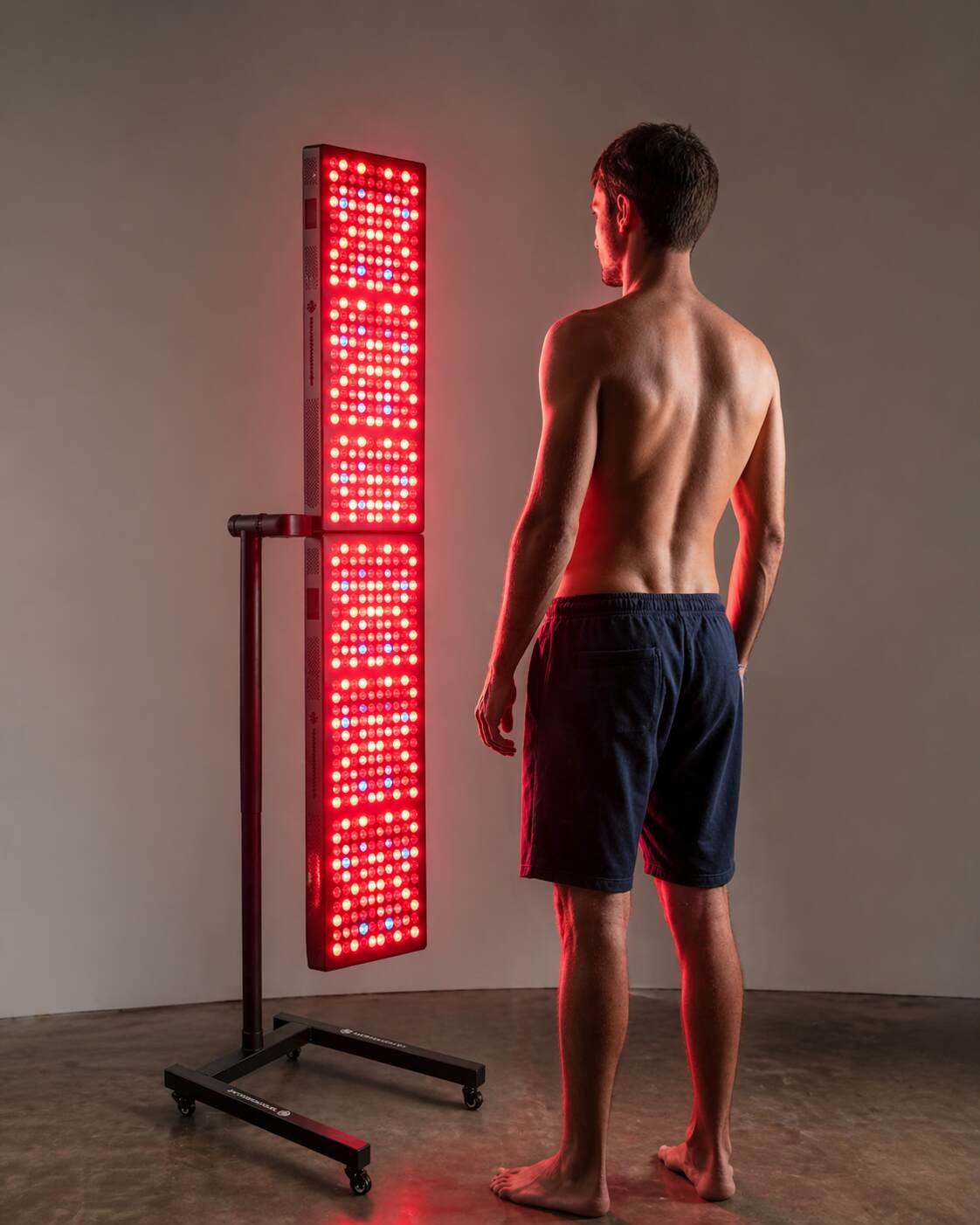
Year-round vitamin D? Try the Maxi UVB with a 20% discount
Mitochondriak® Maxi UVB Upgraded features a wavelength of 295 nm for targeted vitamin D production in the skin, combined with red and near-infrared light for recovery. Currently available for pre-order with a 20% discount. Produce your own vitamin D at home, regardless of weather.
Frequently asked questions
How much vitamin D does the body produce in 15 minutes of sun exposure?
With approximately 35% of the body surface uncovered and a UV index of 6 or higher, the skin can produce the equivalent of 10,000 to 20,000 IU of vitamin D3 in 15 minutes. The exact amount depends on skin type, age, latitude, and cloud cover. Production automatically stops once previtamin D3 reaches saturation, so overdosing from natural light is not a concern.
Can I get vitamin D through a window?
No. Standard window glass blocks nearly 100% of UVB radiation, which is essential for vitamin D synthesis in the skin. It does, however, transmit UVA, which without UVB does not contribute to vitamin D production. If you want vitamin D from light, you need to be outdoors or use a UVB panel.
Is a UVB panel safe for daily use?
UVB panels are safe when used according to the recommended exposure times and distances. As with sunlight, the key is gradual adaptation and appropriate session length. Just as with sun exposure, the body has a built-in autoregulatory mechanism that prevents excessive vitamin D production in the skin.
Is it enough to go outside in summer and skip vitamin D tablets?
In summer (June to September) in Central Europe, with regular sun exposure, supplementation is usually unnecessary if you spend at least 15 to 30 minutes outdoors daily with uncovered skin. In winter, the situation is reversed, and supplementing vitamin D through tablets or a UVB panel is recommended.
What is the difference between UVA and UVB light in terms of vitamin D?
UVB (wavelengths 290 to 315 nm) is responsible for vitamin D synthesis in the skin. UVA (315 to 400 nm) penetrates deeper but does not produce vitamin D. UVA does, however, stimulate the release of nitric oxide. For vitamin D production, UVB is the decisive factor.
Does sunscreen affect vitamin D production?
Yes. According to scientific data, sunscreens with high SPF block UVB radiation, thereby reducing vitamin D synthesis in the skin. A study by Gatta et al. (2025) confirmed that regular use of SPF creams is associated with reduced 25(OH)D levels. Instead of sunscreen, we recommend gradual skin adaptation and brief sun sessions without SPF.
Sources and references
- Bikle, D.D., 2025. Vitamin D: Production, Metabolism, and Mechanism of Action. NCBI Bookshelf
- Kift, R.C. et al., 2024. Globally Estimated UVB Exposure Times Required to Maintain Vitamin D Status. PMC
- Moradi, S. et al., 2020. A comparison of the effect of supplementation and sunlight exposure on serum vitamin D. PubMed
- Joh, H.K. et al., 2020. Effect of sun exposure versus oral vitamin D supplementation. PubMed
- Osmancevic, A. et al., 2015. Vitamin D production after UVB exposure. PubMed
- Bogh, M.K.B. et al., 2011. Vitamin D production depends on ultraviolet-B dose but not on dose rate. PubMed
- McCullough, P.J. et al., 2021. Oral and Topical Vitamin D, Sunshine, and UVB Phototherapy. PMC
- Gatta, E. et al., 2025. Sunscreen and 25-Hydroxyvitamin D Levels. ScienceDirect