.png)
Your circadian rhythm is the internal timing system that tells your body when to wake, eat, move, repair and sleep. It follows an approximately 24 hour cycle, but it does not run independently of the outside world. Light, darkness, food timing, movement and daily routines continuously show your cells what time it is.
- Your circadian rhythm is coordinated by a master clock in the brain and additional clocks throughout the body.
- Light entering the eyes is the strongest environmental signal for synchronizing this internal clock.
- Morning daylight strengthens the daytime signal, while darkness and low evening light prepare the body for sleep.
- Meal timing, movement, caffeine and sleep schedules act as secondary time signals.
- Eight practical habits can help restore a more stable sleep, energy and metabolic rhythm.
- What is the circadian rhythm?
- How does your internal biological clock work?
- Why are light and darkness the strongest time signals?
- Why does circadian rhythm matter for health and energy?
- What disrupts the circadian rhythm?
- Which eight habits help reset your circadian rhythm?
- How can you test these changes for yourself?
- Frequently asked questions about circadian rhythm

What is the circadian rhythm?
The circadian rhythm is a biological cycle lasting approximately 24 hours that coordinates daily changes in sleep, wakefulness, hormones, metabolism, digestion, body temperature and cellular repair. The word circadian comes from the Latin terms for approximately and day.
The circadian system resembles a network of clocks rather than one mechanical clock. Nearly every tissue contains molecular timing mechanisms that help genes and cellular processes become active at the appropriate part of the day.
Your liver, digestive system, muscles, pancreas, immune cells and skin do not perform every task with the same intensity at every hour. The body organizes these processes in time because biological efficiency depends not only on what happens, but also on when it happens.
Your circadian rhythm is the temporal architecture of your biology. Light sets the main clock, while food, movement, temperature and social routines help synchronize clocks throughout the body.
How does your internal biological clock work?
The central circadian clock is located in the suprachiasmatic nucleus, or SCN, a small region of the hypothalamus that receives information about environmental light directly from the eyes. It uses this information to coordinate the timing of sleep, alertness, hormones and peripheral clocks throughout the body.
Specialized cells in the retina contain the light-sensitive pigment melanopsin. These cells are not primarily responsible for forming images. They measure environmental light and send timing information through the retinohypothalamic pathway to the SCN.
When bright natural light reaches the eyes in the morning, the brain receives a clear message that daytime has begun. The SCN then helps coordinate processes such as:
- Morning alertness: the body transitions from sleep toward daytime activity.
- Cortisol timing: cortisol normally rises around waking and supports mobilisation of energy.
- Body temperature: core temperature gradually increases during the active part of the day.
- Melatonin timing: the morning signal helps establish when melatonin should rise later in the evening.
- Peripheral clocks: tissues receive hormonal, neural and behavioural signals that help them align with the central clock.
This is why a person can spend eight hours in bed and still feel poorly synchronized. Sleep duration matters, but so does the timing of light exposure before and after that sleep.
For a deeper scientific explanation, read our updated guide to circadian rhythm, its biology and practical optimization.
Why are light and darkness the strongest time signals?
Natural light during the day and darkness at night form the primary contrast that synchronizes the human circadian system. Morning and daytime light promote alertness and reinforce daytime biology. Darkness and the removal of blue and green light allow the body to transition toward melatonin production and sleep.
Human biology evolved under a predictable sequence:
- Dawn: light intensity rises and the spectrum changes.
- Day: bright full-spectrum sunlight signals activity.
- Sunset: light becomes warmer and gradually weaker.
- Night: darkness replaces the daytime light signal.
Modern indoor life often reverses that pattern. Many people receive weak light during the day while working indoors, then expose themselves to bright screens and cool white LEDs after sunset.
The problem is therefore not that blue light is always harmful. Blue light is a natural and important part of daylight. The problem is blue-rich artificial light at a time when the body expects darkness.
Evening experiments with light-emitting screens have shown delayed circadian timing, reduced melatonin secretion, longer time needed to fall asleep and lower next-morning alertness compared with reading printed material.
Why does circadian rhythm matter for health and energy?
The circadian rhythm helps place biological processes into the part of the day when they can operate most efficiently. It influences sleep and wakefulness, but its reach extends to digestion, glucose regulation, appetite, hormone secretion, immunity, cognition, tissue repair and mitochondrial metabolism.
The digestive system illustrates this clearly. The body is better prepared to receive and process food during the active phase than late at night, when biological systems are beginning to shift toward repair and sleep.
Meal timing also influences peripheral clocks. When eating repeatedly occurs at biologically inappropriate times, the liver and digestive system can receive a different timing signal from the one sent by light to the brain.
This creates internal confusion. The brain may read darkness and expect rest while the digestive system receives a large meal and prepares for metabolic activity.
Circadian disruption does not automatically cause every digestive or metabolic problem. However, it can become a hidden environmental factor that makes sleep, appetite, energy and recovery less stable.
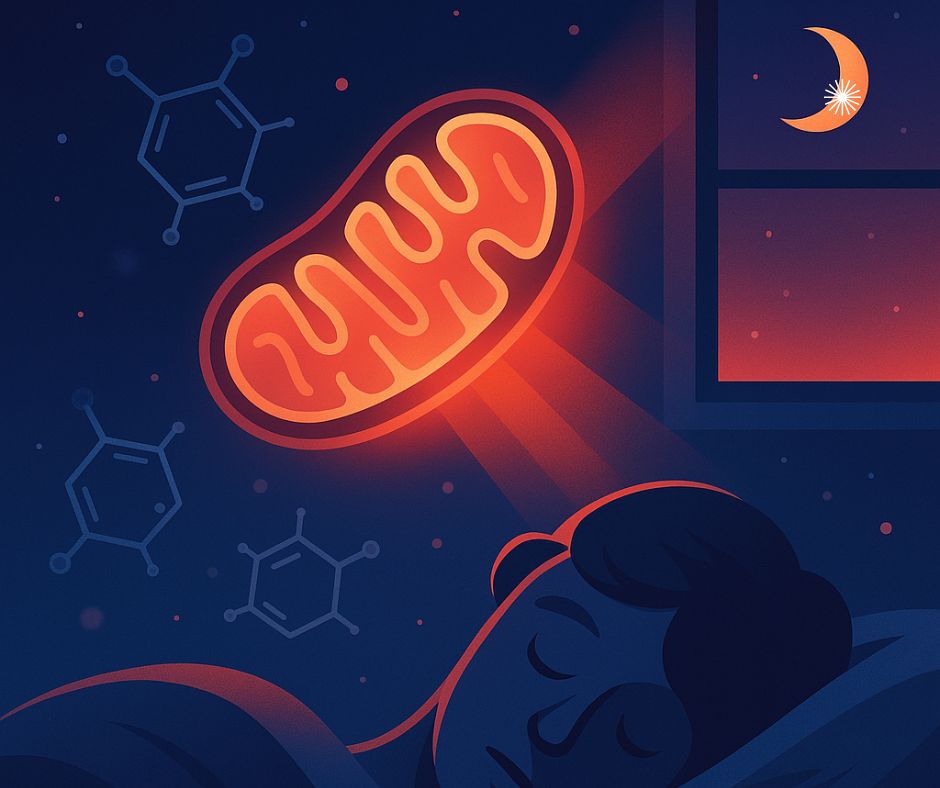
Light is therefore not merely something that helps us see. It is biological information that tells mitochondria and cells what part of the daily cycle they are entering.
What disrupts the circadian rhythm?
Circadian disruption occurs when the timing signals reaching the body repeatedly contradict one another. Common examples include weak daylight, bright evening light, irregular sleep schedules, late meals, shift work, frequent travel across time zones and stimulants used too close to bedtime.
The most common disruptors include:
- Spending mornings indoors: weak indoor lighting may provide an unclear daytime signal.
- Using bright screens at night: blue-rich light can delay the biological transition toward sleep.
- Cool white LED lighting after sunset: overhead light maintains a daytime-like environment.
- Irregular waking times: changing the start of the day repeatedly weakens consistency.
- Eating late at night: food timing can shift peripheral metabolic clocks.
- Afternoon or evening caffeine: caffeine can continue affecting sleep even when consumed several hours before bed.
- Sleeping in illuminated rooms: light at night reduces the contrast between day and biological night.
- Weekend social jet lag: major differences between weekday and weekend schedules create repeated shifts.
One imperfect evening does not destroy your rhythm. The circadian system responds to patterns. What matters most is the collection of signals repeated over days and weeks.
Which eight habits help reset your circadian rhythm?
The most effective circadian strategy is to strengthen the difference between day and night. Seek bright natural light, food and movement during the day. Reduce artificial light, stimulation and eating as night approaches. The following eight habits preserve the practical intent of the original article.
1. Get natural morning light and move outdoors
Go outside as soon as practical after waking and allow natural light to reach your eyes without looking directly at the sun. Outdoor light is usually substantially brighter than indoor lighting, even under clouds, and gives the SCN a clear signal that the biological day has started.
A short outdoor walk combines two useful cues: natural light and movement. Looking through a window is better than remaining in a dark room, but being outdoors provides a stronger and broader light signal.
2. Block artificial blue and green light in the evening
After sunset, reduce exposure to phones, televisions, computers and bright white LEDs. When screens are unavoidable, red lenses that filter both blue and green wavelengths provide a more complete evening solution than clear daytime filters.
The Blue light blocking glasses Mitochondriak® are designed for evening use and block blue and green light through their red lenses. The current product guidance recommends wearing them approximately 90 minutes before sleep when artificial light cannot be avoided.
3. Replace cool white LEDs with red evening bulbs
Your home lighting should change when the sun goes down. Bright overhead LEDs maintain a daytime-like signal, while low red lighting creates visibility without the same blue and green component.
The Evening red bulb Mitochondriak® E27 emits warm red light, contains no blue or green light and is flicker-free. It can replace a conventional E27 bulb in bedrooms, living rooms and hallways.
Different sockets and household needs are covered in the broader range of indoor lighting solutions without blue light.

4. Avoid caffeine late in the day
Caffeine blocks adenosine receptors and can reduce the biological pressure to sleep. A controlled study using 400 mg of caffeine found measurable sleep disruption when it was taken at bedtime, three hours before bedtime and even six hours before bedtime.
Individual caffeine metabolism varies. Instead of relying only on whether you can fall asleep, observe sleep depth, nighttime waking and how rested you feel the next morning.
5. Avoid large meals shortly before sleep
Try to finish your final substantial meal several hours before bedtime. Eating late can send a strong metabolic activity signal at a time when the central circadian system is preparing the body for darkness, lower activity and sleep.
This does not require fear of an occasional late dinner. The goal is to make daytime eating the normal pattern and nighttime eating the exception.
6. Keep meal timing relatively consistent
Breakfast, lunch and dinner also function as timing signals for peripheral clocks. Eating at approximately similar times helps the digestive system, liver and metabolic tissues anticipate when nutrients are likely to arrive.
Consistency does not mean eating at an identical minute every day. It means avoiding a pattern where meals move by many hours from one day to the next.
7. Keep a stable sleep and wake schedule
A consistent wake-up time anchors the beginning of the day and makes morning light exposure easier to repeat. Try to keep bedtime and waking time reasonably similar throughout the week, including weekends.
The rhythm does not need military precision. A stable pattern is more useful than chasing perfection for several days and then abandoning the routine.
8. Give yourself enough time to sleep
Most healthy adults should regularly obtain at least seven hours of sleep, although individual needs vary. Broader expert recommendations commonly place the suitable range for young and middle-aged adults around seven to nine hours.
The original article encouraged approximately 7.5 to 8.5 hours, which remains a reasonable personal target for many people. The best duration is the one that allows you to wake rested, function well during the day and maintain it consistently.
How can you test these changes for yourself?
The circadian system responds to repeated patterns, so test the routine for several weeks rather than judging it after one evening. Change the strongest signals first and observe sleep onset, morning energy, digestion, concentration and your need for stimulants.
Try this simple experiment:
- Choose a stable wake-up time. Keep it within a similar window every day.
- Go outdoors after waking. Combine morning daylight with a short walk.
- Use daylight during the day. Take outdoor breaks instead of remaining under artificial light continuously.
- Finish larger meals earlier. Avoid turning late evening into the main eating window.
- Set a caffeine cut-off. Move it earlier if sleep remains shallow or delayed.
- Change the light after sunset. Dim overhead lights and switch to red evening lighting.
- Use red glasses when screens remain necessary. Wear them during the final part of the evening.
- Sleep in darkness. Remove or cover LEDs and other unnecessary light sources.
Follow the pattern consistently for at least several weeks. The goal is not to force sleep. It is to rebuild an environment in which sleep, wakefulness and metabolism receive clear timing information again.
If persistent insomnia, extreme daytime sleepiness or major changes in mood continue despite good light hygiene, speak with a doctor or sleep specialist. Circadian habits can be powerful, but they do not replace the assessment of an underlying sleep or medical disorder.
Protect the evening side of your circadian rhythm
Morning sunlight starts the biological day. Red evening light and effective blue light blocking help your home move in the opposite direction after sunset, giving the body a clearer transition toward sleep.
Frequently asked questions about circadian rhythm
How long is the human circadian rhythm?
The human circadian rhythm follows an approximately 24 hour cycle. Without environmental time signals, its natural period may differ slightly from exactly 24 hours. Morning light, darkness, meals, activity and regular routines help synchronize it with the solar day.
What is the strongest signal for resetting circadian rhythm?
Light reaching the eyes is the strongest environmental signal for the central circadian clock. Bright natural light in the morning and during the day strengthens wakefulness and anchors biological daytime. Darkness and reduced blue and green light in the evening support the transition toward biological night.
How quickly can circadian rhythm improve?
Some people notice easier waking or earlier sleep within several days, but a stable rhythm develops through repeated signals over weeks. The speed depends on the degree of disruption, light exposure, work schedule, chronotype, meal timing and how consistently the new routine is followed.
Can red light reset the circadian rhythm?
Red evening light is useful mainly because it allows visibility without reproducing the strong blue and green signal of daytime lighting. Morning outdoor light remains the primary tool for anchoring the start of the day. Red light helps protect the evening side of the cycle.
When should blue light blocking glasses be worn?
Red blue light blocking glasses are most useful after sunset or during approximately the final 90 minutes before sleep when screens and artificial lighting cannot be avoided. Seasonal timing matters, so they may be used earlier during dark winter evenings than during long summer days.
Does meal timing affect circadian rhythm?
Yes. Food acts as a timing signal for peripheral clocks in organs such as the liver and digestive system. Keeping most food intake within the active daytime period and maintaining reasonably consistent meal times helps align metabolic clocks with the light-dark cycle.
How much sleep do adults need?
Most healthy adults should regularly sleep for at least seven hours. Many adults function best within a range of approximately seven to nine hours, although individual need varies. Sleep quality, timing, regularity and daytime functioning matter alongside the total number of hours.
Sources and references
- Blume C, Garbazza C, Spitschan M. Effects of light on human circadian rhythms, sleep and mood. Somnologie. 2019. PubMed
- Chang AM, Aeschbach D, Duffy JF, Czeisler CA. Evening use of light-emitting eReaders negatively affects sleep, circadian timing and next-morning alertness. Proceedings of the National Academy of Sciences. 2015. PubMed
- Drake C, Roehrs T, Shambroom J, Roth T. Caffeine effects on sleep taken zero, three or six hours before going to bed. Journal of Clinical Sleep Medicine. 2013. PubMed
- Almoosawi S, Vingeliene S, Gachon F, et al. Timing matters: the interplay between mealtime, circadian rhythms, gene expression, circadian hormones and metabolism. Clocks and Sleep. 2023. PubMed
- Watson NF, Badr MS, Belenky G, et al. Recommended amount of sleep for a healthy adult. Journal of Clinical Sleep Medicine. 2015. PubMed
- Hirshkowitz M, Whiton K, Albert SM, et al. National Sleep Foundation's updated sleep duration recommendations. Sleep Health. 2015. PubMed