.png)
Blue light from screens suppresses your melatonin production by up to 50 %, delays sleep onset, and disrupts the circadian rhythm your body depends on for repair and energy. Understanding how evening screen exposure rewires your internal clock is the first step toward reclaiming deep, restorative sleep, and it starts with the biology behind your own eyes.
What you will learn in this article:
- Why blue light wavelengths (around 460 to 490 nm) are uniquely potent at suppressing melatonin
- How melanopsin receptors in your retina communicate directly with your master circadian clock
- What the peer-reviewed research says about evening screen time and sleep quality
- Practical strategies to reduce blue light exposure at night, from glasses to ambient lighting
Contents:
What Is Blue Light and Where Does It Come From? How Does Blue Light Affect Your Sleep? How Blue Light Disrupts Your Circadian Rhythm What Does the Research Say? How to Protect Your Sleep from Blue Light Frequently Asked Questions
What Is Blue Light and Where Does It Come From?
Blue light is the portion of the visible spectrum with wavelengths between approximately 380 and 500 nm. It carries more energy per photon than red or green light, and it plays a central role in regulating your alertness and circadian timing. During the day, blue light from sunlight is beneficial. In the evening, artificial sources become the problem.
Natural blue light in sunlight
Sunlight is by far the most powerful source of blue light. On a clear day, the sky delivers roughly 100,000 lux of full-spectrum light, with a strong blue component peaking near 480 nm. This natural blue light signal tells your suprachiasmatic nucleus (SCN) that it is daytime, keeping you alert, boosting cortisol, and suppressing melatonin until evening. In evolutionary terms, the human circadian system evolved to respond precisely to this solar blue signal.
Artificial sources: screens, LEDs, and fluorescent lights
Modern life has introduced artificial blue light sources that emit concentrated wavelengths in the 440 to 490 nm range. Smartphones, tablets, laptops, monitors, and LED televisions all emit significant blue light. Standard white LED bulbs achieve their white color by pairing a blue LED chip with a yellow phosphor coating, meaning every LED ceiling light in your home radiates blue wavelengths.
Fluorescent lights, found in offices and commercial spaces, also produce a blue peak. The critical difference between these artificial sources and sunlight is timing. We encounter natural blue light during the day when our biology expects it. Artificial blue light, however, floods our eyes during evenings and nights, precisely when our circadian system expects darkness.
How Does Blue Light Affect Your Sleep?
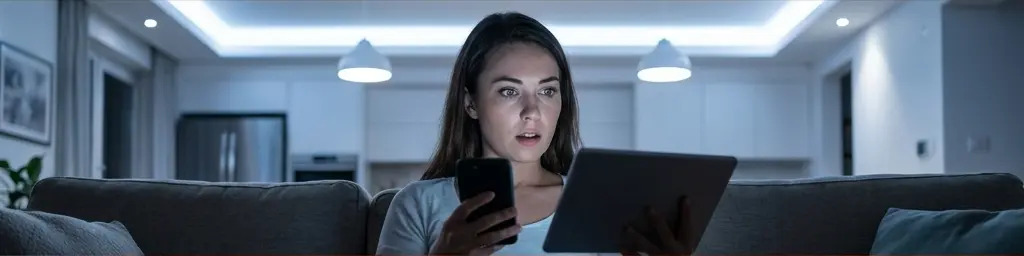
Blue light suppresses melatonin production, delays the onset of sleep, and reduces overall sleep quality by activating a dedicated photoreceptor pathway in your retina that communicates directly with your brain's master clock. The effect is dose-dependent: more blue light in the evening means less melatonin and later sleep.
Melanopsin and intrinsically photosensitive retinal ganglion cells (ipRGCs)
Your retina contains a specialized class of cells called intrinsically photosensitive retinal ganglion cells (ipRGCs). Unlike the rods and cones responsible for vision, ipRGCs are not involved in forming images. Instead, they detect ambient light levels and relay that information to the brain's circadian system. These cells contain a photopigment called melanopsin, which is most sensitive to blue wavelengths around 480 nm [R].
When blue light strikes melanopsin, the ipRGCs fire electrical signals along the retinohypothalamic tract, a dedicated nerve pathway that bypasses the visual cortex entirely. This signal arrives at the suprachiasmatic nucleus (SCN), a tiny cluster of about 20,000 neurons in the hypothalamus that serves as the body's master circadian pacemaker.
The pathway from retina to suprachiasmatic nucleus (SCN)
The SCN receives the blue-light signal from ipRGCs and interprets it as "daytime." In response, it sends inhibitory signals to the pineal gland, the small endocrine organ responsible for synthesizing and releasing melatonin. The result is straightforward: blue light at night tells your brain it is still daytime, and your pineal gland delays or reduces melatonin secretion accordingly.
This is not a subtle effect. Research by Lockley, Brainard, and Czeisler (2003) demonstrated that blue light at 460 nm suppressed melatonin about twice as much as green light at 555 nm with the same photon density, even though the green light appears brighter to the eye [R]. The circadian system is disproportionately sensitive to blue wavelengths compared to the rest of the visible spectrum.
Melatonin suppression mechanism
Melatonin is not simply a "sleep hormone." It is a powerful antioxidant, a mitochondrial protector, and a key regulator of your sleep-wake cycle. Under normal conditions, melatonin levels begin rising about 2 hours before your habitual bedtime, a process called dim light melatonin onset (DLMO). This rise in melatonin signals to your entire body that sleep is approaching: core body temperature drops, heart rate slows, and cellular repair processes activate.
When you look at a screen in the evening, the blue light reaching your ipRGCs suppresses this natural melatonin rise. A landmark study by Chang et al. (2015) found that participants who read on a light-emitting e-reader before bed experienced melatonin suppression, delayed melatonin onset, reduced REM sleep, and felt sleepier the following morning compared to those who read a printed book [R].
How Blue Light Disrupts Your Circadian Rhythm
Blue light does not just suppress melatonin for one night. Repeated evening exposure gradually shifts your entire circadian rhythm later, creating a chronic mismatch between your internal clock and your social schedule. This mismatch, sometimes called "social jet lag," carries consequences that extend well beyond feeling tired.
The circadian clock and light as the primary zeitgeber
Your circadian clock runs on a cycle of approximately 24.2 hours, slightly longer than a solar day. To stay synchronized with the 24-hour light-dark cycle, your SCN relies on external cues called zeitgebers (German for "time givers"). Light is the most powerful zeitgeber, and blue wavelengths are the most effective component of light for circadian entrainment.
During the day, bright blue-rich light advances or maintains the clock's phase. In the evening and night, any blue light exposure pushes the clock later, a phenomenon known as a phase delay. If you regularly use screens until midnight, your circadian clock interprets this as a later sunset and shifts your entire sleep-wake cycle accordingly.
Evening blue light exposure and delayed sleep onset
The practical consequence of a phase delay is difficulty falling asleep at your desired bedtime. Your body is simply not ready for sleep because your melatonin has not yet risen to the level needed to initiate sleep. Research by Cajochen et al. (2005) showed that just 2 hours of evening exposure to blue (460 nm) light produced measurable melatonin suppression and increased alertness [R].
Over time, this delayed sleep onset compresses your total sleep window. If you need to wake at 6:30 AM for work but cannot fall asleep until 12:30 AM because of blue light exposure, you accumulate a chronic sleep deficit. The consequences include impaired cognitive performance, weakened immune function, increased inflammation, and compromised mitochondrial energy production.
Dose-response: intensity, duration, timing, and wavelength
Not all blue light exposure carries the same circadian risk. Four variables determine how much disruption occurs:
- Intensity: Brighter screens and closer viewing distances increase the amount of blue light reaching your retina.
- Duration: Longer exposure produces greater melatonin suppression. A quick 5-minute check is far less disruptive than 3 hours of scrolling.
- Timing: The 2 to 3 hours before your habitual bedtime is the most sensitive window. Blue light at 10 PM has a much stronger effect than the same light at 6 PM.
- Wavelength: Light between 446 and 477 nm is the most potent for melatonin suppression. This range overlaps directly with the peak emission of most LED screens.
Understanding these four factors gives you practical leverage: you do not need to eliminate screens entirely. You need to manage intensity, duration, timing, and wavelength, especially during the critical evening window. Wearing blue light blocking glasses in the evening is one of the simplest and most effective ways to reduce the blue wavelengths reaching your retina without giving up screen time.
What Does the Research Say?
Peer-reviewed studies consistently confirm that evening blue light exposure suppresses melatonin, delays sleep onset, and reduces sleep quality, with the strongest effects occurring in the 460 to 490 nm wavelength range. The evidence spans controlled laboratory trials, real-world screen use studies, and dose-response analyses that together build a robust scientific consensus.
Key studies on blue light and melatonin suppression
One of the most cited experiments in this field comes from Lockley, Brainard, and Czeisler (2003), who exposed participants to monochromatic light at either 460 nm (blue) or 555 nm (green). The blue light suppressed melatonin roughly twice as effectively as the green light at the same intensity, demonstrating that the circadian system responds preferentially to short wavelengths [R].
Cajochen and colleagues (2005) extended this work by showing that 2 hours of evening blue (460 nm) light not only suppressed melatonin more than green light but also increased alertness and raised core body temperature and heart rate, both markers of physiological arousal. Participants exposed to blue light were more alert at a time when their bodies should have been winding down [R].
Screen time and sleep quality findings
The landmark study by Chang et al. (2015) compared participants who read on a light-emitting e-reader with those who read a printed book for 4 hours before bed over 5 consecutive evenings. The e-reader group showed delayed melatonin onset by approximately 1.5 hours, took longer to fall asleep, experienced less REM sleep, and reported greater next-morning sleepiness [R]. This study was significant because it used realistic conditions: participants read actual content on a commercially available device, not a laboratory light source.
A 2018 study by Shechter, Kim, and St-Onge took a complementary approach. Instead of increasing blue light exposure, they blocked it using amber-tinted glasses during the 2 hours before bed. Participants with insomnia symptoms who wore blue light blocking glasses showed improved sleep quality and increased total sleep duration compared to the control group wearing clear lenses [R].
Comparison of different light wavelengths
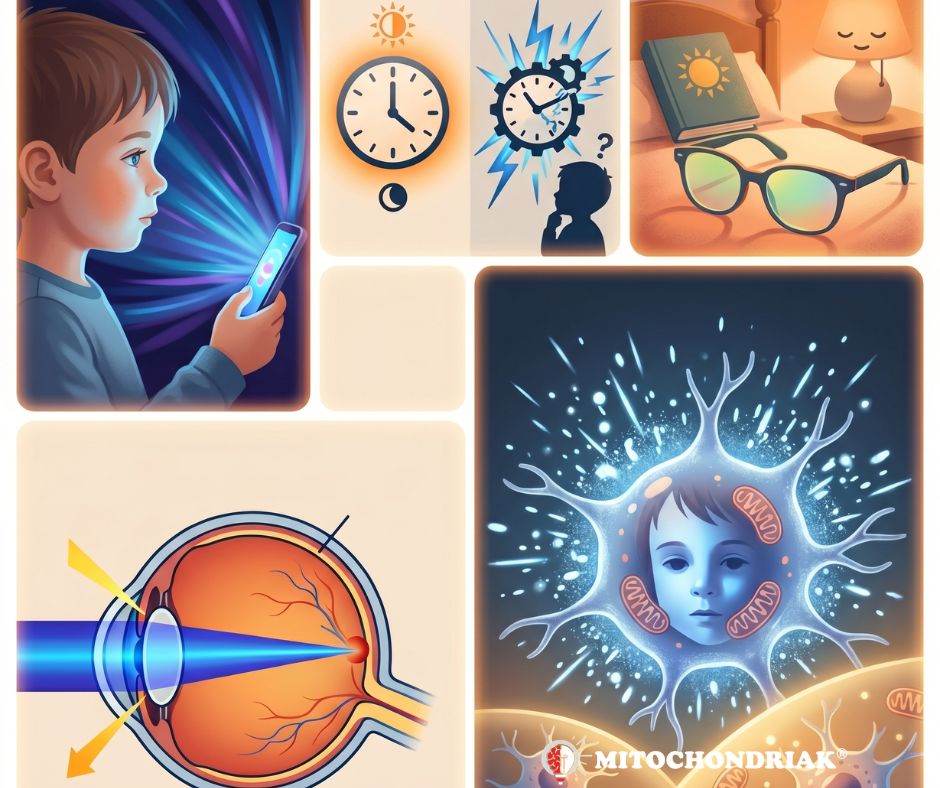
Not all light is created equal when it comes to circadian disruption. Research by Tosini, Ferguson, and Tsubota (2016) reviewed the broader evidence on blue light and the circadian system, confirming that wavelengths between 446 and 477 nm are the most potent for melatonin suppression [R]. Red light (above 620 nm) has virtually no melatonin-suppressing effect. Green light (around 555 nm) has a moderate effect that diminishes rapidly at lower intensities. This wavelength hierarchy is why red light therapy devices and warm-toned evening lighting are effective strategies for protecting your circadian rhythm.
How to Protect Your Sleep from Blue Light
Reducing evening blue light exposure is one of the most effective non-pharmacological interventions for improving sleep quality. You do not need to abandon screens entirely. A combination of timing, filtering, and environmental changes can dramatically reduce the circadian impact of artificial light at night.
Evening screen habits and the 2-hour rule
The simplest strategy is to avoid bright screens during the 2 hours before bedtime. This window corresponds to the dim light melatonin onset (DLMO) period, when your pineal gland is most sensitive to blue light suppression. If you typically go to bed at 11 PM, aim to reduce screen brightness and exposure starting at 9 PM.
If you must use a screen, reduce its brightness to the lowest comfortable setting, increase your viewing distance, and keep the room lights dim. Each of these adjustments reduces the total number of blue photons reaching your retina.
Blue light blocking glasses as a practical solution
Blue light blocking glasses with amber or red-tinted lenses filter out the 400 to 500 nm range before it reaches your eyes. The Shechter et al. (2018) study confirmed that wearing these glasses for 2 hours before bed improved sleep in people with insomnia symptoms. For anyone who needs to work on a computer or watch television in the evening, blue light blocking glasses offer a convenient and evidence-based solution.
When choosing glasses, look for lenses that block at least 90 % of light below 500 nm. Clear "blue light" lenses that claim to reduce eye strain typically block only 10 to 20 % of blue light and have minimal circadian benefit. Amber and red-tinted lenses are significantly more effective for melatonin protection.
Red light and warm lighting in the evening
Replacing your standard white LED bulbs with warm-toned or red LED bulbs in the evening is another powerful strategy. Red wavelengths (above 620 nm) do not activate melanopsin and therefore do not suppress melatonin. Many biohackers use dedicated evening red bulbs to create a sleep-friendly light environment after sunset.
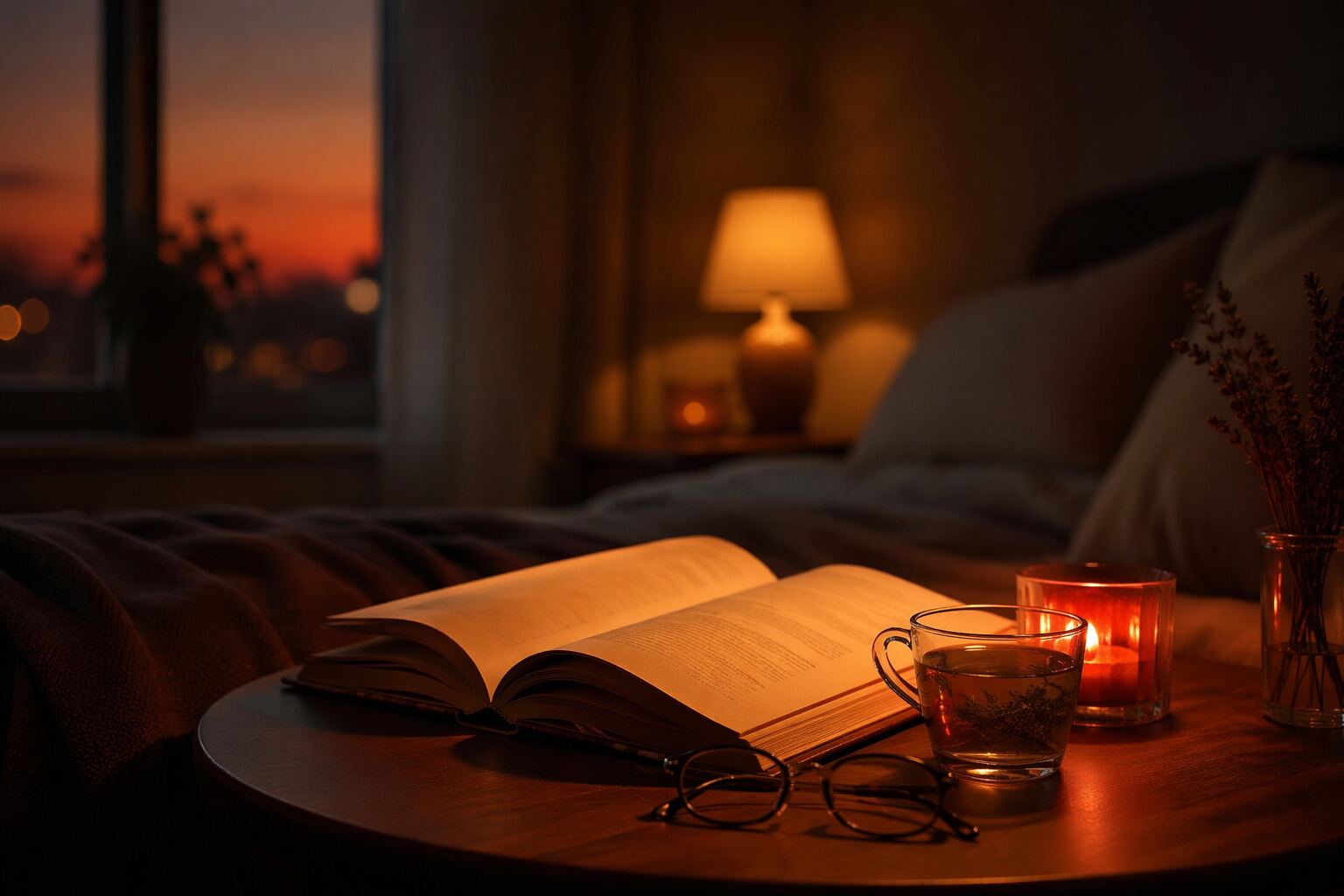
The combination of red evening lighting and blue light blocking glasses provides a comprehensive shield against artificial blue light during the critical pre-sleep hours. This approach aligns your indoor light environment with the natural light-dark cycle your circadian system evolved to follow.
Software filters and device settings
Most modern devices include built-in blue light filters such as Apple Night Shift, Android Night Light, or f.lux for desktop computers. These tools shift the display color temperature toward warmer tones, reducing blue emission. While software filters help, they typically reduce blue light by only 30 to 50 %, which is less effective than dedicated amber-tinted glasses. Consider using both together for maximum protection.
Protect your sleep tonight
Your circadian rhythm depends on the right light at the right time. Blue light blocking glasses filter out the wavelengths that suppress melatonin, helping you fall asleep faster and sleep more deeply, even if you use screens in the evening.
Frequently Asked Questions
Does blue light during the day also affect sleep?
Daytime blue light exposure actually improves sleep quality by reinforcing your circadian rhythm and strengthening the contrast between day and night signals. Morning and midday sunlight, which is rich in blue wavelengths, tells your SCN that it is daytime, which helps your body produce melatonin at the right time in the evening. The problem is specifically blue light in the evening and nighttime hours, when your circadian system expects darkness.
Are blue light blocking glasses effective?
Yes, amber and red-tinted blue light blocking glasses are effective at reducing melatonin suppression from evening screen use. Research by Shechter et al. (2018) showed that wearing amber lenses for 2 hours before bed improved sleep quality in participants with insomnia. The key is choosing lenses that block at least 90 % of wavelengths below 500 nm. Clear "computer glasses" with minimal tinting provide negligible circadian benefit.
What wavelength of blue light is most harmful for sleep?
The wavelengths most potent for melatonin suppression fall between approximately 446 and 490 nm, with peak sensitivity around 480 nm matching the absorption spectrum of melanopsin in your ipRGCs. This range overlaps directly with the peak emission of most LED screens and white LED bulbs. Wavelengths above 520 nm (green, yellow, red) have progressively less impact on your circadian clock.
Can red light therapy improve sleep quality?
Red light therapy can support better sleep through multiple mechanisms. Red wavelengths (630 to 850 nm) do not suppress melatonin, making red light therapy panels safe to use in the evening. Additionally, some research suggests that red light exposure may stimulate mitochondrial function and reduce inflammation, both of which can contribute to improved sleep quality and faster recovery during rest.
Sources and References
- Tosini G, Ferguson I, Tsubota K. Effects of blue light on the circadian system and eye physiology. Mol Vis. 2016;22:61-72. PubMed
- Chang AM, Aeschbach D, Duffy JF, Czeisler CA. Evening use of light-emitting eReaders negatively affects sleep, circadian timing, and next-morning alertness. PNAS. 2015;112(4):1232-1237. DOI
- Lockley SW, Brainard GC, Czeisler CA. High sensitivity of the human circadian melatonin rhythm to resetting by short wavelength light. J Clin Endocrinol Metab. 2003;88(9):4502-4505. PubMed
- Cajochen C, Münch M, Kobialka S, et al. High sensitivity of human melatonin, alertness, thermoregulation, and heart rate to short wavelength light. J Clin Endocrinol Metab. 2005;90(3):1311-1316. PubMed
- Shechter A, Kim EW, St-Onge MP, Westwood AJ. Blocking nocturnal blue light for insomnia: A randomized controlled trial. J Psychiatr Res. 2018;96:196-202. PubMed