Home/Blog/Blue Light Blocking Glasses: A Complete Guide to Better Sleep, Melatonin & Circadian Rhythm
Blue Light Blocking Glasses: A Complete Guide to Better Sleep, Melatonin & Circadian Rhythm
In today's digital era, our eyes are constantly exposed to artificial light from screens and LED lighting. This light, especially the blue component, has a significant impact on our sleep, hormonal balance and overall health. Blue light blocking glasses are becoming a key tool in modern light hygiene. In this complete guide you will learn how they work, how they affect melatonin and your circadian rhythm, and how to choose the right pair for your needs, including special solutions for children.
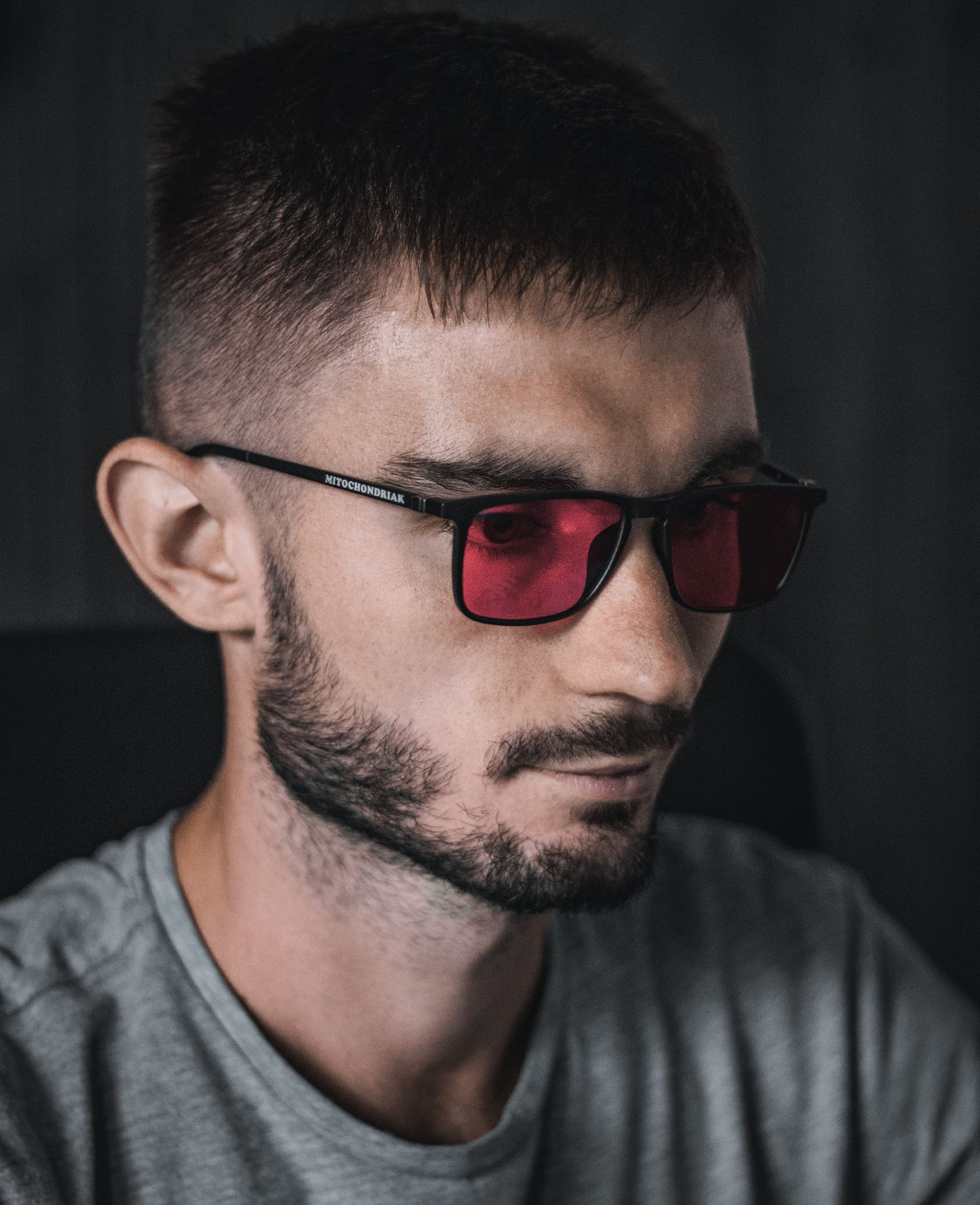
Quality blue light blocking glasses are key to protecting your eyes and sleep.
What is blue light and why should we protect ourselves from it?
Blue light is part of the visible light spectrum with short wavelengths (approximately 380 to 500 nm) and high energy. It naturally occurs in sunlight and is essential for us during the day. Morning and midday blue light helps synchronize our circadian rhythm, our internal biological clock that governs the wake-sleep cycle. It boosts alertness, improves mood and cognitive function.
The problem arises with the rise of modern technology. Today, we are exposed to excessive amounts of blue light in the evening as well, primarily from:
Screens (smartphones, tablets, computers, TVs)
LED lighting
Energy-saving bulbs
This artificial light during late hours, also known as ALAN (Artificial Light at Night), disrupts our natural rhythm. Our body thinks it is still daytime, which leads to suppressed production of the sleep hormone melatonin and increased production of the stress hormone cortisol. The consequences can be wide-ranging, from trouble falling asleep, through poor sleep quality, to long-term health issues. [R1]
How does blue light affect sleep, melatonin and cortisol?
The impact of blue light on our body is complex and starts in our eyes and brain. It is not just about feeling tired eyes, but about a fundamental disruption of biological processes.
Melanopsin: the light sensor that runs your internal clock
Specialized cells in the retina that contain a photopigment called melanopsin play a key role in the response to blue light. Unlike cones and rods, which allow us to see colors and light, melanopsin is not responsible for image formation. Its primary function is to detect the intensity and spectral composition of light and transmit this information to the suprachiasmatic nucleus (SCN) in the brain, our master regulator of the circadian rhythm. [R2]
Melanopsin is particularly sensitive to blue and green light (with peak sensitivity around 480 nm). When activated by these wavelengths, it signals the SCN that it is daytime and suppresses the release of melatonin.
Melatonin: Why does blue light suppress it in the evening?
Melatonin is a hormone produced by the pineal gland that regulates the sleep-wake cycle. Its production starts to rise as light intensity drops in the evening, helping us prepare for sleep. Exposure to blue (and partially green) light in the late evening hours, when melatonin should already be released, significantly suppresses its synthesis. This leads to trouble falling asleep, shortened REM sleep duration and overall reduced sleep quality. [R3]
Cortisol and light: Why does morning light have the opposite effect to evening light?
Cortisol is a stress hormone that wakes us up in the morning and keeps us alert. Morning exposure to bright light (rich in the blue component) is a natural signal for the body to trigger the Cortisol Awakening Response (CAR), which is key to energy and cognitive performance throughout the day. However, if we perceive blue light in the evening as well, instead of cortisol dropping and melatonin rising, this balance can be disrupted. High evening cortisol levels lead to restlessness, trouble falling asleep and other sleep disorders.
Mitochondria and sleep: Why quality sleep means more energy
Mitochondria are tiny power plants in our cells that produce energy in the form of ATP. During sleep, they undergo regeneration and repair. Chronic sleep disruption caused by blue light burdens the mitochondria, leads to oxidative stress and reduces their ability to produce energy efficiently. On the other hand, quality sleep supports optimal mitochondrial function, which translates into greater vitality, better mood and resilience to stress. [R4]
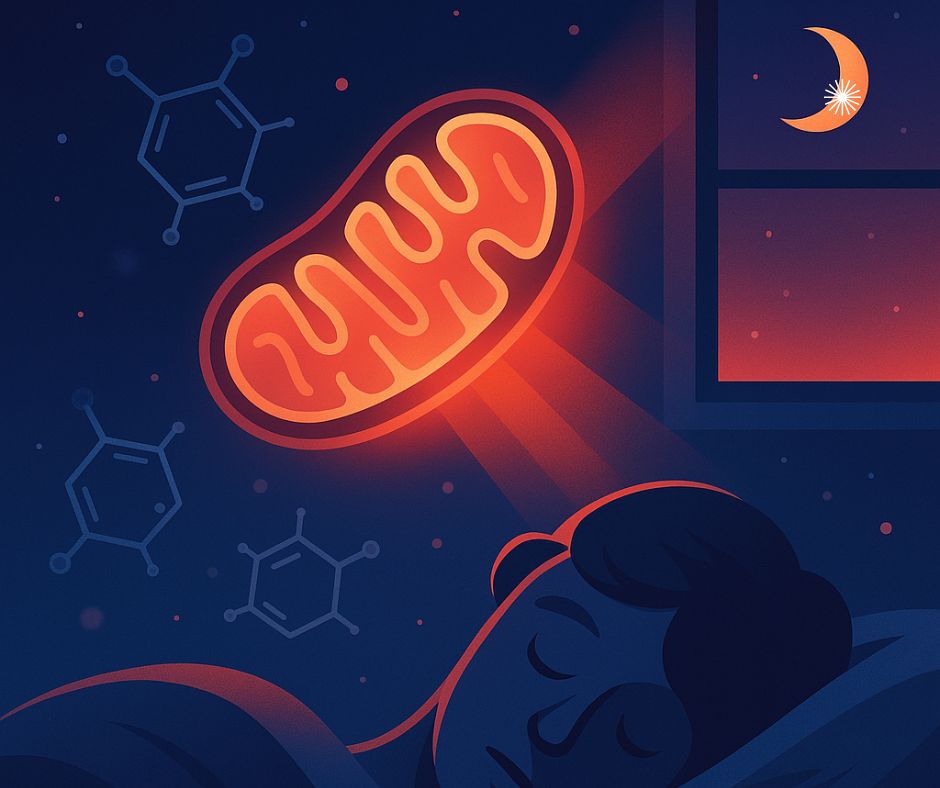
Blue light at night disrupts melatonin production and affects mitochondria.
How do blue light blocking glasses work?
Blue light blocking glasses are designed with special filters that selectively block or absorb specific wavelengths of light.
Yellow vs orange vs red lenses: What is the difference?
The color of blue light blocking lenses is not just an aesthetic matter, it reflects their effectiveness and blocking spectrum. The darker and redder the tint, the wider the spectrum and the higher the percentage of harmful light they block:
Yellow lenses (blocking up to ~450 nm): These lenses block a smaller percentage of blue light (approximately 30 to 50 %). They are suitable for daytime use, especially when working with a computer, where they can ease eye strain, but they do not provide sufficient protection for evening melatonin production.
Orange lenses (blocking up to ~500 nm): They provide a higher level of blocking (approximately 80 to 90 %) and are a better choice for the evening if you still need to work or look at screens. However, they may still not adequately block the entire critical spectrum for melanopsin.
Red lenses (100 % blocking of blue and green light up to 550 nm): These are the most effective for protecting sleep and melatonin. They block not only 100 % of blue light, but also a substantial part of green light (up to roughly 550 nm), to which melanopsin is also sensitive. They are ideal to wear 90 to 120 minutes before bedtime. [R3]
Why does blocking green light also matter? Melanopsin is sensitive not only to blue, but also to green light (up to roughly 540 nm). Therefore, only glasses that also block this green spectrum can effectively protect melatonin production and our circadian rhythm.
Lens type
Blocked spectrum (nm)
Blue light blocking level
Recommended use
Yellow
Up to ~450 nm
30 to 50%
Daytime computer use, reducing eye strain.
Orange
Up to ~500 nm
80 to 90%
Evening use before bed, moderate melatonin protection.
Red
Up to ~550 nm (blocks blue and green)
100%
Evening use 90 to 120 minutes before bed for maximum melatonin support and deep sleep.
Who benefits from wearing blue light blocking glasses?
Given how omnipresent artificial light is in our environment, virtually anyone can benefit from blue light blocking glasses. They are especially valuable for:
People with sleep problems: If you have trouble falling asleep, frequent night awakenings or you wake up tired, the glasses can significantly improve melatonin production.
Night owls and shift workers: For those who are active after dark and cannot avoid screens, the glasses are essential for protecting the circadian rhythm.
Biohackers and athletes: For optimizing recovery, hormonal balance and overall performance.
Parents and babies: If you have to get up at night for your kids, red glasses minimize the disruption of both your own sleep and your child's sleep.
Anyone using electronics in the evening: Simply put, if you watch TV, browse your phone or work on a computer in the evening.
How to choose the right blue light blocking glasses?
Choosing the right glasses is not just about brand and price. The technical parameters that ensure real effectiveness are what matter.
What to look for when choosing (blocking in nm, material, certification)
Blocking spectrum: It is crucial that the glasses block not only blue, but also green light up to approximately 550 nm, where melanopsin is still active.
Lens material: Quality polycarbonate lenses are durable and provide a clear image without distortion.
Certification and measurements: A trustworthy manufacturer should provide a spectrometric measurement chart that confirms the actual blocking level. Marketing claims without data are often misleading.
Comfort and design: The glasses should fit comfortably, not press on your face and be durable.
Why spectrometric measurement matters more than marketing
Many commercial "gaming" or "computer" glasses with a slight yellow tint promise protection from blue light, but in reality they only block a small part of the blue spectrum that is not critical for sleep. Truly effective glasses that influence melatonin should have a dark orange to red tint and certified measurements should demonstrate 100 % blocking of blue and green light up to 550 nm.
All Blue light blocking glasses Mitochondriak® are designed to block 100 % of blue and green light up to 550 nm, which is confirmed by independent spectrometric measurements. They are available in a unisex design and come with a practical case.
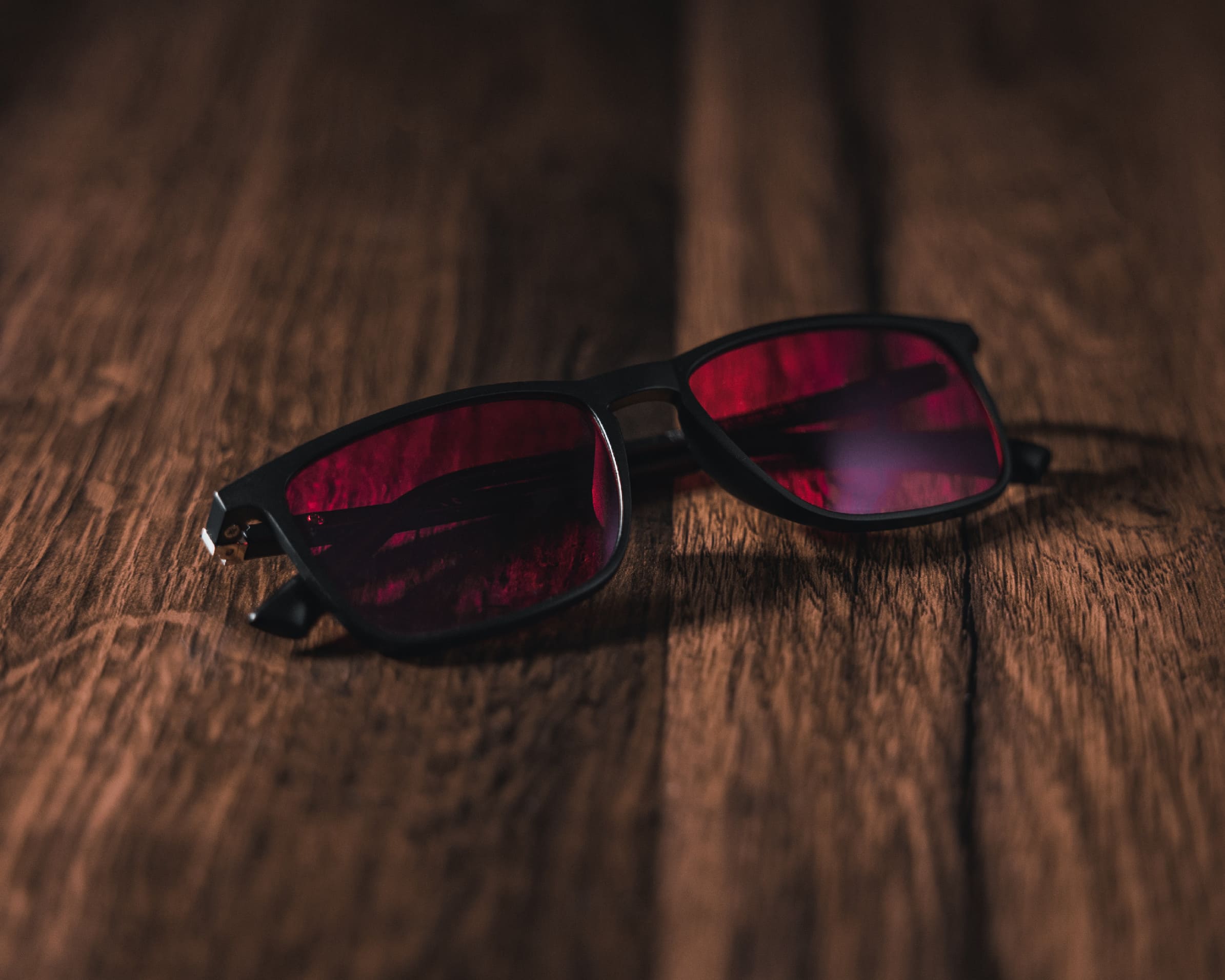
It is important that the glasses block the entire spectrum of blue and green light.
How and when to wear blue light blocking glasses correctly?
To get the maximum benefit for protecting your sleep and circadian rhythm, correct timing and consistency are key:
Timing: Put on your glasses at least 90 to 120 minutes before your planned bedtime. By this time, you should already limit exposure to any artificial light, but if that is not possible, the glasses are essential.
Consistency: Use them regularly every evening, including weekends. Your body will build a habit and will respond to darkness with the expected production of melatonin.
All light sources: The glasses are not just for the computer. Wear them when watching TV, reading from a tablet or simply sitting in a lit room.
Seasonality: In summer months, when daylight lasts longer, you can put the glasses on later. In winter, when it gets dark earlier, it is appropriate to put them on around 5 PM or 6 PM.
Blue light blocking glasses are an ideal addition to an evening routine for better sleep.
Blue light blocking glasses for kids: Why is it even more important?
Children are especially sensitive to blue light for several reasons:
Their eye lenses are more transparent and let more blue light through to the retina.
The children's circadian rhythm is still developing and is more easily disrupted.
Insufficient and poor-quality sleep in children can negatively affect learning, behavior and overall development.
That is why protecting children from evening blue light is even more important. Blue light blocking glasses Mitochondriak® Kids Edition are designed to be comfortable, durable and to effectively block harmful wavelengths, supporting the healthy sleep and development of your children.
Protecting children's eyes from blue light is key to their healthy development.
Tame blue light and improve your sleep starting today!
Discover the complete Mitochondriak® solutions for light hygiene, from glasses, through safe lighting, to bundles for the whole family.
Frequently asked questions about blue light blocking glasses (FAQ)
Do blue light blocking glasses really work?
Yes, quality glasses with sufficient blocking of blue and green light (especially those with red lenses) demonstrably work. They block the wavelengths that disrupt melatonin production and affect the circadian rhythm, which contributes to better sleep and reduced eye strain.
Can I wear blue light blocking glasses during the day?
Red glasses are not suitable for daytime wear, because they would also block beneficial blue light, which is needed for alertness and maintaining a proper circadian rhythm.
Will blue light blocking glasses worsen my eyesight?
No, quality blue light blocking glasses should not worsen your eyesight. They are designed to filter specific wavelengths without negatively affecting visual sharpness. On the contrary, they can reduce eye strain associated with digital overload.
What is the difference between yellow and red blue light blocking glasses?
The main difference is in the range of light spectrum blocking. Yellow glasses block a smaller portion of blue light, while red lenses block 100 % of blue and green light up to 550 nm. Red glasses are therefore much more effective at supporting melatonin and sleep.
Can blue light blocking glasses be worn over prescription glasses?
Yes, some models are designed to be worn comfortably over existing prescription glasses. Check the specifications of the specific model.
How long before bed should I put on blue light blocking glasses?
For optimal effect, we recommend putting the glasses on 90 to 120 minutes before your planned bedtime. This gives your body enough time to naturally start melatonin production.
Are blue light blocking glasses suitable for children too?
Yes, for children they are even particularly important. Their eyes are more sensitive to blue light and evening exposure can significantly disrupt their sleep and development. There are special kids' models, such as the Blue light blocking glasses Mitochondriak® Kids Edition.
Is night mode on my phone enough instead of glasses?
Night mode on a phone reduces some of the blue light, but it is not as effective as physical glasses. Even in night mode, screens still emit enough blue and green light to suppress melatonin. Glasses provide much more reliable protection.
Sources and references
Dompe, C. et al. (2020). Photobiomodulation — Underlying Mechanism and Clinical Applications. Journal of Clinical Medicine.PMC7356229
Brainard, G.C., Hanifin, J.P., Warfield, B.A., Stone, M.K., Green, M.A., Rollag, M.D., & Glickman, G. (2001). Human melatonin suppression by light: Role of wavelength, intensity, and timing. Journal of Biological Rhythms, 16(4), 342–352. PMC2762263
Touitou, Y., Bogdan, A., & Claustrat, B. (2017). Melatonin and the Circadian Rhythm. Handb Exp Pharmacol.PMC6267868
Panda, S. (2016). Circadian physiology of metabolism. Science, 354(6315), 1008-1015. PMC5658092
Glickman, G. (2010). The Effects of Blue Light on Ocular Health and the Importance of Blue Light Protection. Journal of Optometry Practice.
Burkhart, K., & Phelps, J. R. (2009). Amber lenses to block blue light and improve sleep: a randomized trial. Chronobiology International, 26(8), 1602–1612. PubMed
.png)