.png)
Blue light is not the enemy during the day. The problem begins when phones, televisions, computer screens and white LED lighting continue sending a daytime signal after sunset. This mistimed exposure can affect melanopsin, melatonin, sleep and your circadian rhythm.
- How blue light activates melanopsin and influences circadian timing.
- Why evening screens and white LED lighting can suppress or delay melatonin.
- What ALAN, artificial light at night, means for your biological night.
- Why the modern problem is not only excess blue light, but also a lack of natural red and infrared light.
- How to create a healthier evening light environment without abandoning technology completely.
- Why is evening blue light a problem?
- How does blue light influence your circadian rhythm?
- What are melanopsin and the circadian clock?
- How does blue light affect melatonin and sleep?
- Can red and near infrared light support melatonin?
- What is artificial light at night?
- Do we have too much blue light and too little red light?
- How can you improve your evening light environment?
- Frequently asked questions about blue light
Why is evening blue light a problem?
Blue light is an important daytime signal, but its timing matters. Natural blue rich daylight supports alertness and helps synchronise your internal clock. Artificial blue light becomes disruptive when it remains bright and dominant during the evening and biological night.
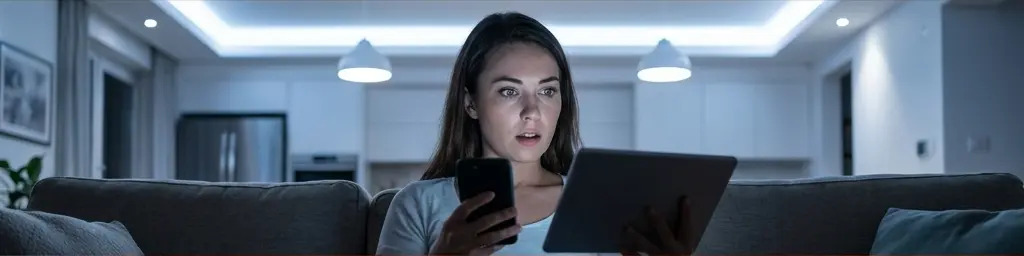
Phones, tablets, televisions and computer screens have become a normal part of work, communication and entertainment. The problem is not simply that we use technology. The problem is that we often use bright screens and white overhead LED lighting long after sunset.
This can affect your health and sleep through two closely connected mechanisms:
- Blue light activates melanopsin, which provides the brain with information about environmental light and helps control circadian timing.
- Blue light suppresses or delays melatonin, making it more difficult for the body to recognise that biological night has begun.
In other words, your clock may say 10 p.m., but your eyes may still be telling your brain that it is daytime.
How does blue light influence your circadian rhythm?
Your circadian rhythm is an approximately 24 hour biological timing system that coordinates sleep, wakefulness, hormones, body temperature, metabolism and cellular repair. Light is its most powerful environmental signal, and blue wavelengths strongly activate the retinal pathway that communicates with the master clock in the brain.
During the day, natural outdoor light helps keep this rhythm aligned with the solar day. Bright morning and daytime light promote alertness and tell your biology that it is time to be active.
After sunset, the natural spectrum and intensity change. Darkness begins to provide the opposite signal. The body prepares for the night phase, and melatonin starts rising before normal sleep time.
Evening exposure to screens and white LED lighting can confuse this transition. The light reaching your eyes does not match the natural time of day, so your circadian system receives a false daytime signal.
This is why the same blue wavelength can be useful in the morning and disruptive late in the evening. The issue is not only the colour of light, but also its intensity, timing, duration and distance from the eyes.
What are melanopsin and the circadian clock?
Melanopsin is a light sensitive pigment found in specialised retinal cells that help measure environmental light. These cells are not primarily responsible for creating the image you see. Their role is to inform the brain about brightness, spectrum and time of day.
When blue rich light reaches melanopsin containing retinal cells, they send signals through the retinohypothalamic pathway to the suprachiasmatic nucleus, also known as the SCN.
The SCN is the master circadian clock in the hypothalamus. It helps coordinate timing throughout the body, including:
- Sleep and wake timing
- Melatonin release
- Morning cortisol rhythm
- Body temperature
- Digestion and metabolism
- Daily patterns of alertness and recovery
This pathway explains why light can affect sleep even when a screen does not feel painfully bright. Your visual experience and your circadian response are related, but they are not identical.
A room may feel comfortably illuminated while still delivering a biologically meaningful signal to melanopsin.
How does blue light affect melatonin and sleep?
Evening blue light can suppress or delay the natural rise in melatonin. Melatonin is not merely a substance that makes you sleepy. It is a night signal involved in circadian organisation, antioxidant defence and mitochondrial protection.
Under natural conditions, melatonin usually begins rising before habitual bedtime as environmental light becomes dimmer and darkness approaches. This rise informs the body that the active part of the day is ending.
Bright screens and white LED lighting can interfere with that signal. Depending on intensity, spectrum, timing and duration, evening light may:
- Delay the onset of melatonin production
- Reduce nocturnal melatonin levels
- Make falling asleep more difficult
- Shift the circadian rhythm later
- Reduce next morning alertness
- Make sleep timing less stable
The strongest practical message is simple: your evening environment should not look like midday.
It is also worth remembering that melatonin is connected with mitochondrial biology. Research has described melatonin production and signalling within cells and mitochondria, where it participates in antioxidant and protective functions.
Can red and near infrared light support melatonin?
Research has examined red and near infrared light in connection with sleep, cellular melatonin and mitochondrial biology. These wavelengths activate melanopsin far less strongly than blue rich white light, and they are naturally abundant in sunlight.
One study followed female basketball players who received 30 minutes of whole body red light exposure in the evening for 14 days. The researchers reported improved sleep related measures and increased nocturnal melatonin compared with the control group.
This does not mean that every red lamp automatically improves sleep or that red light should replace darkness. The practical hierarchy remains:
- Natural outdoor light during the day
- Reduced bright and blue rich light after sunset
- Dim red or amber light when evening illumination is needed
- A dark bedroom during sleep
Red and near infrared light may complement this environment. They should not become an excuse to continue using bright screens until bedtime.
You can read more in our article about how to support natural melatonin production in the evening.
What is artificial light at night?
Artificial light at night, often shortened to ALAN, means exposure to electric light during the biological night. It includes screens, televisions, street lighting, illuminated advertising, white household LEDs and other light sources that continue after sunset.
ALAN is broader than screen exposure alone. You may put your phone away and still spend the entire evening beneath bright overhead LEDs.
The biological effect depends on several factors:
- Spectrum: Blue rich light activates melanopsin strongly.
- Intensity: Brighter light generally creates a stronger circadian signal.
- Timing: Light close to normal bedtime can delay the night phase.
- Duration: Longer exposure increases the total light dose.
- Direction: Light entering the eyes has greater circadian relevance than light directed away from them.
The issue is therefore not simply whether a lamp or screen is on. The question is what biological message that light is delivering at that time.
Do we have too much blue light and too little red light?
Modern indoor life creates a distorted light environment. During the day, many people receive too little bright full spectrum sunlight. During the evening, they receive too much artificial light with a strong blue component.
We often wake before sunrise, travel indoors, work beneath artificial lighting, look at screens for hours and return home after sunset. We may then continue using bright white lighting and displays until bedtime.
The problem is therefore not only excessive artificial blue light. It is also the loss of the natural daily pattern:
- Bright full spectrum light in the morning and during the day
- Regular exposure to natural red and infrared sunlight
- A gradual reduction in brightness toward evening
- Darkness during the biological night
Mitochondriak® red and infrared panels were created to help replenish frequencies of natural sunlight that are often missing from modern indoor environments.
How can you improve your evening light environment?
The simplest strategy is to make daytime brighter and evenings dimmer. You do not need to abandon your phone or computer completely. Begin by changing when, where and under what lighting conditions you use them.
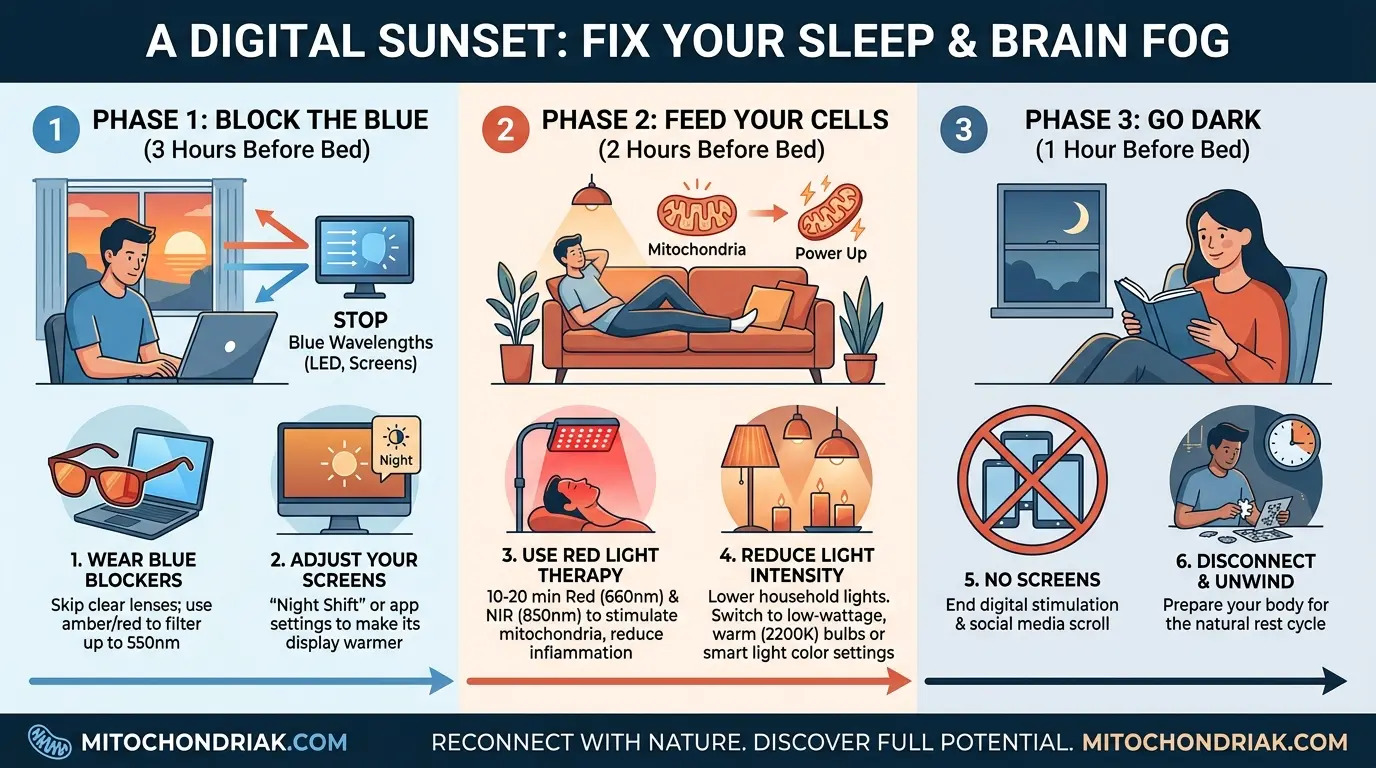
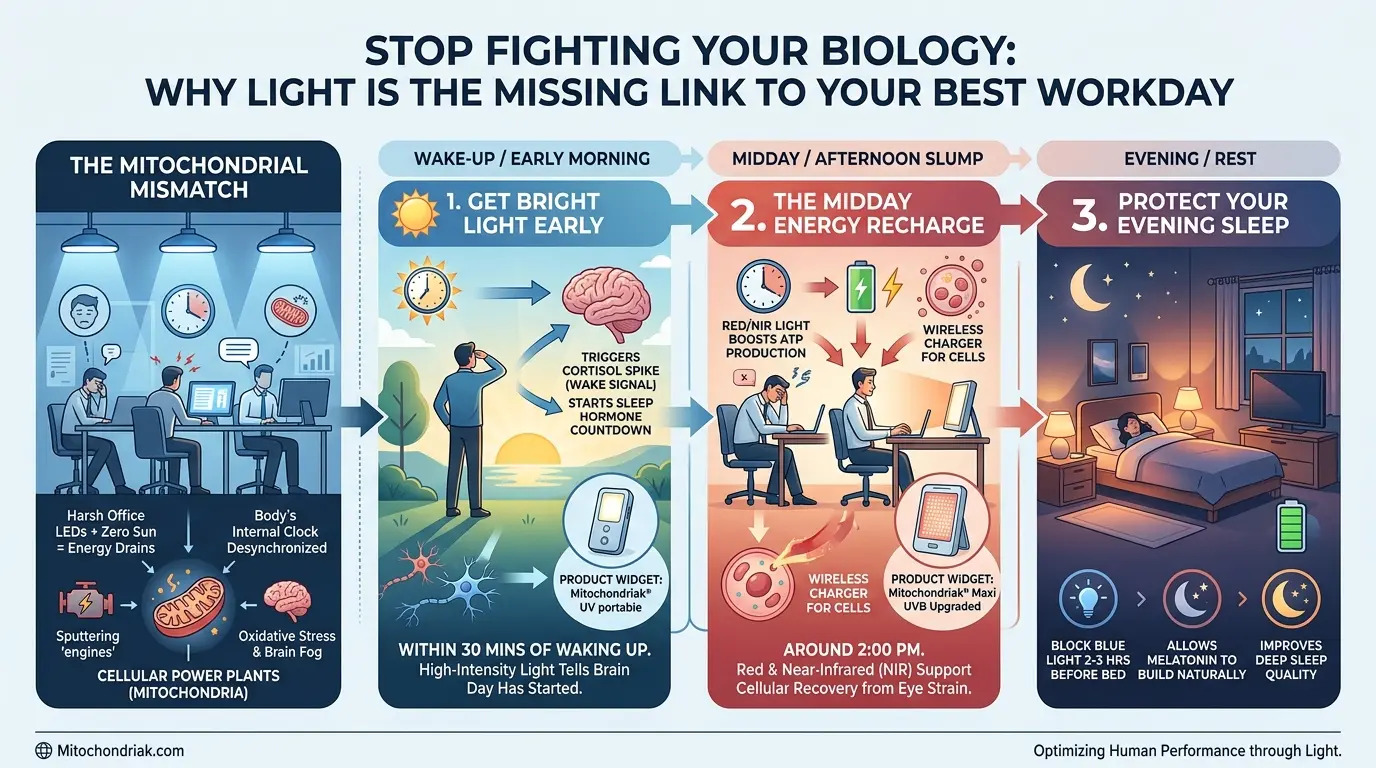
- Go outside after waking. Spend at least a few minutes in natural morning light. Outdoor light is significantly stronger and spectrally richer than typical indoor illumination.
- Spend regular time outside during the day. Even brief outdoor breaks help reinforce a clear daytime signal.
- Reduce bright screens after sunset. Lower brightness, increase viewing distance and avoid holding the screen close to your face in a dark room.
- Dim overhead lights in the evening. Use lower positioned lamps rather than bright ceiling lighting.
- Use red or blue light free bulbs. Red evening lighting, candles or a fireplace provide illumination with a weaker melanopsin signal.
- Wear properly measured evening glasses when necessary. If screens cannot be avoided, blue light blocking glasses can reduce the wavelengths reaching your eyes.
- Create a digital sunset. Choose a consistent time when work, messages and entertainment begin winding down.
- Sleep in darkness. Remove unnecessary light sources and use blackout curtains when outdoor lighting enters the bedroom.
- Do not rely only on night mode. Software filters may help, but they do not remove every problematic wavelength, reduce room lighting or eliminate flicker.
Important: Persistent insomnia, severe daytime fatigue or a suspected sleep disorder should be discussed with a qualified healthcare professional. Light hygiene can be a valuable foundation, but it does not replace appropriate diagnosis or medical care.
If you use red and infrared light devices to complement limited sunlight exposure, choose a transparent brand that provides measurable information about wavelength, intensity and flicker.
At Mitochondriak®, we publish the relevant technical parameters and carry out real measurements of our devices. You can explore our red and infrared light therapy devices or our indoor evening lighting solutions.
Protect your biological night
Start with darkness, lower evening brightness and less screen exposure. When artificial light is necessary, choose measured filters and lighting that remove the blue wavelengths your circadian system interprets as daytime.
Frequently asked questions about blue light
What is artificial light at night?
Artificial light at night, often shortened to ALAN, is exposure to electric light during the biological night. Screens, televisions, overhead LEDs and other indoor sources can send daytime signals when your circadian system expects darkness.
Why does blue light suppress melatonin?
Blue light strongly activates melanopsin containing retinal cells. These cells signal the brain's master circadian clock that it is daytime, which can delay or reduce the evening rise in melatonin.
Is blue light harmful during the day?
Blue light is not inherently harmful. Natural blue rich daylight is an important daytime signal that supports alertness and circadian timing. The main problem is strong artificial blue light at the wrong time, especially after sunset.
Do red light bulbs help in the evening?
Red light has much less influence on melanopsin than blue rich white light. Dim red lighting can therefore provide useful evening illumination while interfering less with the biological signal of darkness.
Are blue light blocking glasses useful?
Properly measured blue light blocking glasses can reduce the wavelengths reaching your eyes in the evening. Their effectiveness depends on the lens spectrum, fit, timing and the surrounding light environment.
Can red and near infrared light support melatonin?
Research has examined red and near infrared light in relation to cellular and mitochondrial melatonin. A study in female athletes also reported improved sleep measures and higher nocturnal melatonin after evening red light exposure.
What is the simplest way to protect circadian rhythm?
Get outdoor light after waking, spend regular time outside during the day, reduce bright screens and overhead lighting after sunset, use dim red or amber evening light, and sleep in a dark room.
Sources and references
- Blume C, Garbazza C, Spitschan M. Effects of light on human circadian rhythms, sleep and mood. Somnologie. 2019. Open the source
- Zhao J et al. Red light and sleep quality in female basketball players. Journal of Athletic Training. 2012. Open the study
- Odinokov D, Hamblin MR. Melatonin and the optics of the human body. Melatonin Research. 2018. Open the review
- Artificial light at night and human health. Open the scientific source