
.png)
Skincare is no longer only about what you apply to the surface. Red and near infrared light can reach the biological processes beneath it, where mitochondria, fibroblasts and collagen production shape how the skin regenerates. This is why red light therapy for the skin has become increasingly popular for wrinkles, sensitive skin, rosacea, dermatitis and acne-related inflammation.
- Red light therapy uses red and near infrared wavelengths to support cellular activity inside the skin.
- Photobiomodulation can influence mitochondria, fibroblasts, collagen fibres and inflammatory signalling.
- Clinical studies have reported improvements in skin roughness, elasticity, collagen density and the appearance of fine wrinkles.
- Red light may complement professional care for rosacea, dermatitis and inflammatory acne, but it does not replace a dermatologist.
- A home skincare routine should follow the instructions for the specific Mitochondriak® device rather than a universal dose.
- What is red light therapy for the skin?
- How does red light affect skin cells?
- Can red light support collagen production?
- What does research say about wrinkles and skin ageing?
- Can red light help with rosacea and dermatitis?
- Does red light therapy help with acne?
- How can you use red light therapy at home?
- Which red light device is suitable for skincare?
- Frequently asked questions about red light skincare
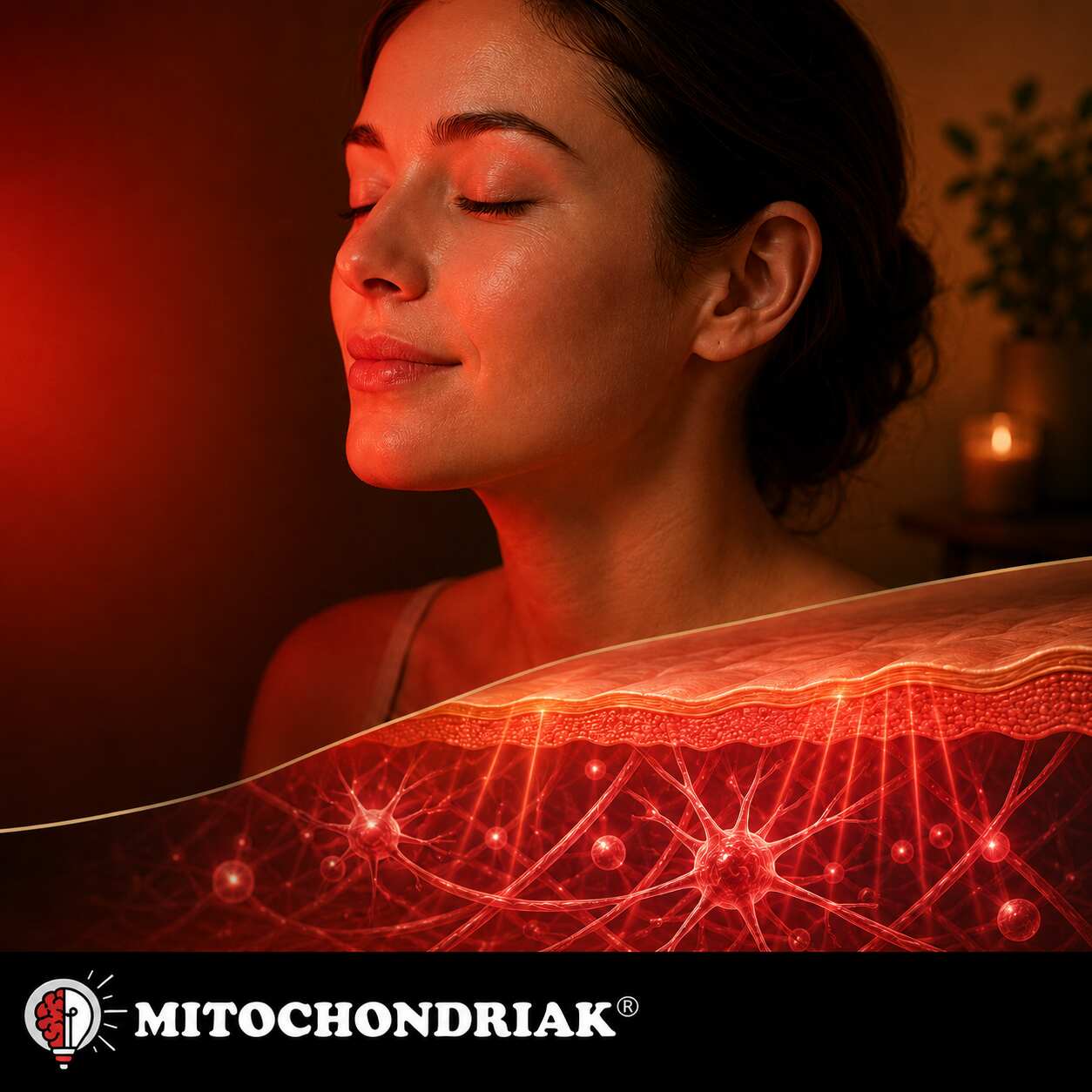
What is red light therapy for the skin?
Red light therapy is a form of photobiomodulation that uses red and near infrared light to influence cellular processes without heating or damaging the skin. Mitochondriak® devices use wavelengths within the broader range of 630 to 940 nm, combining light that acts closer to the surface with wavelengths that reach deeper tissue structures.
Unlike ultraviolet light, red and near infrared light do not work by producing a tanning response. They deliver photons that interact with light-sensitive molecules inside cells. The biological response depends on the wavelength, intensity, exposure time, distance and condition of the tissue.
Photobiomodulation is now studied and used in several areas:
- Skin regeneration: supporting the cellular processes involved in tissue repair.
- Collagen production: influencing fibroblasts and the extracellular matrix.
- Skin ageing: supporting elasticity, texture and the appearance of fine wrinkles.
- Inflammatory skin: modulating inflammatory and oxidative processes.
- Recovery: supporting tissue after selected cosmetic or dermatological procedures.
The technology is no longer limited to specialist clinics. Modern red light therapy devices for home use make it possible to include photobiomodulation in a regular skincare routine.
How does red light affect skin cells?
Red and near infrared photons interact with cellular photoacceptors and can change mitochondrial activity, redox signalling and the availability of cellular energy. In practical terms, this may give skin cells a more favourable environment for regeneration, collagen synthesis and inflammatory regulation.
Mitochondria are often described as cellular power plants, but they are more than batteries. They coordinate energy production, reactive oxygen species, cellular signalling and the response to environmental stress.
One of the main proposed targets of photobiomodulation is cytochrome c oxidase, or CCO, an enzyme in the mitochondrial respiratory chain. Light absorption can influence electron transport, nitric oxide signalling, mitochondrial membrane potential and the production of ATP.
This does not mean that light simply pours energy into the skin like electricity into a cable. The response is biological. Photons act as signals, and the cell decides how to translate that signal according to its current redox state.
These mechanisms may contribute to:
- More efficient cellular regeneration when the skin is under metabolic stress.
- Modulation of inflammation rather than indiscriminate suppression of every immune response.
- Support for microcirculation and the delivery of oxygen and nutrients.
- Fibroblast activity involved in collagen and elastin production.
- Improved tissue repair after minor skin stress or selected cosmetic procedures.
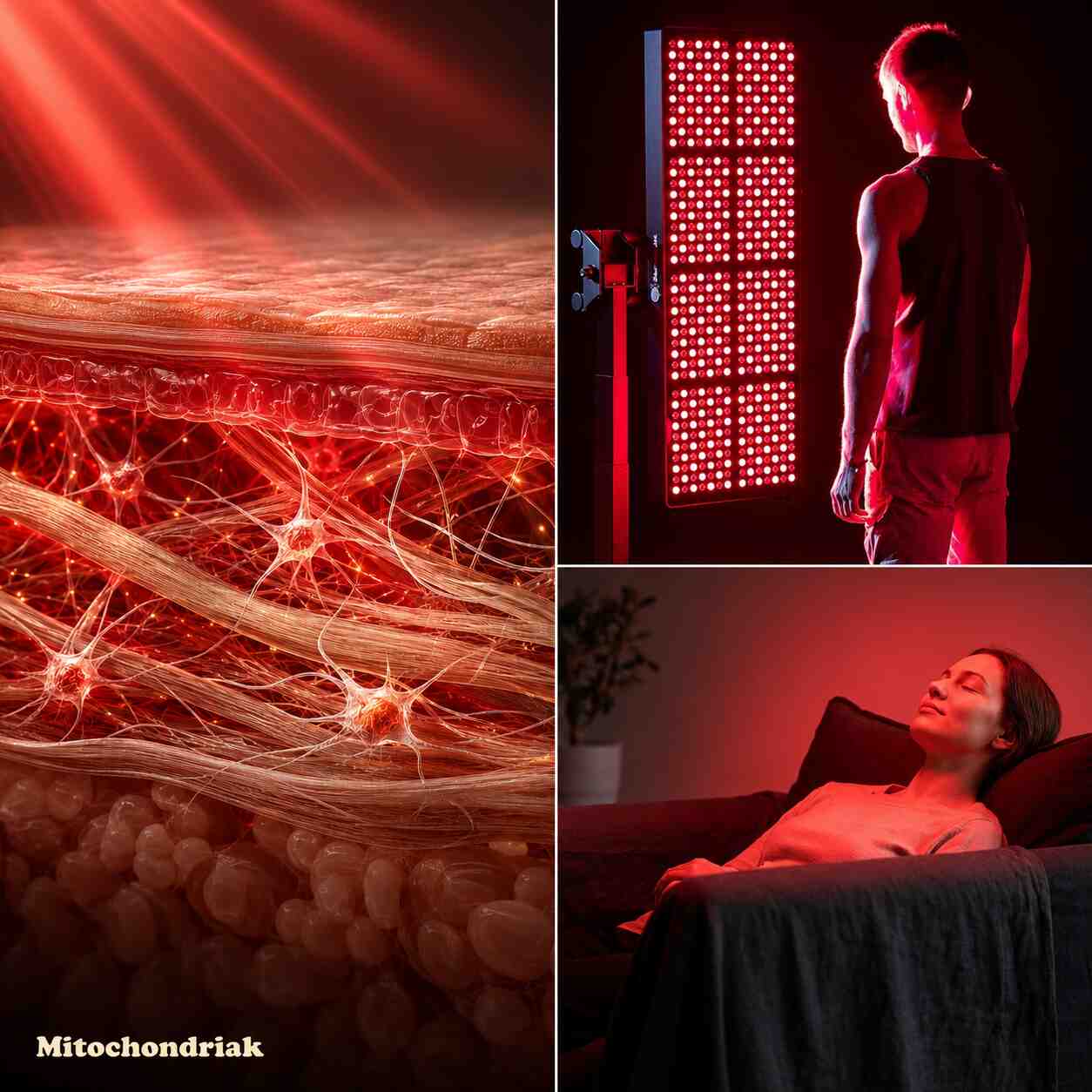
Can red light support collagen production?
Yes. Clinical and laboratory research indicates that repeated red and near infrared light exposure can support fibroblast activity, collagen synthesis and the organisation of collagen fibres. These processes matter because collagen gives the skin structure, while elastin helps it return to its original shape.
Collagen production gradually changes with age and environmental exposure. Sunburn, artificial light at night, poor sleep, smoking, chronic inflammation and oxidative stress can all influence the balance between collagen creation and breakdown.
Photobiomodulation approaches the issue from beneath the cosmetic surface. Creams can support hydration and the skin barrier, while red and near infrared light can reach the tissue environment in which fibroblasts and collagen fibres are located.
A controlled study by Alexander Wunsch and Karsten Matuschka included 136 volunteers. After a series of 30 treatments, the intervention groups showed significant improvements in skin complexion, skin feeling, roughness and measured intradermal collagen density compared with controls.
Another clinical and laboratory study led by Daniel Barolet found increased type I procollagen in a reconstructed skin model after pulsed 660 nm exposure. The clinical part also reported improvements in wrinkle depth and surface roughness after repeated treatments.
The point is not that red light erases every wrinkle. The more realistic benefit is gradual support for the biological structure of the skin.
What does research say about wrinkles and skin ageing?
Research suggests that repeated photobiomodulation can improve fine wrinkles, elasticity, skin roughness and collagen structure, although outcomes depend on the device and treatment parameters. It is not an instant facelift and should not be presented as a replacement for lost facial volume or invasive procedures.
A randomized split-face trial involving 137 women compared red light at 660 nm with amber light at 590 nm. Participants received 10 sessions over four weeks. The published results reported a reduction in periocular wrinkle volume, with the study title noting an average reduction of 30 percent under the tested protocol.
An earlier randomized and double-blinded study of 76 participants evaluated 633 nm, 830 nm and their combination. Objectively measured results showed reductions in wrinkles and increases in skin elasticity compared with baseline. Histological analysis also found increased collagen and elastic fibres and activated fibroblasts.
These studies used specific clinical devices and doses. Their numerical results cannot automatically be transferred to every household lamp or panel. What they demonstrate is that the skin can respond measurably to controlled red and near infrared light exposure.
| Study | Participants | Light used | Main finding |
|---|---|---|---|
| Wunsch and Matuschka, 2014 | 136 volunteers | Red and broader polychromatic light | Improved skin roughness, complexion and collagen density |
| Lee et al., 2007 | 76 participants | 633 nm, 830 nm or a combination | Reduced wrinkles and increased elasticity, collagen and elastic fibres |
| Mota et al., 2023 | 137 women | 660 nm red and 590 nm amber light | Reduced periocular wrinkle volume after repeated sessions |
Can red light help with rosacea and dermatitis?
Red light may support sensitive and inflamed skin by influencing mitochondrial function, oxidative stress and inflammatory signalling. For rosacea or dermatitis, however, it should be used as a complementary approach rather than a substitute for diagnosis and professional dermatological care.
Rosacea is not simply a cosmetic problem. It can involve persistent redness, burning, visible blood vessels, inflammatory lesions and an impaired skin barrier. Dermatitis can have several different causes and forms, so one universal light protocol is not appropriate.
The gentleness of non-thermal photobiomodulation makes it interesting for people who do not tolerate aggressive cosmetic procedures. Potential benefits include:
- Supporting the skin barrier and its regenerative processes.
- Modulating inflammatory signalling associated with irritated skin.
- Supporting mitochondrial energy in metabolically stressed skin cells.
- Improving tissue recovery without exfoliating or mechanically damaging the surface.
Red and near infrared light can complement a broader approach that also considers daylight exposure, circadian rhythm, sleep, food quality and individual triggers.
For a deeper explanation, read our dedicated guide to rosacea and red light therapy.
Important: Rosacea, dermatitis and persistent inflammatory acne should be assessed by a dermatologist. Light therapy can be a useful complementary tool, but it does not replace diagnosis, prescribed treatment or medical supervision.
Does red light therapy help with acne?
Red light may help inflammatory acne by supporting tissue regeneration and moderating inflammation, while blue light is more directly associated with antimicrobial effects against acne-related bacteria. The two colours therefore perform different biological roles and are sometimes combined in professional or multifunctional devices.
Inflamed acne involves more than bacteria. Sebum production, the skin barrier, immune signalling, hormones, oxidative stress and the microbiome all contribute to the condition.
Red light is especially relevant to the inflammatory and regenerative side of acne care. It may help calm redness and support healing after lesions, but it should not be described as a universal cure.
People with photosensitivity, active medical treatment, severe cystic acne or a history of unusual reactions to light should discuss home photobiomodulation with a dermatologist before beginning.
How can you use red light therapy at home?
A home red light skincare routine should begin with clean skin, direct exposure and the instructions supplied with your specific device. Distance, exposure time and intensity are connected, so a protocol designed for one device should never be copied blindly to another.
A simple routine can look like this:
- Clean the skin. Remove makeup, sunscreen and thick cosmetic layers before the session.
- Position the device correctly. Keep the panel stable and follow its recommended operating distance.
- Use red and near infrared light as instructed. Do not add UV unless you are using a device designed for UV and following its separate safety instructions.
- Keep the routine consistent. Skin remodelling happens gradually, not after a single exposure.
- Apply skincare afterwards. A gentle moisturiser or suitable serum can support hydration and the surface barrier.
For standard Mitochondriak® panels, the current general recommendation for superficial areas such as the skin is 5 to 10 minutes from a distance of 30 to 60 cm. The exact instructions for the model you own always take priority.
Do not use UV light on the face as part of this routine. Mitochondriak® instructions advise avoiding the face and eye area during UV exposure and using the supplied protective eyewear whenever UV is active.
If red or near infrared light feels uncomfortable around the eyes, keep your eyes closed and use protective glasses. Anyone with damaged or unusually light-sensitive eyes should consult a specialist.
Which red light device is suitable for skincare?
The most suitable device depends on the surface area you want to illuminate and whether skincare is your only goal. A compact panel is practical for the face, neck and décolletage, while a therapy bulb is better suited to a small local area.
Compact panel for the face, neck and décolletage
The Mitochondriak® Office Upgraded is a compact red and near infrared panel with a touch display and seven wavelengths. Its size makes it suitable for targeted exposure of the face, neck or décolletage without requiring a full-body setup.
Therapy bulb for localized skincare
The LED RED and NIR bulb Mitochondriak® is designed for local red and near infrared exposure. It combines six wavelengths and includes an adjustable gooseneck holder, allowing the light to be aimed at a selected area without holding the bulb by hand.
Larger panels for broader use
A larger device may make sense when skincare is only one of several intended uses and you also want to illuminate the torso, legs or larger muscle groups. You can compare the available options in our red light therapy device category or use the product selection assistant.
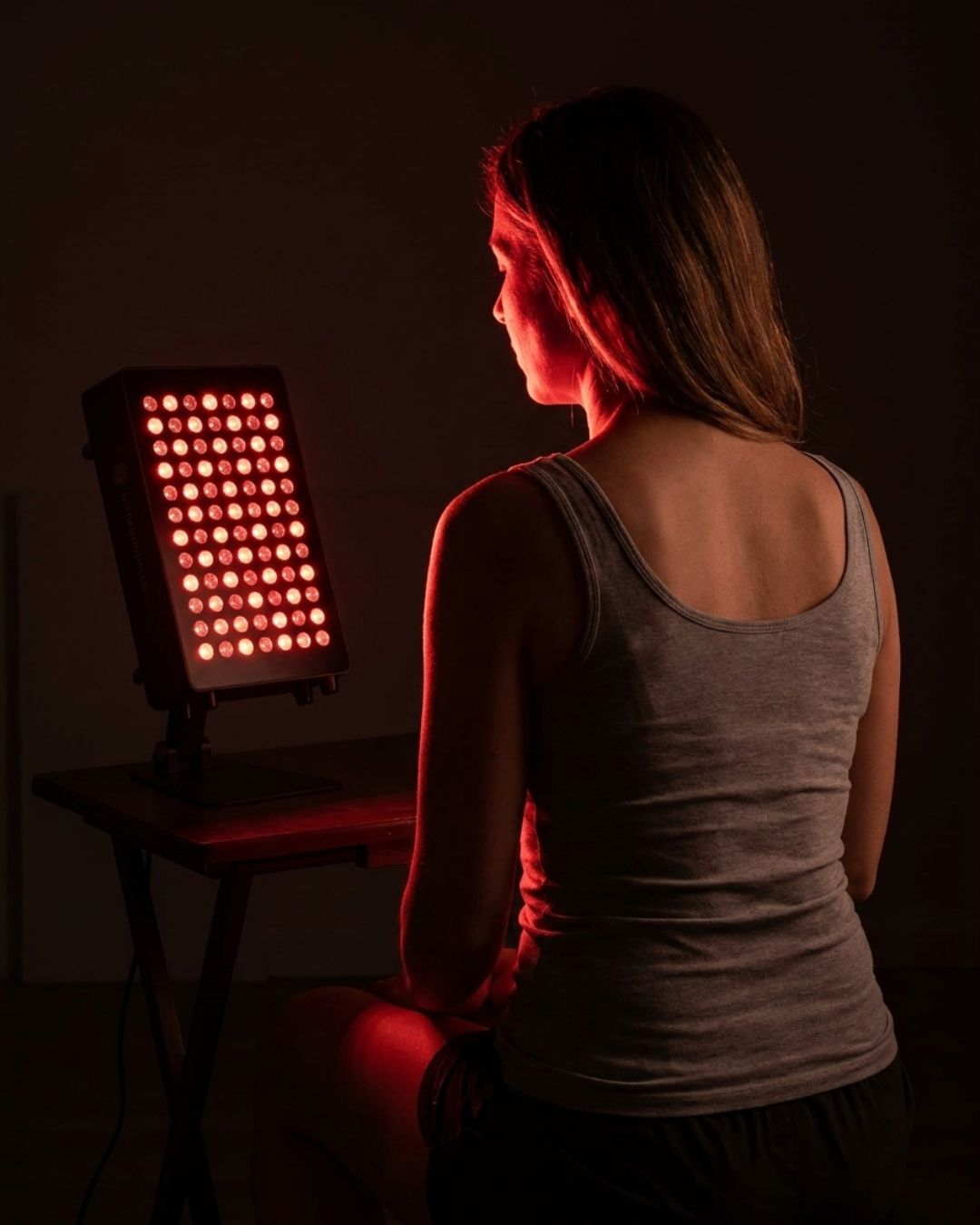
Support your skin beneath the surface
Cosmetics mainly work at the surface and barrier level. Red and near infrared light add another layer by supporting the cellular environment in which regeneration, fibroblast activity and collagen remodelling take place.
Frequently asked questions about red light skincare
Does red light really improve skin quality?
Red light therapy can support skin regeneration and gradually improve texture, elasticity and the appearance of fine wrinkles. Clinical studies have also measured changes in collagen density and skin roughness. Results depend on the wavelength, dose, device, consistency and condition of the skin.
How soon can results become visible?
Some people notice changes in skin tone, calmness or texture within several weeks. Collagen remodelling takes longer, so more visible changes are usually associated with repeated use over several weeks rather than a single session. The original routine in this article places the expected window at approximately 4 to 8 weeks.
How long should one facial red light session last?
Session length depends on the device, distance and intensity. For standard Mitochondriak® panels, the current general recommendation for superficial skin is 5 to 10 minutes from 30 to 60 cm. Always follow the instructions supplied with your specific model.
Is red light therapy safe for the skin?
Non-thermal red and near infrared light is generally well tolerated when used correctly. It is different from ultraviolet light and does not create the same photochemical response. Stop if you experience unusual redness, pain or discomfort and consult a healthcare professional if you suspect photosensitivity.
Can red light therapy help with dermatitis?
Red light may support regeneration and modulate inflammatory signalling in some forms of irritated skin. Dermatitis has multiple causes, however, and light therapy should not replace diagnosis or prescribed treatment. Chronic, spreading or painful dermatitis should always be discussed with a dermatologist.
Can red light slow visible skin ageing?
Red light can support fibroblast activity, collagen production, elasticity and skin texture. This may gradually soften the appearance of fine wrinkles and improve overall skin quality. It cannot stop chronological ageing or reproduce the effects of surgery and other invasive procedures.
Does red light help with acne?
Red light can support healing and reduce inflammatory activity associated with acne. Blue light is more directly linked to antimicrobial effects against acne-related bacteria, so the colours have different roles. Severe, cystic or persistent acne should be managed with a dermatologist.
Sources and references
- Avci P, Gupta A, Sadasivam M, et al. Low-level laser light therapy in skin: stimulating, healing, restoring. Seminars in Cutaneous Medicine and Surgery. 2013. PubMed
- Wunsch A, Matuschka K. A controlled trial to determine the efficacy of red and near infrared light treatment in patient satisfaction, reduction of fine lines, wrinkles, skin roughness and intradermal collagen density increase. Photomedicine and Laser Surgery. 2014. PubMed
- Lee SY, Park KH, Choi JW, et al. A prospective, randomized, placebo-controlled, double-blinded and split-face clinical study on LED phototherapy for skin rejuvenation. Journal of Photochemistry and Photobiology B. 2007. PubMed
- Barolet D, Roberge CJ, Auger FA, Boucher A, Germain L. Regulation of skin collagen metabolism in vitro using a pulsed 660 nm LED light source. Journal of Investigative Dermatology. 2009. PubMed
- Mota LR, Duarte IS, Galache TR, et al. Photobiomodulation reduces periocular wrinkle volume by 30 percent: a randomized controlled trial. Photobiomodulation, Photomedicine, and Laser Surgery. 2023. PubMed