.png)
Rosacea
Rosacea is a chronic inflammatory skin condition affecting the face that impacts approximately 5 to 10% of the population. In this glossary entry, you will learn what rosacea is, how it develops, what types exist, and why photobiomodulation is among the most promising non-pharmacological approaches for alleviating its symptoms.
- What rosacea is and what its 4 main types are
- How rosacea is connected to inflammation and mitochondrial dysfunction in skin cells
- What science says about photobiomodulation in the treatment of rosacea
- What the difference is between red and infrared light in caring for sensitive skin
- Practical tips for managing rosacea triggers in everyday life
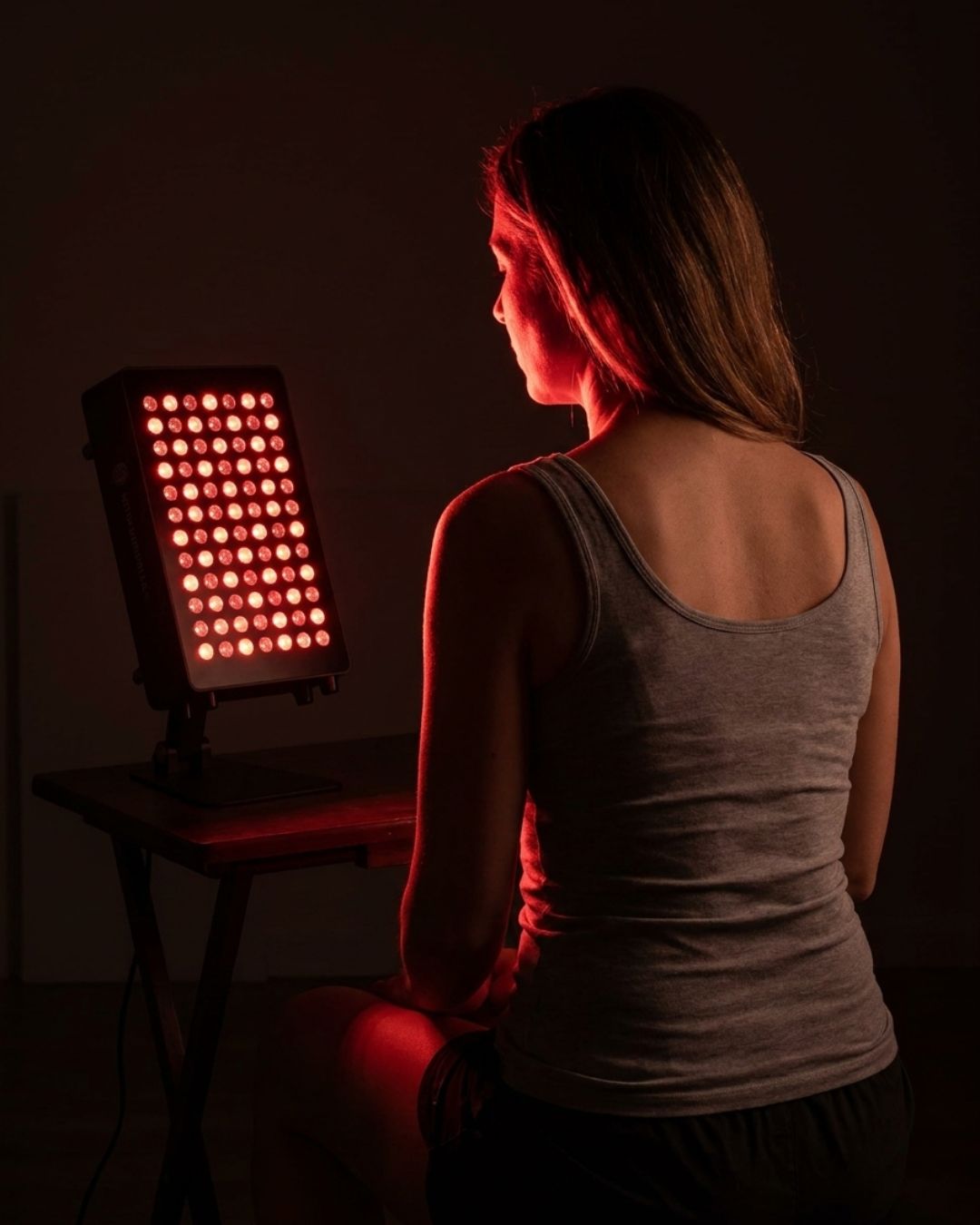
What is rosacea and why does it develop?
Rosacea is a chronic inflammatory skin condition that manifests primarily on the face. Typical signs include redness of the cheeks, nose, forehead, or chin, visible blood vessels (telangiectasias), and increased skin sensitivity. According to estimates, it affects 5 to 10% of the global population, occurring more frequently in people with lighter skin types (Wu et al., 2022).
The exact cause of rosacea is not fully understood, but scientists agree that it involves a combination of genetic predisposition, immune dysregulation, and environmental triggers. Key factors include excessive activity of the innate immune system, dysfunction of the skin barrier, and abnormal vascular reactivity. The mite Demodex folliculorum, which is found in significantly higher numbers in the skin of people with rosacea, also plays a role.
What are the 4 types of rosacea?
Dermatology distinguishes 4 main types (subtypes) of rosacea, each with different manifestations and progression. Individual types can also combine in a single patient or transition from one to another.
| Type | Name | Main manifestations |
|---|---|---|
| Type I | Erythematotelangiectatic | Persistent redness, visible blood vessels, burning sensation |
| Type II | Papulopustular | Inflammatory bumps and pustules resembling acne |
| Type III | Phymatous | Skin thickening, nose enlargement (rhinophyma) |
| Type IV | Ocular rosacea | Redness, burning and dryness of the eyes, eyelid swelling |
The most commonly diagnosed are type I and type II. Both respond to light therapy, particularly photobiomodulation, better than more advanced stages of the condition.
How is rosacea connected to mitochondria and inflammation?
Inflammation is at the core of rosacea pathology. In damaged skin cells, there is overproduction of pro-inflammatory cytokines (such as TNF-alpha, IL-1beta, and IL-6) and dysregulation of the immune response. Research suggests that mitochondrial dysfunction may be one of the mechanisms that sustain this inflammatory cycle.
When mitochondria in skin cells are not functioning optimally, they produce less ATP (cellular energy) and more reactive oxygen species (ROS). The result is oxidative stress, cell damage, and further deepening of inflammation. According to the study by Wu et al. (2022), photobiomodulation (PBM) can regulate the expression of key inflammatory mediators and modulate immune infiltration in skin affected by rosacea (Wu et al., 2022).
Red and infrared light acts directly on cytochrome c oxidase in the inner membrane of mitochondria. This enzyme is the final link in the electron transport chain, and its stimulation leads to increased ATP production, reduced oxidative stress, and activation of signaling pathways that support tissue regeneration.
Does red light help with rosacea?
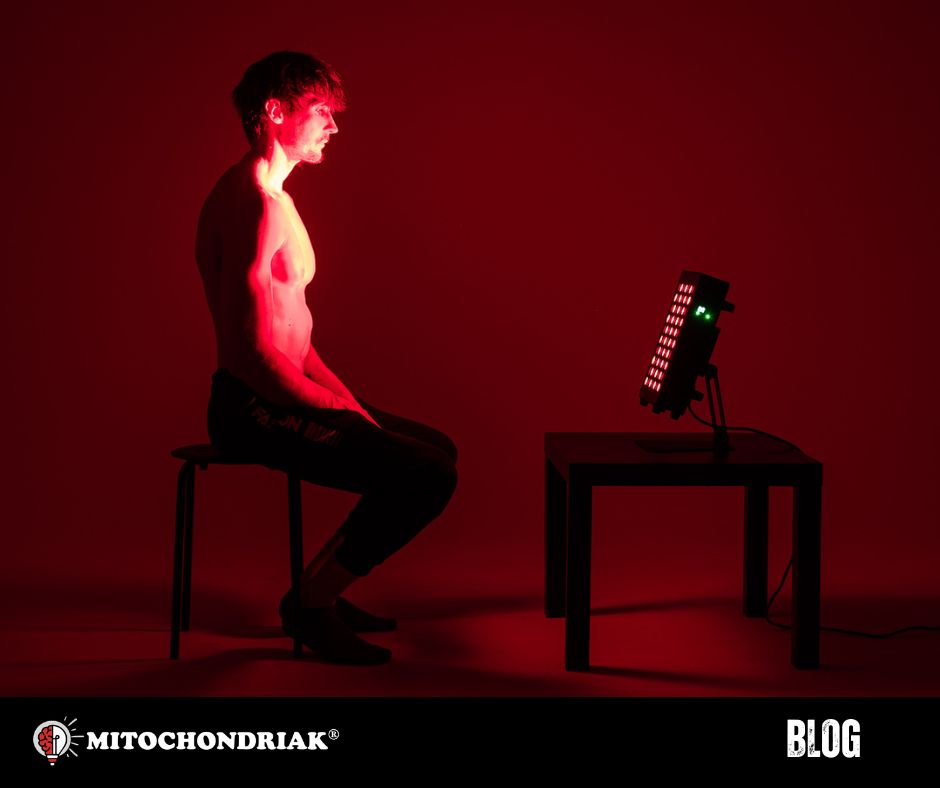
Yes, a growing body of scientific evidence suggests that photobiomodulation with red and infrared light can alleviate the key manifestations of rosacea. The mechanism of action includes reducing the inflammatory response, supporting the restoration of the skin barrier, and regulating vascular reactivity.
The systematic review by Boaretto Netto et al. (2025) analyzed clinical and experimental studies and concluded that photobiomodulation reduces the expression of pro-inflammatory factors, inflammatory infiltration, and immune dysregulation typical of rosacea (Boaretto Netto et al., 2025).
In terms of wavelengths, the most effective appear to be:
- Red light (630 to 670 nm) penetrates the upper layers of the dermis, where it acts as an anti-inflammatory and supports collagen production
- Infrared light (810 to 940 nm) penetrates deeper and acts on vascular structures, fibroblasts, and deeper inflammatory processes
This combination of red and infrared light is the foundation of Mitochondriak® devices, which contain wavelengths of 630, 670, 760, 810, 830, 850, and 940 nm. This covers the full spectrum validated by research, including the 760 nm wavelength targeting cytochrome c oxidase.
The classic review by Avci et al. (2013) confirmed that low-level light therapy (LLLT) has broad applications in dermatology, from stimulating wound healing to reducing inflammation to supporting collagen synthesis (Avci et al., 2013).
It is important to distinguish photobiomodulation from IPL (intense pulsed light). While IPL targets and destroys visible blood vessels through thermal effects, photobiomodulation works systemically at the cellular level, regulating inflammation and supporting natural regeneration. For people with rosacea, PBM may be a gentler and complementary alternative.
What are the most common rosacea triggers and how to avoid them?
Rosacea is a chronic condition that cannot be completely cured, but it can be effectively managed by identifying and minimizing triggers. The most common triggers include alcohol, spicy foods, hot beverages, extreme temperatures, stress, and certain cosmetic products.
From a light hygiene perspective, it is important to know that intense artificial light (especially blue LED light from screens) can increase oxidative stress in the skin. Conversely, morning sunlight in reasonable doses supports the natural adaptation of the skin and the production of protective melanin.
For sensitive skin with rosacea, we recommend:
- Gradual and sensible exposure to morning sunlight (avoid prolonged midday sun exposure, especially with unprepared skin)
- Minimizing contact with aggressive chemical facial products
- Using blue light blocking glasses in the evening to support the circadian rhythm and quality sleep, which indirectly reduces inflammatory burden
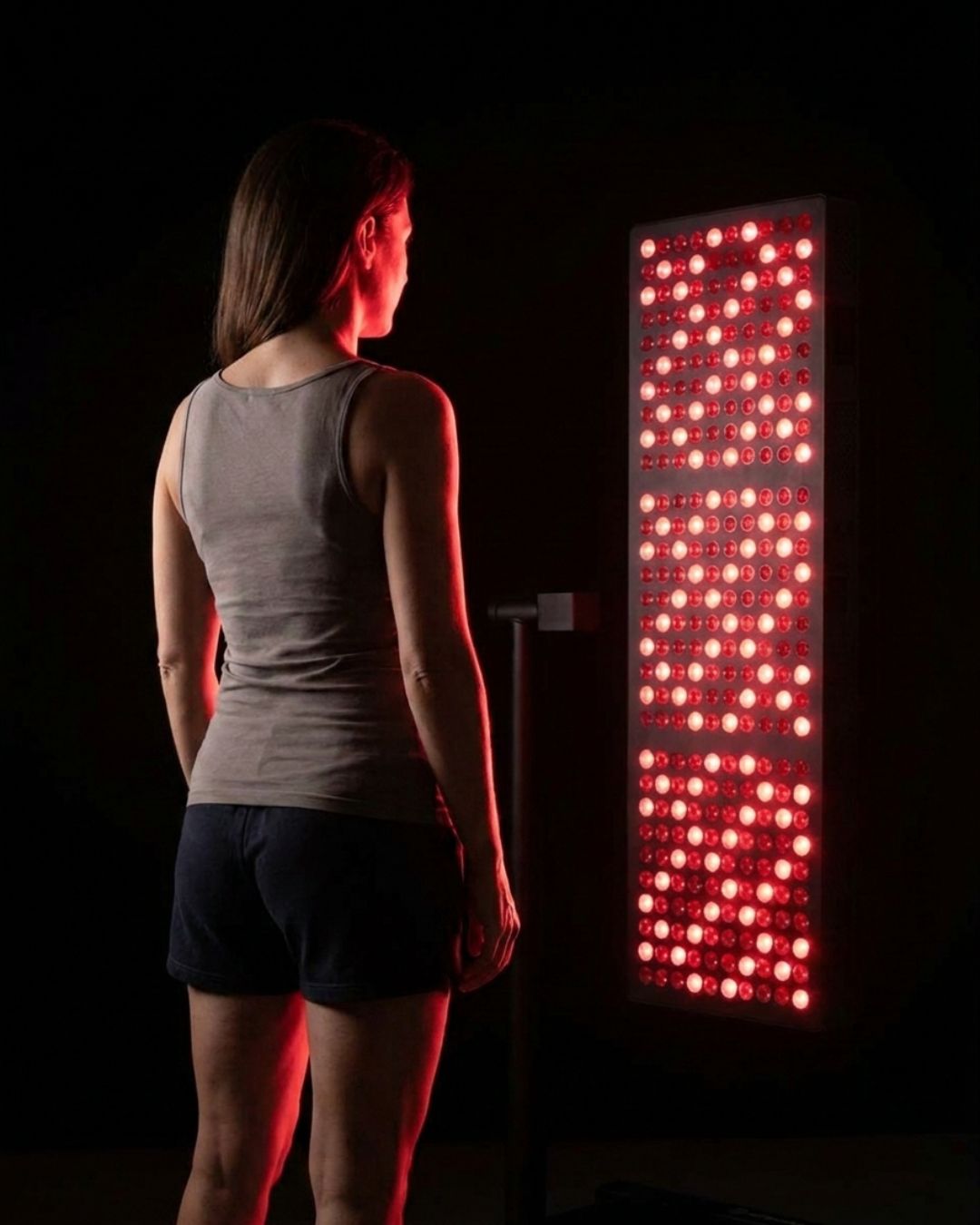
Want to try red light therapy for sensitive skin?
Mitochondriak® devices contain 7 wavelengths (630 to 940 nm) that cover the spectrum validated by research in the area of skincare, including alleviating the manifestations of rosacea.
Frequently Asked Questions About Rosacea
What is rosacea and how does it manifest?
Rosacea is a chronic inflammatory skin condition that manifests primarily on the face. Typical signs include persistent redness, visible blood vessels, inflammatory bumps, and increased skin sensitivity. It affects approximately 5 to 10% of the population and occurs predominantly in people with lighter skin. Rosacea is not contagious and cannot be completely cured, but its symptoms can be effectively managed.
Is rosacea the same as acne?
No, rosacea and acne are different conditions, although some manifestations may look visually similar. Acne is primarily caused by pore clogging with sebum and bacteria, while rosacea is caused by inflammatory and vascular dysfunction. Rosacea does not have comedones (blackheads and whiteheads) that are typical of acne. A dermatologist can distinguish between them.
Does red light help with rosacea?
According to multiple scientific studies, yes. Photobiomodulation with red and infrared light reduces the expression of pro-inflammatory cytokines, regulates the immune response, and supports skin regeneration. Research indicates that wavelengths in the range of 630 to 940 nm can alleviate redness, inflammation, and skin sensitivity in rosacea.
What is the difference between photobiomodulation and IPL for rosacea?
IPL (intense pulsed light) targets and destroys visible dilated blood vessels through thermal effects. Photobiomodulation, on the other hand, works at the cellular level, stimulating mitochondria, reducing inflammation, and supporting the natural regeneration of tissues. PBM is a gentler method and can serve as a complement to dermatological treatment.
Can the sun make rosacea worse?
Intense and prolonged sun exposure without skin adaptation is among the most common triggers of rosacea flare-ups. However, brief exposure to morning sunlight with gradual building of skin tolerance can be beneficial. The key is a sensible approach and gradual adaptation, not complete avoidance of the sun.
Which wavelengths are most effective for rosacea?
Research shows that the best results are achieved with red wavelengths in the range of 630 to 670 nm (anti-inflammatory effect, collagen support) and infrared wavelengths of 810 to 940 nm (deeper penetration, regeneration of vascular structures). The combination of both ranges is more effective than using a single wavelength.
Is rosacea hereditary?
Genetic predisposition plays a significant role in rosacea. If one parent has rosacea, the risk of the condition in their offspring is higher. However, genetics alone is not sufficient; the condition manifests only in combination with environmental triggers such as stress, diet, extreme temperatures, or unsuitable cosmetic products.
Related glossary terms
- Photobiomodulation (PBM) – therapy using red and infrared light to stimulate cellular processes
- Cytochrome c oxidase – an enzyme in mitochondria that red light directly acts upon
- Telangiectasias – visible dilated blood vessels on the skin surface, typical of rosacea type I
- Demodex folliculorum – a mite living in skin follicles, associated with rosacea
- Collagen – a structural protein of the skin whose synthesis red light supports
Summary
Rosacea is a chronic inflammatory facial condition with multiple subtypes that can be effectively managed through a combination of trigger identification and modern therapeutic approaches. Photobiomodulation with red and infrared light offers a non-invasive path to reducing inflammation and supporting skin regeneration. Interested in red light therapy for sensitive skin care? Check out our Mitochondriak® devices.
Sources and References
- Wu, S. et al. (2022). The effects of photobiomodulation therapy on inflammatory skin disease. Photodermatology, Photoimmunology & Photomedicine. PMC9403938
- Boaretto Netto, J. C. et al. (2025). Could photobiomodulation be used for treatment of rosacea? Lasers in Medical Science. DOI
- Avci, P. et al. (2013). Low-level laser (light) therapy (LLLT) in skin: stimulating, healing, restoring. Seminars in Cutaneous Medicine and Surgery. PMC4126803
- Zhang, C. et al. (2025). Intense pulsed Light, Light-Emitting Diode, and photobiomodulation in rosacea. Lasers in Medical Science. PubMed 41073773