
LED RED and NIR bulb Mitochondriak® 6 wavelengths
Related products


Product detailed description
Mitochondriak® LED RED and NIR bulb: 18 LEDs, 6 wavelengths and Mitochondriak Lab measurements
How much light actually reaches the area you want to treat? The Mitochondriak® LED RED and NIR bulb is a practical way to start with red and near-infrared light: small, portable and made for targeted use on a chosen area of the body. With the table clamp and the long adjustable gooseneck you can aim it without holding it. And we don't guess the numbers, we measure them.
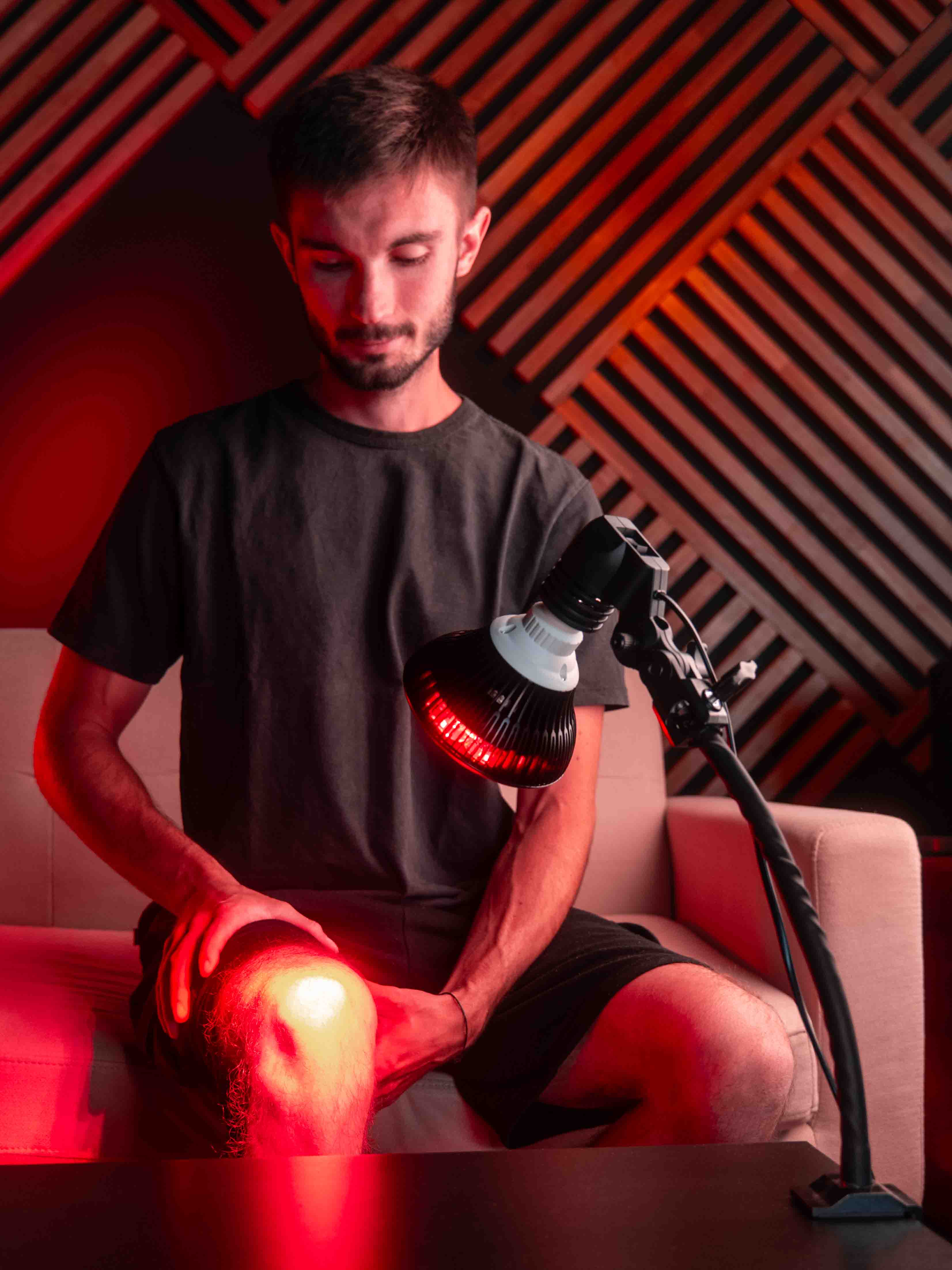
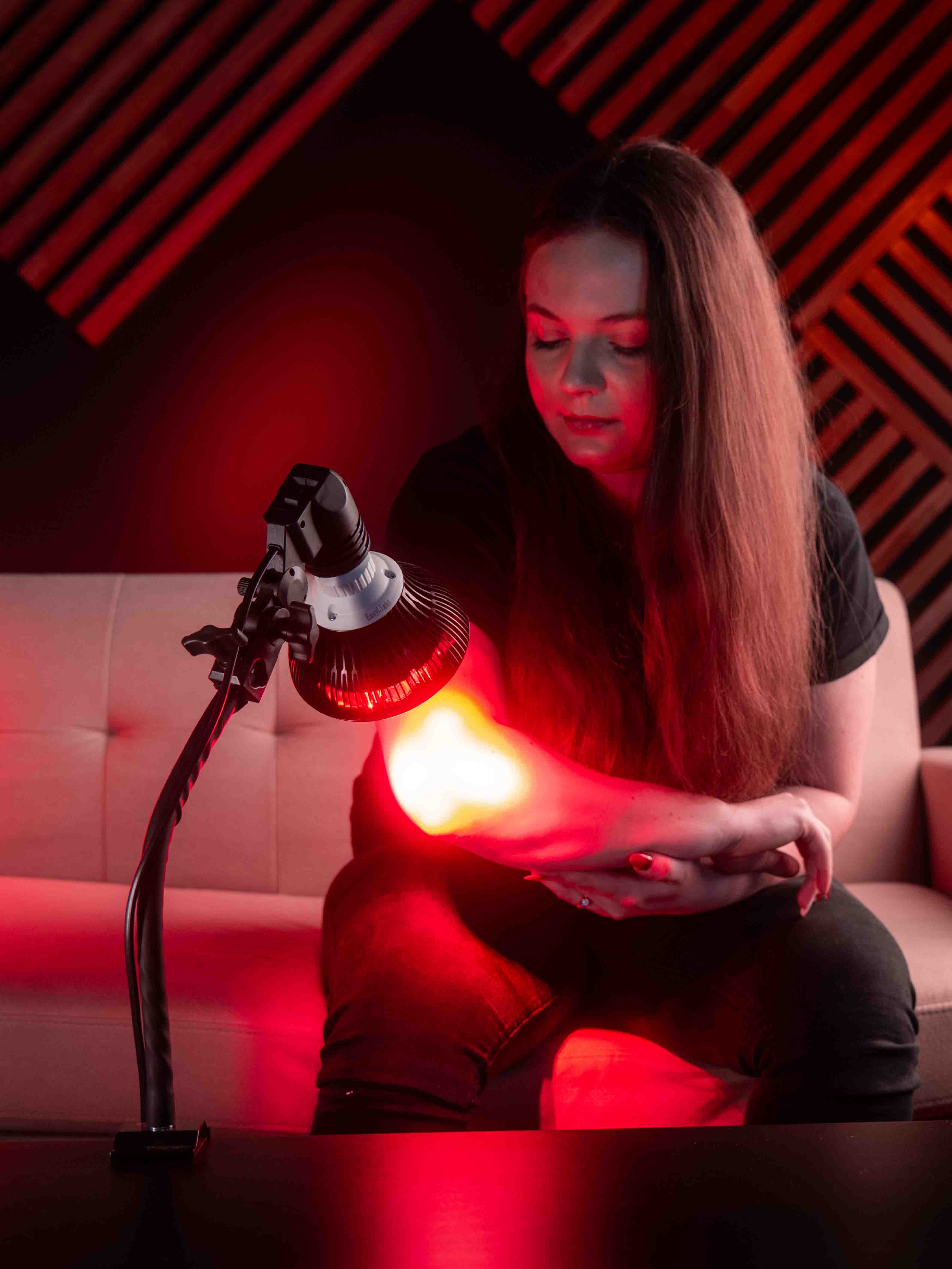
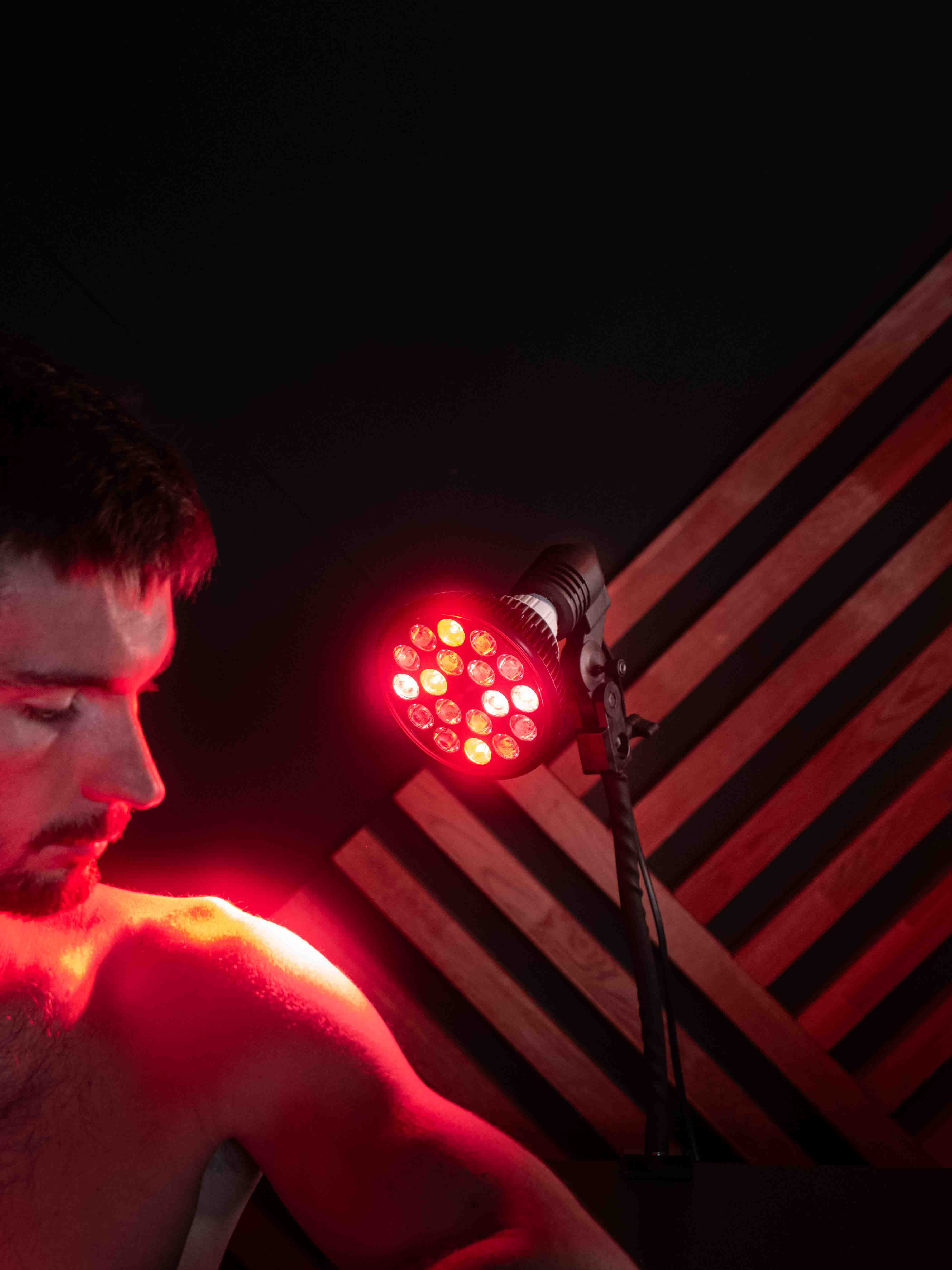
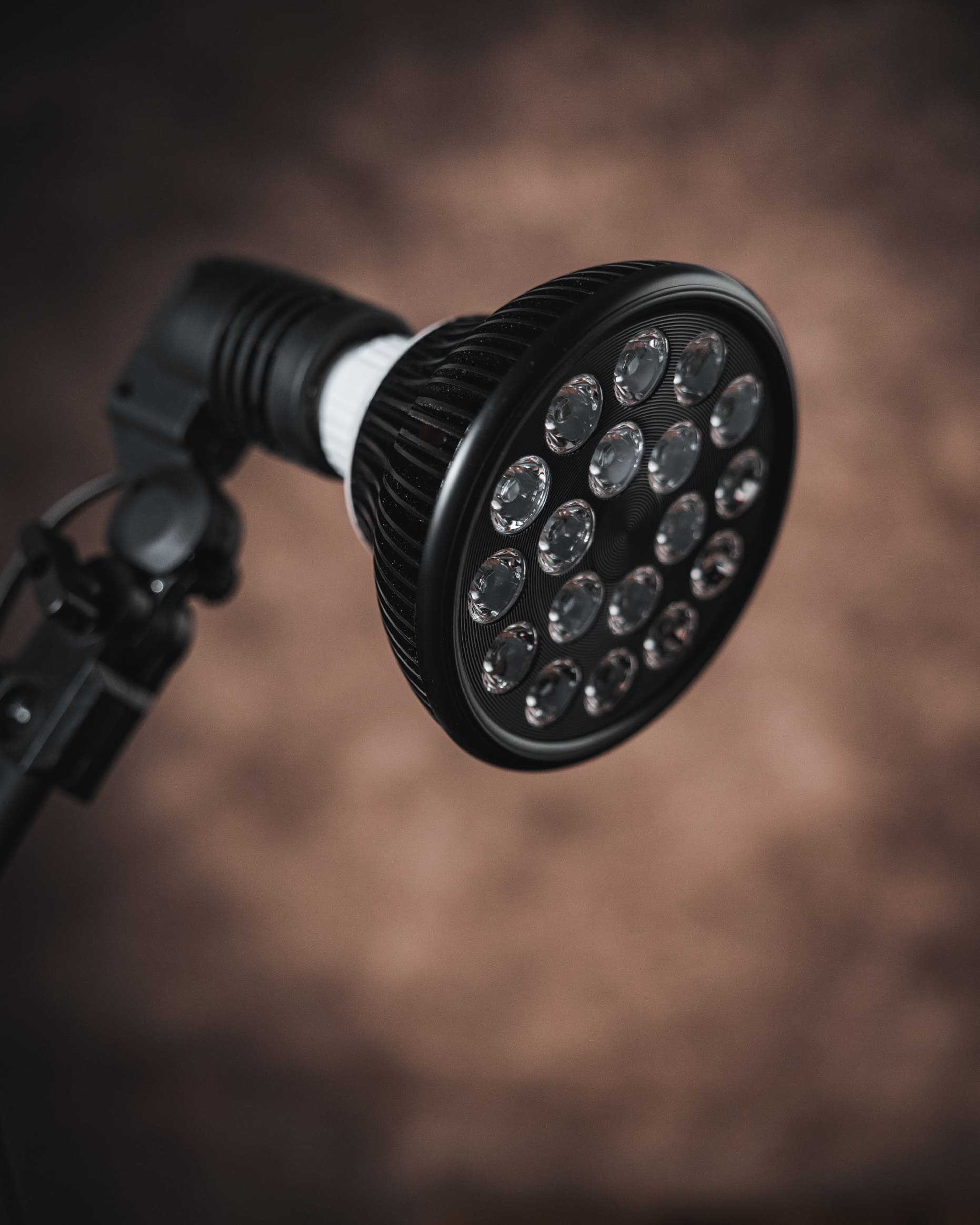
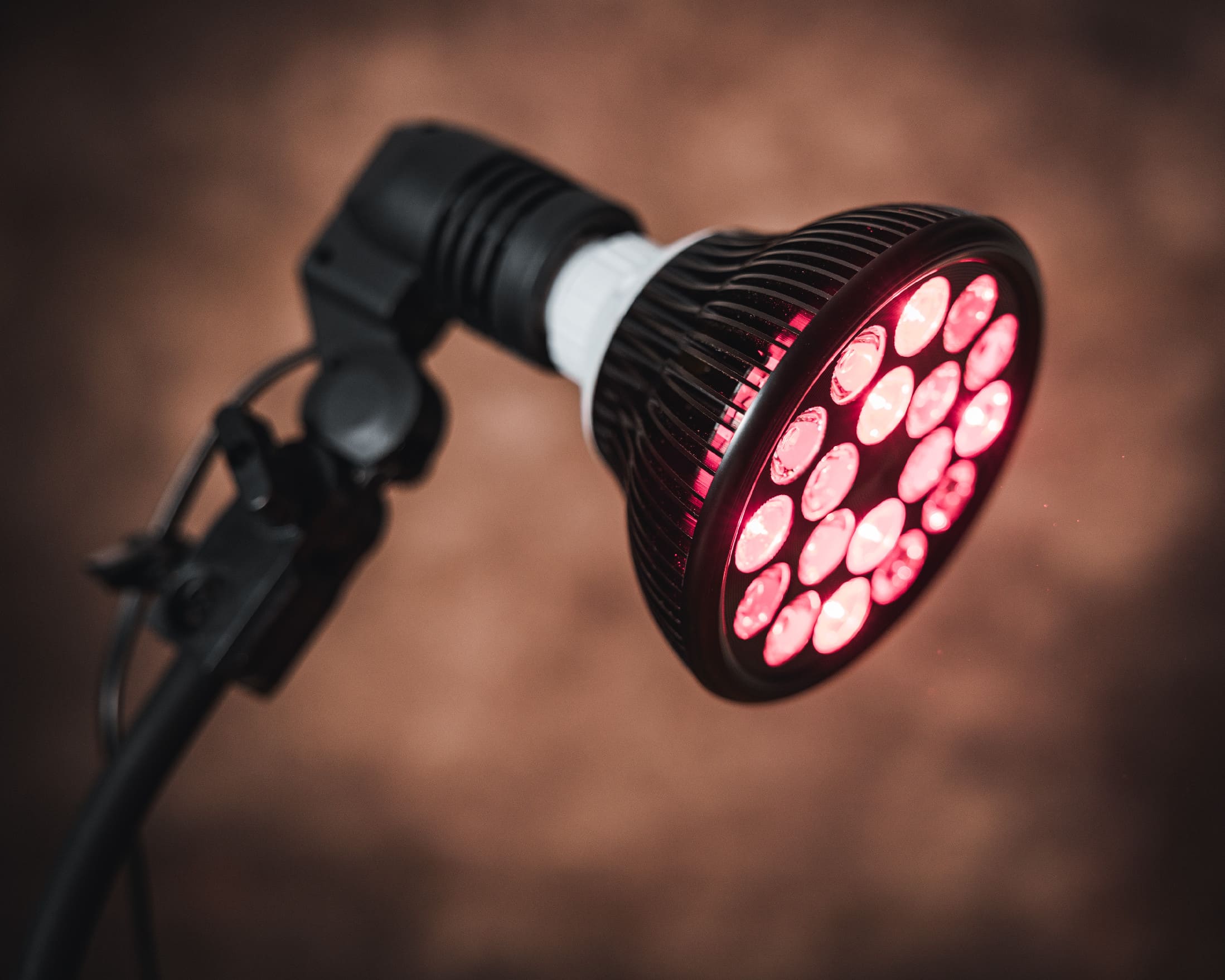
A small device with precisely aimed light
The key features from the Mitochondriak Lab measurement and practical home use.

6 wavelengths
630, 670, 760, 810, 830 and 850 nm combine red and near-infrared light.

Intensity from the spectrometer
90.1 mW/cm² at 30 cm, 46.1 mW/cm² at 50 cm. On the solar meter 147.8 and 67.2 mW/cm².

Zero flicker, background-level EMF
Flicker index 0.00, fluctuation 1.1 to 2.1%, like sunlight. Magnetic field 0.1 µT at 30 cm.

Adjustable mount
The gooseneck and table clamp keep the light in the position you choose.
We don't guess, we measure. As a Slovak manufacturer, we measured the Mitochondriak® LED RED and NIR bulb on 29 October 2026 in Mitochondriak Lab with two certified spectrometers, a solar meter and EMF meters, including flicker. We measured at 15, 30, 50 and 70 cm. The recommended distance is at least 30 cm. We list 15 cm only as a measurement reference point.
- At 30 cm (recommended minimum): 90.1 mW/cm² from the spectrometers, 147.8 mW/cm² on the solar meter
- At 15 cm (measurement reference point): 120.4 mW/cm² from the spectrometers, 204.4 mW/cm² on the solar meter
- At 30 cm red 32.2 mW/cm² and near-infrared 57.9 mW/cm²
- Flicker: zero flicker, fluctuation 1.1 to 2.1%, flicker index 0.00
- EMF: magnetic field 0.1 µT at 30 cm – background level, electric field 0 V/m
Why two numbers? A solar meter is calibrated to sunlight and shows more than the spectrometers for narrow LED bands. Most sellers only quote the solar meter. We quote both: the solar meter for comparison with the market and the spectrometers as the real spectral intensity.
For comparison: on 29 October 2026 at around 3 pm, the same solar meter measured 91.6 mW/cm² in direct sunlight. In the red and near-infrared range (600–1,100 nm) that is about 56.5 mW/cm², and at 30 cm the Mitochondriak® LED RED and NIR bulb delivers 159% of this dose (calculated from the measurement), without UV or blue light.
Zero flicker: Our bulbs really do not flicker. Measurements with two independent certified spectrometers confirm it (see the measurement photos and the protocol). The percentage fluctuation is 1.1 to 2.1%, a very small fluctuation, similar to sunlight, and the flicker index is 0.00. The UPRtek CV600 shows a frequency of 1 Hz because it cannot display zero; the OHSP-350UVF displays 0. Behind this is the quality of the drivers, which we tested and selected repeatedly.


The bulb combines red light at 630 and 670 nm with near-infrared at 760, 810, 830 and 850 nm. Each wavelength reaches a different tissue depth, so together they create a broader spectrum for local photobiomodulation, closer to sunlight.
The LEDs are not distributed 1 : 1. We chose the ratio of LED types according to the biological effectiveness of each wavelength, so some bands overlap in the spectrum and have no separate peak. All 6 LED types (630, 670, 760, 810, 830 and 850 nm) still shine together in the bulb.


Set it in place and keep your hands free
The long adjustable gooseneck and the table clamp are included. Fix the bulb, aim it at the chosen area and you don't have to hold it. The stable mount helps keep the same distance and angle of light throughout the session.


1. Mounting and setup
Mount the bulb in the holder, clamp it to a stable table edge and connect it according to the enclosed manual. Adjust the gooseneck so the light points at the chosen area.
2. Distance and time
Keep a distance of at least 30 cm from the skin. At 30 cm we measured 90.1 mW/cm² from the spectrometers, which is plenty for one area. A typical starting time is 10 to 20 minutes, always according to the manual and your individual sensitivity.
3. Start gradually
For the first sessions choose a shorter time and watch how your skin reacts. Do not look directly into the LEDs and wear the supplied protective glasses.
 (3).jpg)
 (2).jpg)
What's in the box: Mitochondriak® LED RED and NIR bulb
In the box you will find:
- Mitochondriak® LED RED and NIR bulb
- power cable
- protective glasses
- adjustable gooseneck
- table clamp accessories
- user manual

Certification and safety
The device meets CE, RoHS standards. You will find certification documents and safety markings on a separate certification page.
View certification30 days to try
You can try the product at home for 30 days. If it does not suit you, you can return undamaged goods in the original packaging with all accessories according to the shop's terms.
How returns work
Additional parameters
| Category: | Red light therapy devices |
|---|---|
| Warranty: | 2 years |
| Weight: | 1 kg |
| EAN: | 0726529982169 |
| Model: | Mitochondriak® LED RED and NIR bulb |
| Wavelengths: | 6 LED types: 630, 670, 760, 810, 830 and 850 nm |
| LED distribution: | in a ratio based on biological effectiveness, not 1 : 1; some bands overlap in the spectrum |
| ? Recommended distance: | at least 30 cm from the skin |
| ? Total intensity at 30 cm – recommended minimum (measured): | 90.1 mW/cm² spectrometers (400–1,100 nm), 147.8 mW/cm² TES 1333 solar meter |
| ? Total intensity at 50 cm (measured): | 46.1 mW/cm² spectrometers, 67.2 mW/cm² solar meter |
| ? Total intensity at 70 cm (measured): | 24.3 mW/cm² spectrometers, 35.9 mW/cm² solar meter |
| ? Total intensity at 15 cm – measurement reference point (measured): | 120.4 mW/cm² spectrometers, 204.4 mW/cm² solar meter |
| ? Red light 600–700 nm (measured): | 32.2 mW/cm² at 30 cm (15 cm: 39.2, 50 cm: 16.7, 70 cm: 8.7 mW/cm²) |
| ? Near-infrared light 700–1,100 nm (measured): | 57.9 mW/cm² at 30 cm (15 cm: 81.2, 50 cm: 29.3, 70 cm: 15.5 mW/cm²) |
| ? RED : NIR ratio (measured): | 30 cm 36 : 64, 15 cm 33 : 67, 50 and 70 cm 36 : 64 |
| ? Most pronounced spectral peaks (supplement): | 639, 665, 768, 815 and 843 nm; the other LED types overlap |
| ? Flicker (measured): | zero flicker: fluctuation 1.1 to 2.1%, flicker index 0.00 (the UPRtek CV600 displays 1 Hz because it cannot show zero) |
| ? EMF – magnetic field (measured): | 0.1 µT (1 mG) at 30 cm – background level |
| ? EMF – electric field and radio-frequency radiation (measured): | electric field 0 V/m, radio-frequency radiation 0.0001 mW/m² – background level |
| Number of LEDs: | 18 pcs (3 W per diode) |
| Beam angle: | 30° |
| Power (declared): | 54 W |
| Power consumption: | 24 W |
| Voltage: | AC 110–240 V |
| Frequency: | 50/60 Hz |
| Dimensions (H × W × D): | 120 × 120 × 120 mm |
| Bulb weight: | 0.5 kg |
| Package weight: | about 1 kg |
| Material: | aluminium, metal and plastic |
| Gooseneck length: | neck 30 cm, from the table clamp to the top of the socket max. 45 cm |
| Usage: | local use on a chosen area |
| Package contents: | bulb, power cable, protective glasses, gooseneck, table clamp, user manual |
| LED lifespan: | 50,000 hours (137 years at 60 minutes a day) |
| Warranty: | 2 years |
| Certificates: | CE, RoHS |
| ? Measurement: | Mitochondriak Lab, 29 October 2026; 15, 30, 50 and 70 cm from the front of the bulb |


5 Steps to Build a Solar Callus and Avoid Getting Burned by UV Light:
Hormone melatonin is made by mitochondria by light:
Product rating
Leave a rating
List of ratings
 Daniel

Brand Mitochondriak® offer LED devices for RED, NIR and UV light therapy, stylish blue light blocking glasses & safe indoor blue light free lighting solutions, suitable even for children, which protects your sleep, performance and circadian rhythm! We also offer stylish barefoot grounded shoes for better reconnecting with nature in our modern world!
Mitochondriak® mission is to support your mitochondria, health, sleep, energy and performance. We are leader in light therapy. Make our light enviroment better together.