.png)
Rosacea affects up to 10% of the global population, and most people have no idea that chronic facial redness may be rooted in mitochondrial dysfunction. In this article, we explain what rosacea is, its types and symptoms, what triggers it, and why red light therapy (photobiomodulation) offers a solution that conventional dermatology has largely overlooked.
- Rosacea is a chronic inflammatory facial skin condition with 4 types that affects approximately 10% of the population.
- Major triggers include alcohol, UV radiation, stress, spicy foods, and a disrupted circadian rhythm.
- Conventional treatments (antibiotics, creams, IPL laser) address symptoms but fail to target the root cause: mitochondrial dysfunction and oxidative stress.
- Studies (Wu et al. 2022, Boaretto Netto et al. 2025) confirm that photobiomodulation at wavelengths of 630–940 nm reduces inflammation and visible redness.
- A practical protocol: how to start red light therapy at home safely and what additional steps (diet, grounding, light hygiene) can help.
- What is rosacea and why does it develop?
- What types of rosacea exist?
- What triggers rosacea and what are its causes?
- How do you recognize the symptoms of rosacea?
- How does conventional rosacea treatment work?
- Does red light therapy help with rosacea? What does the science say?
- How to start using red light for rosacea at home?
- What other natural approaches help with rosacea?
- Frequently asked questions about rosacea
What is rosacea and why does it develop?
Rosacea is a chronic inflammatory skin condition that primarily affects the face. It occurs in approximately 10% of the population, more frequently in women with fair skin, although men tend to experience more severe symptoms. It is not a cosmetic issue. It is a systemic inflammatory state with roots deeper than most people realize.
From a cellular health perspective, rosacea is linked to mitochondrial dysfunction. Mitochondria are the energy powerhouses of every cell. When they fail to function properly, skin cells cannot manage oxidative stress, inflammatory mediators (such as IL-1, TNF-α, NF-κB) spiral out of control, and the result is chronic redness, burning, and visible blood vessels.
This mechanism explains why conventional treatment focused solely on suppressing symptoms often falls short. If you want to truly manage rosacea long-term, you need to address its root cause: inflammation at the cellular level.
What types of rosacea exist?
Rosacea is classified into 4 main types, each with distinct symptoms and progression. Many people experience a combination of several types simultaneously.
Erythematotelangiectatic rosacea
The most common type. It presents as persistent redness (erythema) in the central face, visible dilated blood vessels (telangiectasia), and a sensation of burning or dryness. The skin is notably sensitive to temperature, cosmetics, and sunlight.
Papulopustular rosacea
Resembles acne but is not acne. Inflammatory bumps (papules and pustules) appear on reddened skin without the presence of comedones. This type often leads to misdiagnosis and inappropriate treatment with acne preparations.
Phymatous rosacea (rhinophyma)
Less common but visually prominent. The skin on the nose (sometimes also on the chin or forehead) thickens, reddens, and enlarges. It predominantly affects men and develops through long-term uncontrolled inflammation.
Ocular rosacea
An often-overlooked type that affects the eyes. It presents as dry, irritated eyes, reddened eyelids, a sensation of a foreign body in the eye, and light sensitivity. Up to 50% of people with cutaneous rosacea also have the ocular form.
| Type of rosacea | Main symptoms | Affected area | Conventional treatment |
|---|---|---|---|
| Erythematotelangiectatic | Redness, visible vessels, burning | Cheeks, nose, forehead | Brimonidine, IPL laser |
| Papulopustular | Bumps, inflammation, erythema | Cheeks, chin, nose | Metronidazole, ivermectin |
| Phymatous (rhinophyma) | Skin thickening, nose enlargement | Nose, chin | Surgery, CO₂ laser |
| Ocular | Dry eyes, irritation, swelling | Eyes, eyelids | Artificial tears, eyelid hygiene |
What triggers rosacea and what are its causes?
The causes of rosacea are multifactorial. It is not a single factor but a combination of genetic predisposition, immune dysregulation, gut microbiome status, and environmental factors. Here are the main ones:
- Genetics: Rosacea has a hereditary component. If a parent had it, the risk is significantly higher.
- Immune dysregulation: Overactivation of cathelicidins (LL-37) and an abnormal innate immune response.
- Demodex mites: Increased density of Demodex folliculorum mites on facial skin correlates with rosacea severity.
- Gut microbiome: Small intestinal bacterial overgrowth (SIBO) occurs in a significant proportion of rosacea patients.
- Mitochondrial dysfunction: Impaired cellular energy production leads to chronic oxidative stress in the skin.
In addition to causes, there are triggers that worsen existing rosacea:
- Sunlight (especially without adaptation and without proper circadian alignment)
- Alcohol (dilates blood vessels, increases inflammation)
- Spicy foods (capsaicin activates TRPV1 receptors)
- Temperature extremes (hot showers, sauna without adaptation)
- Stress (cortisol increases systemic inflammation)
- Blue light from screens (disrupts circadian rhythm, increases inflammatory markers in the skin)
From the Mitochondriak® perspective, the connection between circadian rhythm and skin inflammation is particularly interesting. When your daily light exposure is disrupted (too little morning sunlight, too much blue light in the evening), your body produces more inflammatory cytokines. For skin prone to rosacea, this can be the final trigger for a flare-up.
How do you recognize the symptoms of rosacea?
Rosacea most commonly presents on the face, particularly on the cheeks, nose, forehead, and chin. Symptoms develop gradually, and many people fail to notice them for a long time.
The most common symptoms include:
- Persistent redness (erythema) in the central face that does not subside
- Sudden flushing (episodic reddening) after alcohol, temperature changes, or stress
- Visible blood vessels (telangiectasia) on the cheeks and nose
- Burning, stinging, and dryness of the skin
- Inflammatory bumps without comedones (unlike acne)
- Skin thickening (in advanced stages, especially the nose)
- Ocular symptoms: dry, irritated, reddened eyes
If you experience any of these symptoms, we recommend visiting a dermatologist for a proper diagnosis. Rosacea can be managed, but an accurate diagnosis is the first step.
How does conventional rosacea treatment work?
Conventional dermatology offers several treatment options that can alleviate rosacea symptoms. It is important to understand them and recognize their limitations.
- Topical medications: Metronidazole, azelaic acid, ivermectin (against Demodex), brimonidine (a vasoconstrictor for redness).
- Oral antibiotics: Doxycycline at a sub-antimicrobial dose (40 mg) to suppress inflammation.
- IPL laser and vascular laser: Targeted at visible blood vessels and persistent redness. Effective, but costly and requiring repeated sessions.
- Specialized skincare: Dermocosmetics free from fragrances, alcohol, and irritants.
These approaches work. However, they share a common limitation: they treat symptoms, not the cause. Antibiotics suppress inflammation but do not address mitochondrial dysfunction. Laser removes blood vessels, but new inflammation can create them again. This is why an increasing number of researchers are turning to light therapy, which acts at the cellular level.
Does red light therapy help with rosacea? What does the science say?
Yes, scientific studies confirm that photobiomodulation (red and near-infrared light therapy) reduces inflammation and visible redness in rosacea. It is not an alternative "instead of" a dermatologist, but a complementary approach that addresses the root cause of the problem.
How does the mechanism work?
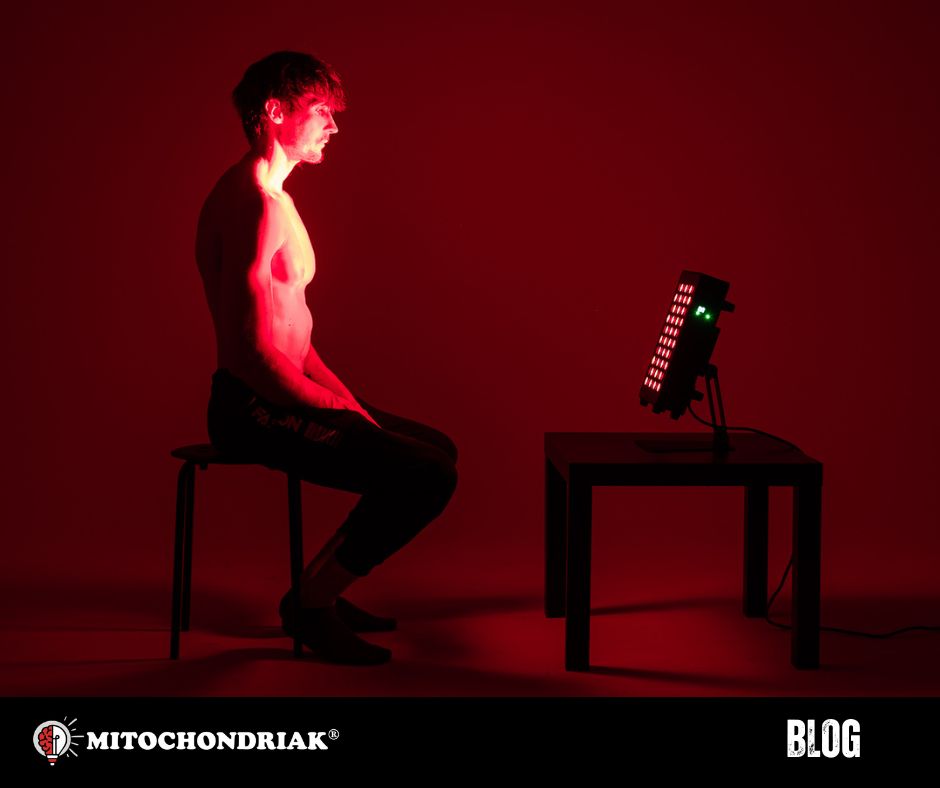
Photobiomodulation (PBM) uses light in the wavelength range of 630 to 940 nm. Photons of this light penetrate the skin and are absorbed by the enzyme cytochrome c oxidase (CCO) in the mitochondria. The result is:
- Increased ATP production (cellular energy), improving skin regeneration
- Reduced inflammatory mediators (IL-1β, TNF-α, NF-κB)
- Decreased oxidative stress through regulation of reactive oxygen species (ROS)
- Support of angiogenesis (formation of new blood vessels), which paradoxically improves vascular stability
- Modulation of the immune response in the skin
Key scientific studies
Wu et al. (2022) demonstrated in a mouse model of rosacea that photobiomodulation significantly reduces inflammatory mediators, inhibits immune infiltration, and regulates angiogenesis in affected skin. The authors concluded that PBM is a promising complementary therapy for rosacea (PMC9403938).
Boaretto Netto et al. (2025) in a review study published in Lasers in Medical Science analyzed available literature and confirmed that PBM reduces key signs of rosacea, including erythema, papules, and pustules. The mechanism involves regulation of inflammatory pathways and support of mitochondrial function (Springer, 2025).
Sorbellini et al. (2020) investigated combined blue and red LED light therapy for rosacea and recorded improvement in patients with the papulopustular form (PMC6988247).
Which wavelengths are most effective?
For rosacea, the most relevant wavelengths are:
- 630 nm (red light): Surface penetration, ideal for erythema and inflammation in the epidermis
- 670 nm (red light): Deeper penetration, strong anti-inflammatory effect in the dermis
- 830–850 nm (NIR, near-infrared light): Penetrates deeper tissue, supports regeneration and cellular energy production
Mitochondriak® infrared panels combine these wavelengths in the range of 630 to 940 nm, covering the entire spectrum effective for inflammatory skin conditions.
How to start using red light for rosacea at home?
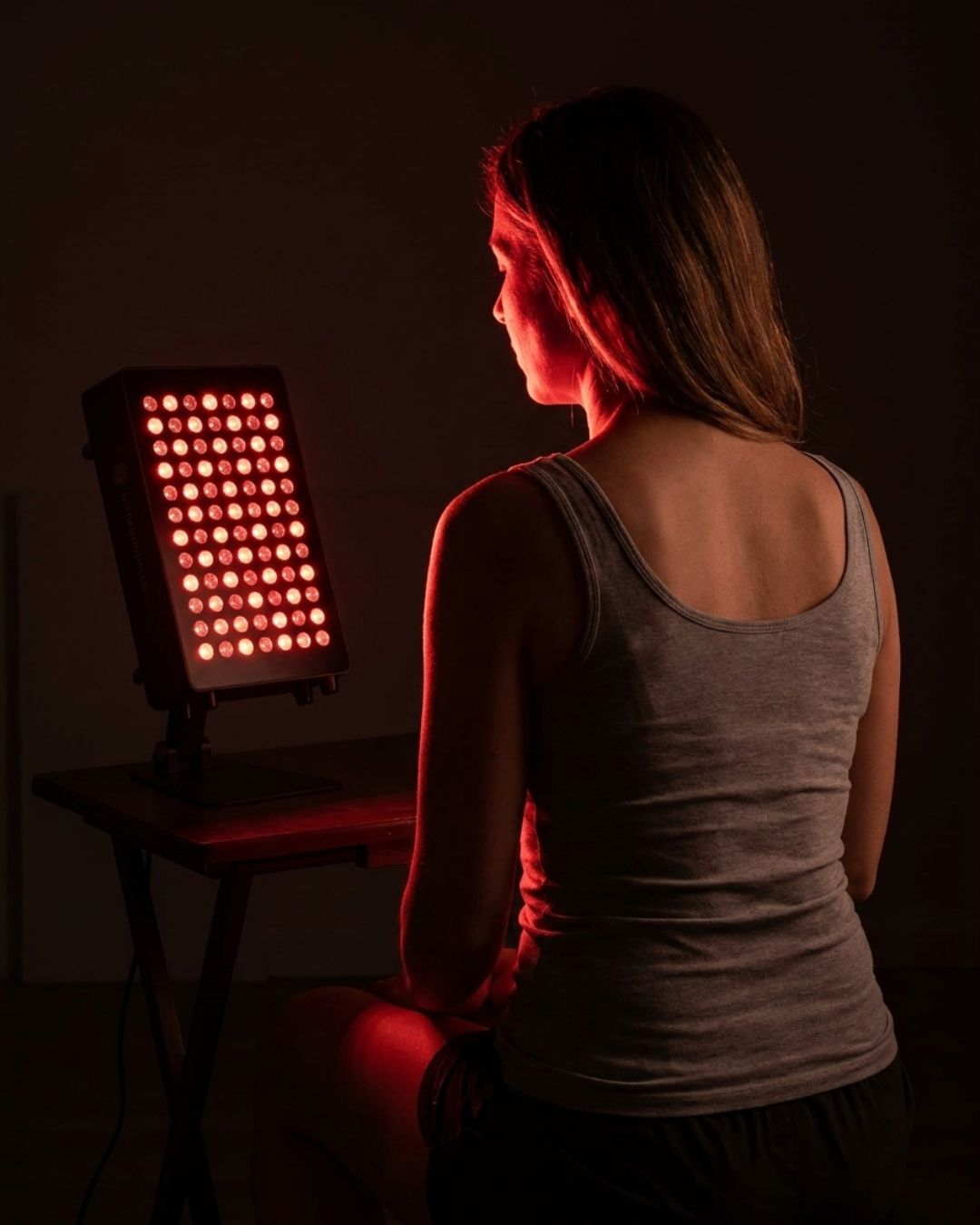
Home red light therapy is safe, non-invasive, and can deliver visible results for rosacea within 4 to 8 weeks of regular use. Here is a practical protocol to get started:
Choose the right panel
For rosacea, you need a panel with wavelengths in the range of 630 to 940 nm that combines red and near-infrared (NIR) light. It is important that it has sufficient power output (irradiance of at least 30 mW/cm² at the skin surface) and proper certification.
For facial therapy, these are suitable:
- Mitochondriak® mini for targeted use and travel
- Mitochondriak® Office for comfortable at-home therapy of the face and neck
Protocol for rosacea
- Frequency: 3 to 5 times per week
- Duration: 10 to 15 minutes per session
- Distance: 15 to 30 cm from the face
- Eye protection: Always use protective goggles or keep your eyes closed
- Start slowly: For the first two weeks, reduce the time to 5 minutes and monitor your skin's response
What to watch out for
Sensitive skin with rosacea may initially respond with a mild warming sensation. This is normal. However, if significant redness or irritation occurs, shorten the exposure time and increase the distance from the panel. With ocular rosacea, always protect your eyes.
What other natural approaches help with rosacea?
Red light therapy is a powerful tool, but the best results come from combining it with other lifestyle changes. Rosacea is a systemic problem and requires a holistic approach.
Anti-inflammatory diet
A diet rich in omega-3 fatty acids (wild fish, sardines, mackerel), quality fats (butter, coconut oil), and seasonal vegetables helps reduce systemic inflammation. Conversely, alcohol, refined sugar, industrial seed oils, and spicy foods can worsen rosacea.
Grounding (earthing)
Direct contact with the earth's surface (walking barefoot on grass, sand, or soil) allows the body to absorb free electrons that act as natural antioxidants. Research shows that grounding reduces systemic inflammation and can support skin healing.
Circadian rhythm and sleep
Proper circadian rhythm alignment is crucial for skin health. Morning exposure to natural sunlight (within the first 30 minutes after sunrise) helps synchronize internal clocks, supports cortisol production at the right time, and prepares the body for melatonin production at night. Melatonin is one of the most powerful endogenous antioxidants that regenerates the skin during sleep.
Using Mitochondriak® evening red bulbs instead of white lighting in the evening helps protect melatonin production and reduce the inflammatory burden on the skin.
Blue light blocking glasses
If you spend long hours at a computer or use your phone in the evening, blue light from screens can worsen skin inflammation and disrupt sleep. Mitochondriak® blue light blocking glasses are a simple and effective tool for protecting your circadian rhythm and reducing inflammatory load.
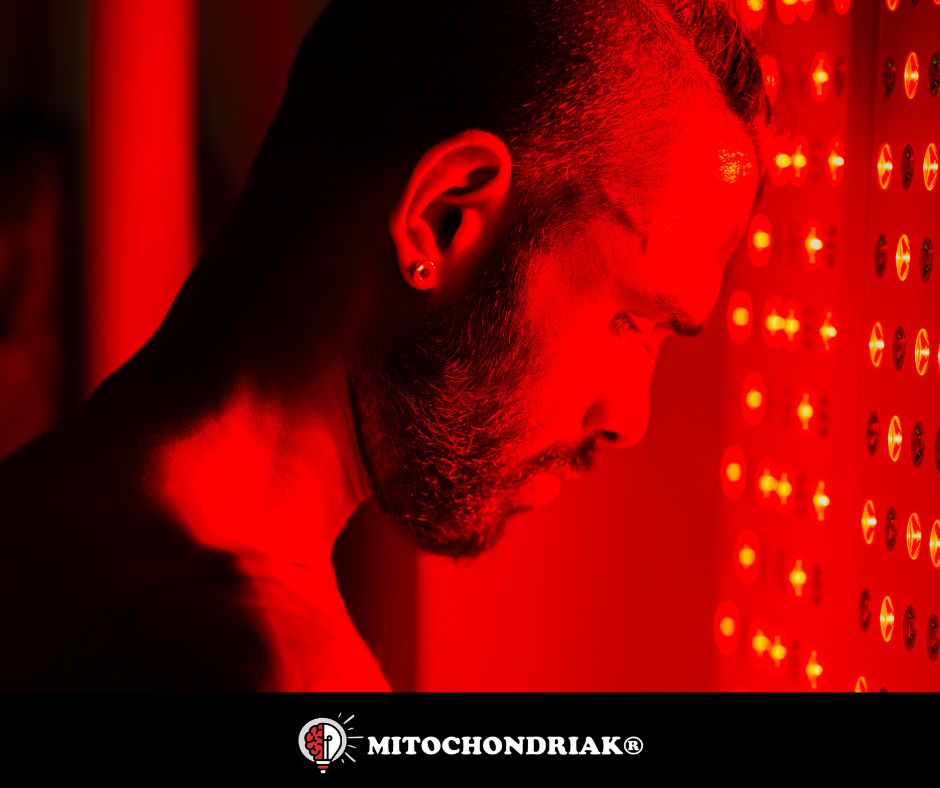
Want to try red light therapy for rosacea?
Mitochondriak® infrared panels combine wavelengths of 630 to 940 nm in a single device. For facial therapy, we recommend:
Frequently Asked Questions
Can rosacea be cured?
Rosacea is not fully curable, but it is manageable. With the right combination of treatment, lifestyle changes, and red light therapy, it is possible to suppress symptoms long-term and significantly improve quality of life.
Does red light help with rosacea?
Yes. Scientific studies (Wu et al. 2022, Boaretto Netto et al. 2025) show that photobiomodulation at wavelengths of 630 to 850 nm reduces inflammation, regulates inflammatory mediators, and alleviates visible redness in rosacea.
What triggers rosacea?
The most common triggers include: alcohol, spicy foods, sunlight without adaptation, heat, stress, blue light from screens, and certain medications (e.g., vasodilators).
What types of rosacea exist?
There are 4 main types: erythematotelangiectatic (redness and visible vessels), papulopustular (inflammatory bumps), phymatous/rhinophyma (skin thickening on the nose), and ocular rosacea (eye irritation).
Is rosacea the same as acne?
No. Rosacea is a chronic inflammatory condition with a different mechanism than acne. In rosacea, comedones (blackheads and whiteheads typical of acne) are absent. However, both conditions can occur simultaneously.
What wavelengths of red light are best for rosacea?
For surface inflammation, wavelengths of 630 to 670 nm (red light) are most effective. For deeper tissue and cellular regeneration, 830 to 850 nm (near-infrared light, NIR) are suitable. Ideally, both should be combined.
How long does it take for red light to work on rosacea?
First visible results (reduced redness, fewer flushes) typically appear after 4 to 8 weeks of regular use, at a frequency of 3 to 5 sessions per week lasting 10 to 15 minutes each.
Can diet affect rosacea?
Yes, significantly. An anti-inflammatory diet rich in omega-3 fatty acids, quality fats, and seasonal vegetables can reduce flare-up frequency. Conversely, alcohol, refined sugar, and spicy foods worsen rosacea.
What is photobiomodulation and how does it work for rosacea?
Photobiomodulation (PBM) is light therapy in the 630 to 940 nm range that stimulates the enzyme cytochrome c oxidase (CCO) in the mitochondria. The result is increased ATP production, reduced oxidative stress, and suppression of inflammatory pathways in the skin.
Is red light therapy safe for sensitive skin with rosacea?
Yes, red light therapy is non-invasive and suitable for sensitive skin. It is recommended to start with shorter sessions (5 minutes) and gradually increase the duration. Always protect your eyes with protective goggles during therapy.
Sources and References
- Wu S. et al., 2022. The effects of photobiomodulation therapy on inflammatory mediators, immune infiltration, and angiogenesis in a mouse model of rosacea. PMC9403938
- Boaretto Netto J.C. et al., 2025. Could photobiomodulation be used for treatment of rosacea? Lasers in Medical Science. Springer, 2025
- Sorbellini E. et al., 2020. Coupled blue and red light-emitting diodes therapy efficacy in rosacea. PMC6988247
- Elawar A. et al., 2023. Combined Photobiomodulation and Static Magnetic Fields for Dermatological Conditions. JCAD, 2023