
.png)
Red light therapy for wrinkles supports the skin below the surface, where fibroblasts produce collagen and the visible signs of ageing begin. Rather than covering fine lines temporarily, red and near-infrared light help the skin gradually become firmer, smoother and more resilient.
- Why wrinkles are influenced by more than chronological age.
- How red and near-infrared light support collagen, fibroblasts and skin structure.
- What clinical research says about wrinkles, elasticity and collagen density.
- Why light therapy and topical skincare work at different biological levels.
- How to build a consistent red light skincare routine at home.
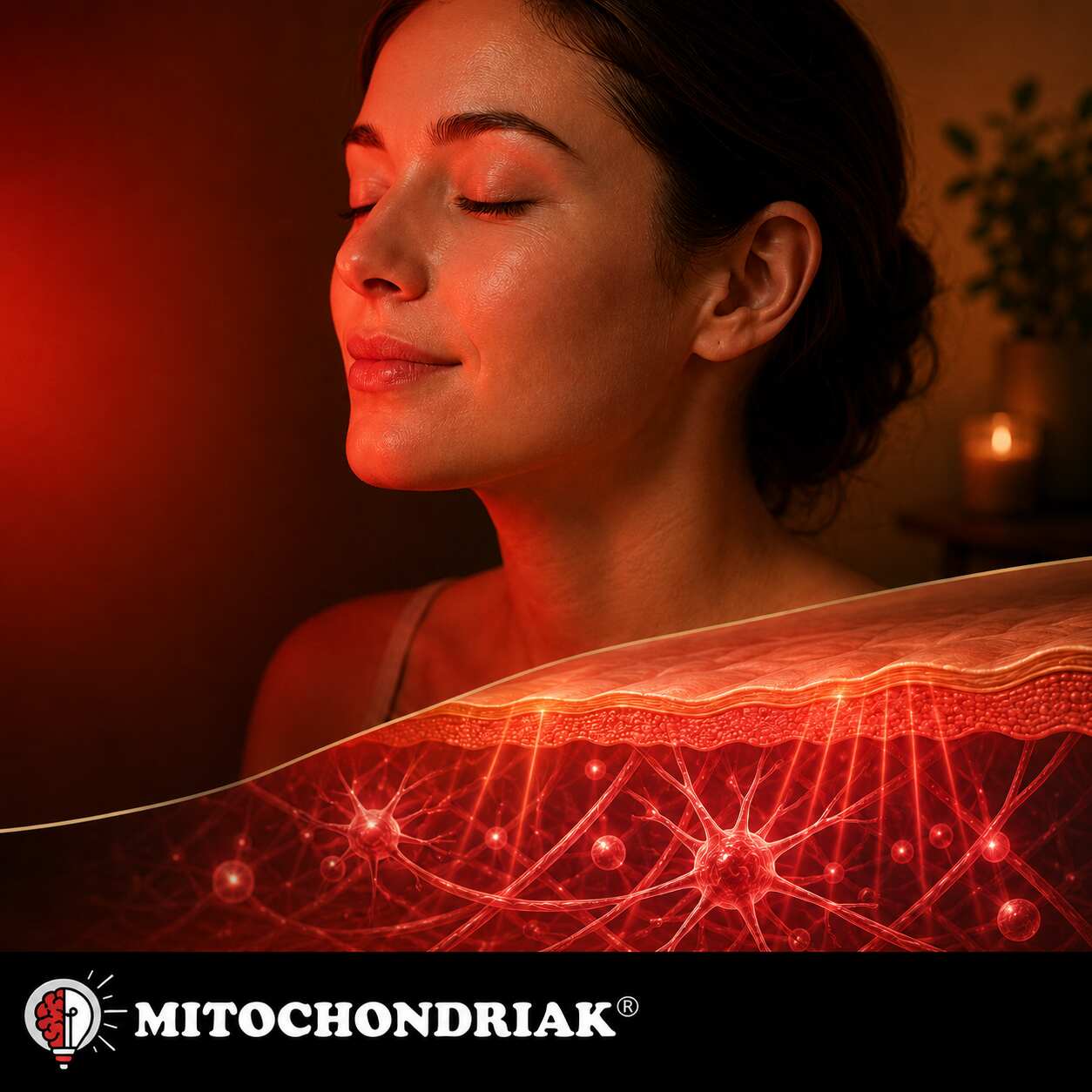
Why do wrinkles form?
Wrinkles are not created by age alone. They reflect gradual changes in collagen, elastin, hydration and the structure of the dermis, together with the influence of sleep, stress, sunlight, facial movement and everyday skincare habits.
Collagen works like an internal scaffold. It helps the skin remain firm and resistant to folding, while elastin allows it to return to its original shape. As collagen production slows and existing fibres become less organised, the skin gradually loses density and elasticity.
This is why simply treating the visible surface has limitations. The appearance of a wrinkle may be visible in the epidermis, but much of the structural change begins deeper in the dermis, where fibroblasts produce collagen and other components of the extracellular matrix.
How does red light help with wrinkles?
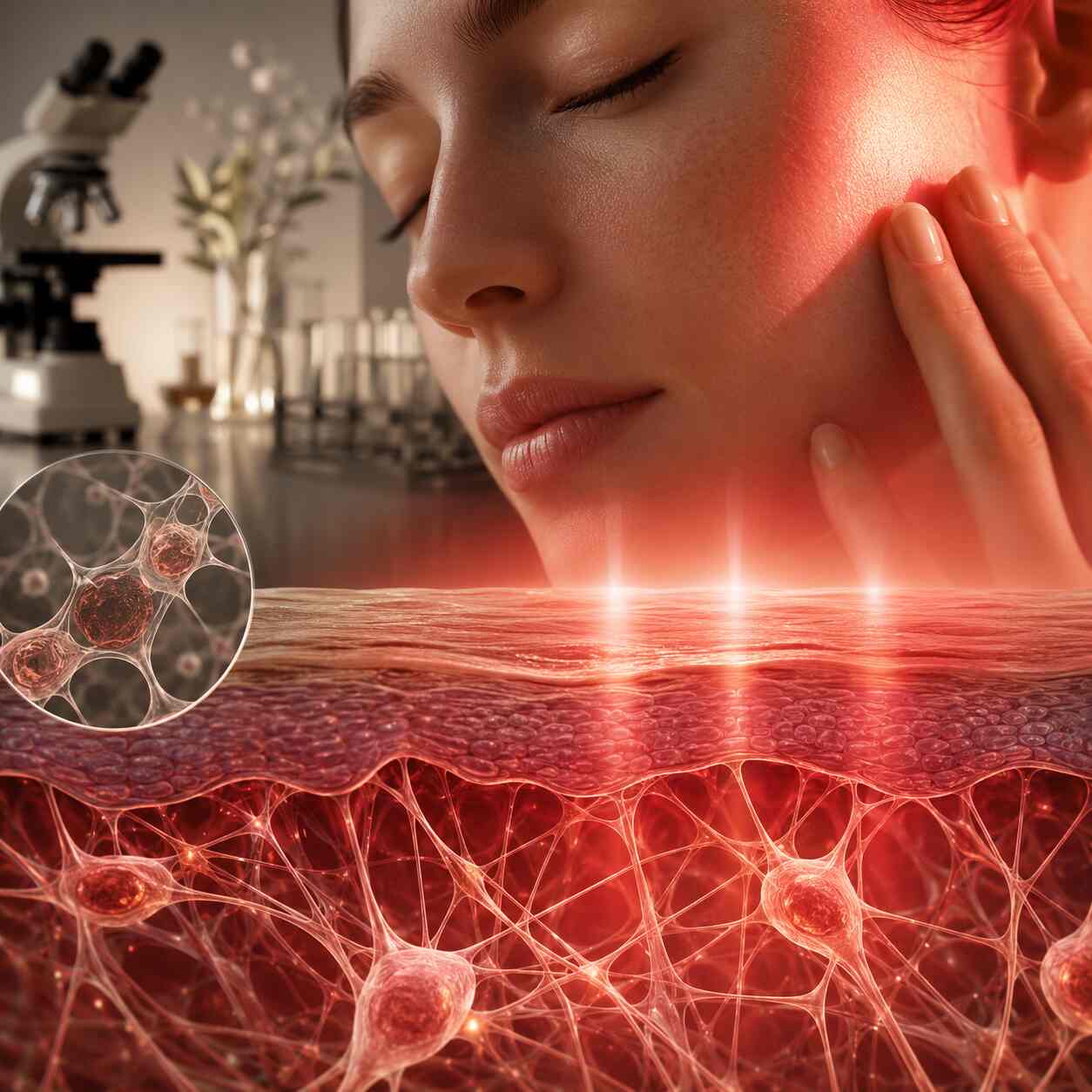
Red and near-infrared light support natural skin regeneration by delivering photons into the tissue without damaging its surface. These wavelengths interact with cellular photoreceptors and mitochondria, influencing energy production, circulation and signalling pathways connected with repair and collagen formation.
This process is known as photobiomodulation. It does not burn, peel or deliberately injure the skin. Instead, it gives cells a light signal that can help them function more efficiently.
For ageing skin, the most relevant effects include:
- Collagen support: fibroblasts receive signals associated with the production and remodelling of collagen fibres.
- Improved skin texture: regular use can gradually soften visible roughness and fine lines.
- Better elasticity: denser and better organised connective tissue helps the skin feel firmer.
- More even appearance: improved circulation and cellular turnover can support a healthier-looking tone.
- Calmer skin: photobiomodulation may support a more balanced tissue response after everyday environmental stress.
The result is not immediate wrinkle removal. Red light works more like training than camouflage. A cream can temporarily improve the appearance of the surface, while light gives the cells underneath repeated signals to rebuild.
What do clinical studies show about red light and wrinkles?
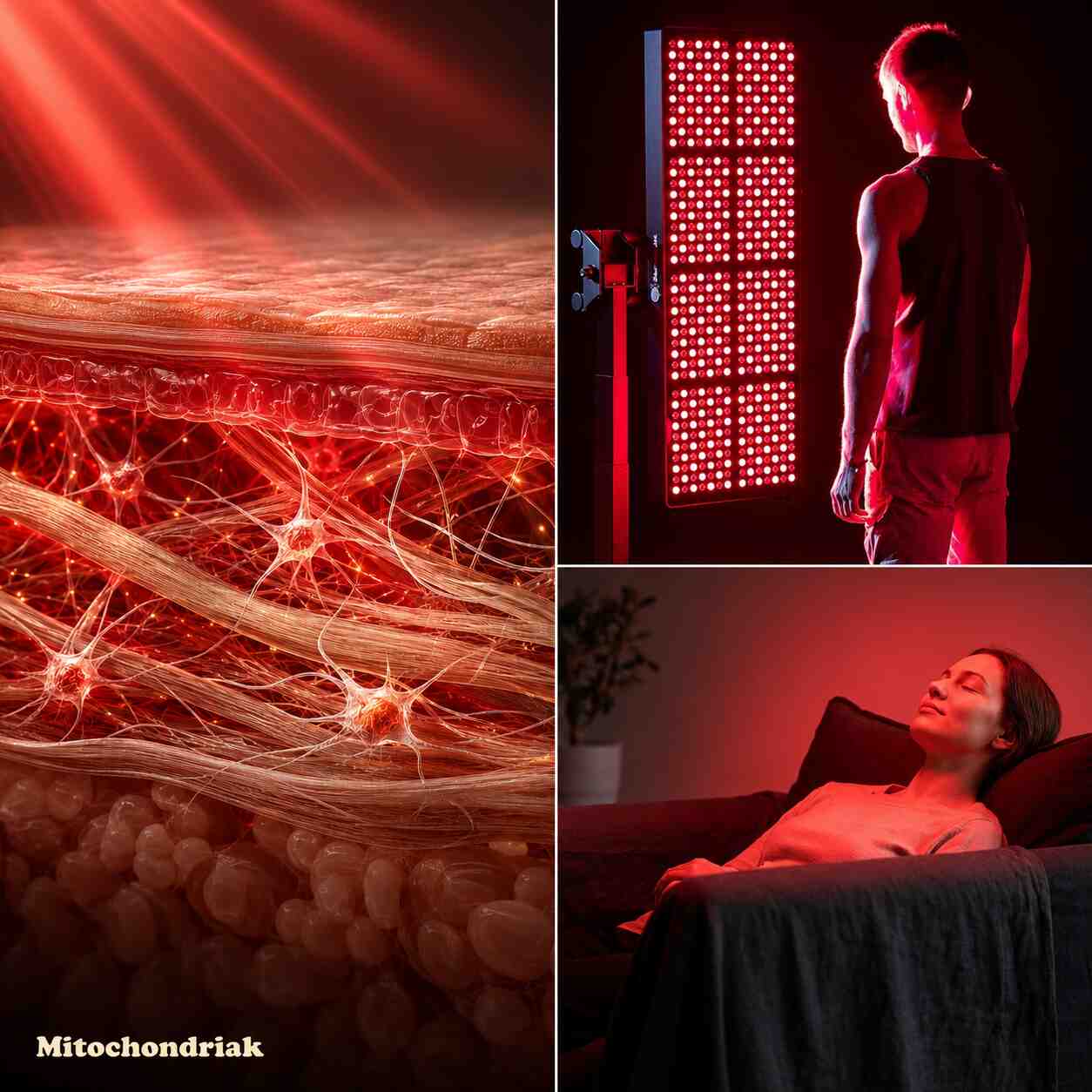
Clinical research has recorded measurable improvements in skin roughness, wrinkle appearance, elasticity and intradermal collagen after repeated red or near-infrared light exposure. The available studies use different devices and protocols, but the overall direction is consistent: results build gradually through regular sessions.
In a controlled trial by Alexander Wunsch and Karsten Matuschka, participants received red or broad-spectrum red and near-infrared light treatments over 30 sessions. Compared with the control group, treated participants showed significant improvements in skin complexion, skin feeling, roughness and ultrasonographically measured collagen density.
A randomized, placebo-controlled split-face study involving 76 people with facial wrinkles evaluated 633 nm red light, 830 nm near-infrared light and a combination of both. The researchers observed reductions in wrinkles, improvements in elasticity and histological increases in collagen and elastic fibres.
A separate randomized clinical trial using 660 nm LEDs for 12 weeks also reported a significant improvement in periocular wrinkles. These results support the original point of this article: red light is not a one-session cosmetic trick, but a method that works progressively through repeated biological stimulation.
| Research | Design | Main observation |
|---|---|---|
| Wunsch and Matuschka, 2014 | Controlled trial, 136 participants | Improved skin roughness, complexion and collagen density |
| Lee et al., 2007 | Randomized, double-blind split-face study | Reduced wrinkles and increased collagen and elastic fibres |
| Kim et al., 2017 | Randomized, double-blind comparative trial | Significant improvement in periocular wrinkles after 12 weeks |
Are red light panels better than cosmetics?
Red light panels and cosmetics do not perform the same job. Creams and serums mainly support the skin barrier and surface environment, while red and near-infrared light can reach deeper layers where fibroblasts, blood vessels, collagen fibres and cellular energy processes are located.
This does not make topical skincare useless. A good routine can help maintain hydration and protect the barrier. The difference is that a panel adds a biological stimulus that cosmetics alone cannot reproduce.
A larger panel also allows you to illuminate the face, neck and décolletage together. These areas often age at a similar rate, yet skincare routines frequently focus on the face alone.
For more detail on the relationship between light, fibroblasts, collagen, acne and skin elasticity, read our broader guide to red light and skin photobiomodulation.
How can you use red light in your skincare routine?
The most important principle is consistency. Photobiomodulation works through repeated cellular stimulation, so several sensible sessions each week are more useful than one excessively long session followed by a long break.
A simple routine looks like this:
- Start with clean skin. Remove makeup and products that create a physical barrier before using the light.
- Position the panel according to its instructions. Follow the recommended distance and session guidance for your specific device.
- Keep the routine repeatable. Choose a time of day when you can use the panel without rushing.
- Apply skincare afterwards. Your moisturiser or serum can remain part of the routine after the light session.
- Track changes over weeks. Take photographs in similar lighting rather than judging the skin after every individual session.
The compact Mitochondriak® Office Upgraded is particularly practical for targeted use on the face, neck and décolletage. Its smaller format makes it easier to position as part of a regular home routine, while its red and near-infrared wavelengths cover both superficial and deeper tissue layers.
If you have a persistent skin condition, unusual sensitivity or another medical concern, discuss light therapy with your doctor or a qualified specialist before adding it to your routine.
What results can you realistically expect?
Red light therapy can gradually soften fine lines, support firmness and improve the overall quality of the skin. It will not erase every deep wrinkle overnight, replace lost facial volume or create the same effect as an invasive procedure.
The first changes people often notice are subtler: the skin may feel calmer, look more even and appear less tired. Structural changes linked with new collagen take longer because collagen fibres must be synthesised, organised and incorporated into the dermal matrix.
This is long-term skincare, not an instant filter. The more regularly you support the skin's natural repair system, the better the environment becomes for gradual visible improvement.
Support your skin below the surface
The Mitochondriak® Office Upgraded is a compact red and near-infrared light panel designed for targeted home use. Its practical size makes it suitable for the face, neck and décolletage without turning your skincare routine into a complicated procedure.
Frequently asked questions
Can red light therapy reduce wrinkles?
Red light therapy can gradually reduce the visible appearance of fine lines and wrinkles by supporting fibroblast activity, collagen production and skin elasticity. It does not remove wrinkles instantly. Clinical improvements are generally associated with repeated use over several weeks.
How long does red light take to improve the skin?
Some people notice changes in tone, calmness or texture earlier, but collagen remodelling requires time. Research commonly evaluates outcomes after several weeks or after a series of repeated sessions rather than after a single exposure.
Should red light be used before or after skincare products?
Use red light on clean skin unless the instructions for your specific device state otherwise. Makeup and thick cosmetic layers may interfere with direct exposure. Moisturisers, serums and other skincare products can be applied after the session.
Can I use red light on the face, neck and décolletage?
Yes. A suitably sized panel can illuminate the face, neck and décolletage as part of the same routine. Always follow the positioning, distance and session instructions supplied with your specific device.
Is a red light panel only useful for deep wrinkles?
No. Red light can also support overall skin texture, elasticity, tone and the appearance of fine lines. Deep structural wrinkles may soften, but they are less likely to disappear completely because their formation also involves facial anatomy and long-term tissue changes.
Sources and references
- Wunsch A, Matuschka K. A controlled trial to determine the efficacy of red and near-infrared light treatment in patient satisfaction, reduction of fine lines, wrinkles, skin roughness, and intradermal collagen density increase. Photomedicine and Laser Surgery. 2014. PubMed PMID 24286286.
- Lee SY et al. A prospective, randomized, placebo-controlled, double-blinded, split-face clinical study on LED phototherapy for skin rejuvenation. Journal of Photochemistry and Photobiology B. 2007. PubMed PMID 17566756.
- Kim WS et al. The efficacy and safety of 660 nm and 411 to 777 nm light-emitting devices for treating wrinkles. Dermatologic Surgery. 2017. PubMed PMID 28195844.
- Calderhead RG et al. Unlocking the power of light on the skin: a comprehensive review on photobiomodulation. 2024. PubMed Central PMC11049838.