
.png)
The skin is not merely a protective cover. It is a metabolically active organ that senses light, temperature and time, while constantly communicating with the immune system, nervous system and mitochondria. When these cellular power centres receive the right environmental signals, the skin has more energy available for repair, barrier renewal and resilience.
- The skin contains its own cellular clocks and responds to daily changes in light and darkness.
- Circadian disruption may influence sleep, melatonin, oxidative stress, inflammation and skin regeneration.
- Rosacea involves inflammation, vascular reactivity, immune dysregulation and a weakened skin barrier.
- Red and near infrared light interact with mitochondria and may support cellular energy, collagen and tissue repair.
- Red light therapy may complement rosacea care, but it does not replace dermatological diagnosis or treatment.
- Is the skin really a sensor of light and time?
- How does circadian rhythm affect the skin?
- What happens when circadian rhythm is disrupted?
- What is rosacea and why does it develop?
- How are mitochondria connected to rosacea?
- Why does the full spectrum of sunlight matter?
- How does red light interact with mitochondria?
- What role does melatonin play in skin regeneration?
- Can red light therapy support skin with rosacea?
- How can you support your skin through light and daily rhythm?
- Frequently asked questions
Is the skin really a sensor of light and time?
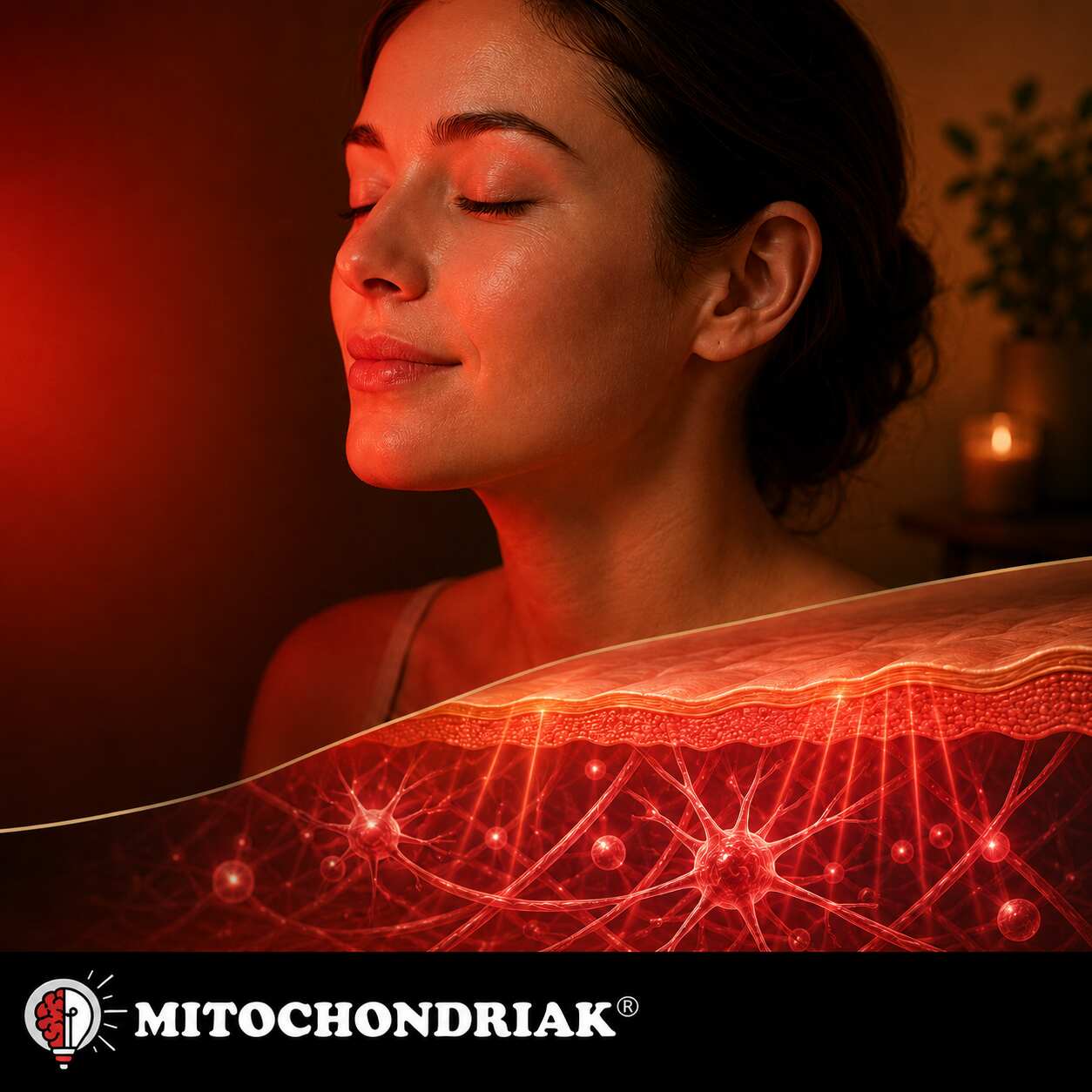
Yes. The skin is a light-responsive organ with its own circadian clocks, photoreceptors, immune cells and mitochondria. It continuously evaluates information from the external environment and adjusts processes such as barrier repair, pigmentation, inflammation, blood flow and cellular regeneration.
The skin contains several interacting layers and cell types. Keratinocytes form most of the epidermis, fibroblasts build collagen-rich connective tissue, melanocytes produce melanin and immune cells monitor potential threats.
Each of these cells requires energy. That energy is largely supplied by mitochondria in the form of ATP, or adenosine triphosphate.
However, mitochondria are more than engines that burn fuel. They also regulate redox signalling, calcium balance, inflammatory responses, cellular survival and the timing of repair.
This means that skin health cannot be separated from the environment in which those mitochondria operate. Food matters, but so do sunlight, darkness, sleep, temperature and the electromagnetic signals that have accompanied human evolution.
How does circadian rhythm affect the skin?
The circadian rhythm coordinates when skin cells protect, divide, repair and respond to environmental stress. The central clock in the brain synchronizes to light entering the eyes, while clocks inside the skin respond to hormonal, neural, metabolic and local light-related signals.
During the daytime, the skin must defend itself against environmental stress. At night, biological priorities gradually shift toward repair, barrier renewal and restoration.
This does not mean that the skin switches one function completely off and another on. Biology works in gradients. Certain processes simply become more active or more efficient at particular times of day.
The strongest environmental signal for this rhythm is light. Morning sunlight tells the brain that biological daytime has begun. Darkness in the evening allows melatonin and other nighttime processes to rise at the appropriate time.
When these signals repeat consistently, the central clock and peripheral clocks are more likely to work in alignment.
For a detailed explanation of this timing system, read our guide to circadian rhythm and how to optimize it.
What happens when circadian rhythm is disrupted?
Circadian disruption creates conflicting information about whether the body should be active, digesting, sleeping or repairing. Weak daylight, bright artificial light at night, irregular sleep and late eating can gradually reduce the contrast between biological day and biological night.
When this rhythm is repeatedly disturbed, several processes relevant to the skin may also become less stable:
- Cellular energy: mitochondrial energy production and redox signalling may become less efficient.
- Inflammation: immune activity may occur at biologically inappropriate times.
- Oxidative stress: the balance between reactive oxygen species and antioxidant defence may worsen.
- Barrier repair: the skin may regenerate less effectively during the night.
- Hormonal timing: melatonin, cortisol and other signals may become mistimed.
- Sleep quality: poor sleep further reduces the time and conditions available for tissue restoration.
Modern indoor life can create precisely this pattern. Many people receive little strong natural light during the day, then surround themselves with bright white LEDs and screens after sunset.
The eyes may see enough light to perform a task, but the biological message remains confused. Daytime is too dim and nighttime is too bright.

What is rosacea and why does it develop?
Rosacea is a chronic inflammatory skin condition that most commonly affects the cheeks, nose, forehead and chin. It may cause persistent redness, visible blood vessels, burning, stinging, sensitivity and acne-like inflammatory bumps.
Typical signs include:
- Persistent facial redness that may initially appear only during flushing.
- Visible small blood vessels near the surface of the skin.
- Burning or stinging after exposure to heat, cosmetics or other triggers.
- Inflammatory bumps that can resemble acne.
- Increased sensitivity and impaired tolerance of skincare products.
- A weakened skin barrier that loses moisture and reacts more easily.
Rosacea does not have one universal cause. Current models point to an interaction among genetic predisposition, innate immunity, vascular reactivity, the skin microbiome, environmental triggers and barrier dysfunction.
The original article also emphasizes oxidative stress, microcirculation and mitochondrial dysfunction. These factors may help maintain the inflammatory cycle once the skin has become chronically reactive.
For a broader overview of symptoms, types and conventional care, read our complete guide to rosacea.
Important: Persistent redness, painful lesions, eye irritation or rapidly changing skin symptoms should be evaluated by a dermatologist. Rosacea can also affect the eyes and should not be diagnosed only from photographs or online information.
How are mitochondria connected to rosacea?
Mitochondria influence rosacea through their effects on cellular energy, oxidative stress, inflammation and tissue repair. When mitochondrial signalling becomes dysfunctional, cells may produce less usable energy while generating more reactive oxygen species and inflammatory signals.
A small amount of reactive oxygen species is normal and necessary. These molecules act as signals that help cells adapt to stress.
The problem begins when production repeatedly exceeds the capacity of antioxidant and repair systems. This imbalance is called oxidative stress.
In sensitive or inflamed skin, excessive oxidative stress may:
- Damage cellular membranes and proteins.
- Activate inflammatory pathways that maintain redness and sensitivity.
- Weaken barrier repair by reducing the energy available to cells.
- Influence vascular responses associated with flushing.
- Slow recovery after environmental or cosmetic irritation.
Mitochondrial dysfunction is therefore not presented as the only cause of rosacea. It is one possible part of a much larger biological network.
Why does the full spectrum of sunlight matter?
Human biology evolved under the complete and changing spectrum of sunlight, not under isolated blue-rich LEDs. Natural light contains ultraviolet, visible, red and infrared wavelengths whose proportions change from dawn through midday to sunset.
Morning light is especially important because it gives the central circadian clock a clear reference point. It helps define the beginning of the biological day and strengthens the contrast with darkness later at night.
Red and infrared wavelengths are present in sunlight throughout much of the day. They are especially prominent relative to shorter wavelengths around sunrise and sunset.
These longer wavelengths interact with tissue differently from blue light or ultraviolet light. Red light acts more strongly in superficial tissue, while near infrared wavelengths can reach deeper structures.
The full spectrum should not be reduced to one supposedly beneficial colour. Biology expects a sequence:
- Morning: natural outdoor light that anchors the circadian clock.
- Daytime: broad-spectrum sunlight that supports alertness and environmental adaptation.
- Evening: gradually warmer and weaker light.
- Night: darkness that permits melatonin and repair processes to rise.
How does red light interact with mitochondria?
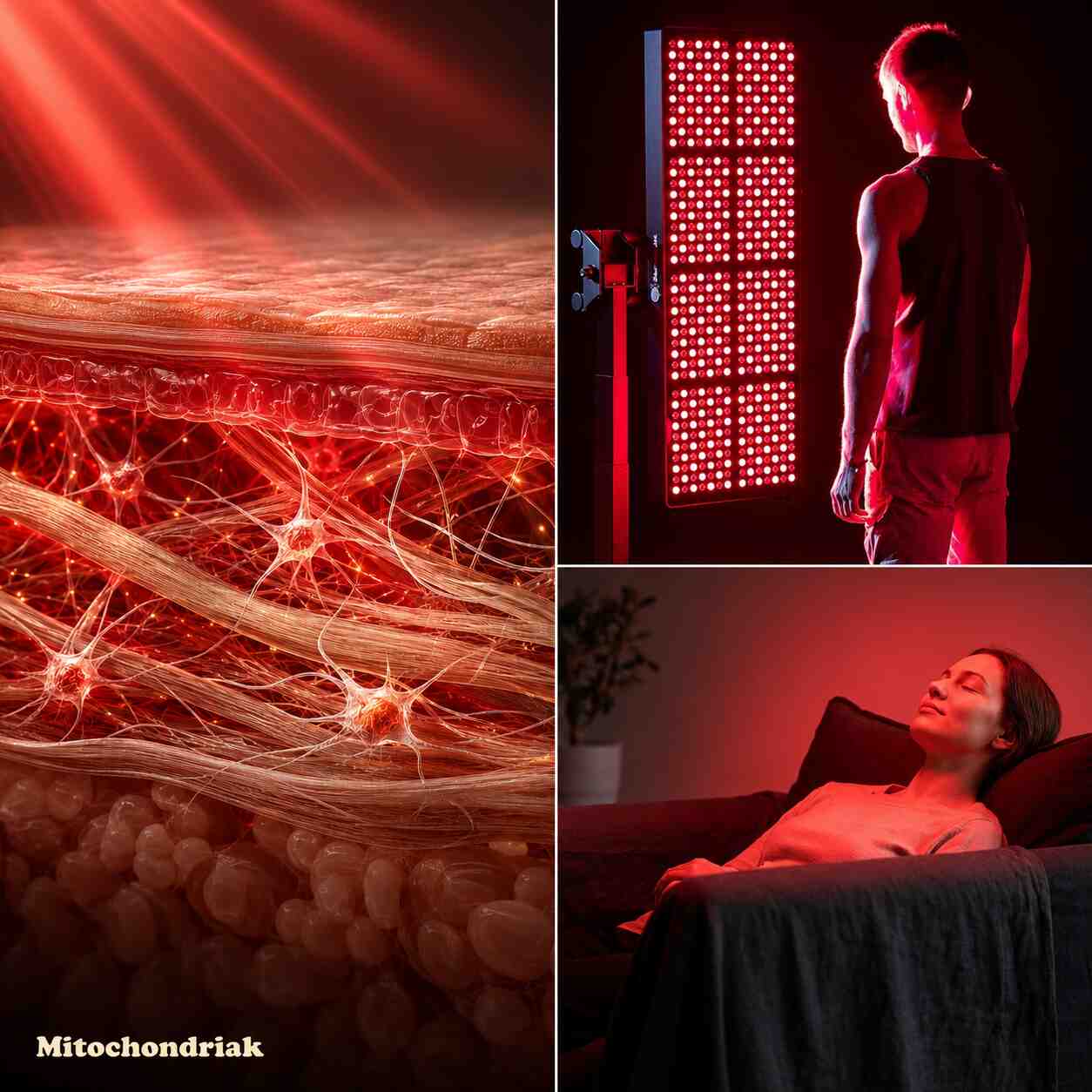
Photobiomodulation uses red and near infrared photons to influence mitochondrial and cellular signalling without producing the damaging effect associated with ultraviolet overexposure. One important proposed photoacceptor is the mitochondrial enzyme cytochrome c oxidase, abbreviated as CCO.
CCO is the final enzyme of the mitochondrial electron transport chain. It helps transfer electrons to oxygen and contributes to the proton gradient used by ATP synthase to produce ATP.
When red or near infrared light is absorbed, several interconnected effects may occur:
- Electron transport may become more efficient under suitable cellular conditions.
- Nitric oxide signalling may change, potentially influencing blood flow and oxygen availability.
- ATP availability may increase, giving cells more energy for repair.
- Reactive oxygen species may briefly act as signals that activate adaptive pathways.
- Inflammatory signalling may be modulated rather than simply switched off.
This response is dose-dependent. More light is not automatically better. Wavelength, irradiance, distance, duration, tissue condition and frequency all affect the outcome.
The light is therefore not a fuel that mitochondria burn directly. It is more like a biological instruction that changes how electrons, oxygen, water and signalling molecules behave inside the cell.
What role does melatonin play in skin regeneration?
Melatonin is not only a sleep signal. It is also an antioxidant and cellular regulator that helps coordinate nighttime repair. The body produces melatonin in several tissues, while the evening rise in circulating melatonin reflects the transition toward biological night.
Melatonin can interact with mitochondria, reduce oxidative stress and support cellular defence. The skin also contains local melatonin-related pathways.
Bright blue and green light at night can delay or suppress the normal evening melatonin signal. Poor sleep then adds another layer of metabolic and inflammatory stress.
This is why evening light hygiene matters for the skin even when no lamp is aimed directly at the face. The skin is connected to the wider circadian system through hormones, nerves, blood flow and metabolism.
A strong daytime light signal and a dark night help maintain the daily polarity that biology expects.
Can red light therapy support skin with rosacea?
Red light therapy may support rosacea by helping regulate inflammation, oxidative stress, barrier repair and mitochondrial energy. The evidence is more supportive of photobiomodulation as a complementary approach than as a standalone cure.
Potential benefits include:
- Supporting cellular energy for repair and barrier renewal.
- Modulating inflammatory activity associated with chronically reactive skin.
- Supporting fibroblasts and collagen in the dermal structure.
- Improving microcirculatory signalling without the thermal destruction used by vascular procedures.
- Helping tissue recover after minor irritation.
Red and near infrared light should not be confused with IPL or vascular laser treatment. IPL and vascular lasers target visible vessels through selective heating. Photobiomodulation uses lower-intensity non-thermal light to influence cellular function.
These approaches may therefore have different goals and can sometimes complement one another under professional guidance.
If a person spends most of the day indoors, red and near infrared light therapy may provide selected wavelengths that are often weak or absent in conventional indoor lighting.
However, a panel cannot replace sunlight, darkness, sleep or good dermatological care. It is one tool within the larger light environment.
How can you support your skin through light and daily rhythm?
The most useful routine restores the natural contrast between a bright day and a dark night. Begin with the environmental signals that regulate the whole organism before adding more complicated skincare products or biohacking tools.
- Go outdoors in the morning. Allow natural light to reach your eyes without looking directly at the sun.
- Spend regular time outside during the day. A bright screen is not a replacement for daylight.
- Reduce blue-rich artificial light after sunset. Dim overhead lighting and use warmer or red light.
- Protect your sleep. Keep the bedroom dark and maintain a consistent sleep schedule.
- Use gentle skincare. Avoid repeatedly damaging a sensitive barrier with aggressive exfoliation or irritating products.
- Identify personal triggers. Heat, alcohol, spicy food, cosmetics and emotional stress may influence rosacea differently in each person.
- Use red light consistently rather than aggressively. Follow the instructions for the specific device and observe your skin response.
For standard Mitochondriak® panels, the current general recommendation for superficial areas such as the skin is 5 to 10 minutes from a distance of 30 to 60 cm. The instructions for the exact model always take priority.
If you have very sensitive skin, begin conservatively and monitor the response over the following 24 hours. Stop and consult a professional if redness, burning or discomfort clearly worsens.
For more practical detail, continue with our article on how red light supports skincare, collagen and regeneration.
Support your skin at the mitochondrial level
Rosacea care begins with understanding triggers, protecting the skin barrier and restoring the daily rhythm of light and darkness. Red and near infrared light can add a mitochondrial signal that conventional indoor lighting usually lacks.
Frequently asked questions
Can a disrupted circadian rhythm worsen rosacea?
A disrupted circadian rhythm may increase inflammatory and oxidative stress while impairing sleep and nighttime repair. It is unlikely to be the only cause of rosacea, but it may become one environmental factor that makes already sensitive skin less resilient.
Does morning sunlight help the skin?
Morning sunlight helps synchronize the central circadian clock and establish the beginning of biological daytime. This supports the timing of hormones, sleep and nighttime repair. Morning light is therefore useful for the entire organism, not only for the skin directly exposed to it.
Does melatonin regenerate the skin?
Melatonin participates in antioxidant defence and nighttime cellular regulation. The skin also has local melatonin-related pathways. Melatonin is not a cosmetic treatment, but healthy nighttime signalling and sleep create conditions that support cellular repair and barrier renewal.
Can red light therapy cure rosacea?
No. Rosacea is a chronic and multifactorial condition. Red light therapy may support inflammation control, barrier repair and mitochondrial function, but it should be treated as a complementary tool rather than a guaranteed cure or replacement for dermatological care.
What is the difference between red and near infrared light?
Red light acts more strongly in superficial skin layers and is often associated with collagen, texture and surface regeneration. Near infrared light penetrates deeper and can influence deeper connective tissue, circulation and mitochondrial processes. Many devices combine both ranges.
Can red light make rosacea worse?
Correctly used non-thermal red light is generally gentle, but individual reactions differ. Excessive exposure, heat from an unsuitable device or photosensitivity may worsen discomfort. Begin conservatively, follow the device instructions and stop if burning or persistent redness increases.
How long should red light be used on facial skin?
For standard Mitochondriak® panels, the current general guidance for superficial skin is 5 to 10 minutes from 30 to 60 cm. Device intensity varies, so the exact manual and instructions for your model always take priority over a universal protocol.
Sources and references
- Avci P, Gupta A, Sadasivam M, et al. Low-level laser light therapy in skin: stimulating, healing, restoring. Seminars in Cutaneous Medicine and Surgery. 2013. PubMed
- Hamblin MR. Mechanisms and applications of the anti-inflammatory effects of photobiomodulation. AIMS Biophysics. 2017. PMC
- Lee SY, Park KH, Choi JW, et al. A prospective, randomized, placebo-controlled, double-blinded and split-face clinical study on LED phototherapy for skin rejuvenation. Journal of Photochemistry and Photobiology B. 2007. PubMed
- Wunsch A, Matuschka K. A controlled trial to determine the efficacy of red and near infrared light treatment in patient satisfaction, reduction of fine lines, wrinkles, skin roughness and intradermal collagen density increase. Photomedicine and Laser Surgery. 2014. PubMed
- Blume C, Garbazza C, Spitschan M. Effects of light on human circadian rhythms, sleep and mood. Somnologie. 2019. PubMed
- Slominski AT, Hardeland R, Zmijewski MA, et al. Melatonin in the skin: synthesis, metabolism and functions. Trends in Endocrinology and Metabolism. 2018. PubMed