.png)
Daylight saving time ends this October, and if you feel groggy, foggy, and out of sync for days afterwards, you are not imagining it. The time change nudges your circadian rhythm out of alignment with the clock on your wall, producing a mild form of social jet lag. The good news: with the right light exposure and a few simple habits, you can reset your internal clock in one to three days instead of a whole miserable week.
- Why the daylight saving time change disrupts your body more than the single hour suggests.
- How the shift mimics jet lag by desynchronising your master body clock from external cues.
- What benefits and limits you can realistically expect when you try to adjust quickly.
- A practical, step-by-step protocol using morning light and evening light hygiene.
- Who should be extra careful around the time change, and when to seek help.
- What is daylight saving time and why does it matter?
- How does daylight saving time work according to research?
- What benefits and limits can you realistically expect?
- How do you approach daylight saving time and your circadian rhythm safely in practice?
- What should you watch out for and who should be careful?
- Summary: what should you remember?
- Frequently asked questions
What is daylight saving time and why does it matter?
Daylight saving time is the twice-yearly practice of shifting clocks by one hour to better match daylight to waking hours. It matters because your body does not run on the wall clock, it runs on your circadian rhythm, an internal timing system anchored to light and darkness. When society moves the clock but the sun does not move with it, your biology and your schedule briefly fall out of step.
Think of it this way: the government can change what your phone says, but it cannot change when the sun rises. That gap between "social time" and "solar time" is exactly what your inner clock struggles with. In autumn, when clocks fall back an hour, most people expect the "extra hour" of sleep to feel like a gift. In practice, many wake earlier than they wanted and feel oddly tired for several days as their body renegotiates its rhythm.
Your circadian rhythm is not just about sleep. It governs the release of hormones such as cortisol in the morning and melatonin in the evening, along with body temperature, digestion, alertness, and mood. A one-hour clock shift may sound trivial, but it touches every one of these systems at once. That is why the transition can feel disproportionate to the single hour on paper.
Understanding this mismatch is the first step to fixing it. If you know that your clocks are set by light, not by decree, then the solution becomes obvious: manage your light exposure deliberately around the change. Before we get to the practical protocol, it helps to understand what the research actually says about how these clocks work. If you want a deeper foundation, our guide on how your internal clock works unpacks the biology in detail.
How does daylight saving time work according to research?
Research shows that the time change disrupts sleep primarily by desynchronising your master body clock from the external light-dark cycle. Your central pacemaker, a tiny cluster of neurons called the suprachiasmatic nucleus, reads light signals from your eyes and sets the timing for the rest of your body. When the clock jumps but daylight timing stays fixed, this pacemaker needs several days to catch up.
Chronobiologist Till Roenneberg and colleagues have documented that the human circadian clock does not simply follow the clock change. In their data, sleep and activity readily adjusted to the autumn return to standard time, but the timing of activity did not adjust to the spring change, especially in late chronotypes, leaving a mismatch between internal time and social time that persists well beyond the changeover day itself. [R] This is why the effects can linger rather than vanish overnight.
The mechanism at the centre of all this is light. A review from the same research group confirms that light is the most prominent signal that tells the human circadian clock what time it is. [R] Bright light in the morning advances your clock and helps you wake earlier, while bright light in the evening delays it and keeps you up later. This dual action is the lever you will pull to adjust smoothly.
Here is what the science tells us in practical terms:
- Morning light speeds up your clock. Getting bright light soon after waking helps shift your rhythm earlier, which is exactly what you need when clocks fall back.
- Evening light delays your clock. Screens and bright indoor lighting after sunset push your melatonin release later, working against a smooth adjustment.
- The clock re-entrains gradually. A one-hour shift typically takes the body one to several days to absorb, not a single night.
- Individual chronotypes differ. "Night owls" often struggle more with the transition than "early birds", because their internal clocks are already running later.
The broader literature on circadian biology underlines just how deeply these rhythms are woven into human physiology, from cellular energy production in the mitochondria to immune function and metabolism. The takeaway is simple but powerful: because light sets the clock, controlling your light is how you take back control of the transition. In the next sections we turn that principle into a concrete plan you can start using today.
What benefits and limits can you realistically expect?
You can realistically expect to reset your circadian rhythm within one to three days if you manage light and sleep timing well, instead of drifting through a foggy week. What you cannot expect is an instant fix on the first morning, or the ability to skip good habits entirely. The change is manageable, but your biology still needs a short adjustment window.
The main benefit of a deliberate approach is speed. Left to itself, your body clock re-entrains at roughly one hour per day, so a passive adjustment to the autumn time change can drag on. By front-loading strong morning light and protecting your evenings, you push your clock in the right direction faster and shorten that groggy period considerably.
A second real benefit is fewer knock-on effects. When your rhythm is aligned, you sleep more soundly, your morning cortisol peak lands at the right time, and your evening melatonin rises on schedule. That translates into steadier energy, better mood, and sharper focus during the day, rather than the mid-afternoon crashes that often follow a poorly managed transition.
The honest limits are worth stating plainly. No light protocol overrides genetics or a chaotic schedule. If you go to bed at wildly different times each night, keep scrolling bright screens until midnight, or work rotating shifts, even perfect morning light will only partly help. Light is the strongest lever you have, but it works with your habits, not instead of them.
How do you approach daylight saving time and your circadian rhythm safely in practice?
In practice, you adjust safely by combining a gradual shift in your sleep schedule with well-timed light exposure. Start two or three days before the change, get bright morning light as early as possible, protect your evenings from blue light, and keep your wake time consistent. These four moves cover the vast majority of what your body needs to re-sync smoothly.
Here is a simple, sequenced protocol you can follow around the end of daylight saving time:
- Shift gradually beforehand. In the two to three days before the clocks change, move your bedtime and wake time by 15 to 30 minutes each day toward the new schedule. Small steps are easier for your clock to absorb than one abrupt jump.
- Anchor your morning with light. Within the first hour of waking, get 10 to 30 minutes of bright light, ideally outdoor daylight. On dark autumn mornings, a bright indoor light source close to your routine helps signal "morning" to your brain.
- Keep your wake time fixed. Even on weekends, get up at the same time. A consistent wake anchor is one of the most reliable ways to stabilise your rhythm, a principle we cover in our guide to cortisol and morning light.
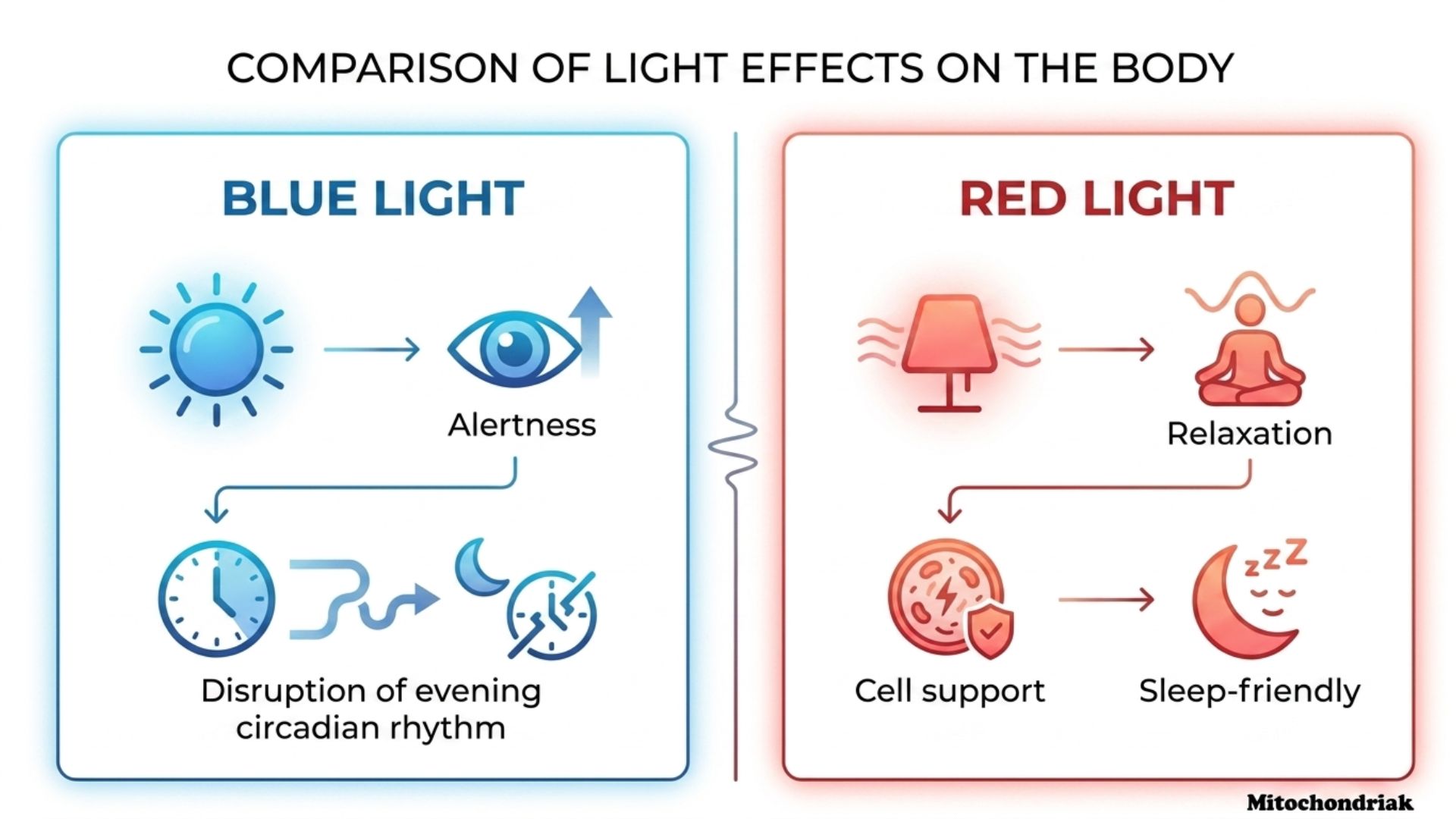
- Practise strict evening light hygiene. In the two to three hours before bed, dim overhead lights and cut short-wavelength light from screens. This is where blue light blocking glasses and warm, low-intensity lighting do their most important work.
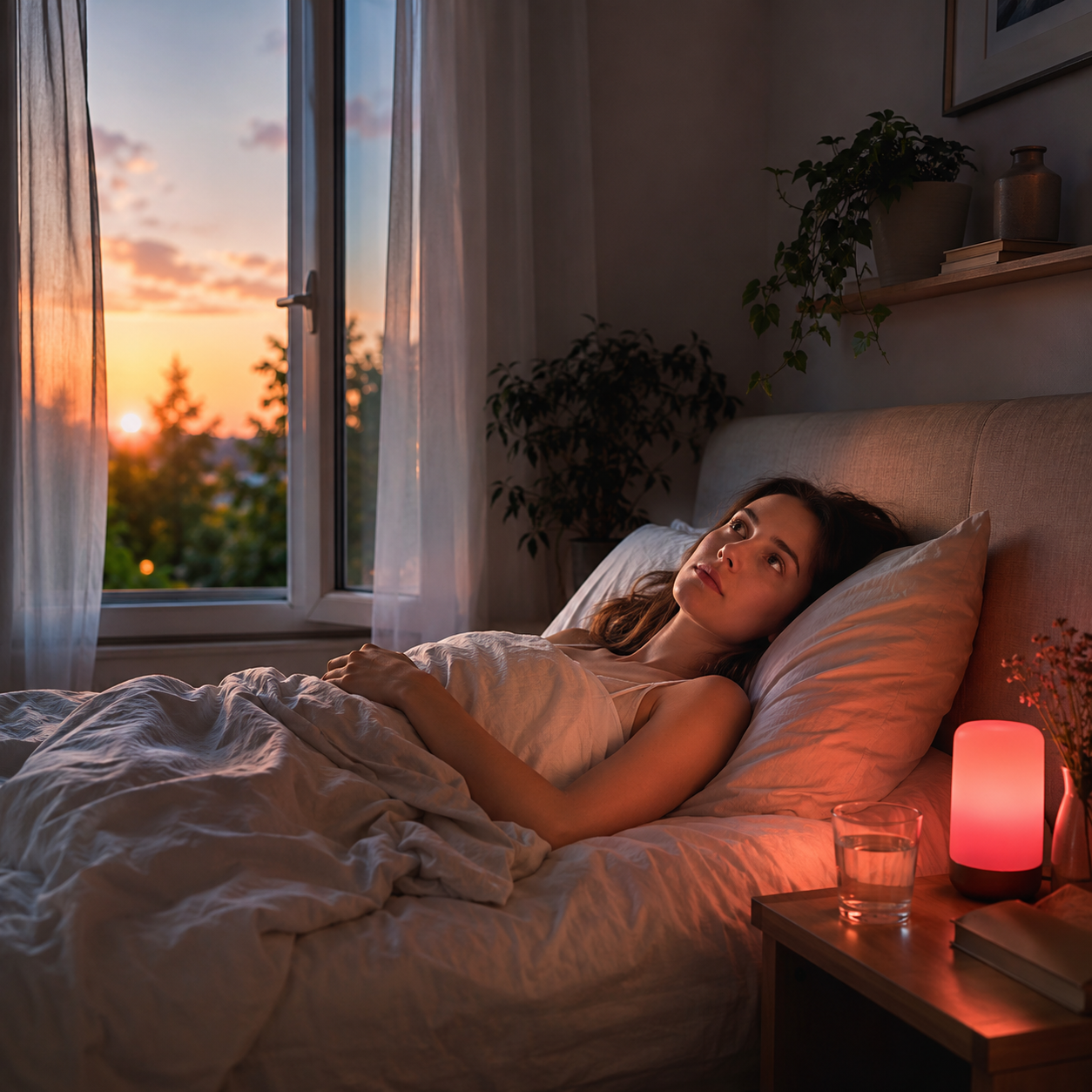
Evening light is where most people sabotage themselves without realising it. Bright white bulbs and glowing screens after sunset tell your brain it is still daytime, delaying melatonin and pushing sleep later, precisely the opposite of what you want in autumn. Swapping harsh overhead lighting for a warm, dim source in the last hours of the day makes a noticeable difference.
This is exactly the problem circadian lighting is designed to solve. An Evening red bulb Mitochondriak® E27 lets you keep your rooms lit in the evening without flooding your eyes with the blue and green wavelengths that suppress melatonin. Paired with Blue light blocking glasses Mitochondriak® for screen time, you protect the wind-down phase that a smooth transition depends on. If you want the full framework, our detailed guide to blue light blocking glasses walks through the evidence and the practical setup.
Reset your clock faster this autumn
The end of daylight saving time is the perfect moment to fix your evening light. Warm, blue-free lighting in the last hours of the day helps your melatonin rise on time, so you fall asleep easier and wake up clearer, that is why we built our circadian lighting range.
What should you watch out for and who should be careful?
Watch out for the temptation to "power through" with caffeine, late naps, or extra alcohol, all of which fragment sleep and slow your adjustment. Certain groups should be especially careful around the time change: teenagers, shift workers, night owls, and people with existing sleep or mood conditions typically feel the disruption more strongly and for longer.
The most common mistakes are simple to avoid once you know them. Heavy caffeine in the afternoon lingers in your system for hours and undermines the very sleep you are trying to rebuild. A long evening nap to "catch up" only pushes your bedtime later and confuses your clock further. And using bright screens in bed reintroduces exactly the blue light you are trying to remove.
Chronotype matters here too. If you are a natural "night owl", your internal clock already runs later than the social schedule demands, so the autumn shift can hit harder. In that case, be extra disciplined about early morning light and a fixed wake time, since those are your strongest tools for pulling your rhythm earlier. Our overview of sleep stages and circadian rhythm explains why consistency matters so much.
Finally, know when this is more than a nuisance. The American Academy of Sleep Medicine publishes sleep hygiene guidance precisely because disrupted sleep is a health issue, not just an inconvenience. If you find that low mood, severe fatigue, or insomnia persists for more than a couple of weeks after the change, or worsens each autumn, that pattern deserves a conversation with a healthcare professional rather than another cup of coffee.
Summary: what should you remember?
The end of daylight saving time feels harder than a single hour because your body runs on light, not on the wall clock. When the clocks fall back but the sun does not, your circadian rhythm briefly desynchronises, producing that familiar tired, foggy, mildly jet-lagged feeling. The reassuring truth is that this is temporary and highly manageable once you understand the mechanism behind it.
The core plan comes down to a few reliable moves: shift your schedule gradually in the days beforehand, flood your first waking hour with bright morning light, keep a fixed wake time even on weekends, and protect your evenings with strict light hygiene. Warm, blue-free lighting and blue light blocking glasses in the final hours before bed let your melatonin rise on schedule, which is the single biggest lever for falling asleep on time.
Be patient but proactive. Expect one to three days rather than an instant fix, avoid the classic traps of late caffeine and evening screens, and pay extra attention if you are a night owl, a teenager, or a shift worker. Manage your light deliberately, and the autumn transition becomes a minor adjustment rather than a lost week.
Frequently asked questions
How long does it take to adjust to daylight saving time?
For most people, the body adjusts to the one-hour change within one to three days when light and sleep are managed well. Left entirely to itself, the circadian clock re-entrains at roughly one hour per day, so passive adjustment can take longer. Night owls and teenagers often need several extra days compared with early risers.
What is the fastest way to reset your circadian rhythm after the time change?
The fastest reset combines bright morning light with strict evening light hygiene. Get 10 to 30 minutes of bright light within an hour of waking to shift your clock earlier, then dim the lights and avoid blue light from screens in the two to three hours before bed. A consistent wake time locks the new rhythm in place.
Why does daylight saving time feel like jet lag?
It feels like jet lag because the mechanism is nearly identical: your internal clock becomes desynchronised from external time cues. With jet lag you fly across time zones, with the time change the clock moves while you stay put, but in both cases your master body clock in the brain needs several days to realign with the new light-dark schedule.
Does evening light really affect how well I adjust?
Yes, evening light is one of the most influential factors. Bright, blue-rich light after sunset delays your clock and suppresses melatonin, making it harder to fall asleep at the right time. Using warm, low-intensity lighting and blue light blocking glasses in the evening removes that delaying signal and supports a smoother, faster adjustment.
Sources and references
- Thomas Kantermann. 2007. The human circadian clock's seasonal adjustment is disrupted by daylight saving time pubmed.ncbi.nlm.nih.gov
- Till Roenneberg. 2013. Light and the human circadian clock pubmed.ncbi.nlm.nih.gov