.png)
Red light therapy uses specific wavelengths of red and near-infrared light to stimulate your mitochondria, the tiny power plants inside every cell. The result is more cellular energy (ATP), which research links to faster recovery, healthier skin and better sleep, all without a single pill.
- What red light therapy actually is and why it has become one of the most researched forms of light medicine.
- The real mechanism of action behind photobiomodulation, from cytochrome c oxidase to ATP and nitric oxide.
- Which benefits are backed by science, and which claims you should treat with caution.
- How to use red light therapy safely at home, including wavelengths, distance and timing.
- Who should be careful and what side effects to watch for.
- What is red light therapy and why does it matter?
- How does red light therapy work according to research?
- What benefits and limits can you realistically expect?
- How do you use red light therapy safely in practice?
- What should you watch out for and who should be careful?
- Summary: what should you remember?
- Frequently asked questions
What is red light therapy and why does it matter?
Red light therapy is a treatment that exposes the body to low levels of red and near-infrared light to trigger beneficial biological changes inside cells. It matters because, unlike a supplement or a drug, it works with a fundamental input your body was designed to receive from sunlight: specific wavelengths that fuel your mitochondria and support natural repair processes.
You may also see it described using more technical names. Photobiomodulation (PBM) is the scientific term researchers prefer, and older literature uses "low-level laser therapy" (LLLT). All of these describe the same core idea: harmless doses of light in the red to near-infrared range change how cells behave, without heating or damaging tissue [R].
Why does this deserve attention now? Modern life keeps most of us indoors, under artificial lighting that lacks the full spectrum of the sun. We get plenty of blue light from screens but very little of the red and infrared frequencies our cells rely on. At Mitochondriak® we see this as a genuine light deficit, and red light therapy is one practical way to replenish part of what indoor living removes.
The wavelengths that carry these effects sit roughly in the 630 to 940 nm range. Red light around 630 to 670 nm tends to act closer to the surface, on skin and shallow tissue, while near-infrared light around 810 to 850 nm penetrates deeper toward muscles, joints and the brain. If you want a gentler introduction to the topic, our overview of what red light therapy is walks through the basics step by step.
How does red light therapy work according to research?
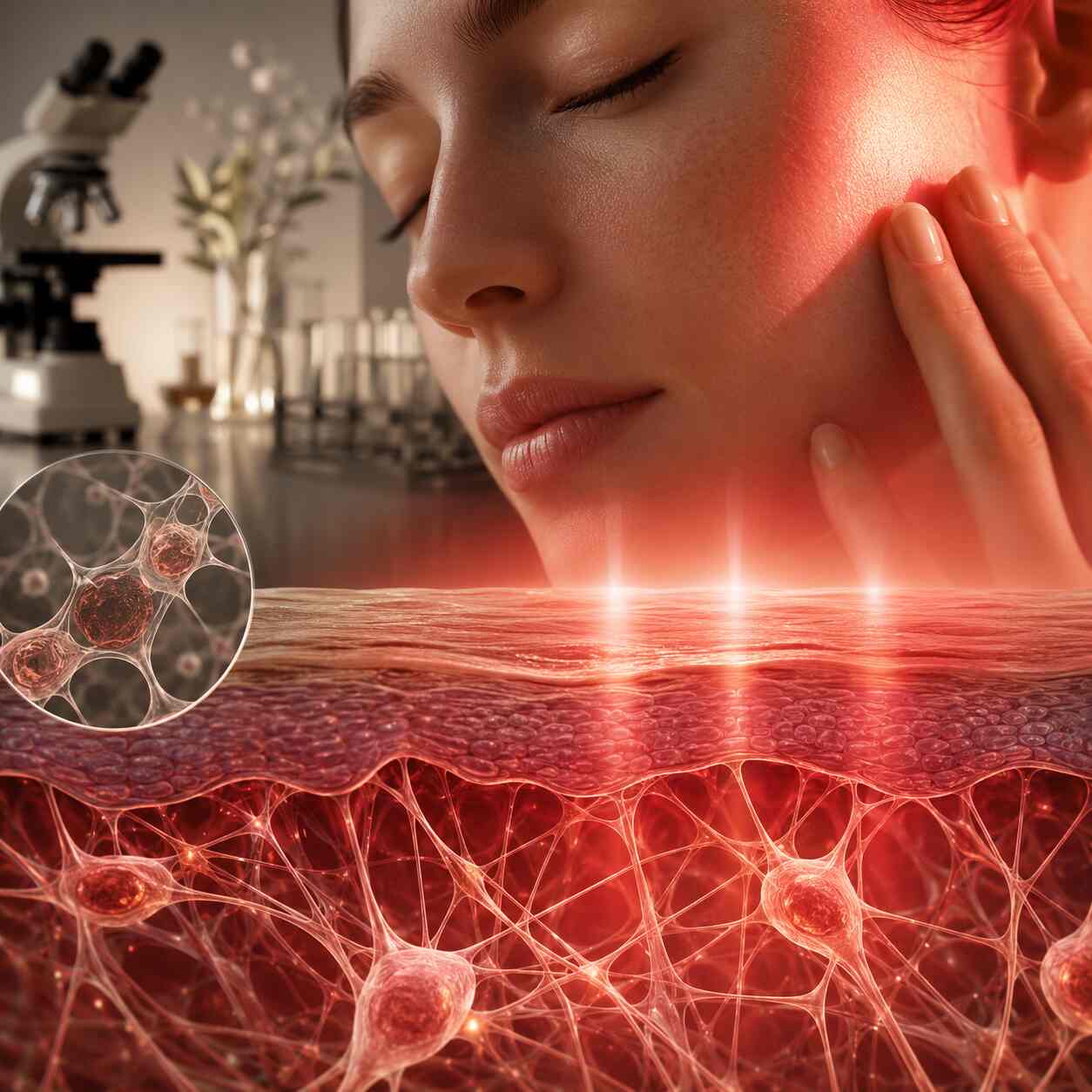
Red light therapy works mainly by delivering photons to an enzyme called cytochrome c oxidase (CCO), which sits in the mitochondria of your cells. When CCO absorbs red and near-infrared light, it works more efficiently, boosts ATP (cellular energy) production and releases signaling molecules that improve blood flow and reduce inflammation. This chain of events is the foundation of every documented benefit [R].
To understand this properly, it helps to zoom in on the cell. The pioneering work of Tiina Karu at the Russian Academy of Sciences established that CCO is the primary photoacceptor: the molecule that catches the light and translates it into a biological response. Light photons are absorbed by the enzyme cytochrome c oxidase, and this absorption speeds up the final step of the mitochondrial electron transport chain.
From there, several things happen in sequence:
- More ATP: With CCO working better, mitochondria produce more ATP, the universal energy currency cells use for repair, regeneration and normal function.
- Nitric oxide release: Light appears to displace nitric oxide (NO) that can bind to and inhibit CCO. Freeing this NO improves the enzyme's activity and, separately, NO acts as a signal that widens blood vessels and improves local circulation [R].
- A brief signaling burst of ROS: Red light causes a small, transient rise in reactive oxygen species (ROS). Rather than causing damage, this mild burst acts as a message that switches on protective and regenerative genes inside the cell.
The result is a cell that has more energy and receives a clear signal to repair itself and calm inflammation. Researchers such as Michael R. Hamblin at Harvard Medical School have described how these cellular events translate into measurable anti-inflammatory effects across many tissue types [R].
One important detail is the concept of a biphasic dose response, sometimes called the Arndt-Schulz curve. In simple terms, a moderate dose of light produces the best result, while too little does nothing and too much can reduce or even reverse the benefit. This is why more time under a panel is not automatically better, a point we return to when we cover practical protocols. If you would like a deeper dive into the terminology, our comparison of photobiomodulation versus red light therapy clarifies how these terms overlap.
What benefits and limits can you realistically expect?
The benefits of red light therapy that have the strongest research backing are improved skin quality, reduced pain and inflammation, faster tissue healing and support for hair growth. Other uses, such as sleep, mood and cognitive support, show promising but earlier-stage evidence. The key is to separate well-documented effects from optimistic marketing claims.
Let us start with the area where the science is most mature. For skin health, red light in the 630 to 670 nm range stimulates fibroblasts, the cells that produce collagen. A widely cited review by Pinar Avci and colleagues documents how photobiomodulation supports collagen production, wound healing and overall skin restoration, which underpins its popularity in dermatology and anti-aging [R]. If skin is your main interest, our detailed guide on what red light can do for collagen, wrinkles and acne goes deeper into protocols.
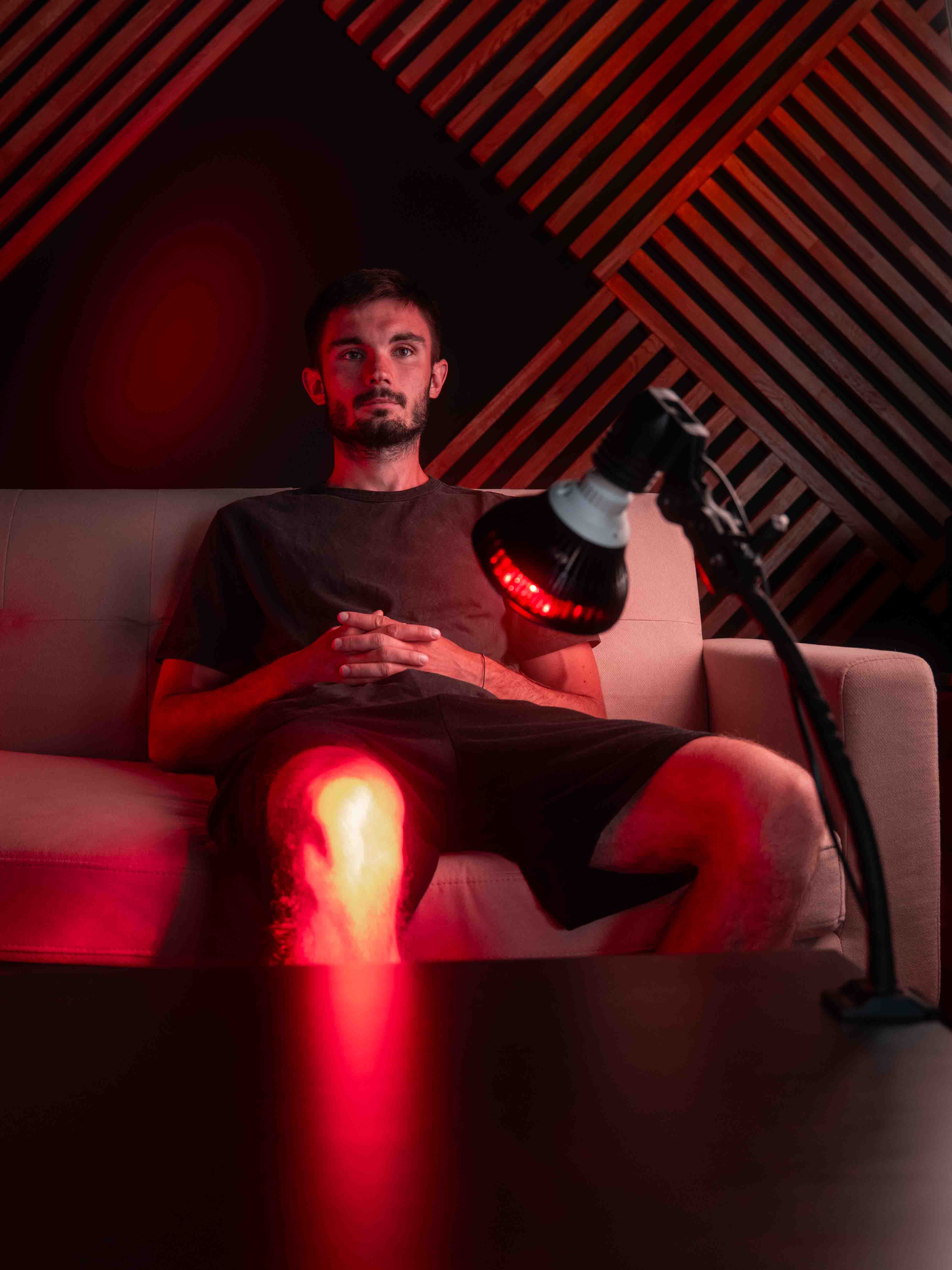
The second well-supported area is pain relief and inflammation. A systematic review by Jan Bjordal found that low-level laser therapy at suitable doses can meaningfully reduce pain in chronic joint disorders, although the authors called for cautious interpretation [R]. This aligns with the anti-inflammatory mechanisms described earlier, where improved circulation and calmer signaling reduce local swelling and discomfort. Athletes often use it to speed up muscle recovery between sessions.
For hair growth, the evidence is also encouraging. A systematic review and meta-analysis on hair loss concluded that red and infrared photobiomodulation was effective for androgenetic alopecia compared with control treatments [R]. Beyond these core areas, early research points to potential support for eye health in age-related macular degeneration [R] and even thyroid function [R].
Now for the limits, because honesty builds trust. Red light therapy is not a cure and it does not replace medical treatment. Many studies are small, use different devices and report varied protocols, which makes direct comparison hard. Results also depend heavily on consistency: a single session rarely does much, while regular use over weeks is where people report the clearest changes. Treat bold promises of instant transformation with healthy skepticism.
How do you use red light therapy safely in practice?
To use red light therapy at home effectively, expose the target area to a quality panel from a recommended distance for a short, consistent session, several times per week. The three variables that matter most are wavelength, distance and duration, and getting them into a sensible range matters more than chasing perfection. Always follow the specific instructions for your device.
Start with wavelength. Look for devices that combine red light (around 630 to 670 nm) with near-infrared light (around 810 to 850 nm). This combination covers both surface tissue like skin and deeper targets like muscles and joints. Panels that publish their exact wavelengths and irradiance are generally more trustworthy than those that only advertise vague claims.
Next, distance and duration. For a classic mains-powered panel such as the Mitochondriak® Maxi Upgraded, a typical therapy distance is around 30 to 60 cm from the body, with sessions lasting roughly 10 to 20 minutes per area. Never place your body closer than 30 cm to a classic panel, both to keep light dosing in the beneficial window and to keep a comfortable distance from the device. Because more is not better, resist the temptation to double session length; the biphasic dose response means overexposure can dull the effect.
Consistency is the real secret. Most published protocols involve using the therapy on most days of the week over several weeks. Building it into an existing routine, such as a morning stretch or an evening wind-down, makes it far easier to stay regular. For a broader look at how light fits into daily life, our article on light therapy benefits, types and how to use it puts red light in context.
Bring red and near-infrared light home
Indoor living leaves most of us short on the red and infrared frequencies our cells rely on. A full-body panel with clearly specified red and near-infrared wavelengths makes it simple to top up that light where you live, on your own schedule.
What should you watch out for and who should be careful?
Red light therapy is considered very safe for most people, with a strong track record and few reported side effects. The most common issues are mild and temporary, such as slight eye strain from looking directly at bright panels or minor skin redness after longer sessions. Still, some groups should take extra care and consult a professional first.
Protect your eyes as a sensible default. While red and near-infrared light is not the same as harmful UV, staring directly into a powerful panel is uncomfortable and unnecessary. Keeping your eyes closed or using suitable goggles during facial sessions is a reasonable precaution. If you experience persistent headaches or visual discomfort, stop and reassess your setup.
Be more cautious in a few specific situations. If you are pregnant, have a diagnosed photosensitivity disorder, take medications that increase light sensitivity, or have active skin cancer or suspicious lesions, speak to your doctor before starting. The same applies if you have a serious underlying medical condition; red light therapy is a supportive tool, not a substitute for proper medical care.
Finally, watch out for the device itself. Choose panels that clearly state their wavelengths and are built to a recognized safety standard, and avoid unbranded products that make extravagant medical claims. A well-specified panel used sensibly is the foundation of a safe, effective routine.
Summary: what should you remember?
Red light therapy, also known as photobiomodulation, is one of the most researched forms of light-based support available today. At its core, it delivers red and near-infrared photons to the enzyme cytochrome c oxidase in your mitochondria, which boosts ATP energy production, releases nitric oxide to improve circulation and triggers a gentle signaling response that helps cells repair and calm inflammation. This single mechanism explains why the same therapy can support such a wide range of outcomes.
When it comes to results, keep expectations grounded but optimistic. The strongest evidence supports benefits for skin quality, pain and inflammation, tissue healing and hair growth, while areas like sleep, mood and eye health show promising early research. The practical formula is simple: choose a panel with credible red and near-infrared wavelengths, keep a classic panel at least 30 cm away, use short sessions of around 10 to 20 minutes, and stay consistent over several weeks. Used this way, and with sensible eye protection, red light therapy is a safe and genuinely useful way to give your cells more of the light that modern indoor life takes away.
Frequently asked questions
What is red light therapy in simple terms?
Red light therapy is a treatment that shines specific wavelengths of red and near-infrared light onto your body. These wavelengths are absorbed by your mitochondria, the energy factories inside your cells, which then produce more energy and send out signals that support repair and reduce inflammation. It does not heat or damage tissue and is also called photobiomodulation.
How long does it take to see results from red light therapy?
Most people do not notice dramatic changes after a single session. Because the effects build gradually, consistent use over several weeks is usually needed. Many protocols involve using the therapy on most days of the week, and visible skin or recovery benefits are commonly reported after four to twelve weeks of regular use, depending on the goal.
Is red light therapy safe to use at home?
Yes, red light therapy is considered very safe for home use and has a strong safety record with few side effects. The main precautions are protecting your eyes from bright panels and following the recommended distance and session times for your device. Pregnant people and those with photosensitivity or serious medical conditions should consult a doctor first.
What wavelengths are best for red light therapy?
The most useful wavelengths fall roughly between 630 and 850 nm. Red light around 630 to 670 nm works closer to the surface and suits skin, while near-infrared light around 810 to 850 nm penetrates deeper toward muscles and joints. A quality panel that combines both ranges gives you the broadest coverage for different goals.
How close should I stand to a red light therapy panel?
For a classic mains-powered panel, a typical therapy distance is around 30 to 60 cm from the body. You should never place your body closer than 30 cm to a classic panel. Always check your specific device instructions, since the ideal distance depends on the panel's power and design.
Can red light therapy help with pain and inflammation?
Yes, this is one of the better-supported uses. Systematic reviews of red and near-infrared light show meaningful reductions in pain, especially for musculoskeletal issues. The effect comes from improved local circulation, increased cellular energy and calmer inflammatory signaling. It is often used to support muscle recovery and ease joint discomfort, alongside proper medical care.
Sources and references
- D. Zhao. 2012. Red light and the sleep quality and endurance performance of Chinese female basketball players pubmed.ncbi.nlm.nih.gov
- J. M. Bjordal. 2003. A systematic review of low level laser therapy with location-specific doses for pain from chronic joint disorders pubmed.ncbi.nlm.nih.gov
- D. B. Höfling. 2013. Low-level laser in the treatment of patients with hypothyroidism induced by chronic autoimmune thyroiditis: a randomized, placebo-controlled clinical trial pubmed.ncbi.nlm.nih.gov
- Y. Zhang. 2022. Photobiomodulation Therapy With Different Wavebands for Hair Loss: A Systematic Review and Meta-Analysis pubmed.ncbi.nlm.nih.gov
- P. Avci. 2013. Low-level laser (light) therapy (LLLT) in skin: stimulating, healing, restoring pmc.ncbi.nlm.nih.gov
- M. R. Hamblin. 2017. Mechanisms and applications of the anti-inflammatory effects of photobiomodulation pubmed.ncbi.nlm.nih.gov
- G. F. Merry. 2017. Photobiomodulation reduces drusen volume and improves visual acuity and contrast sensitivity in dry age-related macular degeneration pubmed.ncbi.nlm.nih.gov