
.png)
Barefoot shoes are not just a lighter way to walk through summer. They give your feet space, sensory feedback and natural movement. And when grounding is added, every step can become a small return to the Earth, electrons and the environment in which the human body evolved.
- Why conventional shoes often block the foot like thick insulation around a sensor.
- How barefoot shoes support toe function, balance, sensitivity and natural gait.
- What research says about minimalist footwear, foot strength and balance.
- What makes grounded barefoot shoes Mitochondriak® different from ordinary barefoot shoes.
- How to use the current 20% summer discount with code grounding20.
- What are barefoot shoes and why does the body sense them differently?
- Why is the foot a sensor, not just a platform?
- What does science say about minimalist footwear?
- What does grounding add to ordinary barefoot shoes?
- How should you start with barefoot shoes safely?
- How can you use the 20% summer discount?
- Frequently asked questions

Summer barefoot sale
20% off grounded barefoot shoes Mitochondriak®
Give your feet natural movement and add a practical grounding effect to everyday walking. Use this discount code in the cart:
grounding20
Choose grounded barefoot shoes
The promotion is intended for the short summer window and may end earlier if stock sells out.
What are barefoot shoes and why does the body sense them differently?
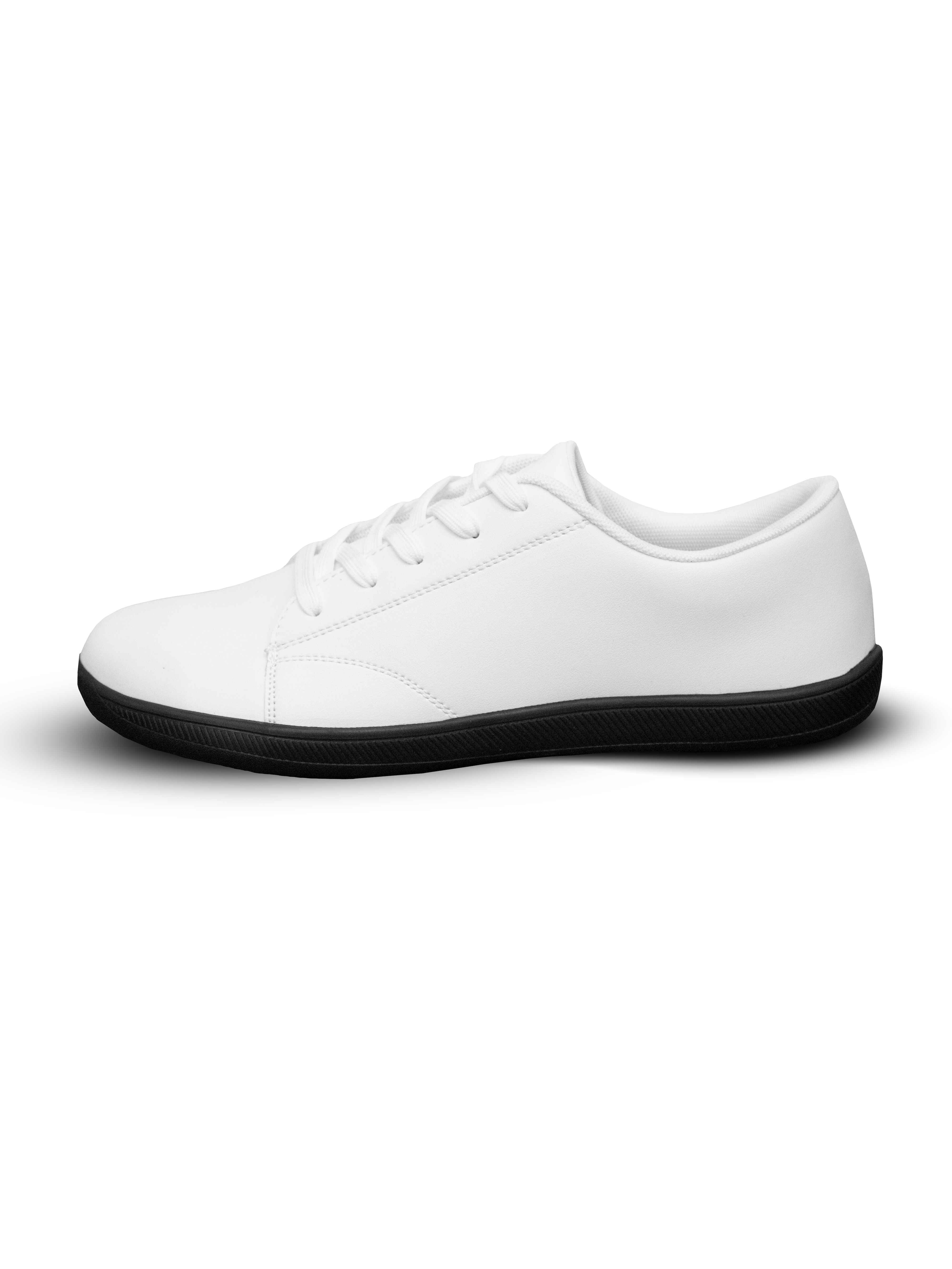
Barefoot shoes are shoes designed to interfere as little as possible with natural foot movement. They usually have a wider toe box, a flexible and low sole, minimal cushioning and little to no heel-to-toe drop.
In simple terms, a barefoot shoe does not try to do the work for your foot. It gives the foot space to work again. That is very different from many modern shoes, which often narrow the toes, lift the heel, soften the ground and change the way you walk.
Think of the foot as a biological antenna. It is full of nerves, muscles, tendons, ligaments and receptors. With every step, it sends information to the brain: what the surface feels like, where your centre of gravity is, how the ankle should respond and how the knee, pelvis and spine should organise themselves.
When this antenna is placed inside a thick, stiff and insulating shoe, part of the signal is lost. The body still moves, but it reads less data. And when the brain receives less data, movement often becomes less precise and more dependent on compensation.
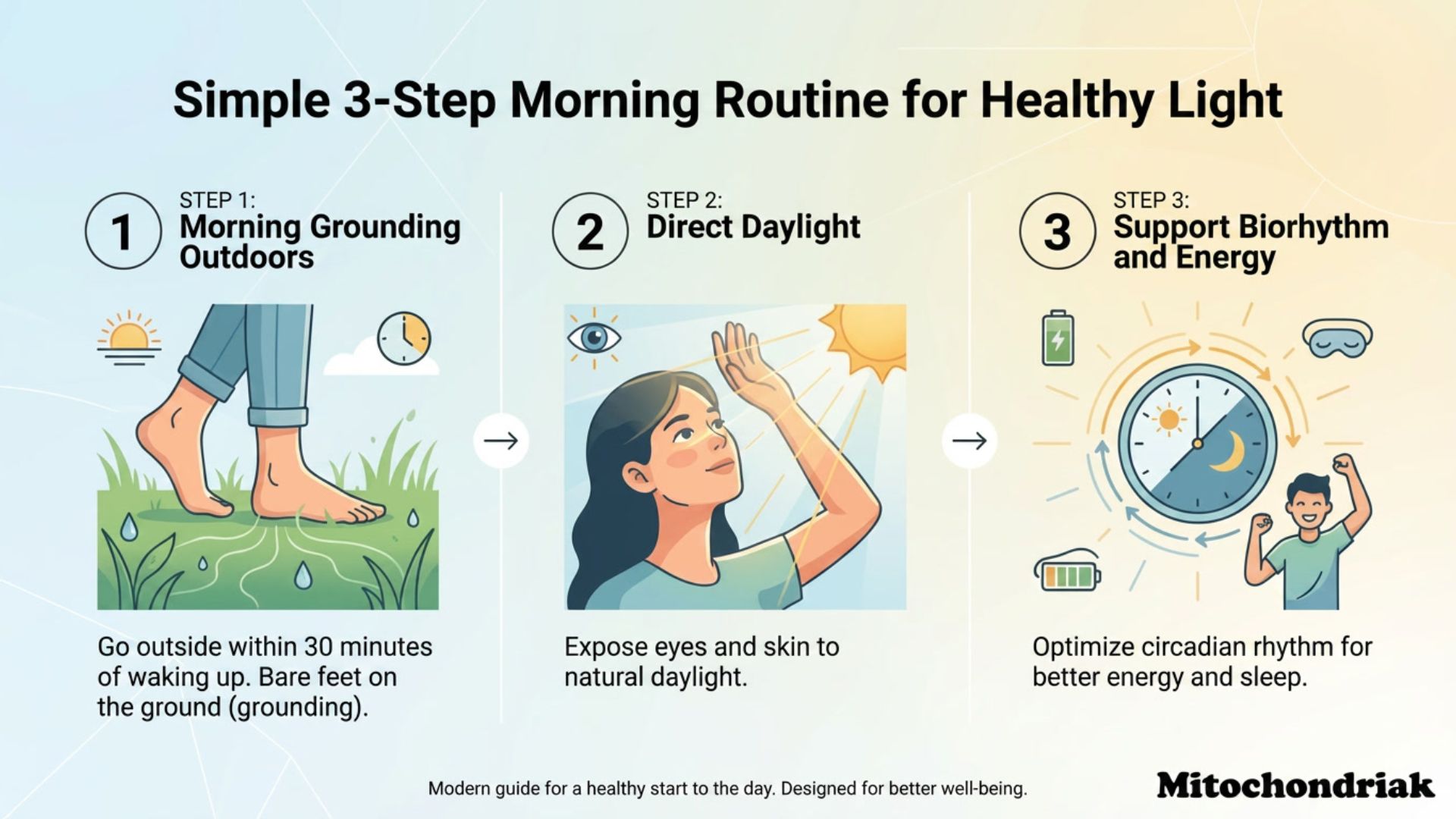
This is why barefoot footwear is not only about “feeling the ground”. It is about giving the nervous system back information that used to be normal. Just as light helps set the circadian rhythm, contact between the foot and the ground helps set the movement map of the body.
Why is the foot a sensor, not just a platform?
The foot is the main point of contact between the body and the Earth. It carries weight, absorbs impact, helps with balance and guides the entire movement chain through the toes, arch, ankle, knee, pelvis and spine.
From an evolutionary point of view, humans did not spend most of history walking in thick foam soles. We walked barefoot, in leather, in simple sandals or in minimal protection. The foot met grass, soil, sand, stone, heat, cold and moisture.
Modern shoes are comfortable, but often too comfortable. A thick sole reduces feedback. A narrow front compresses the toes. A raised heel changes tension in the calf, Achilles tendon and pelvis. And when the foot does not need to work for years, it can weaken like any other underused part of the body.
This is where barefoot philosophy connects beautifully with the mitochondrial perspective. Mitochondria like movement, rhythm, mechanical loading and natural signals from the environment. Walking is one of the oldest biological training tools humans have. It is quiet, simple and repeated every day.
The category page for earthing grounded barefoot shoes reminds us that the average person takes about 8 to 10 thousand steps a day. The question is simple: if you already walk every day, why not let each step send a better signal to your foot, nervous system and posture?
What does science say about minimalist footwear?
Research on minimalist footwear suggests that regular use may support foot strength, balance and some aspects of foot posture. At the same time, transition should be gradual because muscles, tendons and bones need time to adapt.
One of the most interesting papers was published in Scientific Reports in 2021. Rory Curtis from the University of Liverpool and colleagues studied adults who used minimal footwear in daily life for six months. The study reported an average 57.4% increase in foot strength after the intervention. It also explains that intrinsic foot muscles help regulate the arch, stability and gait. Source: Curtis et al., 2021, Scientific Reports.
Another randomized controlled trial by Anna Gabriel and colleagues, published in PLOS ONE in 2024, used a four week walking intervention in minimalist shoes. Participants started with 3,000 steps per day in the first week and increased to 5,000 steps per day for the remaining three weeks. The minimalist shoe group showed improvements in foot posture and static single-leg balance. Source: Gabriel et al., 2024, PLOS ONE.
A 2025 systematic review and meta-analysis led by Jean-Louis Peters-Dickie concluded that foot exercises and minimalist shoes may be appropriate tools for increasing foot strength and inducing biomechanical changes during dynamic tasks. The authors also noted that the certainty of evidence was low to very low, mainly because of the limited number and quality of available studies. Source: Peters-Dickie et al., 2025, PubMed.
What does this mean in practice? When the foot receives more work, more room and more sensory contact, it may begin to rebuild functions that were muted for years. But the same principle applies as with light, cold or training: the signal must be appropriate. Too little does nothing, too much can overload the system.
What does grounding add to ordinary barefoot shoes?
Ordinary barefoot shoes can give the foot space and flexibility, but they usually still insulate the body from the Earth. Grounded barefoot shoes add a conductive element in the sole so the body can stay electrically connected to the ground through the shoe.
This is the key difference between barefoot and grounded barefoot. A standard barefoot shoe may be excellent for movement, but if its sole is non-conductive, your body is still electrically separated from the Earth. It is like standing beside a river with glass between you and the water.
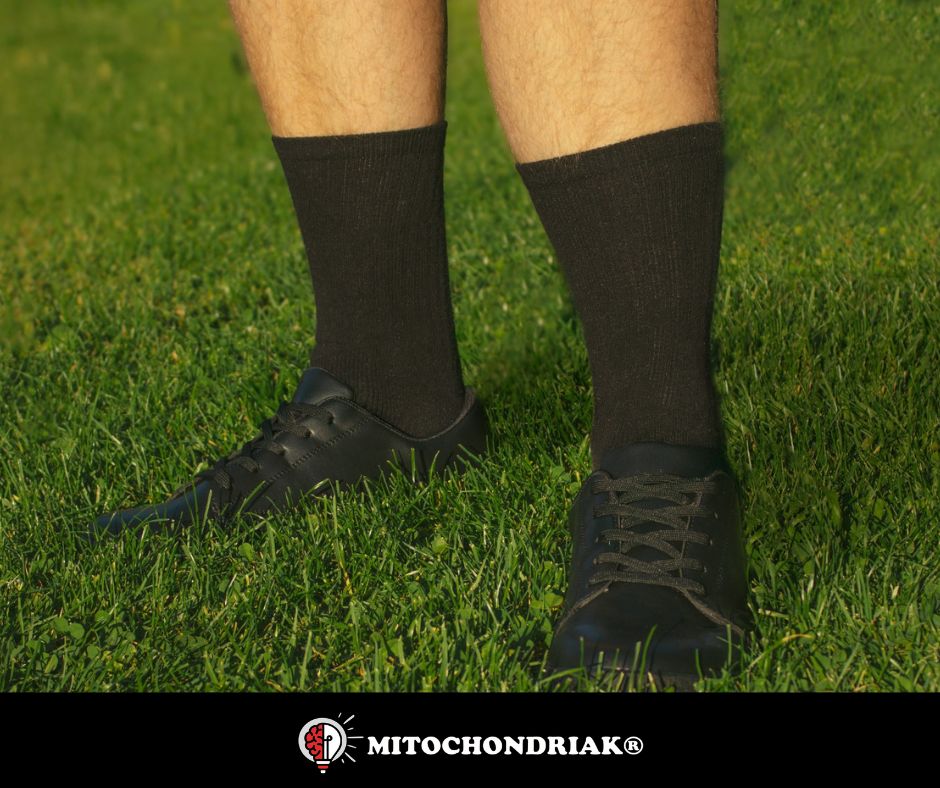
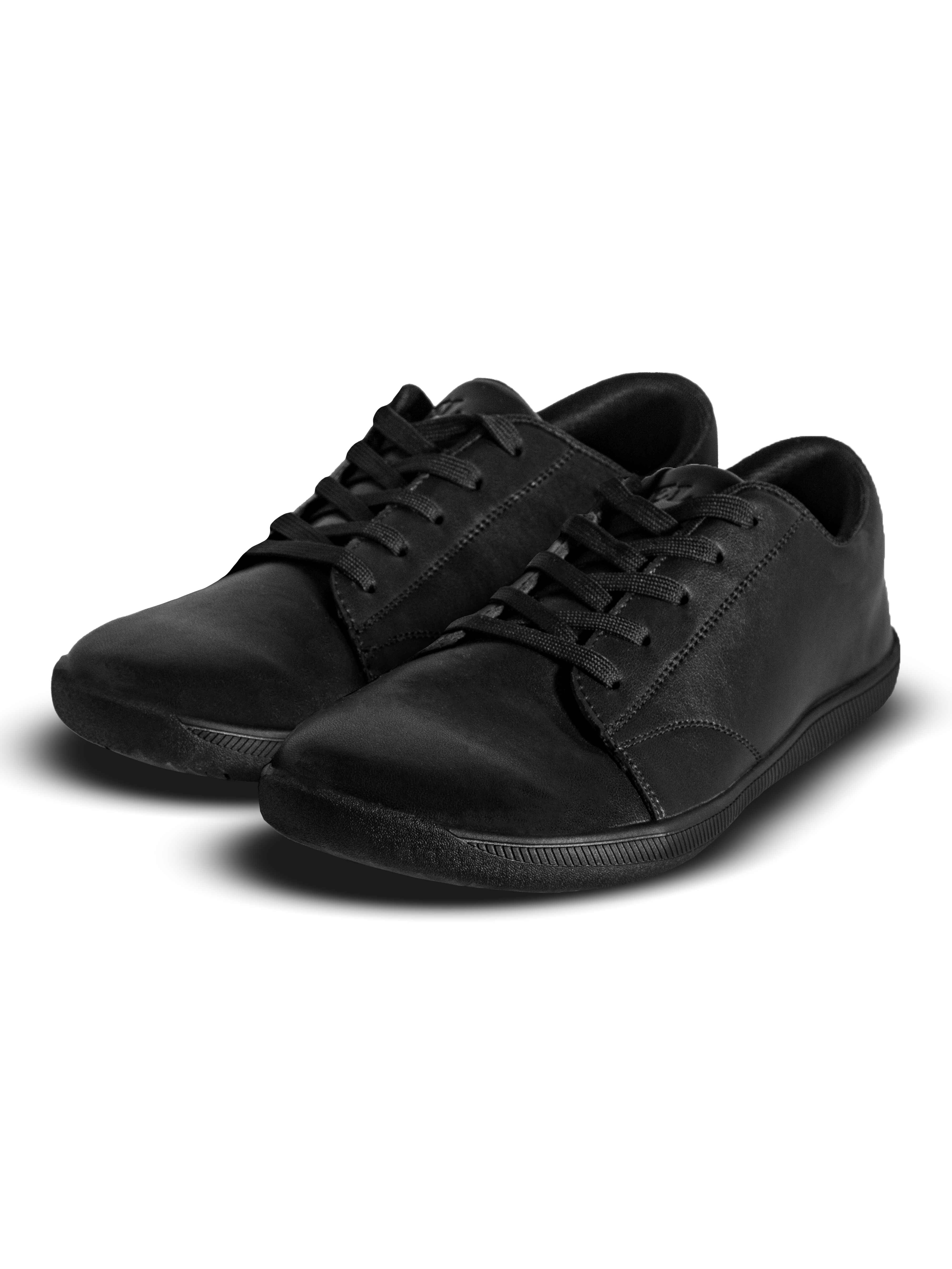
Grounded barefoot shoes Mitochondriak® use a graphene additive in the sole. The official category describes a thin sole, a wider toe box and grounding through the sole, so that walking can support both natural foot function and conductive contact with the Earth on suitable surfaces.
Grounding, also called earthing, means contact between the body and the surface of the Earth. In bioelectrical language, the Earth can be seen as a large electrical reservoir. The human body is also a conductive environment. Water, minerals, collagen networks, fascia and cell membranes all participate in electrical communication.
The scientific literature on grounding is smaller and less robust than the literature on movement and foot strength, so it is important to speak carefully. In 2015, James L. Oschman, Gaétan Chevalier and Richard Brown reviewed possible links between grounding, inflammation, immune response and wound healing. This does not make grounding a medical treatment. It makes it a biologically interesting environmental signal that is worth using reasonably. Source: Oschman et al., 2015, PubMed.
If you want a deeper explanation, read our older article What is grounding and what are its benefits?. We do not treat grounding as a trick. We treat it as a return to something basic: the body evolved in contact with soil, sunlight, water and the natural electromagnetic environment.
How should you start with barefoot shoes safely?
The best way to start with barefoot shoes is gradually. Your foot, calf, Achilles tendon and arch may have spent years relying on conventional shoe support. The goal is not heroism. The goal is slow adaptation.
The most common mistake is enthusiasm. A person buys barefoot shoes, wears them all day, goes for a long hike or starts running immediately. The body then complains not because barefoot is wrong, but because it received too much new signal too quickly.
A simple transition can look like this:
- First week: wear barefoot shoes for 30 to 60 minutes a day during ordinary walking.
- Second and third week: add short walks, ideally on grass, soil, a park path or another natural surface.
- Following weeks: gradually increase time according to how your feet, calves and Achilles tendon feel.
- Running and long hikes: keep them for later, once your feet tolerate normal daily walking without fatigue.
If you have flat feet, persistent pain, diabetes, reduced foot sensitivity, neurological issues or a recent injury, start even more slowly and consult a qualified professional. Barefoot is a tool, not a race.
With grounded barefoot shoes, surface matters too. Grounding makes the most sense on conductive surfaces such as grass, moist soil, natural terrain, stone or concrete. On asphalt or indoor flooring, conductivity can be limited, but the barefoot movement benefits remain.
You can also continue with our related articles New shoes? Try barefoot combined with the grounding effect and Why wear grounding barefoot shoes Mitochondriak®?.
How can you use the 20% summer discount?
The current summer promotion gives you 20% off grounded barefoot shoes Mitochondriak®. Use the discount code grounding20 in the cart and the discount will be applied to the shoes.
On the international Mitochondriak.com store, the product is listed as Grounded barefoot shoes Mitochondriak®. The category currently shows the shoes in stock and describes them as grounded barefoot shoes with a thin graphene sole and an extended toe box.
If you have been thinking about barefoot shoes for a while, summer is a good time to start. Not only because of the discount, but because summer gives your feet the right environment: more light, more walking, more time outside, more grass, more soil and more natural surfaces.
Get 20% off with code grounding20
Grounded barefoot shoes Mitochondriak® combine a wider toe box, a thin flexible sole and grounding through a graphene sole. They are suitable for everyday walking, summer routines, city use and a practical return to contact with the Earth.
Choose grounded barefoot shoes
The promotion is intended for the short summer window and may end earlier if stock sells out.
Frequently asked questions
Are barefoot shoes suitable for everyone?
Not always and not immediately in the same amount. Most healthy people can start gradually with short walks, but people with pain, deformities, diabetes, reduced foot sensitivity or recent injury should consult a qualified professional. Barefoot shoes give the foot more work, so adaptation matters.
What is the difference between barefoot and grounded barefoot shoes?
Barefoot shoes support more natural foot movement through a wider toe box, flexibility and a low sole. Grounded barefoot shoes Mitochondriak® add a conductive graphene element in the sole, which allows conductive contact with the Earth on suitable surfaces.
Does grounding work through every shoe?
No. A normal rubber or synthetic sole usually insulates the body from the ground. Grounding through footwear makes sense when the sole includes a conductive element and you are standing or walking on a suitable surface such as grass, moist soil, stone or concrete.
How long should I wear barefoot shoes at the beginning?
Start with 30 to 60 minutes per day and observe your feet, calves and Achilles tendon. If everything feels fine, increase time gradually. With barefoot shoes, the goal is adaptation, not speed. The foot needs time to work again after years in conventional footwear.
Can I run in barefoot shoes immediately?
If you are new to barefoot shoes, postpone running. First adapt to ordinary walking and short walks. Running creates higher impact and greater load for the foot, calf and tendons, so it is better to add it only after a gradual transition.
Where do I enter the discount code grounding20?
Enter the code grounding20 in the cart during checkout. After applying the code, the 20% discount is applied to grounded barefoot shoes Mitochondriak®. The promotion is intended for the short summer window and may end earlier if stock sells out.
Sources and references
- Curtis R. et al., 2021. Daily activity in minimal footwear increases foot strength. Scientific Reports
- Gabriel A. et al., 2024. A four-week minimalist shoe walking intervention influences foot posture and balance in young adults. PLOS ONE
- Peters-Dickie J. L. et al., 2025. The effects of foot core exercises and minimalist footwear on foot muscle sizes, foot strength, and biomechanics. PubMed
- Oschman J. L., Chevalier G., Brown R., 2015. The effects of grounding on inflammation, immune response and wound healing. PubMed
- Mitochondriak®. Earthing grounded barefoot shoes