.png)
Choosing the best red light therapy panel comes down to three things most brands never fully explain: wavelengths, irradiance, and safety. Get these right and you own a device that actually reaches your mitochondria. Get them wrong and you own an expensive red lamp. This guide shows you exactly what to look for.
- Why the best red light therapy panel is defined by wavelengths, irradiance and safety, not by a single marketing number.
- Which wavelengths actually matter and why multi-wavelength panels outperform single-diode designs.
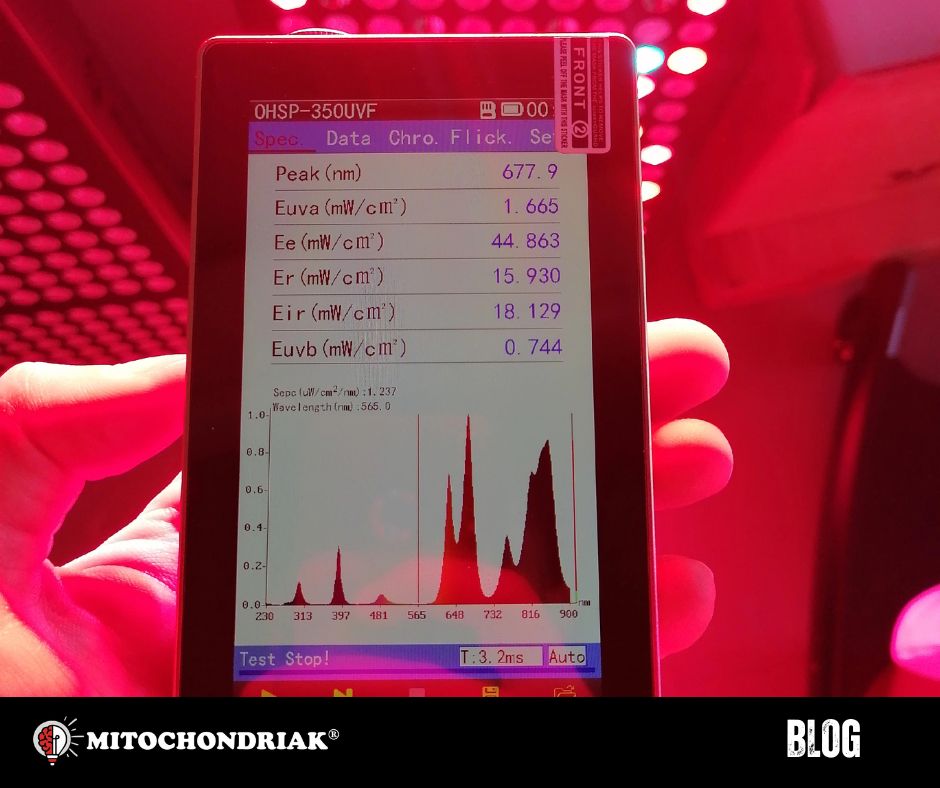
- How to read irradiance honestly, using both solarmeter and spectrometer values from realistic distances.
- What EMF and flicker mean for your safety and how to spot a panel that hides these details.
- A practical checklist you can use to compare any red light panels before you buy.
- What should you know about choosing the best red light therapy panel, and why does it matter?
- What does research say about choosing the best red light therapy panel?
- What benefits and limits can you realistically expect?
- How do you approach choosing the best red light therapy panel safely in practice?
- What should you watch out for and who should be careful?
- Summary: what should you remember?
- Frequently asked questions
What should you know about choosing the best red light therapy panel, and why does it matter?
The best red light therapy panel is not the biggest or the cheapest one, but the device that delivers clinically relevant wavelengths at a verified irradiance while keeping your exposure to EMF and flicker low. In other words, it is the panel where the light actually reaches your cells, and where the manufacturer can prove it with real measurements.
This distinction matters because the market is flooded with red light panels that look almost identical from the outside. Two devices can share the same wattage rating and the same glossy photo, yet one penetrates tissue effectively while the other barely warms your skin. The difference lives in the details that are easy to hide and hard to fake: the exact diode wavelengths, the measured power density at a usable distance, and the electronics behind the light.
When people search for the best red light therapy devices, they usually want a shortcut, a single brand name they can trust. The honest answer is that the best panel for you depends on your goal, your budget and your space. What stays constant are the criteria you use to judge quality. Once you understand those criteria, you can evaluate any panel yourself instead of relying on marketing claims.
Throughout this guide we will treat the Mitochondriak® Maxi and its siblings as reference points, not because we want you to buy blindly, but because they were built specifically around these criteria. If you prefer to browse first, you can explore the full range in our red light therapy devices category and come back to compare it against everything you learn below.
What does research say about choosing the best red light therapy panel?
A red light therapy panel works through photobiomodulation: photons of red and near-infrared light are absorbed by the enzyme cytochrome c oxidase (CCO) inside your mitochondria, which boosts ATP production and cellular energy. The right wavelengths, delivered at the right dose, trigger a cascade of repair and regeneration signals throughout the treated tissue.
This mechanism is well documented. Photobiomodulation researcher Michael R. Hamblin of Harvard Medical School describes how red and near-infrared light interact with the mitochondrial respiratory chain, increasing energy output and modulating reactive oxygen species and nitric oxide. [R] These are not vague wellness claims, they are measurable biochemical events driven by specific colors of light.
The reason wavelength selection is so important comes down to absorption. Different tissues and chromophores absorb light differently across the spectrum. Red light in the range around 630 to 670 nm is absorbed strongly near the surface, making it ideal for skin, collagen and superficial tissue, as shown in dermatological research on low-level light therapy. [R] Near-infrared wavelengths in the 810 to 850 nm range penetrate deeper, reaching muscle, joints and even the brain.
This is exactly why the number of wavelengths on a panel is such a meaningful buying criterion. A single-diode panel can only address one narrow slice of this biological window. A well-designed multi-wavelength device covers both the shallow and the deep targets at once, which is one of the questions people most often ask: which red light panel has the most wavelengths? We answer that in detail later, but the short version is that Mitochondriak® panels combine wavelengths such as 630, 670, 810, 830, 850 and 940 nm depending on the model, and never use 660 nm as a headline number. If you want the deep dive, our article on how many wavelengths a red light infrared panel should have covers the spectrometry behind these choices.
There is one more piece of the science that decides whether a panel works: dose. Research on the biphasic dose response shows that too little light does nothing, while too much can actually reduce the benefit. [R] This is where irradiance, the power density measured in milliwatts per square centimeter, becomes the second pillar of a quality panel. Wavelength tells you which door the light can open, irradiance tells you whether it has enough energy to walk through it. In the next sections we translate this science into concrete benefits, limits and a safe, practical buying checklist.
What benefits and limits can you realistically expect?
A quality red light therapy panel can realistically support skin health, muscle recovery, joint comfort and cellular energy, with visible skin changes typically taking 4 to 12 weeks of consistent use. It is a supportive tool that works gradually, not an overnight fix, and its results depend heavily on the wavelengths and irradiance discussed earlier in this guide.
On the skin side, the evidence is the most mature. Dermatological research on low-level light therapy shows that red and near-infrared light can stimulate fibroblasts, support collagen production and assist wound healing and tissue repair. [R] This is why so many people first come to red light therapy devices for wrinkles, skin tone and post-workout recovery. If skin is your main goal, our article on red light and skin goes deeper into the collagen mechanism.
For recovery and performance, the deeper near-infrared wavelengths matter most. Because 810 to 850 nm light penetrates into muscle and joint tissue, a full-body panel like the Mitochondriak® Maxi Upgraded can cover large treatment areas in a single session, which is practical for athletes and anyone with widespread stiffness. The underlying driver is the same in every case: more ATP, better cellular energy and a stronger repair signal, as described in the photobiomodulation literature. [R]
It is equally important to be honest about the limits. Red light therapy is not a cure for any disease, and results vary between individuals. The biphasic dose response means that more is not better, so a panel with wildly overstated irradiance is not an advantage, it is a risk of overdosing a session and losing the benefit. [R] A realistic expectation is steady, cumulative improvement when you use the right dose consistently, not a dramatic transformation after a single week.
How do you approach choosing the best red light therapy panel safely in practice?
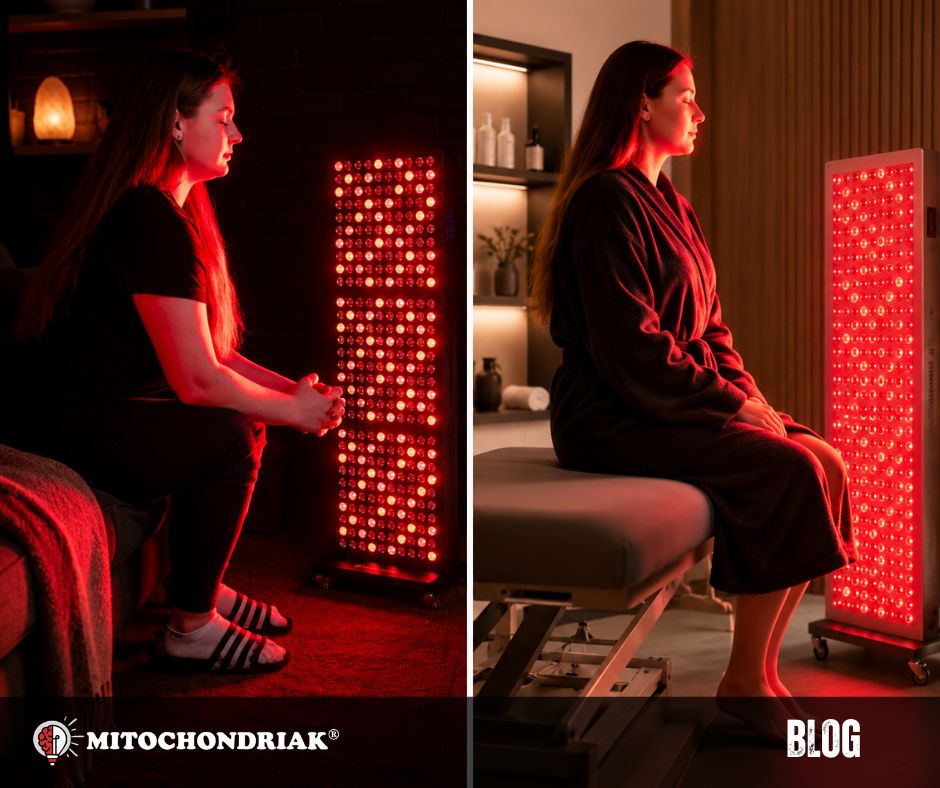
To use a red light therapy panel safely, sit at the manufacturer's recommended distance, keep sessions short at first, and protect your eyes from direct high-intensity light. For classic mains-powered panels, the recommended therapeutic distance is never below 30 cm, and typical full-body sessions run for a set number of minutes rather than "as long as possible".
Distance is the single most misunderstood variable. With classic (non-battery) panels such as the Mitochondriak® Maxi or Mitochondriak® Office Upgraded, we always recommend a therapeutic distance of at least 30 cm, and commonly 30 to 60 cm depending on the model and your goal. This is partly about dose and partly about limiting EMF exposure from a corded device at very close range. Any figure you see quoted from 15 cm is a technical irradiance measurement or a short skin-sensitivity test, not a recommended treatment distance.
Session length follows the biphasic principle. Start with shorter sessions of a few minutes per area, then build up as your skin and body adapt. Because the deeper the target, the more the near-infrared wavelengths do the work, positioning matters: face the panel squarely and keep the treated area within the effective beam. A structured routine of consistent, moderate sessions beats occasional marathon exposures every time.
Eye comfort deserves attention too. Red and near-infrared light is generally well tolerated, but bright panels can feel intense, so most people simply close their eyes or look away from the diodes during full-body sessions. If you are new to the whole category and want a gentler starting point, a compact device like the Infrapanel Mitochondriak® mini lets you target a knee, shoulder or elbow without committing to a full-body setup, and it is easy to dial in distance and time on a small area first.
Ready to compare panels the right way?
Now that you know how wavelengths, irradiance and safety actually work, you can judge any device on its merits. Our full-body Mitochondriak® Maxi Upgraded was engineered around multiple clinically relevant wavelengths and honest, measured irradiance, so you are not buying a spec sheet, you are buying verified light.
What should you watch out for and who should be careful?
Watch out for panels that hide their real specifications: no diode wavelengths, no measured irradiance at a stated distance, and no mention of EMF or flicker. People who are pregnant, taking photosensitizing medication, or managing a serious medical condition should be careful and consult a doctor before starting, as should anyone with active skin cancer in the treatment area.
The biggest red flags are marketing tricks around numbers. Many cheaper red light panels quote a single impressive wattage or a headline irradiance value taken from an unrealistically close distance. A trustworthy manufacturer states which distance the measurement was taken from and ideally provides both solarmeter and spectrometer readings, because these tell you what the light actually delivers to your skin, not just what the diodes draw from the wall.
Two hidden factors decide long-term comfort: EMF and flicker. Corded panels with poor electronics can emit higher electromagnetic fields at close range, which is one more reason to respect the minimum distance. Flicker, the invisible pulsing of cheap LED drivers, can cause eye strain and headaches in sensitive people. Panels that never mention either specification are usually hoping you will not ask. Our guide on the 5 criteria that make the difference breaks down how to interrogate these details before you buy.
Finally, be realistic about cost. A genuinely well-built full-body panel with verified multi-wavelength output sits in a higher price bracket than a basic single-diode lamp, and that difference reflects real components, not just branding. If you are still weighing home use against professional sessions, our comparison of red light therapy at home versus a clinic can help you decide where your budget is best spent.
Summary: what should you remember?
The best red light therapy panel is never defined by a single number on a box. It is the device that combines clinically relevant wavelengths, honest and measurable irradiance, and safe electronics with low EMF and no flicker. When you evaluate any panel against these three pillars, the marketing noise falls away and the genuinely good devices reveal themselves quickly.
Use this article as a checklist. Ask what wavelengths the panel emits and whether it covers both the shallow red band around 630 to 670 nm and the deeper near-infrared band around 810 to 850 nm. Ask for the measured irradiance and, crucially, the distance it was taken from. Ask about EMF and flicker, and treat silence on these points as an answer in itself. Then match the format, full-body panel, compact mini panel or targeted bulb, to your actual goal and space. If you want a starting point built around exactly these criteria, the full red light therapy devices range is a fair place to begin your comparison.
Frequently asked questions
What should you look for when choosing a red light therapy panel?
Focus on three pillars: wavelengths, irradiance and safety. A quality panel covers both red (around 630 to 670 nm) and near-infrared (around 810 to 850 nm) wavelengths, states its measured irradiance along with the distance it was taken from, and discloses EMF and flicker performance. If a manufacturer hides any of these, treat it as a warning sign rather than a minor omission.
Which red light panel has the most wavelengths?
The strongest devices are multi-wavelength panels that combine several clinically relevant bands rather than a single diode color. Mitochondriak® panels, for example, integrate wavelengths such as 630, 670, 810, 830, 850 and 940 nm depending on the model, so they address both surface tissue and deeper targets. More meaningful wavelengths generally means broader coverage of the therapeutic window than a single-color panel can offer.
How much does a quality red light therapy panel cost?
A genuinely well-built full-body panel with verified multi-wavelength output and honest irradiance typically sits in a higher price bracket than a basic single-diode lamp. The difference reflects real components: quality diodes, solid electronics with low flicker, and proper EMF management. Compact options such as a mini panel or a therapy bulb are far more affordable and are a sensible entry point for targeting a single area.
What irradiance is best for a red light therapy panel?
There is no single "best" number, because of the biphasic dose response: too little light does nothing, too much can reduce the benefit. [R] What matters more than a headline figure is that irradiance is measured honestly at a realistic treatment distance, and that you adjust session length accordingly. A moderate, verified irradiance used consistently beats an inflated number you can never actually reproduce.
How far should I sit from a red light therapy panel?
For classic mains-powered panels such as the Mitochondriak® Maxi, keep a therapeutic distance of at least 30 cm, commonly 30 to 60 cm depending on the model and your goal. Distances quoted from 15 cm are technical irradiance measurements or short skin-sensitivity tests, not treatment recommendations. A sensible distance balances effective dose with lower EMF exposure from a corded device.
How long until I see results from a red light therapy panel?
Red light therapy works gradually rather than instantly. Skin changes such as improved tone and collagen support typically become visible over 4 to 12 weeks of consistent use, while recovery benefits can be felt sooner after training. Results depend on using the right wavelengths and dose regularly. Think of it as a cumulative, supportive tool, not an overnight fix.
Sources and references
- Ying-Ying Huang. 2009. Biphasic Dose Response in Low-Level Light Therapy pmc.ncbi.nlm.nih.gov
- Pinar Avci. 2013. Low-level laser (light) therapy (LLLT) in skin: stimulating, healing, restoring pmc.ncbi.nlm.nih.gov
- Michael R. Hamblin. 2017. Mechanisms and applications of the anti-inflammatory effects of photobiomodulation pubmed.ncbi.nlm.nih.gov