
.png)
Red light and skin are two words that have been resonating more and more in recent years, not just among dermatologists, but also in everyday households. Photobiomodulation, a therapy using specific wavelengths of red and infrared light, can demonstrably stimulate collagen, reduce wrinkles, acne, and rosacea, all without invasive procedures and without a single chemical.
- How red and infrared light affect skin cells and why photobiomodulation is effective for a wide range of skin concerns.
- What clinical studies say about the effects of red light on collagen, wrinkles, acne, rosacea, scars, and pigmentation.
- Which wavelengths and parameters are most effective for skincare and how you can find them in Mitochondriak® devices.
- Practical recommendations on how to start red light therapy for your skin at home.
- Answers to the most frequently asked questions about safety, frequency, and combining red light therapy with skincare products.
- What is photobiomodulation and how does it affect the skin?
- How does red light stimulate collagen production?
- Does red light help with wrinkles and skin ageing?
- Can red light therapy help with acne?
- Is photobiomodulation effective for rosacea?
- How does red light affect scars and pigmentation?
- What does red light do for skin elasticity and hydration?
- How to start red light therapy for your skin?
- Frequently asked questions
What is photobiomodulation and how does it affect the skin?
Photobiomodulation (PBM) is a non-invasive therapy in which red light with wavelengths of approximately 620 to 700 nm and near-infrared light (NIR) in the range of 700 to 1,000 nm penetrate the skin and stimulate cellular processes. This is a scientifically validated mechanism, not a cosmetic trend without evidence.
At the cellular level, the process works as follows. Photons of red light are absorbed by the enzyme cytochrome C oxidase (CCO) in mitochondria, the energy centres of every cell. Light absorption releases nitric oxide (NO), which had been bound to CCO and blocking its function. The result is increased production of ATP, the cell's energy currency, and activation of signalling pathways for cell growth, repair, and regeneration. [R]
For the skin, this translates into specific changes. Fibroblasts, the cells responsible for producing collagen and elastin, become activated and begin to produce more structural proteins. Inflammatory processes are suppressed as PBM regulates pro-inflammatory cytokines. Blood circulation in the dermis improves thanks to the released nitric oxide, resulting in better nutrient and oxygen supply to the skin.
Red light penetrates to a depth of 2 to 5 mm, which is sufficient to reach the dermis where most collagen fibres are located. Infrared light penetrates even deeper, reaching subcutaneous tissue and supporting deeper regeneration. It is precisely the combination of both types of light that makes photobiomodulation so effective for the entire spectrum of skin concerns, from surface-level issues such as fine wrinkles and uneven skin tone to deeper structural changes.
How does red light stimulate collagen production?
Red light stimulates collagen production through direct activation of fibroblasts in the dermis, increased ATP production, and activation of signalling pathways responsible for the synthesis of type I and type III collagen. Clinical studies have demonstrated measurable increases in collagen density after several weeks of regular therapy.
Collagen is the primary structural protein of the skin, making up approximately 75 to 80% of the dry weight of the dermis. From the age of 25, its production declines, leading to a loss of firmness, volume, and the formation of wrinkles. Photobiomodulation can slow this process and partially reverse it.
In a clinical study by Wunsch and Matuschka (2014), 113 participants were treated with polychromatic red and infrared light (wavelengths ranging from 611 to 650 nm and 570 to 850 nm) over 30 sessions. Ultrasonographic measurements confirmed a significant increase in intradermal collagen density compared to the control group. Participants reported improved skin texture, reduced skin roughness, and an overall improvement in complexion. [R]
The Mitochondriak® Maxi Upgraded features up to 7 wavelengths: 630, 670, 760, 810, 830, 850, and 940 nm. Red light in the range of 630 to 670 nm primarily targets the superficial layers of the dermis where most collagen synthesis takes place. Infrared wavelengths of 810 to 940 nm complement this effect through deep tissue stimulation, covering the entire spectrum validated by research.
It is important to understand that collagen stimulation is not instantaneous. The synthesis of new collagen fibres takes weeks, which is why consistency of therapy is key. Studies indicate that optimal results appear after 8 to 12 weeks of regular use.
Does red light help with wrinkles and skin ageing?
Yes, red light demonstrably reduces wrinkle depth and improves the overall appearance of ageing skin. Clinical studies have recorded improvements in skin texture, a reduction in fine lines, and increased elasticity after just a few weeks of regular therapy.
In the aforementioned study by Wunsch and Matuschka (2014), participants in the active group experienced a significant reduction in skin roughness as measured by profilometry. Participant satisfaction with their own skin increased significantly compared to the control group. Importantly, the study also confirmed the safety of long-term use, with no adverse effects reported. [R]
A more recent study by Couturaud et al. (2023) examined the effects of red LED photobiomodulation at a wavelength of 630 nm on facial ageing. After 12 weeks of two sessions per week, the researchers recorded demonstrable reversal of skin ageing signs, including softening of wrinkles, improved tone, and increased skin elasticity. [R]
Skin ageing has two components. Chronological ageing, caused by the natural decline of cellular functions, and photoageing, primarily caused by chronic UV radiation damage. Red light addresses both components. It stimulates the synthesis of new collagen while simultaneously increasing the activity of antioxidant enzymes that protect the skin against free radicals.
In practical terms, this means that regular photobiomodulation can soften fine lines around the eyes and mouth, improve overall skin tone, and give the skin a healthy glow that creams alone cannot achieve because they do not act on mitochondria within the dermis.
Can red light therapy help with acne?
Red light helps with acne thanks to its anti-inflammatory effect. It reduces inflammation in skin follicles, supports the healing of post-acne lesions, and regulates sebaceous gland activity, leading to a gradual improvement in acne-prone skin.
Acne is primarily an inflammatory condition. Although the bacterial component (Cutibacterium acnes) plays a role, it is the inflammation that determines the severity and the formation of scars. Red light in the 620 to 670 nm range reduces the production of pro-inflammatory cytokines (IL-6, TNF-α) while increasing anti-inflammatory mediators. A review by Hernández-Bule et al. (2024) confirmed that photobiomodulation effectively modulates inflammatory processes in the skin across various dermatological conditions, including acne. [R]
In clinical practice, red light is used either on its own or in combination with blue light (around 415 nm), which has an antimicrobial effect. The combination of both wavelengths delivers a dual effect: blue light destroys bacteria while red light heals inflammation and scars.
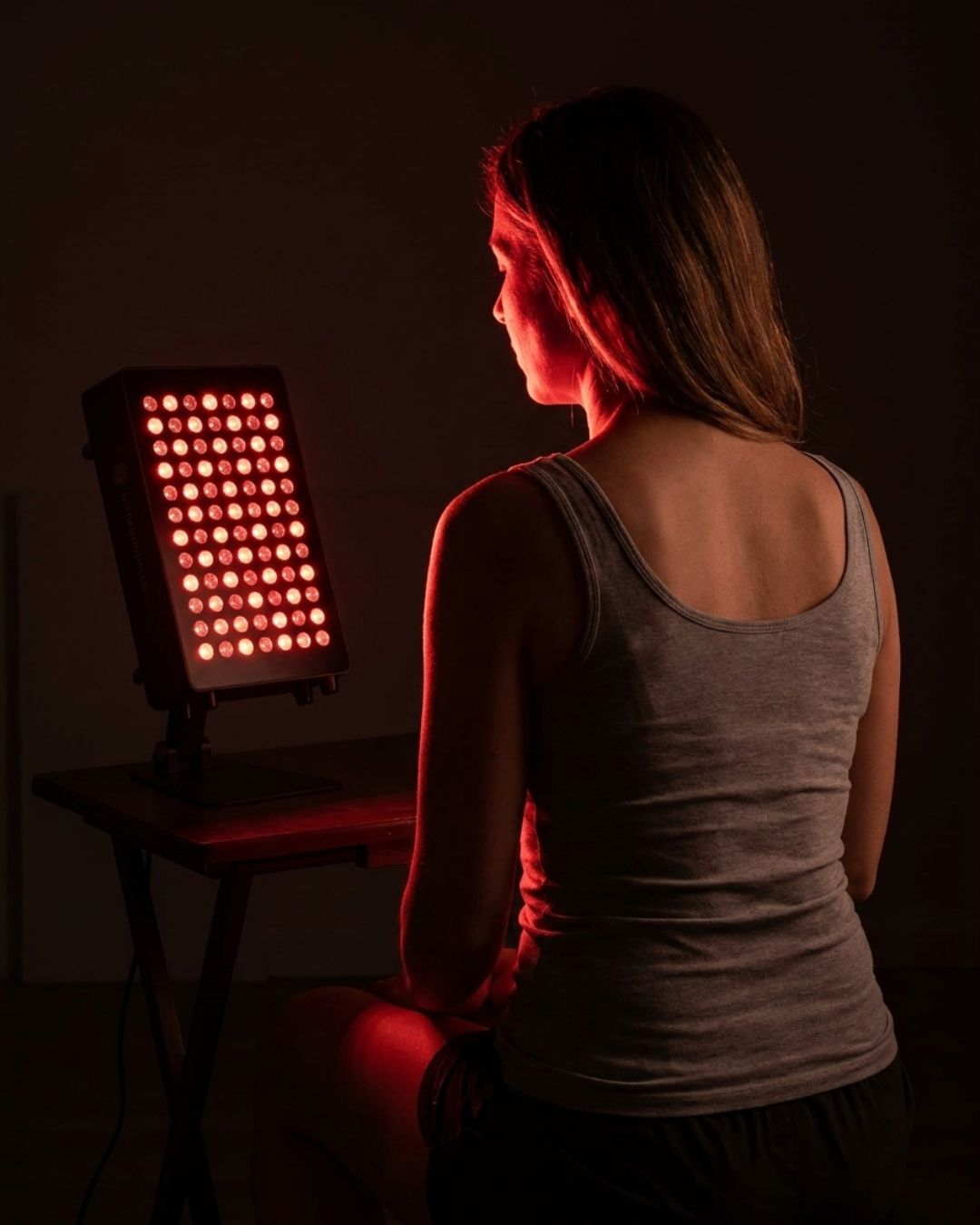
For home therapy, red light is a safe and effective option. The Mitochondriak® Office Upgraded is ideal for targeted facial treatment thanks to its compact size. Simply place it on a desk or use it with a stand and aim it directly at the problem area.
If you suffer from inflammatory acne, you should know that results are not immediate. Inflammatory lesions typically begin to shrink after 4 to 6 weeks of regular use. You will achieve the best results with a consistent therapy routine.
Is photobiomodulation effective for rosacea?
Photobiomodulation represents a promising therapeutic option for people with rosacea. Red and infrared light helps regulate chronic inflammation, reduces redness, and strengthens capillary walls, which are three key issues associated with this condition.
Rosacea is a chronic inflammatory skin condition characterised by redness, visible blood vessels, papules, and pustules, most commonly on the face. Wu et al. (2022) investigated the effects of photobiomodulation on inflammatory markers in rosacea and found that PBM can improve rosacea by regulating key inflammatory mediators and modulating immune infiltration. [R]
For patients with rosacea, an important advantage is that red light is exceptionally gentle. Unlike IPL (intense pulsed light) or laser treatments, photobiomodulation does not heat the skin to temperatures that could trigger a rosacea flare-up. The cold light of LED devices works exclusively at the cellular level without causing thermal damage.
The infrared wavelengths that Mitochondriak® devices contain (810, 830, 850, and 940 nm) penetrate deeper and help strengthen the vascular wall and improve microcirculation, which plays a crucial role in rosacea. This combination of red and infrared spectra makes photobiomodulation a unique tool compared to single-wavelength devices.
How does red light affect scars and pigmentation?
Red light accelerates the remodelling of scar tissue and helps regulate skin pigmentation. It stimulates controlled healing, reduces excessive scar collagen formation, and modulates melanocyte activity, leading to a more even skin tone.
Scars, whether post-acne, post-surgical, or post-traumatic, are the result of a disrupted healing process. Excessive collagen production leads to hypertrophic scars, while insufficient production results in atrophic scars (the typical post-acne pitting). Photobiomodulation acts on both types because it regulates the balance between collagen production and breakdown.
Hamblin (2023) confirmed in a comprehensive review that photobiomodulation can act on both directions of pigmentation, meaning hyperpigmentation as well as hypopigmentation, depending on the dose and wavelength of light. This seemingly paradoxical effect is explained by the fact that PBM normalises melanocyte function rather than unidirectionally stimulating or inhibiting them. [R]
For people with post-inflammatory hyperpigmentation (dark spots after acne or injury), photobiomodulation is appealing precisely because it is gentle. Many common dermatological pigmentation treatments (chemical peels, lasers) can paradoxically cause even greater pigmentation in darker skin types. Red light minimises this risk because it does not act thermally and does not irritate melanocytes.
If you are troubled by post-acne scars or uneven skin tone, red light is a suitable long-term addition to your skincare routine. Results are gradual but lasting, as they work at the structural level of the dermis.
What does red light do for skin elasticity and hydration?
Photobiomodulation improves skin elasticity by stimulating elastin production and strengthening the dermal extracellular matrix. At the same time, it supports skin hydration through improved microcirculation and activation of hyaluronic acid in the dermis.
Elastin is the protein responsible for skin elasticity. Just like collagen, its production declines with age, leading to sagging skin and loss of facial contours. Fibroblasts activated by red light produce not only more collagen but also more elastin and glycosaminoglycans (including hyaluronic acid), molecules capable of binding large amounts of water.
In practical terms, this means that regular red light therapy can improve skin hydration from within, not just through the surface application of creams. The skin looks fresher, plumper, and radiantly healthy.
The release of nitric oxide during photobiomodulation also dilates capillaries in the dermis, improving the supply of nutrients and oxygen to the skin. This effect is visible as a healthy flush immediately after therapy, but the long-term benefits are far more significant: better-nourished skin regenerates faster and ages more slowly.
How to start red light therapy for your skin?
Getting started with red light therapy for your skin is simple. You need a quality source of red and infrared light, the correct distance, and consistency. More important than intensity is regularity: frequent shorter sessions deliver better results than occasional long ones.
When choosing a device for skincare, you have two main options depending on the scope of treatment:
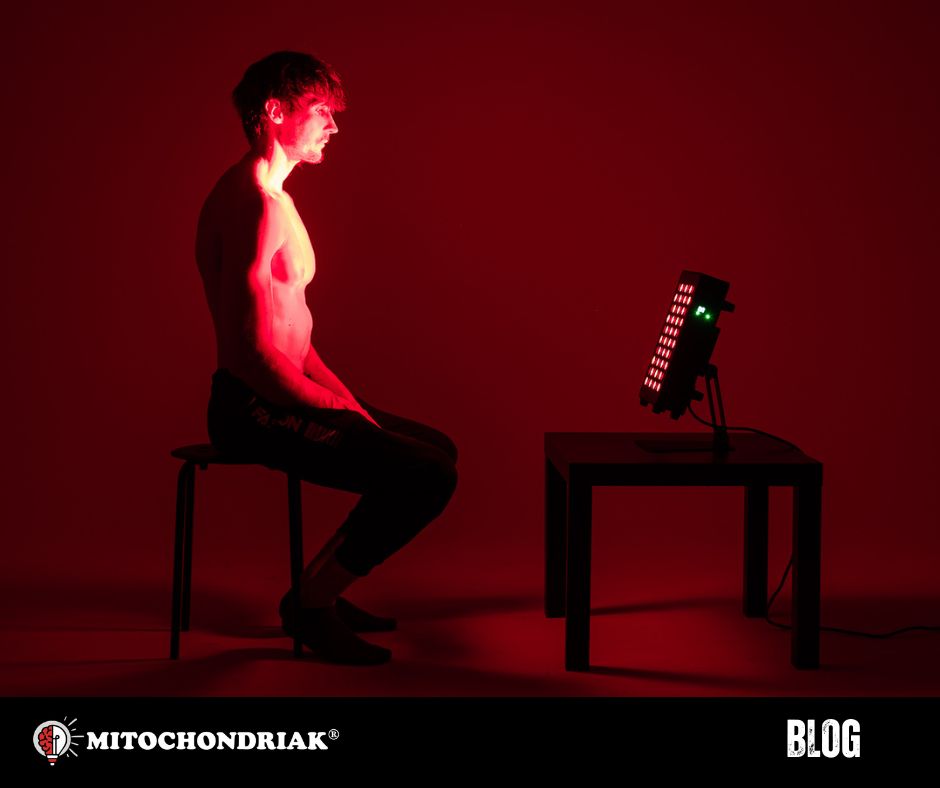
For targeted facial and décolletage therapy, the Mitochondriak® Office Upgraded (€699) is ideal. This compact panel with 5 wavelengths (630, 670, 810, 830, and 850 nm) is designed specifically for localised treatment of the face, neck, and décolletage. Thanks to its adjustable stand, you can comfortably position it at the correct distance, and the touchscreen display allows precise time and intensity settings.
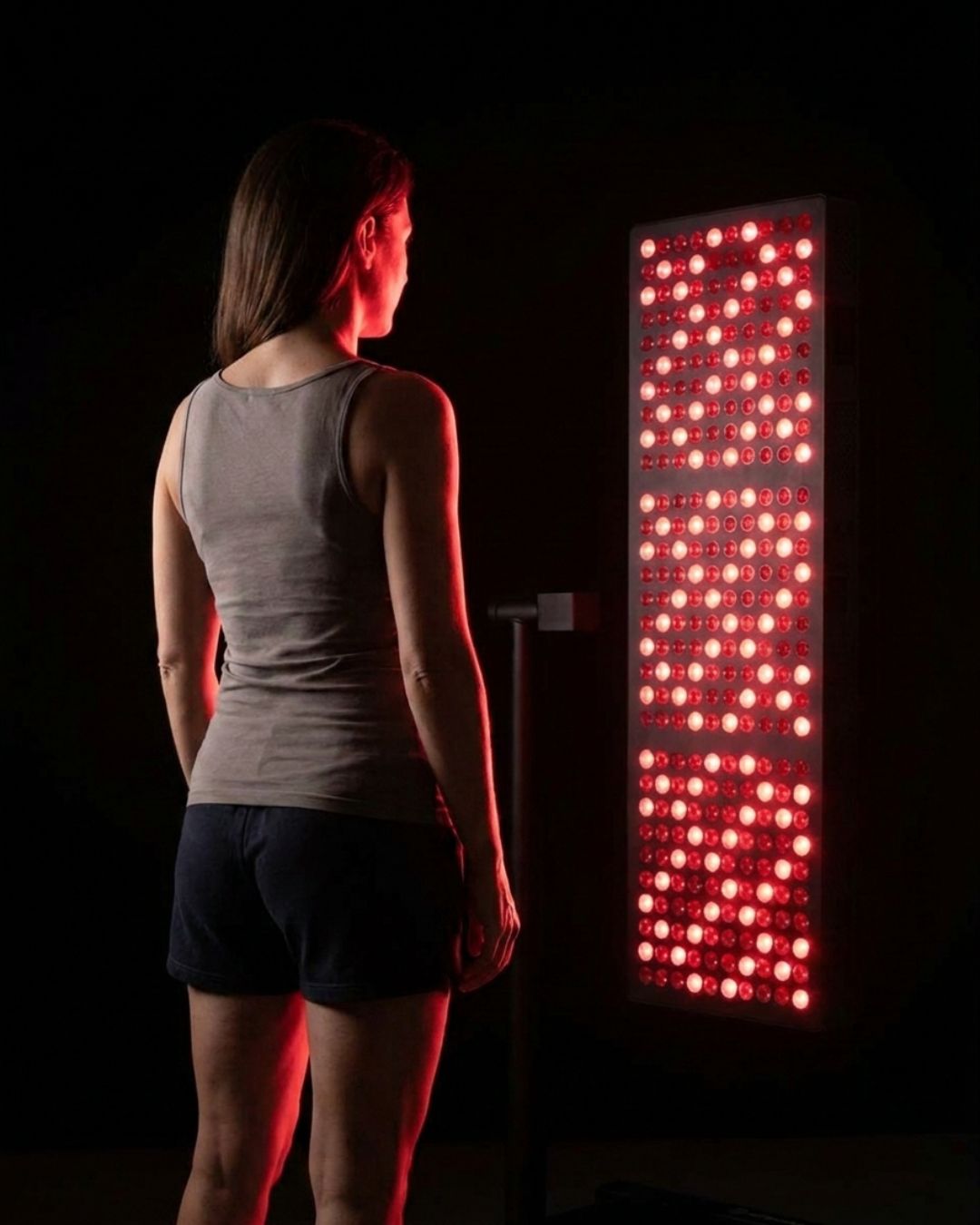
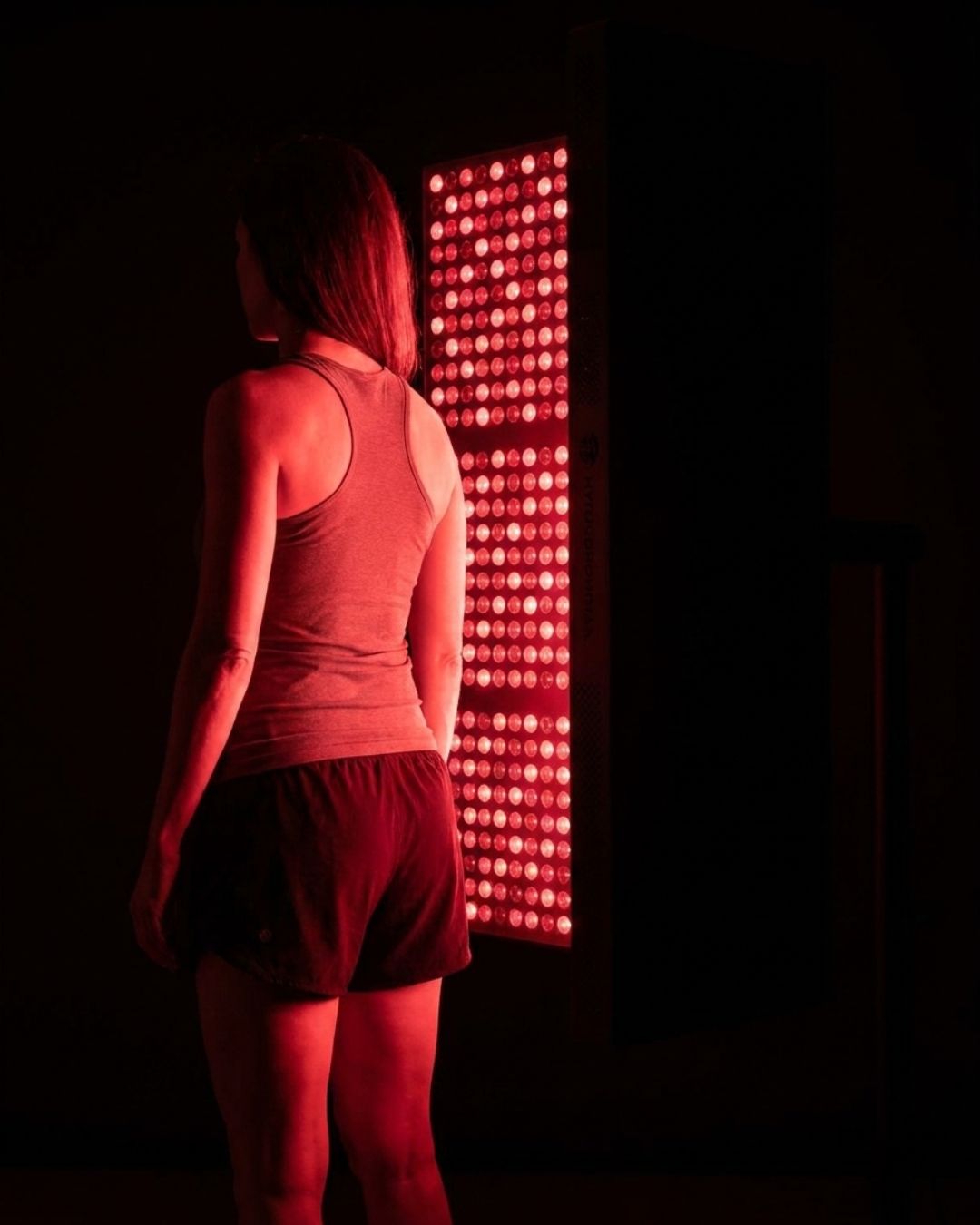
For full-body treatment including skin, we recommend the Mitochondriak® Maxi Upgraded (€1,469). With 300 LEDs and 7 wavelengths (630, 670, 760, 810, 830, 850, and 940 nm), it covers the widest therapeutic spectrum on the market. It also includes the 760 nm wavelength, which specifically targets cytochrome C oxidase, complementing the effect of the other wavelengths. Beyond skincare, you will also support mitochondrial energy production throughout your entire body.
Here are a few practical guidelines for skincare:
- Before therapy, cleanse your face of make-up and creams. Photons of red light pass through clean skin more effectively than through a layer of cosmetics.
- Distance and duration should be set according to the manufacturer's recommendations for your specific panel. You can find detailed information on each product's page.
- Consistency is more important than the length of a single session. It is better to do therapy daily or every other day for a shorter period than once a week for a long time.
- Eyes: close them during facial therapy or use the protective goggles supplied with the device.
Red light is synergistic with natural skincare. For the best results, combine therapy with an adequate intake of vitamin C (a cofactor of collagen synthesis), DHA omega-3 fatty acids, and morning sunlight, which sets your circadian rhythm and supports the skin's natural regeneration.
Experience the power of red light on your own skin
Whether you want to boost collagen, reduce wrinkles, or calm acne, Mitochondriak® devices offer a research-backed spectrum of wavelengths for use in the comfort of your home.
Frequently asked questions
How often should I do red light therapy for my skin?
The optimal frequency is 3 to 5 sessions per week. Studies show that consistency is more important than the length of a single session. The first visible results on the skin typically appear after 4 to 8 weeks of consistent use. For specific time and distance settings, refer to the recommendations on your device's product page.
When will I see the first results on my skin?
The first subjective improvements (a fresher appearance, better skin tone) are often noticeable within 2 to 3 weeks. Measurable structural changes, such as increased collagen density and reduced wrinkle depth, have been recorded in clinical studies after 8 to 12 weeks of regular therapy. [R] Scars and pigmentation respond more slowly and require 3 to 6 months of consistent use.
Is red light therapy safe for all skin types?
Yes, photobiomodulation is safe for all phototypes (I to VI on the Fitzpatrick scale). Unlike laser treatments or chemical peels, red light does not cause thermal damage and does not increase the risk of post-inflammatory hyperpigmentation, even in darker skin types. The study by Wunsch and Matuschka (2014) confirmed its safety with long-term use, with no adverse effects recorded. [R]
What is the difference between red and infrared light for the skin?
Red light (630 to 700 nm) penetrates to a depth of 2 to 3 mm and primarily affects the epidermis and upper dermis, where it stimulates collagen and reduces inflammation. Infrared light (700 to 1,000 nm) penetrates deeper, to 5 mm and beyond, supporting the healing of deeper tissues and improving microcirculation. For comprehensive skincare, the most effective approach is a combination of both, exactly as Mitochondriak® devices provide.
Can I combine red light therapy with regular skincare products?
Yes, but with one rule: perform therapy on clean skin without layers of creams, serums, or make-up. Apply your skincare products after therapy, when the skin is better supplied with blood and active ingredients are absorbed more effectively. Avoid products containing retinol immediately before therapy, as the combined photosensitivity could cause irritation. The best partner for red light is a vitamin C serum applied after the session, as vitamin C is a cofactor in collagen synthesis.
Sources and references
- Wunsch, A., Matuschka, K. (2014). A Controlled Trial to Determine the Efficacy of Red and Near-Infrared Light Treatment in Patient Satisfaction, Reduction of Fine Lines, Wrinkles, Skin Roughness, and Intradermal Collagen Density Increase. Photomedicine and Laser Surgery, 32(2), 93–100. [R]
- Couturaud, V. et al. (2023). Reverse skin aging signs by red light photobiomodulation. Skin Research and Technology, 29(7), e13391. [R]
- Hernández-Bule, M. L. et al. (2024). Unlocking the Power of Light on the Skin. International Journal of Molecular Sciences, 25(8), 4483. [R]
- Hamblin, M. R. (2023). Photobiomodulation for Skin Pigmentation Disorders. Journal of Cosmetic and Laser Therapy. [R]
- Wu, S. et al. (2022). The effects of photobiomodulation therapy on inflammatory mediators in rosacea. Annals of Translational Medicine, 10(12). [R]
- Glass, G. E. (2023). Photobiomodulation: A Systematic Review of the Oncologic Safety of PBM for Aesthetic Skin Rejuvenation. Aesthetic Surgery Journal. [R]