
.png)
Photobiomodulation and red light therapy are two terms that often appear in the same sentence, yet they do not mean exactly the same thing. Understanding the distinction helps you make smarter decisions about wavelengths, devices, and protocols, whether you are reading a clinical study or shopping for a home panel.
- How photobiomodulation became the accepted scientific umbrella term for light-based therapy
- Why red light therapy is a consumer-friendly subset that covers only part of the PBM spectrum
- The key differences in wavelength range, clinical context, and regulatory language
- What happens inside your cells when photons reach cytochrome c oxidase in the mitochondria
- How to decide between a clinical PBM session and a high-quality home red light panel
What Is Photobiomodulation?
Photobiomodulation (PBM) is a broad scientific term that describes any non-thermal, non-ionising light interaction that triggers beneficial biological changes in living tissue. The term was formally adopted by the World Association for Photobiomodulation Therapy (WALT) in 2015 to replace the older, less precise label "low-level laser therapy" (LLLT).
The key word is broad. PBM covers wavelengths from roughly 400 nm to 1 100 nm, spanning visible violet, blue, green, red, and near-infrared (NIR) light. A clinical PBM protocol can use lasers, LEDs, or even filtered sunlight, as long as the irradiance stays within the therapeutic window and the mechanism is photochemical rather than thermal.
Researchers and clinicians prefer the PBM label because it is mechanism-neutral. It does not lock the definition to a single device type, a single wavelength, or a single clinical outcome. More than 6 000 peer-reviewed papers now use "photobiomodulation" in their titles or abstracts, according to PubMed data from 2025. The shift from LLLT to PBM also resolved a long-standing debate: many therapeutic devices are neither "low-level" nor "lasers," yet they produce the same biological effects (Anders, Lanzafame & Arany, 2015).
Where You Will Encounter the Term PBM
- Medical journals and clinical trial registries (PubMed, ClinicalTrials.gov)
- Physiotherapy and rehabilitation clinics offering laser or LED protocols
- Dermatology and wound-care centres using light to accelerate healing
- Neuroscience research exploring transcranial photobiomodulation for brain health
What Is Red Light Therapy?
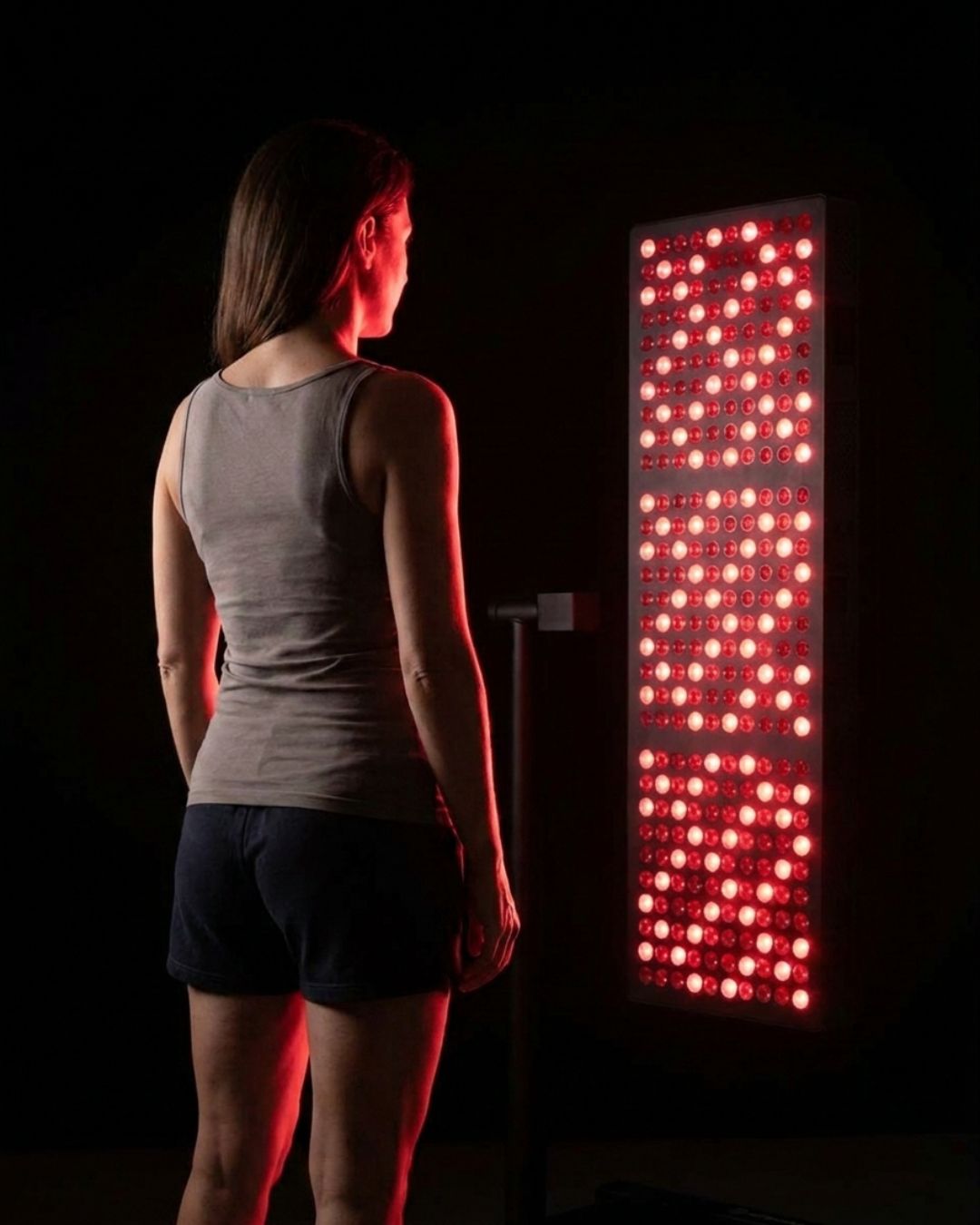
Red light therapy (RLT) is a consumer-facing term that describes the use of red and near-infrared LEDs, typically in the 630 to 850 nm wavelength range, for health, recovery, and skin benefits at home. While it falls entirely within the broader photobiomodulation category, it covers only a portion of the full PBM spectrum.
The popularity of red light therapy exploded after 2015, when affordable LED panels made it possible for anyone to run sessions at home. Before that, light therapy was largely confined to clinical settings with expensive laser equipment. Today, the term "red light therapy" dominates Google searches, social media, and product marketing, making it the most recognised label among consumers worldwide.
A typical home red light device, such as the Mitochondriak® panel range, emits a carefully selected combination of wavelengths. The Mitochondriak® panels, for example, deliver 630, 670, 760, 810, 830, 850, and 940 nm, covering both visible red and deep near-infrared bands. This multi-wavelength approach brings the device closer to the clinical PBM concept while remaining user-friendly for daily home use.
Why the Consumer Label Matters
When someone searches for "red light therapy benefits" or "red light therapy before and after," they are usually looking for practical, accessible information about home devices. The RLT label serves as a bridge between scientific research and everyday application. It simplifies the conversation, but it can also create confusion when people assume that red light therapy covers all forms of light-based treatment, including blue light acne devices, UV phototherapy for psoriasis, or green light protocols for pain. Those modalities belong under the PBM umbrella but not under the red light therapy label.
How Do Photobiomodulation and Red Light Therapy Differ?
Photobiomodulation is the scientific umbrella, while red light therapy is one practical application within it. The difference is comparable to "exercise" versus "running": running is a type of exercise, but calling all exercise "running" would be misleading. Below is a closer look at the three areas where the distinction matters most.
Clinical vs Consumer Terminology
In peer-reviewed literature, researchers almost exclusively use the term photobiomodulation or its abbreviation PBM. This is because PBM accurately describes the mechanism (light-induced biological modulation) without implying a specific colour or device format. The World Association for Photobiomodulation Therapy (WALT) endorsed the switch from "low-level laser therapy" to PBM precisely to eliminate ambiguity (Anders, Lanzafame & Arany, 2015).
Red light therapy, on the other hand, emerged as a marketing and consumer-education label. It tells buyers what colour the LEDs emit and what the device is for. The downside is that it excludes near-infrared wavelengths (invisible to the eye) even though nearly every modern panel, including the Mitochondriak® panels, emits both red and NIR simultaneously.
Wavelength Ranges and Parameters
The wavelength scope is perhaps the most tangible difference between the two terms.
| Parameter | Photobiomodulation (PBM) | Red Light Therapy (RLT) |
|---|---|---|
| Wavelength range | 400 to 1 100 nm (violet through deep NIR) | 630 to 850 nm (visible red + near-infrared) |
| Light sources | Lasers, LEDs, filtered sunlight | Primarily LED panels, bulbs, wraps |
| Setting | Clinical, research lab, home | Predominantly home use |
| Dosimetry | Precisely controlled fluence (J/cm²) | Manufacturer guidelines, less standardised |
| Typical users | Clinicians, researchers, biohackers | Health-conscious consumers, athletes |
Multi-wavelength panels like the Mitochondriak® range blur this boundary. With seven wavelengths spanning 630 to 940 nm, they cover a broader slice of the PBM spectrum than a typical single-wavelength red LED bulb, yet they remain designed for safe, daily home use.
Research, Regulation, and Dosimetry
Clinical PBM protocols specify exact parameters: wavelength in nanometres, irradiance in mW/cm², fluence in J/cm², pulse frequency, and treatment duration. This precision allows researchers to replicate results across studies and clinics.
Consumer red light therapy devices usually provide general recommendations such as "use for 10 to 20 minutes at 15 cm distance." While this is practical, it makes cross-device comparison harder. Higher-end home panels, including Mitochondriak®, publish irradiance data so users can calculate their own dosimetry, bringing them closer to clinical-grade precision.
What Happens at the Cellular Level?
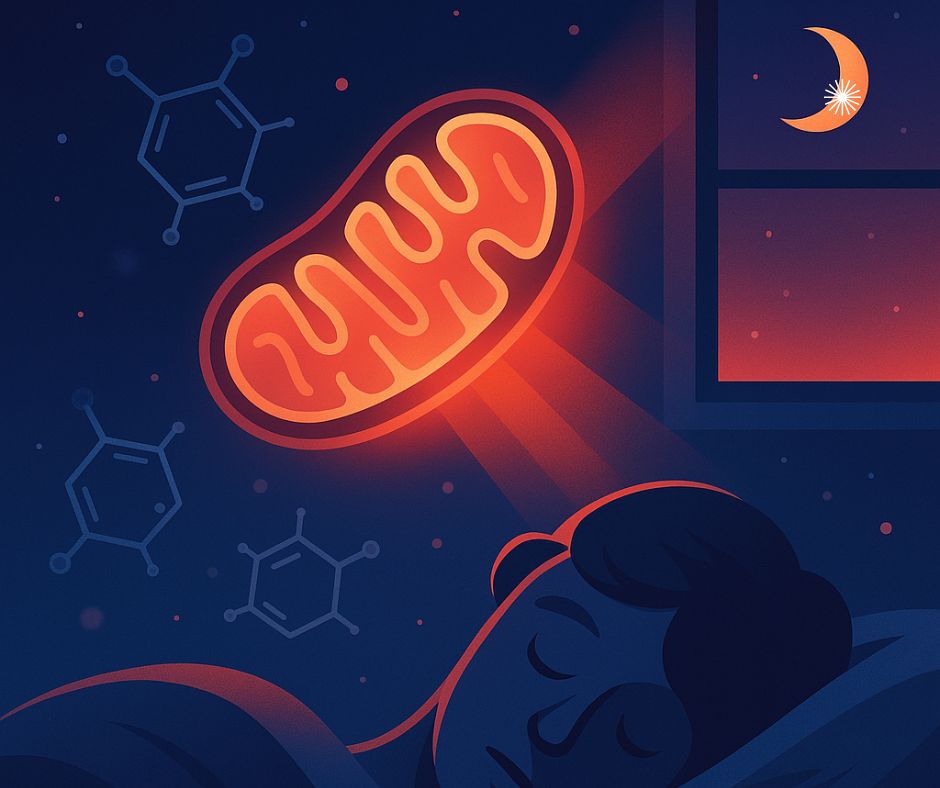
Both photobiomodulation and red light therapy work through the same fundamental mechanism: photons in the red and near-infrared range are absorbed by cytochrome c oxidase, a key enzyme in the mitochondrial electron transport chain. This absorption enhances cellular energy production and triggers a cascade of beneficial biological responses.
When red or NIR photons reach cytochrome c oxidase (Complex IV), they dissociate nitric oxide (NO) that is otherwise blocking the enzyme's copper and haem centres. With NO removed, oxygen can bind more efficiently, and the electron transport chain accelerates. The immediate result is an increase in adenosine triphosphate (ATP) synthesis, the molecule that powers virtually every cellular process (de Freitas & Hamblin, 2016).
At the same time, a brief, controlled burst of reactive oxygen species (ROS) is generated. Rather than causing damage, this low-level ROS pulse activates protective transcription factors such as NF-κB and Nrf2, which upregulate antioxidant enzymes, reduce inflammation, and support tissue repair (Hamblin, 2017).
A 2012 study on C2C12 muscle cells demonstrated that a single red light session at 630 nm increased mitochondrial membrane potential and ATP levels by up to 25 %, with peak effects observed 3 to 6 hours after exposure (Ferraresi et al., 2012). These cellular changes underpin the wide range of benefits reported in clinical studies, from faster muscle recovery and reduced joint pain to improved collagen synthesis and wound healing.
Importantly, the cellular mechanism is identical whether you call the treatment photobiomodulation or red light therapy. What differs is the range of wavelengths applied and the clinical precision of the protocol, not the biology itself.
How to Choose Between a Clinical PBM Session and a Home Device
The best choice depends on your goals, budget, and how much control you want over your treatment parameters. Clinical photobiomodulation and home red light therapy each have clear advantages, and many people benefit from combining both.
When a Clinical PBM Session Makes Sense
- Specific medical conditions such as neuropathy, traumatic brain injury, or chronic wounds that require targeted laser protocols
- Supervised dosimetry by a trained clinician who can adjust wavelength, power, and exposure time per session
- Access to wavelengths outside the typical consumer range, for example blue (450 nm) or deep NIR (1 064 nm) for specialised applications
- Insurance or referral pathways in countries where clinical PBM is covered for certain diagnoses
When a Home Red Light Panel Is the Better Fit
- Daily maintenance sessions for general wellness, skin health, post-exercise recovery, and sleep support
- Cost efficiency over time, since a one-time panel purchase replaces dozens of clinical visits
- Convenience and consistency, which matter because the benefits of light therapy accumulate with regular use
- Multi-wavelength coverage that brings you closer to clinical-grade PBM without leaving your home
The Mitochondriak® panel range was designed to bridge the gap between consumer red light therapy and clinical photobiomodulation. With seven wavelengths (630, 670, 760, 810, 830, 850, and 940 nm), medical-grade irradiance values, and a modular design from compact Mini to full-body Maxi, these panels deliver a PBM-level session in the comfort of your home. Whether you are an athlete optimising recovery, a biohacker tracking mitochondrial health, or simply someone looking to support skin and sleep quality, the right panel size and protocol can be adjusted to your needs.

Explore the Mitochondriak® panel range and find the right size for your daily protocol. Seven wavelengths, medical-grade irradiance, and a 3-year warranty included.
Browse Red Light Therapy Panels
Frequently Asked Questions
Is photobiomodulation the same as red light therapy?
Not exactly. Photobiomodulation is the broad scientific term that covers all forms of non-thermal light therapy across wavelengths from approximately 400 to 1 100 nm. Red light therapy is a consumer-friendly subset that focuses on red (630 to 670 nm) and near-infrared (810 to 850 nm) wavelengths. Every red light therapy session is a form of photobiomodulation, but not every PBM protocol qualifies as red light therapy.
What wavelengths are used in photobiomodulation?
PBM research encompasses wavelengths from 400 nm (violet) to 1 100 nm (deep near-infrared). The most commonly studied therapeutic windows are 630 to 670 nm (visible red), 810 to 850 nm (near-infrared), and 940 to 1 064 nm (deep NIR). The Mitochondriak® panels deliver seven wavelengths across both the red and NIR range for comprehensive coverage.
Can you do photobiomodulation at home?
Yes. Modern LED panels have made home-based photobiomodulation safe and accessible. While clinical PBM may use lasers and more precise dosimetry, high-quality LED panels with published irradiance specifications can deliver effective PBM sessions for general wellness, recovery, and skin health. The key is choosing a panel with verified wavelengths and sufficient power output.
Is PBM safe for daily use?
Yes, when used within recommended parameters. A comprehensive review by Chung et al. (2012) confirmed that photobiomodulation has an excellent safety profile with no significant adverse effects at standard doses. Most home panel manufacturers, including Mitochondriak®, recommend sessions of 10 to 20 minutes at a distance of 15 to 30 cm. Overexposure is unlikely with LED devices, but following the manufacturer's guidelines ensures optimal results without diminishing returns.
Sources and References
- Anders JJ, Lanzafame RJ, Arany PR (2015). "Low-Level Light/Laser Therapy Versus Photobiomodulation Therapy." Photomedicine and Laser Surgery, 33(4), 183–184. DOI: 10.1089/pho.2015.9848
- Hamblin MR (2017). "Mechanisms and applications of the anti-inflammatory effects of photobiomodulation." AIMS Biophysics, 4(3), 337–361. PubMed: 28748217
- de Freitas LF, Hamblin MR (2016). "Proposed Mechanisms of Photobiomodulation or Low-Level Light Therapy." IEEE Journal of Selected Topics in Quantum Electronics, 22(3), 7000417. DOI: 10.1109/JSTQE.2016.2561201
- Chung H et al. (2012). "The nuts and bolts of low-level laser (light) therapy." Annals of Biomedical Engineering, 40(2), 516–533. DOI: 10.1007/s10439-011-0454-7
- Ferraresi C et al. (2012). "Low-level laser (light) therapy increases mitochondrial membrane potential and ATP synthesis in C2C12 myotubes with a peak response at 3–6 h." Photochemistry and Photobiology, 88(1), 160–167.