
.png)
Barefoot
Barefoot (literally "bare foot") is a movement and footwear philosophy based on a simple idea: the human foot was designed by evolution for walking without shoes. Modern footwear with thick soles, narrow toe boxes, and elevated heels alters walking biomechanics, weakens the muscles of the foot, and cuts the foot off from sensory contact with the ground. The barefoot approach brings all of this back. And when you combine it with grounding (earthing), you get one of the most powerful mitohacking tools available.
- What barefoot is and why people are returning to it
- How modern footwear weakens foot muscles and alters walking biomechanics
- What science says about walking barefoot and minimalist footwear
- What the difference is between barefoot shoes and conventional shoes
- Why at Mitochondriak® we combine barefoot with grounding
- How to safely transition to barefoot shoes step by step
- What is barefoot and where does this approach come from?
- How does modern footwear change foot biomechanics?
- Why is foot proprioception so important?
- What does science say about walking barefoot and barefoot shoes?
- What are the main features of barefoot shoes?
- Why do we combine barefoot with grounding?
- How to safely transition to barefoot shoes?
- Who is barefoot suitable for and who should be cautious?
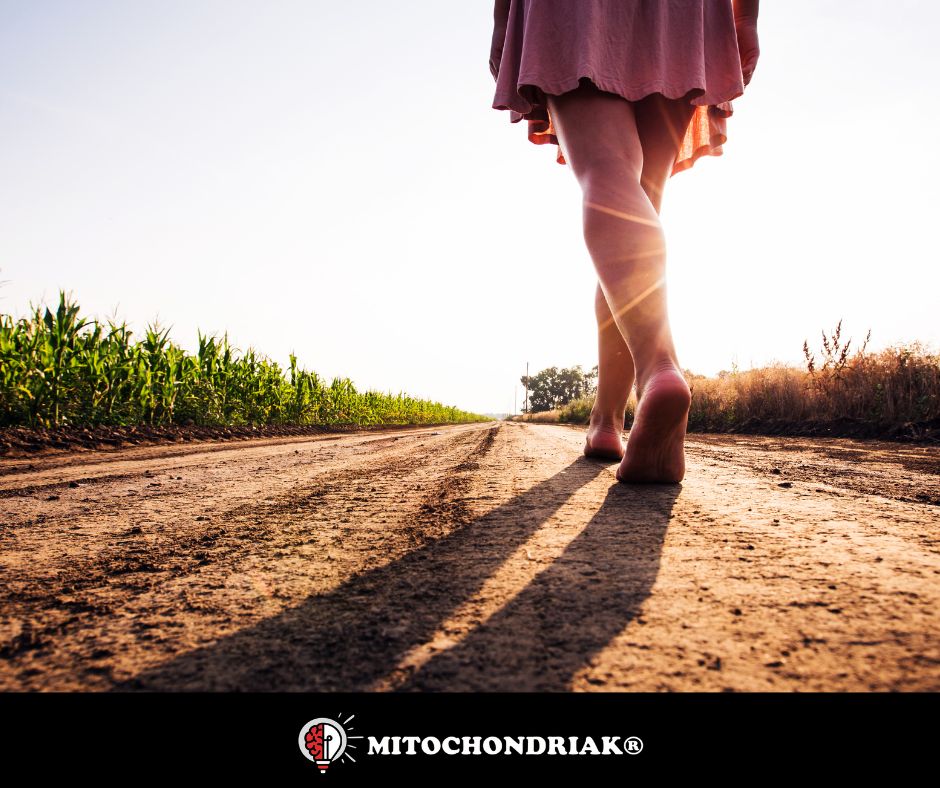
What is barefoot and where does this approach come from?
Barefoot is an approach to movement and footwear that respects the natural anatomy and biomechanics of the human foot. It is based on the fact that the human foot evolved over millions of years without any footwear. It contains 26 bones, 33 joints, and more than 100 muscles, tendons, and ligaments. It is one of the most complex mechanical systems in the human body.
Modern footwear, which we have worn for the last few centuries (and in its current form for the last 50 years), significantly restricts this system. A narrow toe box compresses the toes, a raised heel shifts the center of gravity forward, a thick sole cuts off sensory input from the ground, and a rigid construction prevents the natural flexing of the foot.
The barefoot movement began to take shape in the 2000s, when researchers like Daniel Lieberman from Harvard University showed that people running barefoot achieve a more natural foot strike (on the forefoot or midfoot), while runners in conventional shoes land on the heel, which creates greater impact forces.
How does modern footwear change foot biomechanics?
Garcia-Arrabe et al. (2024) in a study comparing technological running shoes with barefoot found that modern footwear leads to weakening of the intrinsic foot muscles and reduced range of motion in the ankle. The group of runners training barefoot had significantly stronger foot muscles and greater dorsiflexion in the ankle (Garcia-Arrabe et al., 2024).
Modern footwear causes several problems:
- Narrow toe box – compresses the toes together, weakens the toe abductors, contributes to hallux valgus (bunions) and hammer toes
- Heel elevation (drop) – shifts the center of gravity forward, shortens the Achilles tendon, changes the pelvic angle, and loads the knees and lumbar spine
- Thick, rigid sole – blocks sensory input from the terrain, weakens proprioception (awareness of body position in space), and prevents the natural bending of the foot during walking
- Arch supports – take over the function of muscles that should be actively maintaining the arch. The result is weakening and collapse of the arch
Imagine wearing gloves for 50 years that prevent you from bending your fingers. The muscles of your hand would atrophy and you would lose fine motor skills. That is exactly what happens to feet in conventional footwear.
Why is foot proprioception so important?
The foot contains thousands of nerve endings (mechanoreceptors) that continuously sense the surface, pressure, temperature, and vibrations. This information travels to the brain and is used to regulate balance, joint stability, and movement coordination.
Biscarini et al. (2024) demonstrated that just 3 minutes of walking in ultra-minimalist shoes on an uneven surface significantly improved foot proprioception. Sensory activation was measurable immediately and persisted even after the exercise ended (Biscarini et al., 2024).
When you wear shoes with a thick sole, it is like listening to music through a wall. The signal is there, but it is muffled. Barefoot shoes (or walking barefoot) amplify this signal. The brain receives more accurate information about the terrain, which leads to better balance, stability, and fall prevention, especially in older adults.
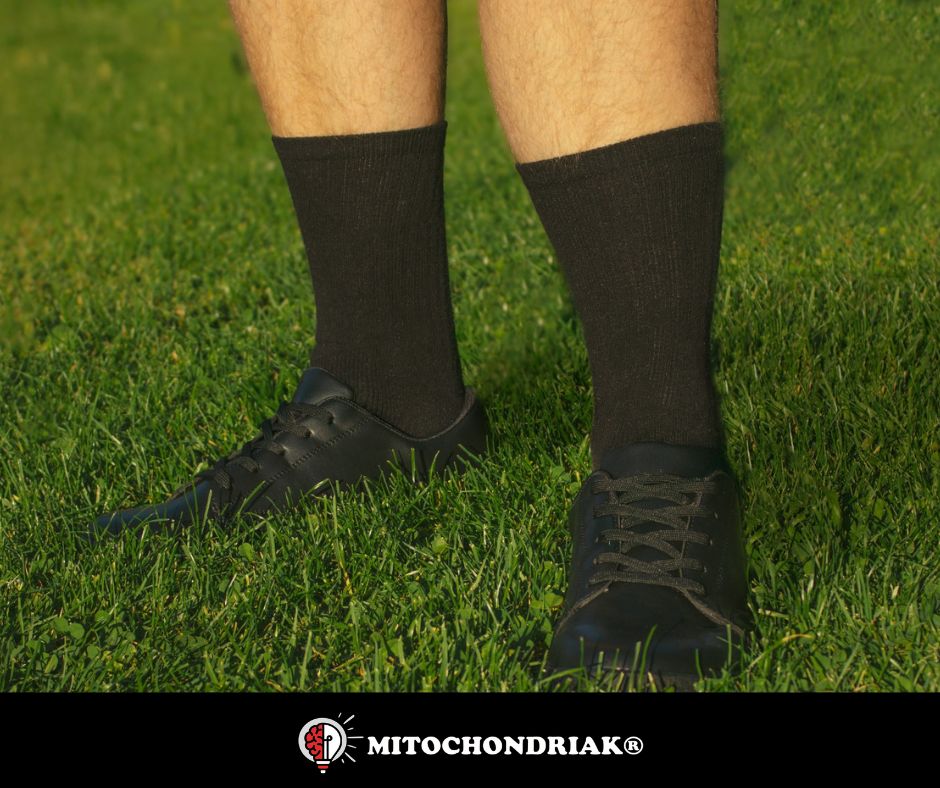
What does science say about walking barefoot and barefoot shoes?
Research on barefoot walking and minimalist footwear has expanded significantly over the past decade. Here are the key findings:
Strengthening intrinsic foot muscles
Futrell et al. (2025) confirmed in a systematic review that walking in minimalist footwear is an effective way to strengthen the intrinsic muscles of the foot. Stronger foot muscles mean a better arch, more stable joints, and a lower risk of injury (Futrell et al., 2025).
Improved balance and stability
Derzsi (2025) summarized in a literature review on barefoot walking that barefoot walking provides additional sensory input that is beneficial for balance and gait stability. It is an effective motivation for exercise and fall prevention (Derzsi, 2025).
Neuromuscular and biomechanical adaptations
Rodriguez-Longobardo et al. (2025) showed that training programs in barefoot shoes lead to neuromuscular and biomechanical adaptations, including changes in lower leg muscle activation and improved movement coordination (Rodriguez-Longobardo et al., 2025).
A more natural gait pattern
Walking barefoot or in minimalist shoes leads to a shorter stride, a forefoot or midfoot strike, and greater engagement of the calf muscles. This pattern reduces impact forces on the knees and hips compared to heel striking in conventional footwear.
What are the main features of barefoot shoes?
True barefoot shoes meet several criteria that distinguish them from conventional footwear:
| Feature | Barefoot shoes | Conventional shoes |
|---|---|---|
| Toe box | Wide, anatomically shaped | Narrow, compresses toes |
| Drop (heel-to-toe height difference) | 0 mm (zero drop) | 8 to 12 mm |
| Sole thickness | 3 to 8 mm (thin) | 15 to 35 mm |
| Flexibility | High (bends in all directions) | Low (rigid construction) |
| Arch support | None (muscles work actively) | Yes (muscles passive) |
| Sensory feedback | High (feel the terrain) | Minimal |
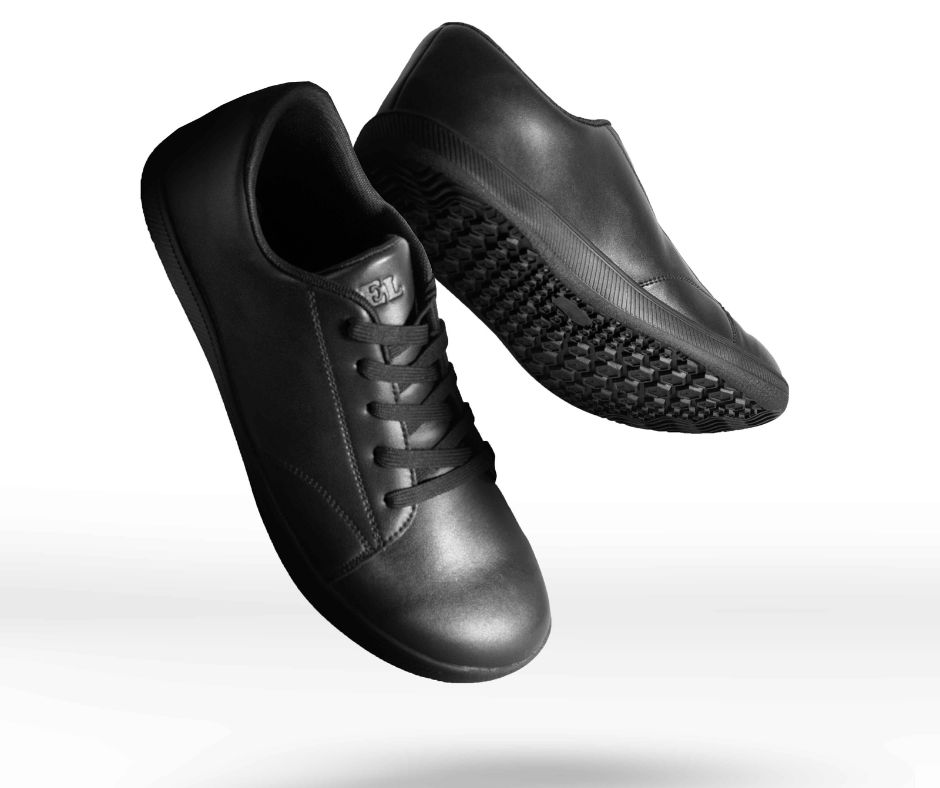
At Mitochondriak®, we add one more feature: conductivity. Our grounded barefoot shoes have a graphene conductive element in the sole that ensures electrical contact with the earth. This combines the biomechanical benefits of barefoot shoes with the benefits of grounding (earthing).
Why do we combine barefoot with grounding?
Barefoot and grounding are two concepts that complement each other perfectly:
- Barefoot addresses biomechanics: proper posture, strong foot muscles, healthy joints, proprioception
- Grounding addresses biophysics: transfer of free electrons from the Earth, inflammation reduction, cortisol normalization, parasympathetic support
When you walk barefoot on grass, you get both at once. But in the city, in winter, or on rough surfaces, that is not always possible. That is why at Mitochondriak® we developed grounded barefoot shoes that combine both concepts: the anatomical shape of barefoot shoes with a graphene conductive layer in the sole.
The result: you walk through the city and your feet work naturally (barefoot), while your body receives free electrons from the Earth (grounding). Two biohacks in one step.
From a mitochondrial health perspective, this combination is particularly interesting. Barefoot walking increases blood flow in the feet and legs, while grounding supplies free electrons that neutralize reactive oxygen species. Together, they support more efficient ATP production and reduce chronic inflammation.
How to safely transition to barefoot shoes?
The transition to barefoot shoes should be gradual. Your feet have been "wrapped" in conventional footwear for years, and the muscles, tendons, and joints need time to adapt. Here is a proven approach:
Weeks 1 to 2: Barefoot at home
Start by walking barefoot or in thin socks at home. This activates the proprioceptors and begins strengthening the intrinsic foot muscles. Do simple exercises: picking up objects with your toes, standing on one leg, ankle circles.
Weeks 3 to 4: Short walks in barefoot shoes
Wear barefoot shoes for short walks (15 to 30 minutes). Alternate with conventional footwear. Listen to your body. Mild soreness in the foot muscles is normal (these are muscles that have not worked for years). Sharp pain is not normal.
Weeks 5 to 8: Extending the time
Gradually extend the time spent in barefoot shoes. The goal is for them to become your primary footwear. Most people fully adapt within 6 to 12 weeks.
Ongoing: Walking barefoot on natural surfaces
Whenever the environment allows, walk barefoot on grass, sand, or soil. This strengthens the feet, improves proprioception, and simultaneously grounds you.
Who is barefoot suitable for and who should be cautious?
The barefoot approach is suitable for most people, but there are situations where caution is needed:
Suitable for:
- Healthy adults who want to strengthen their feet and improve posture
- People with flat feet (barefoot strengthens the arch muscles)
- Biohackers who want to combine barefoot with grounding
- Children (their feet develop best barefoot or in minimalist footwear)
- Older adults who want to improve balance (with a gradual transition)
Caution with:
- Diabetic neuropathy (reduced foot sensitivity, risk of unnoticed injuries)
- Acute foot or ankle injuries
- Severe foot deformities (consult an orthopedist)
- Transitioning too quickly (gradual progression is key)
In all cases: listen to your body and transition gradually. Your feet will tell you when they are ready for the next step.
Related glossary terms
- Mitochondria – cellular organelles whose function barefoot walking with grounding indirectly supports
- ATP – energy whose production grounding through barefoot shoes optimizes by reducing oxidative stress
- Circadian rhythm – the biological rhythm that morning barefoot walking in sunlight helps set
- Photobiomodulation – light therapy that, together with barefoot and grounding, forms the foundation of mitohacking
- Melatonin – a hormone and antioxidant whose production is supported by a healthy circadian rhythm set by morning time outdoors
Grounded barefoot shoes Mitochondriak®
Our barefoot shoes combine an anatomical shape, zero drop, a thin flexible sole, and a graphene grounding element. Walk through the city while your body receives free electrons from the Earth. Barefoot + grounding in one step. An elegant design suitable for everyday wear.
- Barefoot is an approach that respects the natural anatomy of the foot: wide toe box, zero drop, thin flexible sole
- Modern footwear weakens foot muscles, reduces proprioception, and alters walking biomechanics
- Studies confirm that barefoot walking strengthens intrinsic foot muscles, improves balance, and changes gait patterns
- Barefoot + grounding = biomechanics + biophysics. Two biohacks in one step
- The transition to barefoot shoes should be gradual (6 to 12 weeks)
- Grounded barefoot shoes Mitochondriak® add conductive contact with the earth to barefoot benefits
Sources and References
- Garcia-Arrabe, M. et al. (2024). Effects of technological running shoes versus barefoot on foot muscle strength and ankle range of motion. Scientific Reports, 14, 16892. PMC11269782
- Biscarini, A. et al. (2024). Enhanced Foot Proprioception Through 3-Minute Walking in Ultra-Minimalist Shoes on Uneven Surface. Sensors, 24(24), 8194. PMC11672953
- Futrell, E. et al. (2025). The effects of intrinsic foot muscle strengthening interventions on foot structure and function. Journal of Foot and Ankle Research, 18, 28. PMC12568628
- Rodriguez-Longobardo, C. et al. (2025). Effects of Barefoot and Minimalist Footwear Strength-Oriented Training on Foot Structure and Function in Athletic Populations. Sports Medicine – Open, 11, 12. PMC12609320
- Derzsi, Z. (2025). Walking barefoot: a literature review of sensory, biomechanical, and health perspectives. Medical Research Archives, 13(4). esmed.org/7126