.png)
Rosacea is more than temporary facial redness. It is a chronic inflammatory skin condition involving the skin barrier, blood vessels, immune signalling and heightened sensitivity. Alongside dermatological care, red light therapy may support calmer skin, regeneration and a more balanced inflammatory response without using an aggressive or heat-based procedure.
- Rosacea affects the skin barrier, vascular regulation and inflammatory signalling, not only the colour of the skin.
- Red and near-infrared light interact with mitochondria and may support cellular regeneration and inflammatory balance.
- Early research suggests that photobiomodulation may influence inflammatory mediators, immune-cell infiltration and abnormal blood-vessel formation associated with rosacea.
- Sensitive skin requires a gradual, consistent and carefully observed approach to light therapy.
- Red light should be viewed as a supportive part of comprehensive rosacea care, not as a substitute for dermatological diagnosis or treatment.
- What is rosacea and why does it develop?
- What happens beneath the skin during rosacea?
- How does red light work on sensitive skin?
- Can red light therapy help soothe rosacea?
- What does research say about photobiomodulation and rosacea?
- Can the modern light environment affect sensitive skin?
- How should red light be used for rosacea?
- How does red light fit into complete rosacea care?
- Frequently asked questions
What is rosacea and why does it develop?
Rosacea, sometimes called couperose, is a chronic inflammatory skin condition that most often affects the central part of the face. It commonly appears on the cheeks, nose, forehead and chin, although the symptoms and their intensity can differ significantly from one person to another.
A systematic review and meta-analysis covering more than 26 million people estimated that rosacea affects approximately 5.46 percent of the adult population. This makes it one of the most common long-term inflammatory facial skin conditions.
Typical signs and symptoms include:
- Persistent facial redness that no longer disappears as quickly as ordinary flushing.
- Visible small blood vessels, also known as telangiectasia.
- Burning, stinging or warmth even when the skin does not look severely irritated.
- Increased sensitivity to cosmetics, temperature changes, wind or other environmental influences.
- Papules and pustules that may resemble acne but arise through a different biological process.
- Dryness and barrier disruption, despite the skin sometimes appearing oily in certain areas.
The exact cause is not fully understood. Rosacea appears to develop through a combination of genetic predisposition, altered innate immunity, vascular hyperreactivity, nervous-system signalling, microorganisms such as Demodex mites and weakening of the skin barrier.
In other words, the redness is only the visible surface of a deeper biological imbalance.
What happens beneath the skin during rosacea?
Rosacea involves an exaggerated conversation between blood vessels, sensory nerves, immune cells and the skin barrier. When these systems lose their normal balance, harmless stimuli can trigger flushing, inflammation, burning and prolonged redness.
The skin barrier normally acts like a selectively permeable wall. It helps retain water while limiting the entry of irritants and microorganisms. When this barrier becomes compromised, the skin loses moisture more easily and reacts more intensely to cosmetics, wind, heat and sudden temperature changes.
At the same time, facial blood vessels may dilate too easily and remain enlarged for longer. Repeated episodes of flushing can gradually make small vessels more visible beneath the surface.
Inflammatory signalling also becomes more active. Immune cells release mediators that can amplify redness, swelling and discomfort. Sensory nerves may add another layer by producing burning, stinging or unusual sensitivity even when visible changes appear modest.
This helps explain why rosacea rarely responds to one isolated cosmetic product. It usually requires a long-term approach that respects the barrier, inflammation, vascular reactivity and the wider environment surrounding the skin.
How does red light work on sensitive skin?
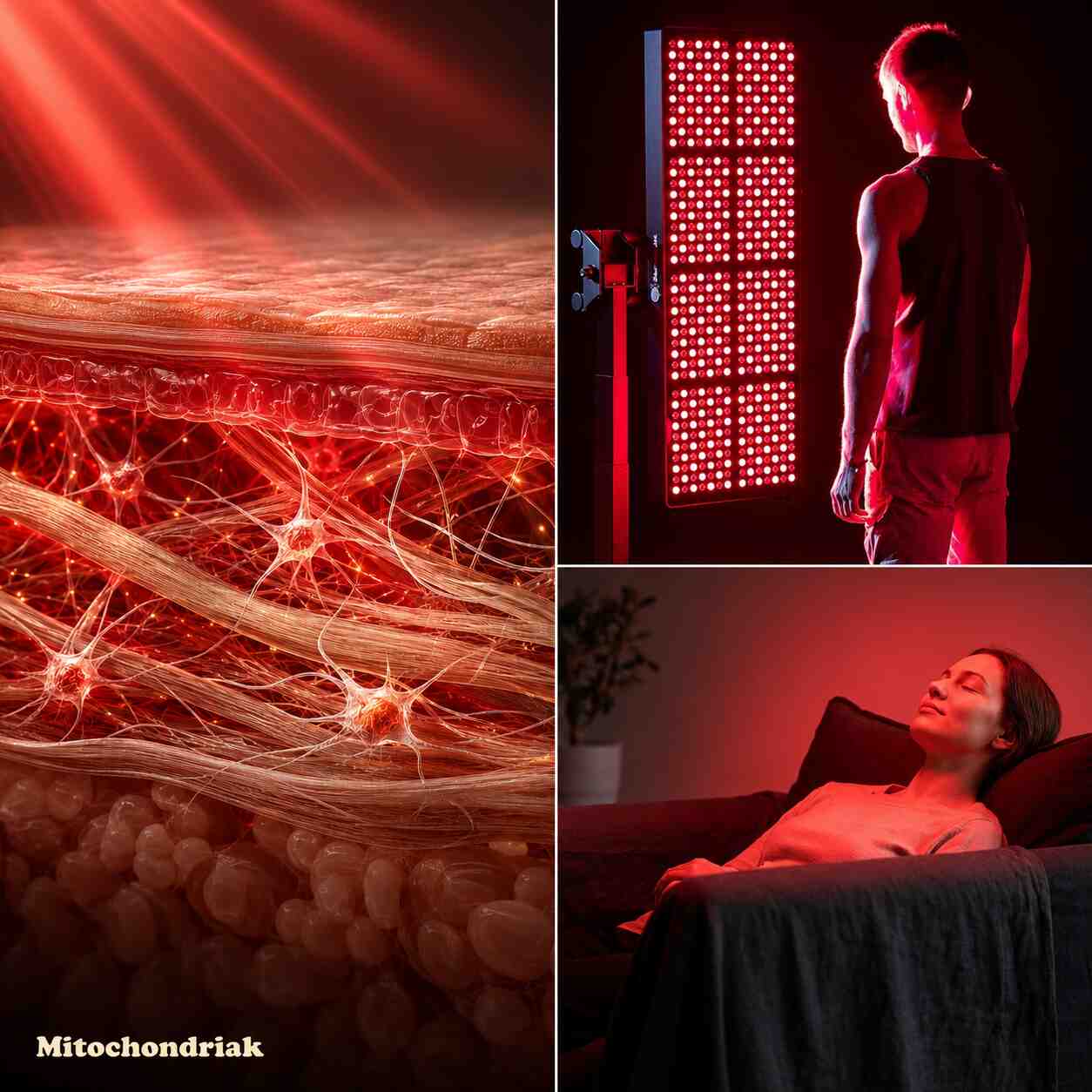
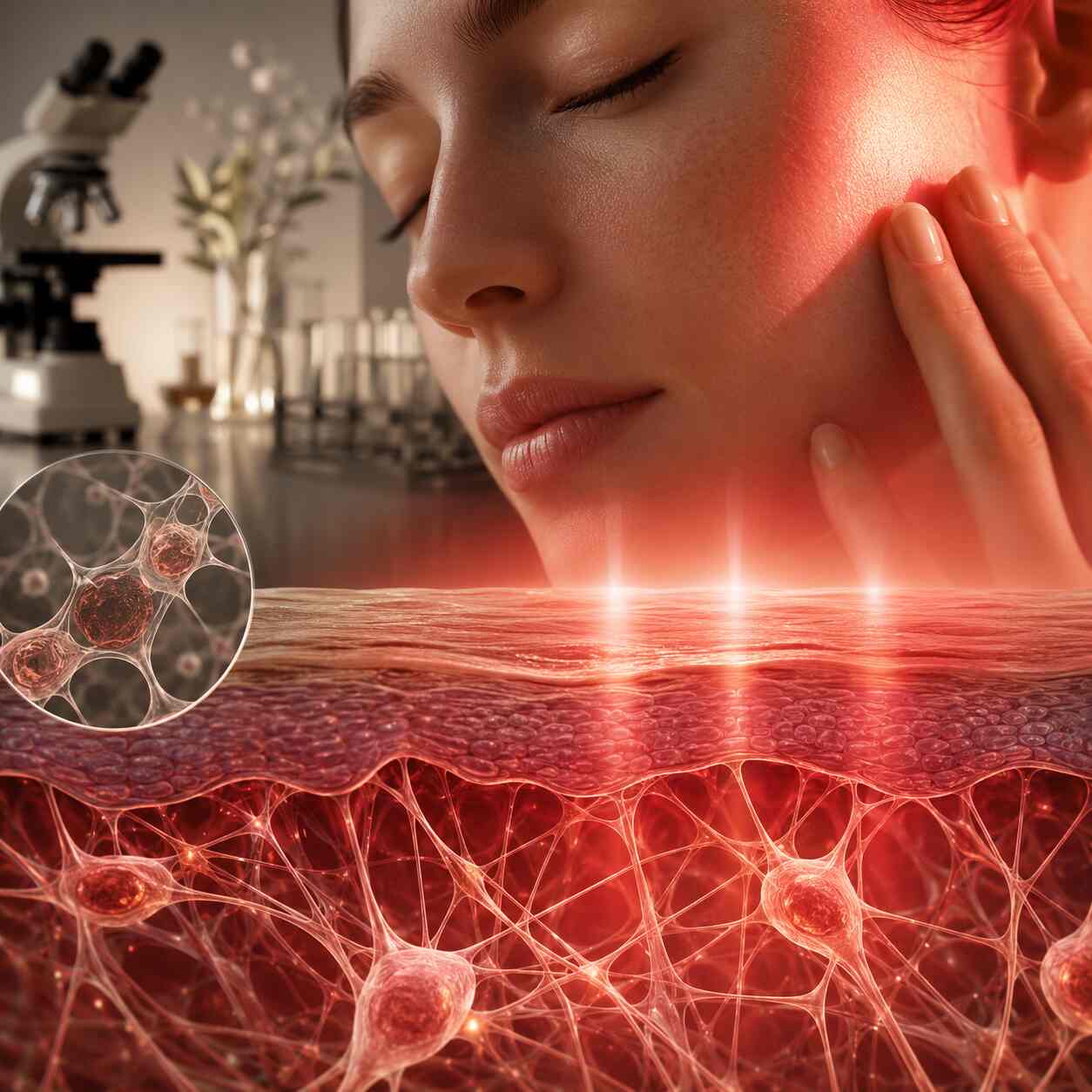
Red and near-infrared light deliver photons into the skin, where they interact with light-sensitive molecules and mitochondria. This process is known as photobiomodulation. Rather than peeling, burning or deliberately damaging the tissue, it aims to influence how cells produce energy and coordinate regeneration.
Photobiomodulation commonly uses wavelengths within approximately 630 to 1000 nm. Red wavelengths act closer to the skin surface, while near-infrared light can reach deeper structures.
At the cellular level, photons interact with mitochondrial chromophores, including cytochrome c oxidase. This can influence electron transport, ATP production, nitric-oxide signalling and controlled reactive oxygen species.
These signals may then affect processes relevant to sensitive skin, including:
- Cellular regeneration by supporting the energy required for repair.
- Inflammatory regulation through changes in cellular signalling pathways.
- Microcirculation and local nitric-oxide activity.
- Collagen and extracellular matrix remodelling.
- Skin-barrier recovery and tissue organisation.
This is why red light is increasingly discussed in aesthetic dermatology and in the long-term care of sensitive or inflammation-prone skin.
For a broader explanation of these mechanisms, read our guide to red light, collagen, wrinkles, acne and skin regeneration.
Can red light therapy help soothe rosacea?
Red light therapy may be a useful supportive tool for rosacea because it acts on several processes involved in irritated skin. Its potential value lies mainly in inflammatory regulation, cellular regeneration, microcirculation and support for the compromised skin barrier.
In practice, red light may help support:
- Calmer inflammatory signalling in irritated tissue.
- Recovery of the skin barrier and improved resistance to everyday stressors.
- Cellular repair without using exfoliating acids or aggressive chemical ingredients.
- Balanced microcirculation and healthier tissue organisation.
- Extracellular matrix remodelling, including collagen support.
An important distinction must be made between photobiomodulation and heat-based light procedures. A red light LED panel is not the same as intense pulsed light, a vascular laser or photodynamic therapy with a photosensitising substance.
Photobiomodulation uses non-ionising red and near-infrared light at levels intended to stimulate cellular responses without deliberately heating or damaging the skin. This gentler mechanism is one reason it may be interesting for people whose skin reacts badly to aggressive procedures.
However, rosacea is highly individual. Some people react to warmth, light intensity or even a new cosmetic routine. A method that feels calming for one person may need to be introduced more slowly by another.
What does research say about photobiomodulation and rosacea?
Research specific to red light photobiomodulation and rosacea is promising but still developing. Available experimental evidence suggests that PBM may reduce inflammatory mediators, immune-cell infiltration and abnormal vascular signalling, while direct clinical evidence remains more limited than the evidence for established dermatological treatments.
In a 2022 experimental study, Shuwei Wu and colleagues investigated photobiomodulation in a mouse model of rosacea. The researchers reported changes in several processes associated with the condition, including inflammatory mediators, immune infiltration and angiogenesis.
The authors concluded that photobiomodulation may represent a promising supportive treatment. However, because the study used an animal model, the results cannot automatically be interpreted as proof of the same effect in every human patient.
A 2025 scientific review evaluated the available experimental and clinical literature on PBM for rosacea. It concluded that photobiomodulation could potentially reduce characteristic signs through lower expression of pro-inflammatory factors, less inflammatory infiltration and extracellular matrix remodelling. The authors also emphasised that more clinical research is needed.
Human evidence includes a published report of two patients with papulopustular rosacea who received combined blue light at 480 nm and red light at 650 nm. Improvement was described after a series of sessions. This is encouraging, but two case reports are not equivalent to a large randomised clinical trial.
| Research | Model | Relevant finding | Important limitation |
|---|---|---|---|
| Wu et al., 2022 | Mouse model of rosacea | Changes in inflammation, immune infiltration and angiogenesis | Preclinical animal research |
| Viana et al., 2025 | Scientific review | PBM may reduce characteristic inflammatory processes | Few direct clinical studies available |
| Dini and colleagues, 2020 | Two human case reports | Improvement after combined blue and red LED sessions | Very small sample without a control group |
Important: Red light therapy should be viewed as a supportive part of rosacea care. If redness, burning, eye irritation or inflammatory lesions persist, worsen or appear suddenly, consult a dermatologist or another qualified healthcare professional.
Can the modern light environment affect sensitive skin?
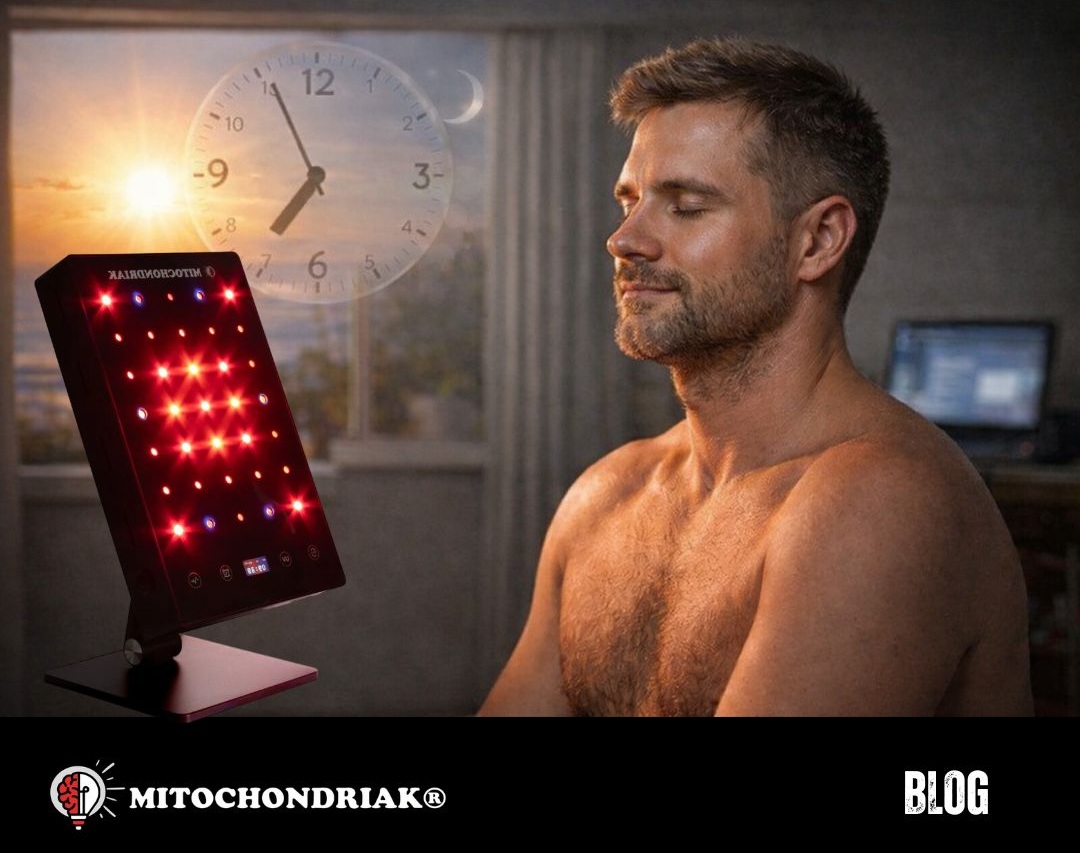
Human skin evolved under the changing spectrum of natural sunlight, not under a static indoor LED spectrum. Modern people often spend most of the day in offices, under artificial lighting and in front of screens, while receiving little natural red and infrared light.
Skin is not merely a passive covering. It contains mitochondria, blood vessels, nerves, immune cells and light-sensitive proteins. These structures respond to timing, wavelength, intensity and the wider environmental context.
Natural daylight changes throughout the day. Morning and evening sunlight contain a strong proportion of red and infrared wavelengths, while ultraviolet light becomes available according to the time of day, season and latitude.
Artificial indoor lighting usually provides a much narrower and biologically different signal. It may contain a relatively strong blue component while lacking much of the infrared spectrum present outdoors.
This does not mean that artificial light is the sole cause of rosacea. The original point is broader: a lack of natural light and long hours in an artificial environment may influence biological processes in the skin, particularly when combined with stress, poor sleep and circadian disruption.
Red light devices offer one way to restore selected wavelengths indoors, but they should complement rather than replace daylight, time outdoors and a stable circadian rhythm.
How should red light be used for rosacea?
Sensitive skin should be introduced to red light gradually, from an appropriate distance and with close observation of its response. Regular shorter sessions are generally easier to tolerate than an aggressive start with maximum intensity or excessive exposure.
1. Begin with clean skin
Remove makeup and thick cosmetic layers before the session. This gives the light a direct path to the skin and makes it easier to distinguish the skin's response to light from its reaction to a cosmetic ingredient.
2. Use red and near-infrared light without UV
For facial rosacea care, use the red and near-infrared channels. Do not add UV light to facial exposure. Sensitive or reactive facial skin requires a different approach from deliberate UV exposure intended for other areas of the body.
3. Maintain a suitable distance
For the Mitochondriak® Office Upgraded, the verified recommendation for superficial skin applications is approximately 30 to 60 cm from the panel.
The panel is compact but powerful, so moving closer is not automatically better. A greater distance or lower intensity can be especially useful when introducing light to reactive skin.
4. Start with a short session
The verified product guidance for superficial skin applications is approximately 5 to 10 minutes. With rosacea, begin at the shorter end and observe the skin during the following hours before increasing exposure.
5. Introduce the routine gradually
The original recommendation is regular use, commonly several sessions per week. At the beginning, leave enough time between sessions to see whether the skin remains calm or develops prolonged redness, burning or discomfort.
6. Adjust intensity when necessary
The Mitochondriak® Office Upgraded allows separate adjustment of RED and NIR intensity from 1 to 100 percent. Sensitive users can begin at a lower intensity and increase gradually instead of starting at maximum power.
7. Keep skincare gentle
Avoid introducing several new active products at the same time as red light. A simple routine makes it easier to identify what calms the skin and what triggers a reaction.
If the light causes persistent burning, pain or a significant flare-up, stop using it and consult a dermatologist. People taking photosensitising medication should also discuss light therapy with their doctor or pharmacist.
How does red light fit into complete rosacea care?
Rosacea usually responds best to a combination of dermatological guidance, trigger awareness, gentle skincare and support for the skin's natural regenerative processes. Red light can form one part of that wider strategy, but it does not replace diagnosis or prescribed treatment.
A comprehensive approach may include:
- Dermatological assessment to identify the dominant rosacea symptoms and rule out other conditions.
- Individual trigger tracking rather than assuming that every person reacts to the same food, temperature or cosmetic.
- Barrier-friendly skincare without unnecessary fragrance, harsh exfoliation or repeated product changes.
- Natural daylight and circadian alignment to support the wider biological environment of the skin.
- Stress and sleep management, as nervous-system activation can influence flushing and inflammatory signalling.
- Photobiomodulation as a gentle, non-chemical method of supporting regeneration and inflammatory balance.
Rosacea is not simply a cosmetic defect to be hidden. It is a biological signal from sensitive tissue. The goal is therefore not to fight the skin with more aggression, but to create an environment in which it has a better chance to regulate, repair and become more resilient.
Introduce red light to your skincare routine gradually
The Mitochondriak® Office Upgraded combines seven red and near-infrared wavelengths with adjustable intensity and a compact format suitable for targeted facial use. For sensitive skin, use only RED and NIR, begin gradually and follow the verified distance and session guidance.
Frequently asked questions about rosacea and red light
Can red light therapy cure rosacea?
No single method can be guaranteed to cure rosacea permanently. Red light therapy may support inflammatory balance, cellular regeneration and the skin barrier, which can make it a useful addition to broader care. Persistent or severe rosacea should always be evaluated by a dermatologist.
Can red light make rosacea worse?
Sensitive skin can react to excessive intensity, heat or exposure that is introduced too quickly. Begin with a short session, maintain the recommended distance and observe the skin afterwards. Stop if you experience persistent burning, pain or a significant increase in redness.
Which colour of light is suitable for rosacea?
Red and near-infrared light are the main wavelengths used for supportive photobiomodulation. For facial rosacea, use RED and NIR without UV. Blue light has been studied in combination with red light for papulopustular rosacea, but it is not necessary for every home routine.
How far should the face be from a red light panel?
Distance depends on the specific device and its intensity. For the Mitochondriak® Office Upgraded, the verified recommendation for superficial skin applications is approximately 30 to 60 cm. Sensitive skin should begin conservatively rather than moving as close as possible.
How long should a red light session for rosacea last?
For superficial skin applications with the Mitochondriak® Office Upgraded, the verified guidance is approximately 5 to 10 minutes. With reactive skin, begin at the shorter end and increase only when the skin remains calm after repeated sessions.
Should skincare products be applied before red light therapy?
Use red light on clean skin unless the instructions for a specific product say otherwise. Makeup, thick creams and several active ingredients can complicate the skin's response. Gentle moisturising products can be applied after the session.
Sources and references
- Gether L, Overgaard LK, Egeberg A, Thyssen JP. Incidence and prevalence of rosacea: a systematic review and meta-analysis. British Journal of Dermatology. 2018. PubMed PMID 29478264.
- Wu S, Su Y, Wang L, Sun B, Jiang X. The effects of photobiomodulation therapy on inflammatory mediators, immune infiltration, and angiogenesis in a mouse model of rosacea. Annals of Translational Medicine. 2022. PubMed PMID 36035005.
- Viana EL et al. Could photobiomodulation be used for treatment of rosacea? Lasers in Medical Science. 2025. PubMed PMID 40439755.
- Dini V et al. Coupled blue and red light-emitting diodes therapy efficacy in patients with rosacea: two case reports. Journal of Medical Case Reports. 2020. PubMed PMID 31992343.
- Husein-ElAhmed H, Steinhoff M. Light-based therapies in the management of rosacea: a systematic review with meta-analysis. International Journal of Dermatology. 2022. PubMed PMID 34089264.