.png)
Your evening scroll through your phone might be quietly stealing your sleep. Blue light blocking glasses for evening are one of the simplest, most affordable tools to protect your melatonin production and defend your circadian rhythm from screens and artificial lighting. In this guide we cover which lens colour actually works, how much light to block, and how to choose the right pair for real, restful nights.
- Why evening blue light suppresses melatonin and delays your body clock
- How blue light blocking glasses actually work at the level of your retina
- The real difference between clear, amber and red lenses for night use
- How much blue and green light your evening glasses should filter
- What frame styles give the best coverage and comfort for the evening
- What is best blue light blocking glasses for evening and why does it matter?
- How does best blue light blocking glasses for evening work according to research?
- What benefits and limits can you realistically expect?
- How do you use best blue light blocking glasses for evening safely in practice?
- What should you watch out for and who should be careful?
- Summary: what should you remember?
- Frequently asked questions
What is best blue light blocking glasses for evening and why does it matter?
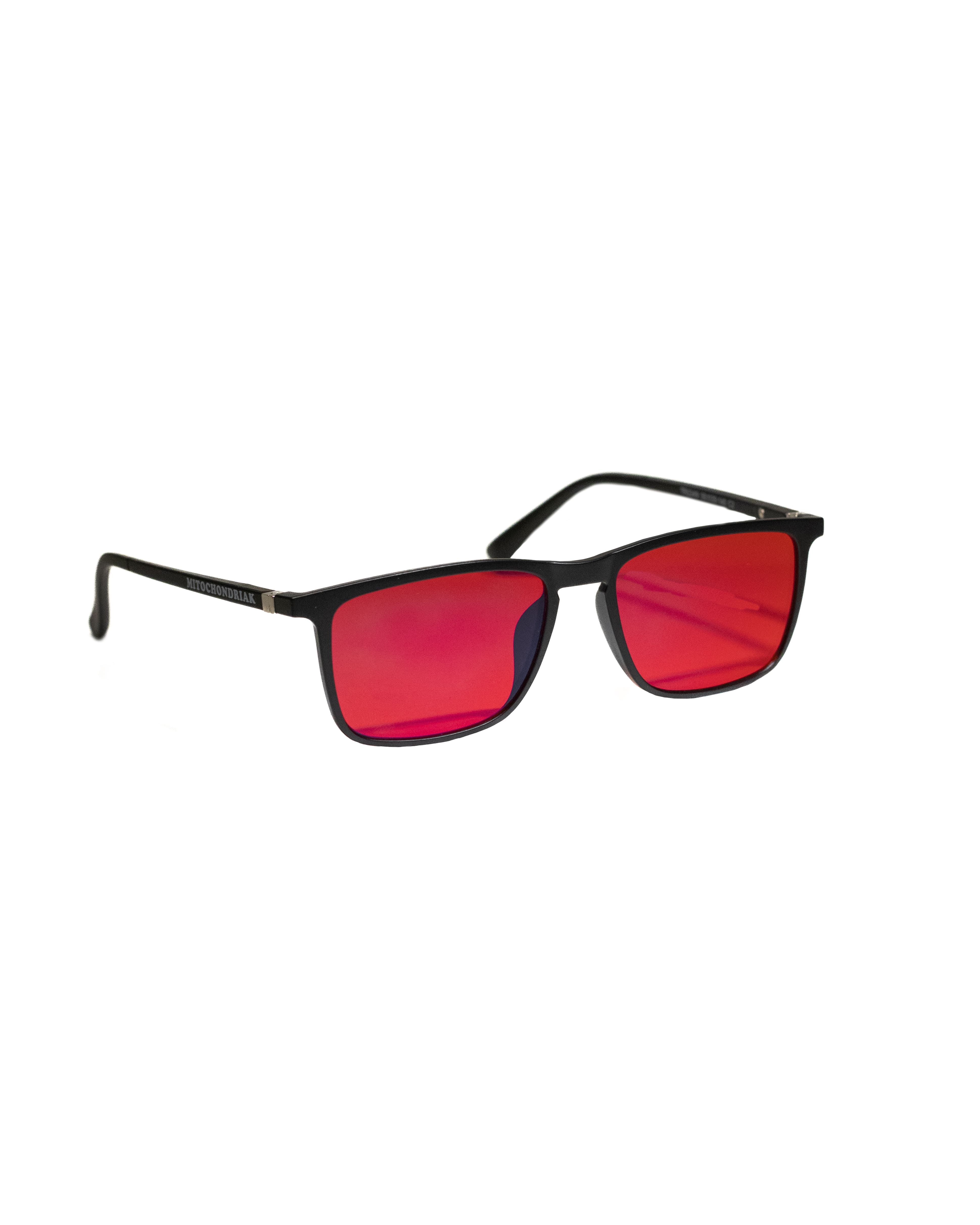
The best blue light blocking glasses for evening are lenses that filter a high percentage of blue and green wavelengths, typically with an amber or red tint, worn in the last two to three hours before bed. They matter because evening light exposure is the single biggest environmental disruptor of melatonin, the hormone that tells your body it is time to sleep.
Here is the core problem. Modern evenings are flooded with artificial light that our biology never evolved to handle. Phones, laptops, LED bulbs and televisions all emit strong blue wavelengths that, historically, only appeared during daylight. When your eyes register this light after sunset, your brain assumes it is still daytime and holds back melatonin release.
Not all blue light glasses are built for this job. Many clear "computer glasses" sold for daytime eye comfort filter only a small slice of blue light and do very little for your circadian rhythm. Evening glasses are a different tool entirely. Their purpose is not to reduce screen glare but to protect your sleep signalling by removing the wavelengths that suppress melatonin most aggressively.
If you want the deeper background on this mechanism, our article on how screens disrupt your circadian rhythm explains the full picture. For evening protection specifically, the Blue light blocking glasses Mitochondriak® use a red lens designed to block close to 100 percent of blue and green light, which is exactly what your body needs after dark.
Think of it this way: sunscreen protects your skin from too much UV during the day, and evening blue light glasses protect your sleep hormones from too much artificial light at night. Both are simple, passive tools that work in the background while you carry on with your normal routine.
How does best blue light blocking glasses for evening work according to research?
Evening blue light glasses work by filtering short-wavelength light before it reaches specialised cells in your retina called intrinsically photosensitive retinal ganglion cells. These cells contain a pigment named melanopsin, which is most sensitive to blue light around 480 nm and acts as your body's main brightness sensor for the circadian clock. Block that light, and you protect melatonin.
The discovery of melanopsin reshaped how scientists understand light and sleep. Research led by Robert J. Lucas at the University of Manchester confirmed that these non-visual photoreceptors regulate your circadian rhythm independently of normal vision. This is why light can disrupt your body clock even when you are not consciously looking at a bright screen. [R]
When these melanopsin cells detect blue light in the evening, they send a direct signal to the suprachiasmatic nucleus, the master clock in your brain. That signal suppresses the pineal gland's release of melatonin. A comprehensive review by Leena Tähkämö and colleagues concluded that evening exposure to blue-enriched light measurably delays the circadian phase and reduces melatonin, leading to worse and shorter sleep. [R]
This is where lens colour becomes the deciding factor, and it is the most misunderstood part of choosing evening glasses:
- Clear or slightly yellow lenses: These filter only a modest amount of blue light, often 5 to 30 percent. They are designed for daytime screen comfort, not sleep protection, so they are the weakest choice for the evening.
- Amber (orange) lenses: A meaningful upgrade. Amber lenses block a large share of blue light and are a solid option earlier in the evening when you still want a fairly natural view of your surroundings.
- Red lenses: The gold standard for the two to three hours before sleep. Red lenses block not only blue but also much of the green spectrum, and green light is a second, often ignored, suppressor of melatonin.
A systematic review by John G. Lawrenson and colleagues examined blue-light-filtering lenses and highlighted that the strength and spectrum of filtration matter enormously, which explains why a weak clear lens and a strong red lens produce very different results at night. [R]
The practical takeaway is straightforward. For genuine evening protection you want lenses that filter blue and green wavelengths as completely as possible. If you would like to pair this with light-based support for your body clock, our guide on how to naturally raise melatonin in the evening covers complementary habits worth building alongside your glasses.
What benefits and limits can you realistically expect?
Realistically, the best blue light blocking glasses for evening help you fall asleep faster, protect your natural melatonin rise, and reduce the "wired but tired" feeling after late screen use. What they do not do is fix poor sleep habits, replace darkness, or cancel out the effects of caffeine, stress or an irregular schedule.
Let us start with the honest benefits, because they are genuinely worth having. When you consistently wear red-lens glasses in the last two to three hours before bed, you remove the strongest artificial trigger that keeps your brain in daytime mode. Many people notice they feel naturally sleepy at a sensible hour again, rather than getting a "second wind" around 10 or 11 pm.
The research supports this pattern. A comprehensive review by Leena Tähkämö and colleagues found that reducing evening blue-enriched light exposure helps preserve the normal circadian phase and melatonin release, which are the two ingredients your body needs to initiate deep, restorative sleep. [R]
Here is what you can reasonably expect:
- Faster sleep onset: Less melatonin suppression usually means you drift off more easily instead of lying awake.
- Fewer evening "alertness spikes": Your brain stops receiving the daytime signal, so the late-night energy surge softens.
- A calmer wind-down: Warm, dim, red-tinted vision naturally cues your body that the day is ending.
- Screen flexibility: They let you use a screen if you must, without paying for it as heavily in lost sleep.
Now the limits, because good sleep hygiene is a system, not a single gadget. Glasses reduce the light hitting your eyes, but bright overhead lighting still floods the room, and any light leaking around the frames still reaches your retina. This is why the American Academy of Ophthalmology is careful to note that blue-light glasses are not a cure-all and that overall evening light habits matter just as much as the lenses themselves. [R]
The glasses also cannot compensate for a chaotic body clock. If your sleep and wake times swing wildly day to day, no lens will fully stabilise your rhythm. For that, you need a broader approach, which our article on sleep stages and circadian rhythm explains in practical detail. Think of the glasses as one strong pillar of your evening, not the entire structure.
How do you use best blue light blocking glasses for evening safely in practice?
To use evening blue light glasses effectively, put on a pair of red-lens glasses about two to three hours before your target bedtime and keep them on until you switch off the lights. Wear them for all artificial light exposure in that window, including screens, overhead LEDs and bathroom lighting, and only remove them once you are ready to be in full darkness.
The single most common mistake is timing. People put the glasses on five minutes before bed and expect a transformation. Melatonin release is a gradual process, so the earlier in the evening you block the disruptive wavelengths, the more natural your wind-down becomes. Treat sunset, or roughly two to three hours before sleep, as your cue to switch to red lenses.
Here is a simple, realistic evening protocol:
- Set a trigger time. Pick a fixed hour, for example 8 or 9 pm, and put your glasses on then, every night, so it becomes automatic.
- Wear them for everything. Screens are not the only culprit. Bright kitchen and bathroom lights are just as disruptive, so keep the glasses on for all of it.
- Combine with dimmer lighting. Glasses work best when the whole room is already calmer. Dim the overhead lights and let the lenses handle the rest.
- Keep them on until lights-out. Only take them off when you are about to close your eyes in a dark room.
Coverage matters as much as timing. A wraparound or wide-temple frame style is ideal for the evening, because it blocks light sneaking in from the sides. Slim, narrow frames may look sleeker, but they let peripheral light reach your retina and reduce the benefit. This is why the Blue light blocking glasses Mitochondriak® use a frame designed to sit close to the face and minimise light leakage around the edges.
For children, the same logic applies but the case is even stronger, since young eyes are more sensitive to light and their developing body clocks are easily shifted. The Kids Blue light blocking glasses Mitochondriak® are sized and built for exactly this purpose. If your evenings still feel bright even with glasses on, pairing them with our advice on raising melatonin naturally in the evening will give you the biggest overall improvement.
What should you watch out for and who should be careful?
The biggest thing to watch out for is marketing that overpromises. Many "blue light glasses" sold online are clear lenses that block only a small fraction of blue light, offer no green-light filtration, and do almost nothing for evening sleep. For night use, weak lenses are effectively decorative, so always check the actual filtration spectrum, not just the label.
A few practical cautions will save you disappointment. First, avoid wearing dark red lenses while doing tasks that need accurate colour or good depth perception, such as cooking with a sharp knife, walking down stairs in a dim area, or any activity where safety depends on clear vision. Red lenses shift how you see colour, which is fine for relaxing but not for precision tasks.
Second, be realistic about who benefits most. If you already keep your evenings dark, avoid screens after sunset and sleep well, you may notice only a small difference. The people who feel the strongest effect are those with heavy evening screen use, shift workers, students, and anyone who struggles to switch off at night. This is a tool for a specific problem, not a universal upgrade.
Certain groups should take extra care. If you have an existing eye condition, wear prescription lenses, or experience unusual light sensitivity, it is worth speaking to an optometrist about the right approach for you. The American Academy of Ophthalmology emphasises that healthy sleep habits and sensible light management are the foundation, and that glasses are a helpful addition rather than a medical treatment. [R]
Finally, do not use the glasses as permission to double down on bad habits. Wearing red lenses while scrolling until 1 am is still far worse for your rhythm than simply going to bed. The glasses reduce harm, but the healthiest evening is still one that is dim, calm and screen-light.
Protect your sleep from the very first evening
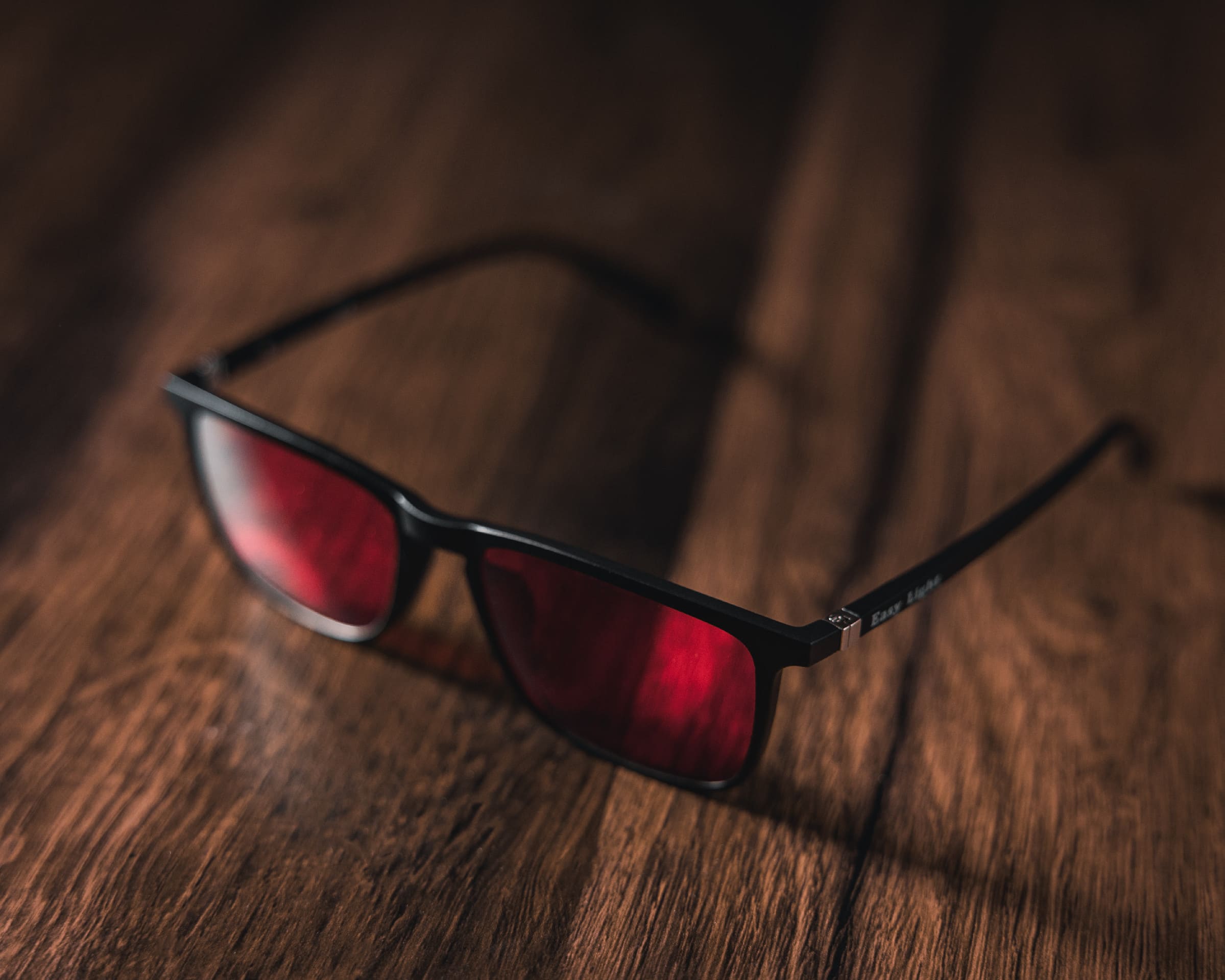
If you want a pair built specifically for night use, the Blue light blocking glasses Mitochondriak® use a red lens that blocks close to 100 percent of blue and green light, in a wraparound frame designed to stop light leaking in from the sides. It is one of the simplest changes you can make to defend your melatonin and your circadian rhythm.
Summary: what should you remember?
Choosing the best blue light blocking glasses for evening comes down to one principle: block as much blue and green light as possible in the last two to three hours before bed. This protects melatonin, the hormone that initiates sleep, and defends your circadian rhythm from the artificial light that dominates modern evenings. Lens colour is the deciding factor, and red lenses are the strongest choice for genuine night-time protection.
Remember that these glasses are a powerful pillar of good sleep hygiene, not a magic fix. They work best when combined with dimmer lighting, consistent timing and a calm wind-down routine. Put them on at a fixed hour, wear them for all artificial light, choose a wraparound frame for full coverage, and keep expectations honest about what light management can and cannot do. Used this way, a good pair of evening glasses is one of the cheapest and most effective upgrades you can make to your nights, protecting both your sleep tonight and your long-term rhythm.
Frequently asked questions
What is the best lens colour for blue light glasses in the evening?
Red lenses are the best choice for the evening. Unlike clear or amber lenses, red lenses block not only blue light but also much of the green spectrum, and green light is a second, frequently overlooked suppressor of melatonin. For the two to three hours before bed, a red lens that blocks close to 100 percent of blue and green light gives the strongest circadian protection.
How many hours before bed should I wear blue light blocking glasses?
Aim to put them on about two to three hours before your target bedtime. Melatonin release is gradual, so the earlier in the evening you block disruptive wavelengths, the more naturally your body winds down. A simple approach is to pick a fixed hour, such as 8 or 9 pm, and make putting on your glasses an automatic nightly habit.
Do blue light glasses for sleep actually work?
Yes, when they filter the right wavelengths strongly enough. Research reviewed by Leena Tähkämö and colleagues shows that reducing evening blue-enriched light helps preserve melatonin and the normal circadian phase. However, weak clear lenses that block only a small amount of blue light do very little, so effectiveness depends heavily on choosing a strong red or amber lens.
Are clear "computer glasses" good enough for the evening?
Generally no. Clear or slightly yellow computer glasses are designed for daytime screen comfort and often filter only 5 to 30 percent of blue light, with no green-light filtration. That is far too little to meaningfully protect your evening melatonin. For night use, you want dedicated amber or, ideally, red lenses built specifically for sleep protection.
Can children use blue light blocking glasses at night?
Yes, and the case for children can be even stronger, because young eyes are more sensitive to light and their developing body clocks shift easily. The Kids Blue light blocking glasses Mitochondriak® are sized and built for this purpose. As with adults, the glasses work best alongside dimmer evening lighting and a consistent, calm bedtime routine.
What frame style is best for evening blue light glasses?
A wraparound or wide-temple frame is best for the evening. These styles sit close to the face and block light sneaking in from the sides, whereas slim, narrow frames let peripheral light reach your retina and reduce the benefit. Good coverage matters as much as lens colour, so prioritise a frame designed to minimise light leakage around the edges.
Sources and references
- Lucas RJ, et al.. 2014. Melanopsin and the non-visual effects of light pubmed.ncbi.nlm.nih.gov
- Hatori M, et al.. 2017. The effects of blue light on the circadian system and eye physiology pubmed.ncbi.nlm.nih.gov
- Lawrenson JG, et al.. 2018. Blue light-filtering spectacle lenses: a systematic review pubmed.ncbi.nlm.nih.gov
- Tähkämö L, et al.. 2019. The impact of blue light on sleep and health pubmed.ncbi.nlm.nih.gov
- American Academy of Ophthalmology. 2021. American Academy of Ophthalmology Statement on Blue Light aao.org