.png)
Quality sleep is not a luxury. It is a biological process shaped by sleep stages, circadian rhythm and light. Once you understand how NREM, REM, melatonin and morning light work together, you can build an evening routine that supports deeper recovery, steadier energy and easier waking.
- How NREM and REM sleep stages are organized across the night.
- How the circadian rhythm works with sleep pressure to decide when you feel sleepy or alert.
- Why there is no single perfect target for deep sleep.
- How morning light, evening blue-rich light and dim red light affect melatonin and sleep timing.
- Which practical changes can improve sleep without turning your bedroom into a laboratory.
- What are sleep stages and circadian rhythm?
- How do NREM and REM sleep cycles work?
- How much deep sleep do you need?
- How does light affect melatonin and sleep?
- How can you improve sleep and circadian rhythm?
- When should sleep problems be professionally assessed?
- What should you remember?
- Frequently asked questions
What are sleep stages and circadian rhythm?
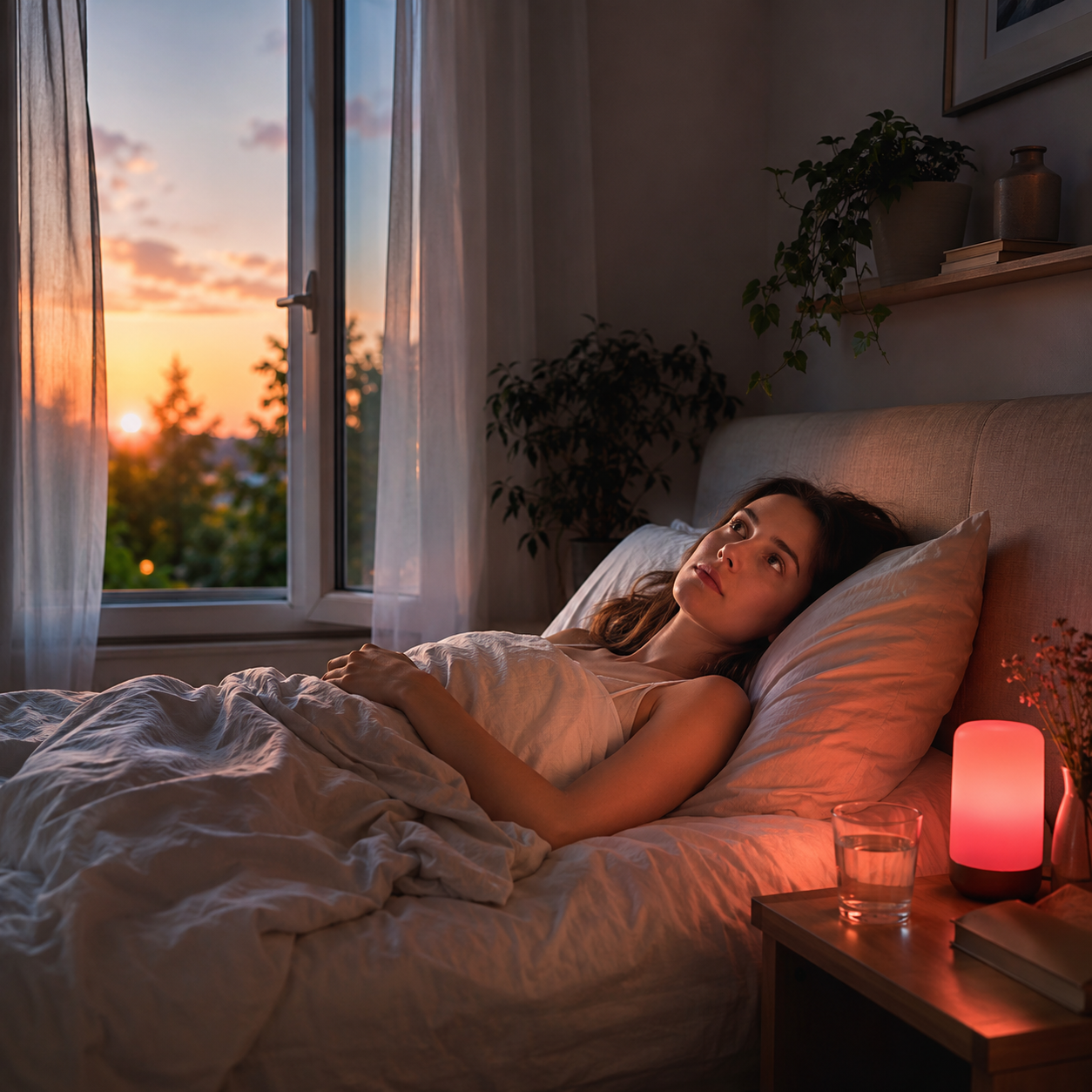
Sleep stages are recurring patterns of brain and body activity during sleep. Your circadian rhythm is a roughly 24-hour timing system that helps determine when sleep and wakefulness are biologically favored. They work together, but they are not the same mechanism.
Sleep is often described through a useful two-process model. One process is homeostatic sleep pressure, which builds the longer you stay awake and decreases while you sleep. The second is the circadian signal, which changes across the day and can promote alertness even after many hours awake. You sleep best when sufficient sleep pressure meets the right circadian window.
This explains why eight hours in bed do not always feel restorative. Sleep duration matters, but so do timing, continuity, light exposure and whether you complete enough of the cycles that contain both deep NREM sleep and REM sleep.
Sleep is not a passive shutdown. During the night, the brain changes how it processes information, the autonomic nervous system shifts, hormones follow timed patterns and tissues move through repair and maintenance processes. For a broader introduction to the body clock, read our guide to circadian rhythm and how to optimize it.
How do NREM and REM sleep cycles work?
A normal night contains repeated cycles of NREM and REM sleep. A cycle is often simplified to about 90 minutes, but real cycles vary between people and across the night. Most adults pass through roughly four to six cycles when sleep is long and uninterrupted enough.
NREM sleep is divided into three stages. N1 is the transition from wakefulness into sleep. N2 is stable light sleep and usually occupies the largest part of the night. N3 is slow-wave sleep, commonly called deep sleep. REM sleep has a more active brain pattern, vivid dreaming is common, and muscle tone is strongly reduced.
| Stage | What is happening | Typical role |
|---|---|---|
| N1 | Transition into sleep | Reduced awareness of the environment |
| N2 | Slower heart rate, lower body temperature, sleep spindles | Stable sleep and memory processing |
| N3 | High slow-wave activity and reduced responsiveness | Physical recovery and restorative functions |
| REM | Rapid eye movements, active brain, reduced muscle tone | Learning, emotional processing and memory integration |
Why does the first half of the night feel different from the second?
The first part of the night usually contains more N3 slow-wave sleep. REM periods become longer toward morning. Cutting the final two hours from your sleep therefore removes a disproportionate amount of late-night REM, even though the missing time may look small on a clock.
What controls the timing of sleep?
The central circadian pacemaker is the suprachiasmatic nucleus, or SCN, in the hypothalamus. It receives information about environmental light from the eyes and coordinates daily timing across the body. Clifford B. Saper and colleagues at Harvard Medical School described this network and its clinical relevance in a major neurobiology review. [R]
The SCN does not simply switch sleep on and off. It helps organize rhythms in melatonin, alertness, core body temperature and many other processes. Sleep pressure and circadian timing then interact with behavior, stress, food timing, activity and the sleeping environment.
How much deep sleep do you need?
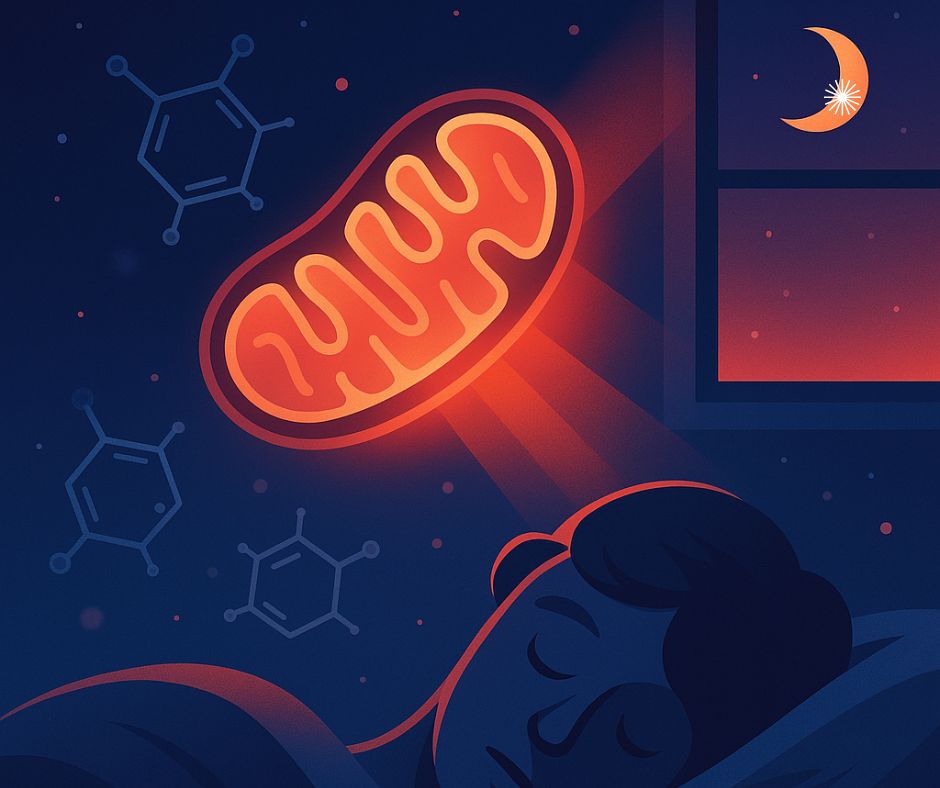
There is no universal number of minutes of deep sleep that every adult must reach. N3 sleep varies with age, genetics, recent sleep loss, exercise, illness and the measurement method. The better target is enough regular sleep combined with good daytime function.
Deep sleep is usually more abundant in younger people and declines across adulthood. A large meta-analysis by Maurice Ohayon and colleagues showed clear age-related changes in sleep architecture across the human lifespan. [R]
After sleep loss, the brain often protects slow-wave sleep and increases its intensity during recovery. That does not mean one long weekend sleep can completely reverse a chronically short schedule. Consistency gives the brain a better opportunity to organize the full sequence of NREM and REM periods night after night.
Should you trust the deep sleep score on a smartwatch?
Wearables infer sleep stages from movement, heart rate and related signals. Clinical sleep staging uses electroencephalography, eye movements and muscle activity. A wearable can reveal useful trends, but a single low deep sleep score is not a diagnosis and should not become a new source of anxiety.
How much total sleep matters?
The American Academy of Sleep Medicine and the Sleep Research Society recommend that adults obtain at least 7 hours of sleep regularly to support health. Many adults feel and function best within roughly 7 to 9 hours, although individual needs differ. [R]
How does light affect melatonin and sleep?
Light is the strongest environmental time cue for the human circadian system. Bright outdoor light during the biological morning helps anchor the clock to daytime. Bright blue-rich light in the evening can delay circadian timing, suppress melatonin and make the brain interpret night as an extension of day.
Anne Marie Chang, Daniel Aeschbach, Jeanne Duffy and Charles Czeisler showed that evening use of a light-emitting eReader delayed circadian timing, reduced evening melatonin and impaired next-morning alertness compared with reading a printed book. [R]
This does not mean every photon from a screen destroys sleep. The response depends on spectrum, intensity, duration, distance, timing and individual sensitivity. It does mean that a bright phone close to the eyes in a dark room sends a very different biological signal from a dim, warm evening environment.
Why is morning light so important?
Morning outdoor light provides a strong daytime signal and usually contains far more intensity than indoor lighting. It supports alertness during the day and helps set the timing of melatonin for the following evening. Glass and indoor distance reduce the strength of that signal, so going outside is generally more effective than standing beside a window.
For a deeper explanation, see our article on cortisol and morning light.
Is red light neutral for the circadian system?
Red light usually produces a weaker circadian response than blue-rich white light at practical evening intensities because melanopsin is less sensitive to longer wavelengths. Still, intensity matters. Very bright light of any color is not identical to darkness, so the best evening environment is both warm in spectrum and low in brightness.
That is why dim red lighting can be useful when you need to move around, read or care for a child after sunset. It reduces the need to switch on a bright white ceiling light. Learn more in our article on how evening blue light affects sleep.
How can you improve sleep and circadian rhythm?
The most effective strategy is not one supplement or device. It is a sequence of clear environmental signals: outdoor light and activity during the day, less artificial light after sunset, regular timing, darkness and enough time in bed.
Which habits have the highest practical value?
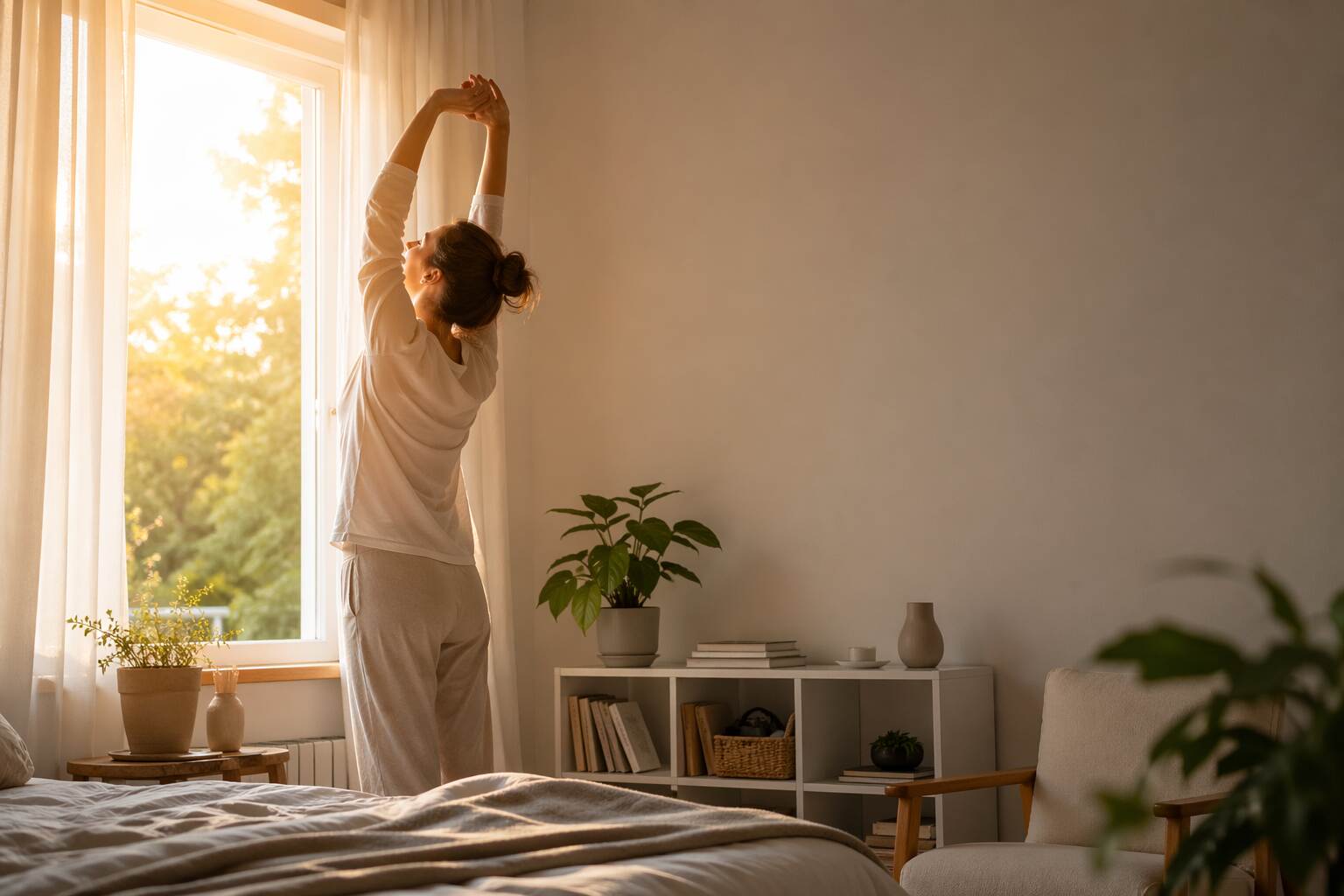
- Start with outdoor morning light: Spend time outside during the first 30 to 60 minutes after waking whenever possible. Do not stare at the sun. Simply let natural daylight reach your eyes while you walk, sit or begin the day.
- Keep a stable wake time: A consistent wake time anchors the rhythm more reliably than repeatedly changing bedtime and sleeping late to compensate.
- Move and eat mainly during daylight: Daytime movement, outdoor activity and earlier food timing reinforce the message that this is the active phase of the day.
- Dim the evening: Reduce ceiling lights and screen brightness one to two hours before bed. Night mode can help, but it does not replace lower brightness or a better light source.
- Protect darkness: Use blackout curtains, cover small LEDs and keep the bedroom quiet and comfortably cool.
- Respect caffeine and alcohol: Caffeine can remain active for hours, while alcohol may shorten sleep onset but fragments later sleep and alters REM organization.
- Create a repeatable closing ritual: Reading, quiet conversation, stretching or a warm shower can become a predictable signal that the active day is ending.
How can you use red light in the evening?
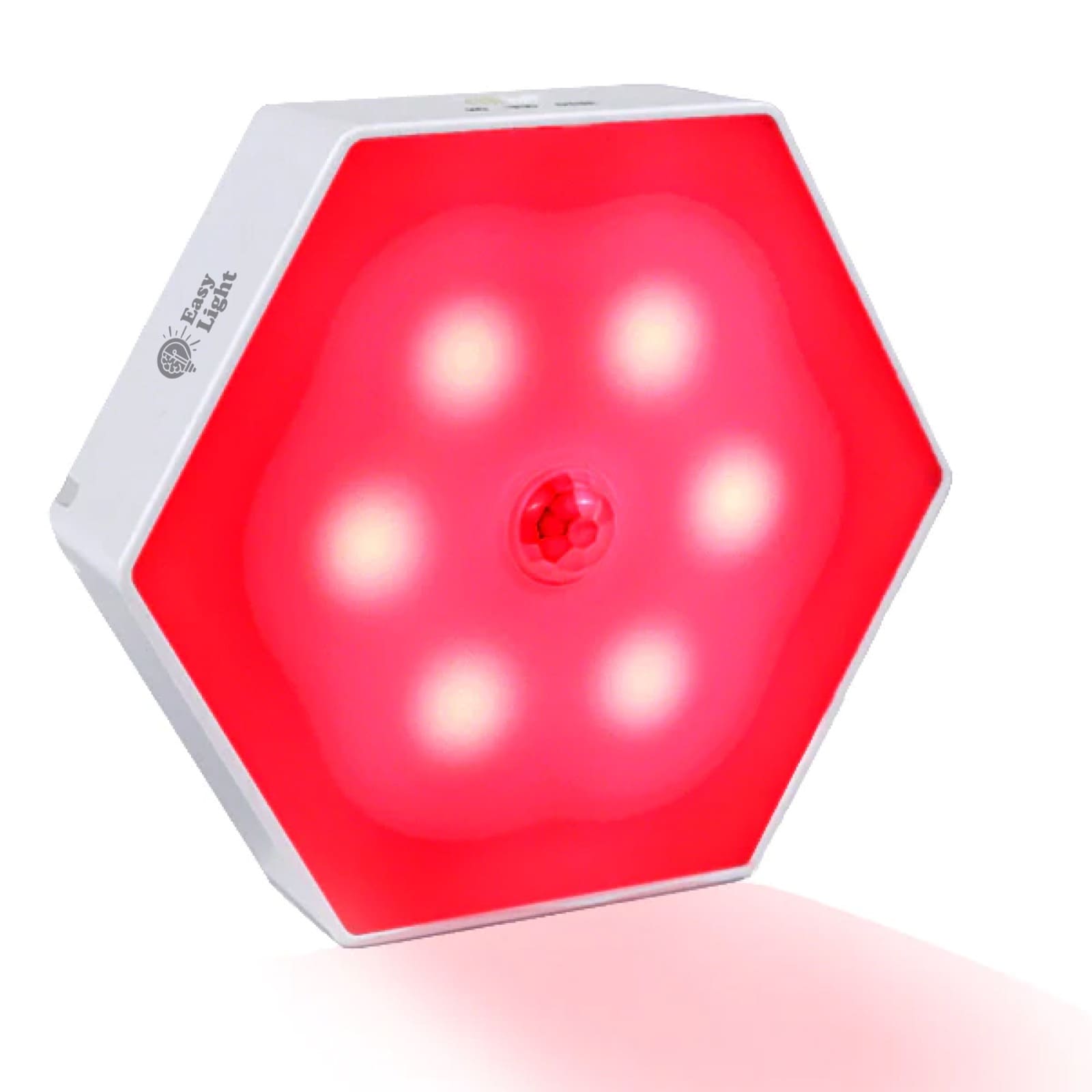
Replace bright blue-rich overhead lighting with dim red or warm light after sunset. For hallways, bedrooms or nighttime bathroom trips, the Red night light Mitochondriak® with motion sensor switches on only when movement is detected and avoids the sudden biological jolt of a bright white lamp.
What about red light therapy before bed?
Photobiomodulation and evening red lighting are not the same thing. A red therapy panel delivers much more light to tissue than a dim room lamp. One small study in Chinese female basketball players reported improved sleep-related outcomes and higher melatonin after red light exposure, but this specific population does not prove that every person should use a panel immediately before bed. [R]
Some people find a red and near-infrared session relaxing, while others feel more alert afterwards. Start earlier in the evening, observe your response and follow the instructions for the specific device. Our detailed guide explains the practical context of red light therapy before bed.
When should sleep problems be professionally assessed?
Sleep hygiene is useful for many people, but it cannot diagnose or treat every sleep disorder. Seek professional assessment when insomnia persists, daytime sleepiness is severe, breathing pauses or loud snoring occur, restless legs disturb sleep, or sleep problems affect safety, mood or daily function.
Frequent awakenings can have simple causes such as light, heat, alcohol, stress or late meals. They can also be linked to sleep apnea, chronic pain, reflux, hormonal changes, medication effects or mental health conditions. A clinician can investigate what an evening routine cannot.
Take extra care when using any bright light device if you have a diagnosed eye condition, a history of photosensitivity or take medication that increases light sensitivity. This article is for educational purposes and does not replace diagnosis, treatment or personalized medical care.
What should you remember?
Your sleep is built from repeated NREM and REM cycles, while the circadian system helps determine when those cycles can unfold most effectively. Deep sleep tends to dominate earlier in the night, REM becomes more prominent toward morning, and neither stage can be optimized by chasing one wearable score.
The most powerful daily lever is the contrast between day and night. Seek bright outdoor light in the morning, stay active during daylight, reduce blue-rich light after sunset and protect darkness in the bedroom. Red evening light can support that transition, while red light therapy remains an optional tool rather than a replacement for enough sleep.
Build an evening environment that protects your sleep
Better sleep begins before you get into bed. Explore blue light blocking glasses, red evening bulbs and motion-activated night lighting designed to reduce unnecessary blue-rich light after sunset.
Frequently asked questions
How many hours of sleep do adults need?
Most adults should regularly get at least 7 hours of sleep, and many function best within a range of about 7 to 9 hours. Individual needs vary with age, health, activity and recovery demands. Regular timing and daytime functioning matter more than chasing one perfect number.
How much deep sleep do you need each night?
There is no universal deep sleep quota. N3 sleep is usually a smaller portion of total sleep and naturally declines with age. The most useful goal is sufficient, regular sleep with good daytime energy, not forcing a wearable to display a specific percentage.
Why do I keep waking up during the night?
Brief awakenings between sleep cycles are normal. Longer or repeated awakenings may be linked to stress, alcohol, late meals, room temperature, light, noise, pain, breathing problems or an irregular circadian schedule. Persistent symptoms deserve medical assessment rather than another sleep hack.
Can red light help you sleep better?
Dim red light is generally more suitable in the evening than blue-rich white light because it usually produces a weaker circadian signal. It can help create a calmer, melatonin-friendly environment, but it is not a treatment for insomnia and should support, not replace, good sleep habits.
How does the circadian rhythm control sleep?
The circadian rhythm is an internal timing system coordinated by the suprachiasmatic nucleus in the brain. Light reaching the eyes helps set this clock each day. The clock then influences alertness, body temperature, hormone timing and when sleep is most likely to occur.
Can red light therapy before bed make you feel more awake?
It can for some people. Red and near-infrared light have less circadian impact than blue-rich light, but a bright or stimulating session may still feel activating. Move the session earlier in the evening when that happens and always follow the instructions for the specific device.
Are smartwatches accurate for measuring sleep stages?
Consumer wearables can be useful for tracking broad trends such as sleep timing and total sleep, but they do not measure brain activity like clinical polysomnography. Their estimates of REM and deep sleep should be treated as approximations, not diagnoses or daily performance scores.
Sources and references
- Saper CB, Scammell TE, Lu J. 2005. Hypothalamic regulation of sleep and circadian rhythms. PubMed
- Chang AM, Aeschbach D, Duffy JF, Czeisler CA. 2015. Evening use of light-emitting eReaders negatively affects sleep, circadian timing, and next-morning alertness. PNAS
- Watson NF et al. 2015. Recommended Amount of Sleep for a Healthy Adult: A Joint Consensus Statement of the American Academy of Sleep Medicine and Sleep Research Society. Sleep
- Ohayon MM et al. 2004. Meta-analysis of quantitative sleep parameters from childhood to old age in healthy individuals. PubMed
- Zhao J et al. 2012. Red light and the sleep quality and endurance performance of Chinese female basketball players. PubMed