.png)
Red light therapy before bed is one of the most effective biohacking tools for improving sleep quality without medication. Scientists have confirmed that properly applied red and infrared light supports the natural production of melatonin, calms the nervous system, and helps the body transition into recovery mode.
- Why red light does not suppress melatonin and how it differs from blue and white light
- Clinical study results: 12% improvement in sleep quality and a 75% rise in melatonin after 14 days of therapy
- A complete evening protocol, step by step, using an infrared panel and red bulbs
- Which wavelengths are most effective for sleep and why the combination matters
- Practical tips for optimising the light environment in your bedroom
- Why does red light improve sleep without suppressing melatonin?
- What do scientific studies say about red light and sleep?
- Which wavelengths are most effective for sleep?
- What does a complete red light therapy protocol before bed look like?
- How to optimise the light environment in your bedroom?
- What mistakes do people make most often with evening light therapy?
- Frequently asked questions
Why does red light improve sleep without suppressing melatonin?
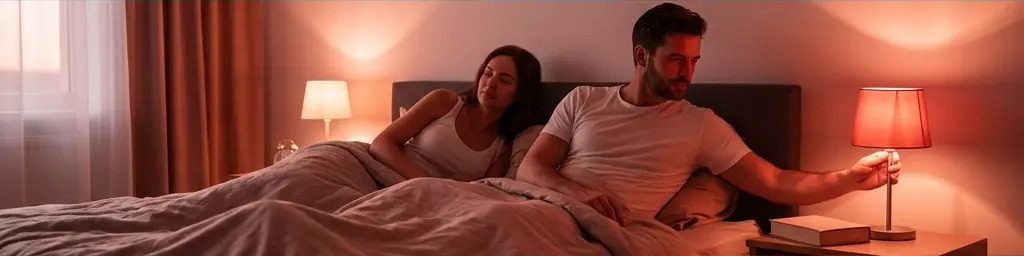
Red light improves sleep because, unlike blue and white light, it does not suppress melatonin production. Wavelengths above 600 nm do not activate melanopsin receptors in the retina, allowing the body to continue preparing for sleep while simultaneously stimulating mitochondria at the cellular level.
The key to understanding this mechanism lies in how our eyes and skin perceive light. Melanopsin, a photopigment in retinal ganglion cells, is most sensitive to wavelengths around 480 nm, which falls squarely in the blue light range. When melanopsin detects blue light in the evening, it sends a signal to the suprachiasmatic nucleus (SCN) in the brain, which then suppresses melatonin production in the pineal gland.
Red light with wavelengths of 630 nm and above is practically invisible to melanopsin. Research by Mariana Figueiro at Rensselaer Polytechnic Institute (2020) showed that red light at night promotes alertness and performance without negatively affecting melatonin secretion. [[R]] This is a fundamental difference compared to standard LED bulbs, which emit large amounts of the blue spectrum.
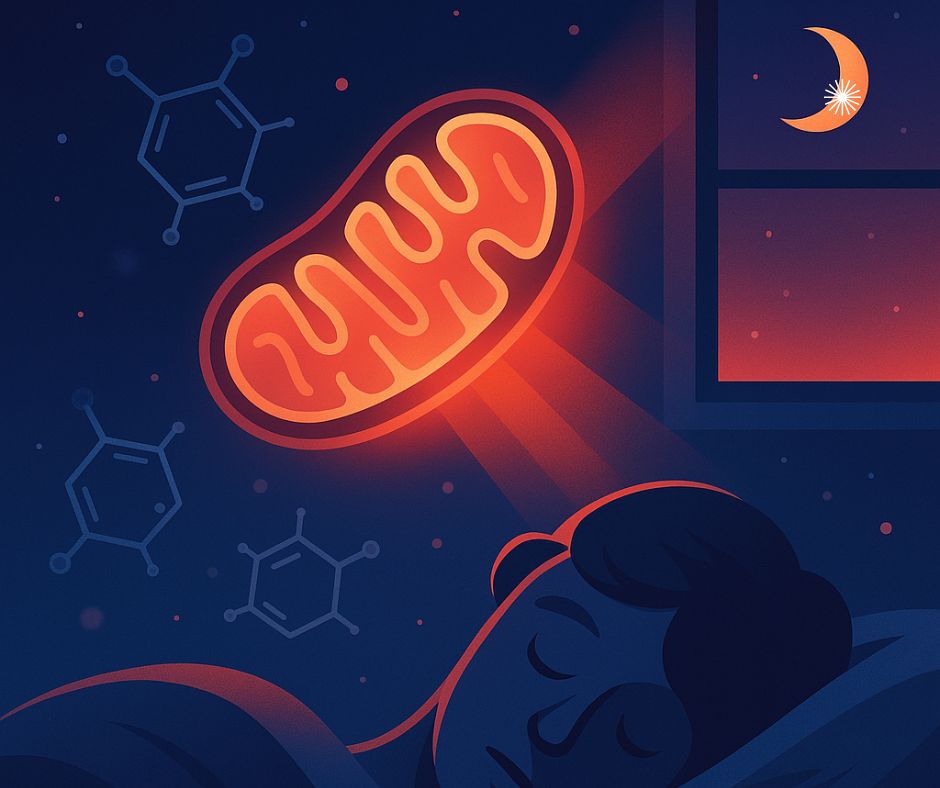
At the cellular level, red and infrared light acts on cytochrome C oxidase (complex IV of the mitochondrial electron transport chain). This releases nitric oxide, increases electron flow, and allows mitochondria to produce more ATP and metabolic water. Interestingly, mitochondria themselves produce their own subcellular melatonin, which acts as a powerful antioxidant directly within the cell. Research by Russel J. Reiter at UT Health San Antonio has pointed out that infrared light may stimulate this mitochondrial melatonin production as well.
What do scientific studies say about red light and sleep?
Scientific studies consistently confirm that red light therapy improves sleep quality, increases melatonin levels, and shortens the time needed to fall asleep. These results have been documented in both healthy individuals and people with sleep disorders.
One of the most cited studies is by Zhao and colleagues (2012), which tracked the effects of whole body red light irradiation on 20 Chinese female basketball players over 14 days. The group that underwent daily red light therapy achieved statistically significant improvements in sleep quality as measured by the Pittsburgh Sleep Quality Index (PSQI), and serum melatonin levels increased. [[R]]
A more recent study by Pan and colleagues (2023) examined the effect of red light on objective sleep parameters in both healthy adults and individuals with insomnia. The results showed that red light exposure before bed improved mood and reduced subjective perception of sleep difficulties. [[R]]
A groundbreaking randomised, placebo controlled study by Kennedy and colleagues (2023) tested the application of red and infrared light to the neck area before sleep. Participants who received active therapy reported significantly better relaxation, higher sleep quality, and improved next day functioning compared to placebo. [[R]]
In 2025, Liao and colleagues published results of a clinical study in which LED light therapy improved sleep quality in shift working nurses suffering from insomnia. In addition to improved sleep, symptoms of depression, anxiety, and stress also decreased. [[R]]
Which wavelengths are most effective for sleep?
For improving sleep, the most effective are red wavelengths in the 630 to 670 nm range (surface effects on skin, collagen, relaxation) and infrared wavelengths from 810 to 940 nm, which penetrate deeper into tissues and stimulate mitochondrial processes, including subcellular melatonin production.
Not all wavelengths work the same way. 630 nm is a surface red wavelength that primarily affects the skin and superficial blood vessels. 670 nm penetrates deeper and is one of the most studied wavelengths in the field of photobiomodulation. 760 nm is a deep red wavelength that targets cytochrome C oxidase in the inner mitochondrial membrane.
In the infrared spectrum, 810 nm is a key wavelength for transcranial photobiomodulation, meaning light penetration through the skull to the brain. This is particularly important for sleep because the brain controls the entire sleep cycle. Wavelengths of 830, 850, and 940 nm penetrate even deeper and influence metabolism at the organ level.
This exact combination of wavelengths is at the core of Mitochondriak® devices. The Mitochondriak® Maxi Upgraded features 7 wavelengths: 630, 670, 760, 810, 830, 850, and 940 nm, covering the full spectrum validated by research. The Kennedy et al. (2023) study used red and infrared light targeted at the neck, and the combination of these spectra led to improved relaxation and sleep quality. [[R]] Mitochondriak® devices include wavelengths precisely in this range.
What does a complete red light therapy protocol before bed look like?
A complete evening red light therapy protocol consists of three phases: blue light blocking, therapeutic exposure with an infrared panel, and optimising the light environment using red bulbs. The entire process takes roughly 90 to 120 minutes before going to bed.
Phase 1: Blocking blue light (90 to 120 minutes before bed)
The first step is to eliminate blue light from your environment. Put on Blue light blocking glasses Mitochondriak®, which block 100% of blue and green light up to 550 nm. Wear them throughout the entire evening protocol, whether you are watching television, working on a computer, or reading.
At the same time, switch the lighting in your home to red bulbs. The Evening red bulb Mitochondriak® E27 contains zero blue light, has no flicker, and fits a standard E27 socket. Simply screw it into a table lamp in your bedroom or living room.
Phase 2: Infrared panel therapy (30 to 60 minutes before bed)
The second phase is the therapeutic exposure to red and infrared light itself. For evening therapy, the Mitochondriak® Maxi Upgraded is ideal as it illuminates half the body at once.
Protocol based on recommendations from the Mitochondriak® website:
- Distance: Stand 30 to 60 cm from the panel.
- Duration: 10 to 20 minutes on the front of the body, optionally the same on the back.
- Mode: Turn on both RED and NIR simultaneously. For an even deeper sleep effect, use the preset "Sleep" programme on the touch display.
- Clothing: Ideally directly on bare skin so light can penetrate without a barrier.
- Eyes: Keep them closed or use the protective goggles included in the package.
Phase 3: Preparing for sleep (final 15 to 30 minutes)
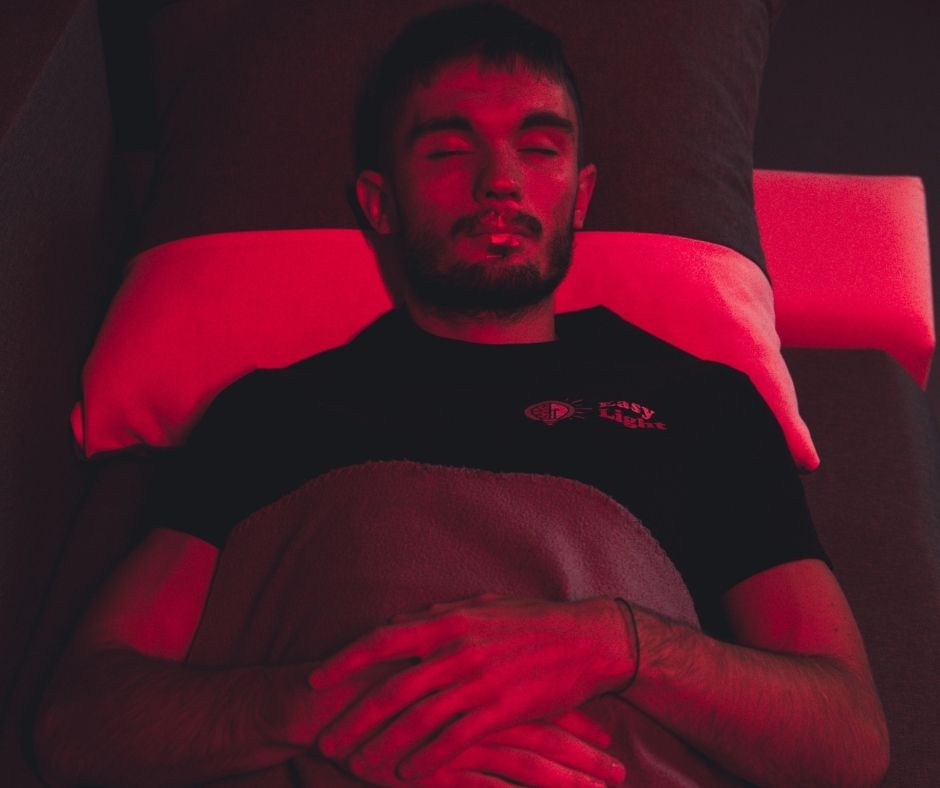
After the infrared panel session, reduce all light stimulation to a minimum. Leave only a red bulb on in the bedroom and prepare for sleep. Breathing through the nose during sleep increases nitric oxide levels and improves oxygenation throughout the night.
If you get up at night to use the bathroom or tend to a child, place a Red night light Mitochondriak® with motion sensor in the hallway. It turns on automatically when it detects movement and switches off after 20 seconds, without disrupting your circadian rhythm.
How to optimise the light environment in your bedroom?
Optimising the light environment in your bedroom is just as important as the therapy itself. An ideal bedroom should be illuminated exclusively by red light with no blue spectrum after dark, and should be completely dark during sleep.
Your body evolved over millions of years in an environment where the only light sources after sunset were fire and moonlight. Both of these sources contain minimal blue spectrum. Today's LED lighting, smartphone screens, and TV displays dramatically disrupt this natural pattern. Even brief exposure to blue light from a phone screen can suppress melatonin production.
Practical steps for optimising your bedroom:
- Replace your evening lighting with Mitochondriak® red bulbs (E27, E14, or GU10 depending on your fixtures).
- Cover LED indicator lights on electronics with Red foil Mitochondriak® blocking blue, green light.
- If you have a refrigerator or appliance with a bright white LED in your bedroom, apply the red film there too.
- Blackout your windows if street lighting enters your bedroom.
- Consider combining multiple products: Blue light blocking glasses Mitochondriak®, an Evening red bulb Mitochondriak® E27, and a Red night light Mitochondriak® with motion sensor for a complete setup.
If you want to learn more about how the circadian rhythm works and why light hygiene matters so much, read our detailed article on how our internal clock works.

What mistakes do people make most often with evening light therapy?
The most common mistake is using red light therapy too late, for example right before falling asleep, without first blocking blue light. Equally common is combining therapy with unprotected screen use, which cancels out the entire effect.
Here is an overview of the most frequent mistakes and how to avoid them:
1. Doing therapy with white lights on
Some people turn on the infrared panel but leave standard LED ceiling lights on in the room. This is like taking vitamins while eating junk food. Blue light from LED bulbs actively suppresses melatonin, negating the positive effect of red light. The solution is simple: switch to red bulbs.
2. Checking your phone during therapy
Even a few seconds of looking at a smartphone screen is enough for melanopsin in the retina to detect blue light and trigger melatonin suppression. If you need your phone during the evening routine, wear your red glasses and set the display brightness to its lowest setting.
3. Skipping morning light
Quality sleep starts in the morning. Morning exposure to bright, natural light (ideally sunlight) sets the circadian rhythm for the entire day. Matthew Walker of UC Berkeley, a sleep expert, emphasises that the contrast between bright morning light and darkness in the evening is crucial for sleep. If this topic interests you, read our article on cortisol and morning light.
4. Too short exposure
A therapy session lasting only 2 to 3 minutes is unlikely to have a measurable effect on sleep. Studies used exposure durations in the range of 10 to 30 minutes, with the optimum appearing to be around 10 to 20 minutes at the correct distance and intensity.
5. Incorrect distance from the panel
Standing too close (less than 15 cm) can cause skin overheating, while being too far away (over 100 cm) significantly reduces intensity. For evening therapy with a Mitochondriak® panel, the ideal distance is 30 to 60 cm.
Ready to start red light therapy for better sleep?
For a whole body evening protocol, the Mitochondriak® Maxi Upgraded with 7 wavelengths and a touch display featuring preset programmes is ideal. For a complete bedroom light environment, combine it with Blue light blocking glasses Mitochondriak®, an Evening red bulb Mitochondriak® E27, and a Red night light Mitochondriak® with motion sensor.
Frequently asked questions
Can I use the infrared panel before bed every day?
Yes, daily use of red light therapy before bed is safe and recommended. The Zhao et al. (2012) study used 14 consecutive days of daily therapy and recorded progressive improvements in sleep quality. [[R]] Red and infrared light does not contain a UV component, so there is no risk of skin damage even with regular use.
How many minutes before bed should I do the therapy?
Ideally 30 to 60 minutes before getting into bed. The body needs time to process the light signal and gradually increase melatonin production. The panel therapy itself takes 10 to 20 minutes, but the entire evening protocol including blue light blocking should start 90 to 120 minutes before sleep.
Does red light from the infrared panel disrupt my partner's sleep?
Red light from the infrared panel does not suppress melatonin, so even if your partner sees the red glow, their circadian rhythm will not be disrupted. Many couples do the therapy together. However, if you prefer complete darkness, the panel has a timer that automatically shuts it off after the set duration.
Is it better to use an infrared panel or a red bulb for sleep?
They serve different functions, so ideally you should combine both. An infrared panel (such as the Mitochondriak® Maxi Upgraded) delivers a therapeutic dose of red and infrared light that stimulates mitochondria and supports recovery. A red bulb (such as the Evening red bulb Mitochondriak® E27) serves as safe evening lighting that does not disrupt melatonin. Use the panel for therapy and the bulb for ambient lighting.
Does red light help with waking up during the night?
Yes, indirectly. Regular red light therapy improves overall sleep architecture, meaning fewer awakenings during the night. Furthermore, if the hallway lighting is red (instead of white) when you get up at night, your melatonin will not be suppressed and you will fall back asleep more easily. This is exactly what the night light with motion sensor is designed for.
Are there any contraindications for red light therapy before bed?
Red and infrared light therapy is generally considered very safe. Caution is advised for photosensitive conditions, when taking medications that increase light sensitivity, and for oncological conditions. If in doubt, consult your doctor.
Do I need synthetic melatonin if I use red light?
The Mitochondriak® philosophy focuses on supporting the body's natural melatonin production rather than synthetic supplementation. Your body can produce sufficient melatonin on its own when you create the right conditions: morning sunlight, blocking blue light in the evening, red light therapy, and a dark sleeping environment. Synthetic melatonin can be useful in the short term (for example, when overcoming jet lag), but long term use may reduce receptor sensitivity and impair the body's own production. Learn more about melatonin in our article about how melatonin is made by our mitochondria.
Sources and references
- Zhao J, et al. (2012). Red Light and the Sleep Quality and Endurance Performance of Chinese Female Basketball Players. J Athl Train. PMC3499892
- Pan R, et al. (2023). Effects of red light on sleep and mood in healthy subjects and individuals with insomnia. Sleep Biol Rhythms. PMC10484593
- Kennedy KER, et al. (2023). A randomized, sham-controlled trial of a novel near-infrared and red light device for sleep. J Clin Sleep Med. PMC10476031
- Figueiro MG, et al. (2020). Red light: A novel, non-pharmacological intervention to promote alertness. J Alzheimers Dis. PMC8059068
- Liao YH, et al. (2025). The Effectiveness of Low-Level LED Light Therapy for Sleep Quality in Shift-Work Nurses. Healthcare. PMC12187440