
.png)
Barefoot shoes in summer are not just a fashion trend. They are a way to give your feet back their natural function, strengthen the muscles of the legs and, thanks to the grounding effect, draw free electrons from contact with the earth that help reduce inflammation in the body.
- Why June and summer are the ideal time to switch to barefoot shoes
- What benefits grounding (earthing) brings and what science says about it
- How barefoot shoes strengthen the foot muscles and improve proprioception
- What makes the grounded barefoot shoes Mitochondriak® unique and why they combine barefoot with grounding
- How to start with barefoot shoes correctly so you do not hurt yourself
Why is summer the best time to switch to barefoot shoes?
Summer is ideal for switching to barefoot shoes for several reasons. Warm surfaces and the soft terrain of nature are gentler on the feet than frozen ground in winter, so adaptation is smoother and carries a lower risk of injury.
In summer we spend more time outdoors, on grass, sand and forest paths. These surfaces naturally stimulate the proprioceptors in the feet, which is exactly what barefoot shoes support. Soft terrain allows the foot muscles to gradually strengthen without excessive load.
The temperature factor matters too. In winter, feet tend to cramp inside tight shoes and thick socks. Summer barefoot shoes allow the toes to move freely thanks to a wider toe box, which supports a natural push off during walking. If you have never tried barefoot shoes, an adaptation that begins in June gives you 3 to 4 months of warm weather for a gradual transition. You can read more about why to choose grounded barefoot shoes in our separate article.
What is grounding and why is it important in summer?
Grounding, that is direct contact of the body with the surface of the earth, allows the body to receive free electrons from the ground that, according to research, act as natural antioxidants and help reduce chronic inflammation.
A review by Oschman, Chevalier and Sinatra (2015) in the Journal of Inflammation Research showed that grounding the body to the earth can positively influence inflammatory processes, immune responses and wound healing. The authors found that free electrons from the earth function as mobile antioxidants that neutralize reactive oxygen species at sites of inflammation. [R]
In summer, grounding is much easier because we walk barefoot on grass, sand or in water. But it is not always possible, for example in the city, on concrete or at work. This is exactly where grounded shoes come into play, allowing you to stay in contact with the earth even when you are wearing shoes. If you are interested in what grounding is and what benefits it brings, read our detailed guide as well.
According to a practical review by physician Laura Koniver (2023), published in the Biomedical Journal, grounding brings measurable health benefits including improved sleep, reduced pain and support of blood circulation. [R]
The link between grounding, light and energy production in cells is also fascinating. Grounding the body supports more efficient ATP production in the mitochondria, because free electrons from the earth contribute to the optimal functioning of the respiratory chain. You can read more about this mechanism in the article on grounding, light and more efficient ATP production.
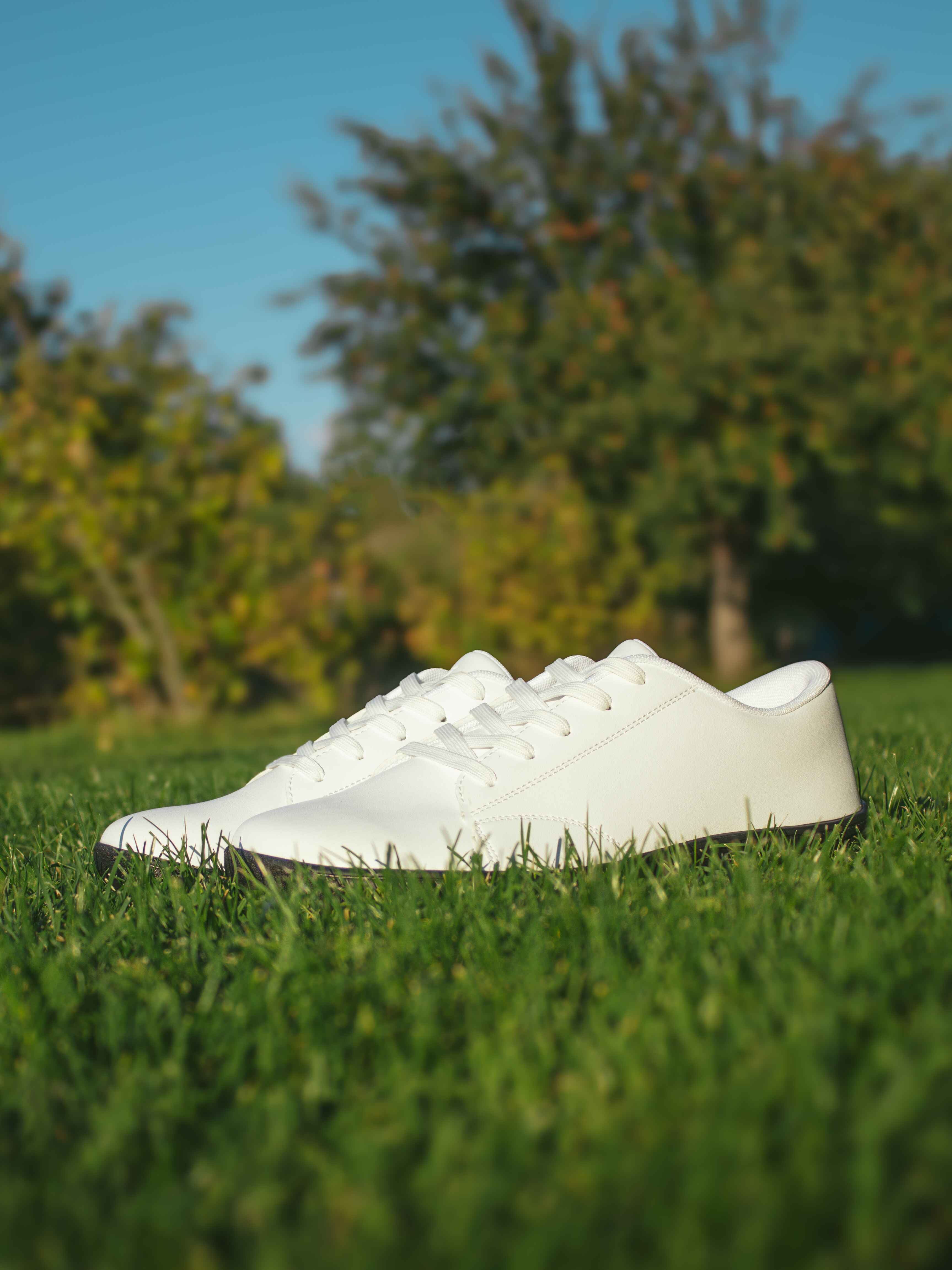
How do barefoot shoes strengthen the foot muscles?
Barefoot shoes activate the intrinsic muscles of the foot, that is the small muscles which gradually weaken in classic shoes with a thick sole and arch support. These muscles are key to stability, balance and a correct push off during walking.
A study by Franklin et al. (2018) confirmed that walking barefoot or in minimalist shoes leads to increased activation of the foot and ankle muscles compared with regular shoes. The researchers found that barefoot walking stimulates especially the calf muscles and the muscles responsible for ankle stabilization. [R]
Why does it matter? Stronger foot muscles mean better proprioception, that is the body's ability to sense its position in space. This shows up as better balance, a lower risk of falls and injuries and a generally more efficient gait.
A more recent study by Peters Dickie et al. (2025) confirmed that exercising the foot muscles in combination with minimalist shoes leads to biomechanical changes that support a healthier gait. [R]
If you are considering barefoot shoes but have never tried minimalist footwear before, we recommend reading our article New shoes? Try barefoot combined with the grounding effect, where you will find practical tips for complete beginners.
How do grounded barefoot shoes differ from regular ones?
Regular barefoot shoes offer a thinner sole, a wider toe box and more freedom for the toes. Grounded barefoot shoes Mitochondriak® go a step further, because they combine all the advantages of barefoot footwear with the function of the grounding effect.
The key difference is the graphene additive in the sole. Graphene is a conductive material that enables the transfer of free electrons from the surface of the earth into the body, even when you have shoes on your feet. The result is that you are grounded even during ordinary walking around the city, in the park or in nature.
Other features of Mitochondriak® shoes:
- Wider toe box for natural toe spread and a better push off
- Thin sole for maximum feedback from the terrain
- Elegant design suitable for everyday wear in the city and in nature
- Pigskin lining, microfiber upper, all day comfort
Classic barefoot shoes will strengthen your feet. Grounded barefoot shoes Mitochondriak® additionally allow you to draw the benefits of grounding throughout the entire day, regardless of whether you are walking on grass or on the pavement. If you are interested in how light, grounding and barefoot changed life for the better, read a personal experience on our blog.
How to start with barefoot shoes correctly in summer?
The transition to barefoot shoes should be gradual. The foot muscles, which spent years working inside the protective cage of classic shoes, need time to adapt. The best approach is to start slowly and give the body space.
Week 1 to 2: Wear barefoot shoes for 30 to 60 minutes per day on shorter walks over soft surfaces, such as grass or in the park. Wear regular shoes for the rest of the day.
Week 3 to 4: Gradually extend the wearing time to 2 to 3 hours per day. Add longer walks and a variety of surfaces.
From week 5: If your feet feel good, you can wear barefoot shoes all day long. Listen to your body. If you feel pain or unpleasant tension, lower the intensity.
Tip: Combine barefoot shoes with simple foot strengthening exercises. It is enough to pick up objects with your toes, stand on one leg or walk on uneven surfaces. These exercises support adaptation and speed up the strengthening of the muscles.
For better recovery, we also recommend complementing barefoot walking with a few minutes of barefoot walking on grass every day. Combined with grounded shoes you will then cover the entire day with contact to the earth. A practical guide on how to start with grounding, including the scientific benefits, can be found on our blog.
Try the grounded barefoot shoes Mitochondriak®
Thanks to the graphene additive in the sole, you are grounded even when you are not barefoot. The wider toe box and thin sole support your feet exactly the way nature intended. The ideal companion for summer, the city and nature.
Frequently asked questions
Can you walk on concrete in grounded barefoot shoes?
Yes. The graphene additive in the sole of the grounded barefoot shoes Mitochondriak® allows the transfer of electrons even when walking on concrete, asphalt and other conductive surfaces. The strongest grounding effect is achieved on wet grass, damp sand or earth.
Are barefoot shoes suitable for beginners who have never worn minimalist footwear?
Yes, but the transition should be gradual. Start with 30 to 60 minutes per day and gradually extend the wearing time. The feet need several weeks to adapt the muscles which were not working inside classic shoes.
How much do the grounded barefoot shoes Mitochondriak® cost?
The grounded barefoot shoes Mitochondriak® cost €175. Compared with regular barefoot shoes, you additionally gain the grounding effect thanks to the conductive graphene sole, which makes them an investment in the health of your feet and the whole body.
Can I run or do sports in barefoot shoes?
For recreational running on a soft surface, barefoot shoes are suitable, but only after sufficient adaptation. Running in barefoot shoes places higher demands on the foot and calf muscles. We recommend at least 4 to 6 weeks of regular walking in barefoot shoes before adding running.
What is the difference between grounding barefoot and in grounded shoes?
The principle is the same, the transfer of free electrons from the earth into the body. Walking barefoot is the most intense form of grounding, because the contact with the surface is direct. Grounded shoes Mitochondriak® offer a comparable effect thanks to the graphene additive, but with the advantage of foot protection and the option to wear them anywhere.
How long does adaptation to barefoot shoes take?
For most people, adaptation takes 4 to 8 weeks. It depends on the condition of the foot muscles, body weight and previous experience with minimalist footwear. The key is gradual progress and listening to the signals of your own body.
Sources and references
- Oschman, J. L., Chevalier, G., Brown, R. (2015). The effects of grounding (earthing) on inflammation, the immune response, wound healing, and prevention and treatment of chronic inflammatory and autoimmune diseases. Journal of Inflammation Research, 8, 83 to 96. [PubMed]
- Koniver, L. (2023). Practical applications of grounding to support health. Biomedical Journal, 46(1), 41 to 47. [PMC]
- Franklin, S. et al. (2018). Modifications in lower leg muscle activation when walking barefooted. Human Movement Science, 57, 161 to 169. [PubMed]
- Peters Dickie, J. L. et al. (2025). The effects of foot core exercises and minimalist footwear on foot strength and biomechanics. Journal of Foot and Ankle Research. [PubMed]
- Sinatra, S. T. et al. (2023). Grounding, the universal anti inflammatory remedy. Biomedical Journal, 46(1), 11 to 16. [ScienceDirect]