
.png)
Grounding (earthing) is one of the simplest ways to restore the connection between your body and the earth. May is perfect for it, as the ground is already warm enough, the days are long, and nature is full of energy. Learn how to start grounding outdoors the right way and why grounding barefoot shoes can help you stay earthed even during an everyday walk.
- What grounding is and why direct contact with the earth matters for your body
- Why May is the best month to start grounding outdoors
- What science backed benefits barefoot walking provides (cortisol, inflammation, sleep)
- How to start grounding safely and gradually, step by step
- How Grounded barefoot shoes Mitochondriak® bring grounding into your everyday life
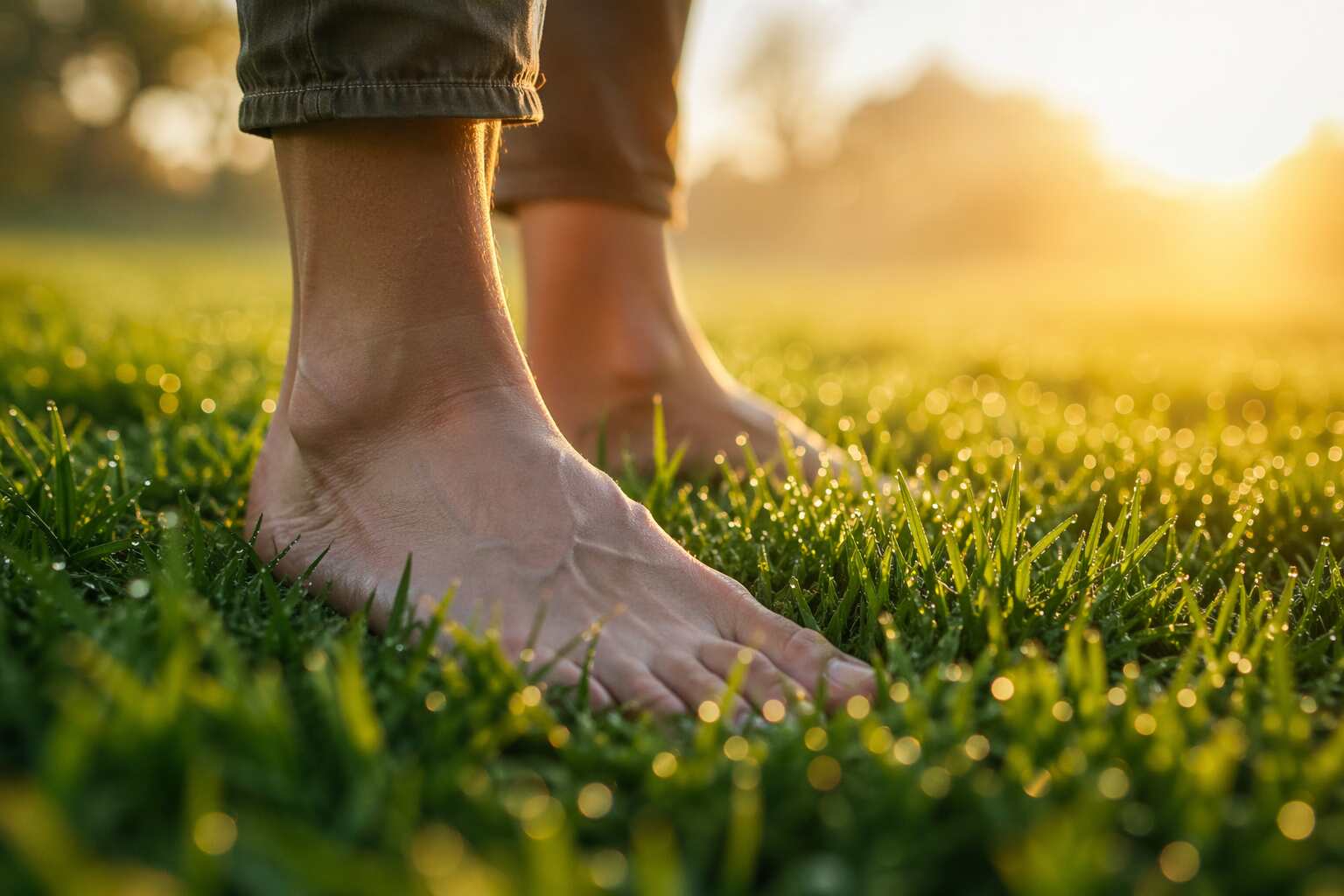
What is grounding and why does your body respond to it?
Grounding (also known as earthing) is direct conductive contact between the human body and the surface of the earth. When you touch grass, soil, or sand with bare skin, free electrons from the earth's surface flow into your body, where they act as natural antioxidants.
For thousands of generations, humans walked barefoot or in shoes with natural soles. Modern rubber and synthetic soles have broken this conductive contact. The result is a state that some researchers refer to as an "electron deficit." Our bodies have simply become isolated from one of the oldest natural resources they evolved with.
The earth's surface carries a slight negative electrical charge. When you connect with it, your body moves toward electrical equilibrium. This very principle underlies the benefits described by a growing body of scientific studies. Grounding is also one of the four pillars of the Mitochondriak® brand philosophy, because we believe that contact with the earth is just as important as proper light exposure.
Why is May the ideal time for grounding outdoors?
May offers the best conditions to begin grounding because the soil temperature rises above 10 to 15 °C, which is comfortable for bare feet, and the days are long enough to combine earthing with morning sunlight.
After winter, when we spent most of our time indoors on insulating floors, spring is the perfect reset. Both air and ground temperatures reach pleasant levels, parks and gardens are covered in soft fresh grass, and the morning sun is strong enough to support vitamin D production.
Combining grounding with morning sunlight is one of the most natural biohacks in existence. Morning light sets your circadian rhythm, while simultaneous contact with the earth adds a grounding effect on the autonomic nervous system. May is also a time when most people naturally return to outdoor activities, making it very easy to integrate grounding into a walk or morning routine.

What benefits of grounding has science confirmed?
Research suggests that regular grounding reduces inflammatory markers in the body, normalizes cortisol levels, improves sleep quality, and supports blood circulation. While this is a relatively young field of study, the results so far are consistent and compelling.
A review study by Oschman and colleagues from 2015, published in the Journal of Inflammation Research, analyzed the effects of grounding on inflammation, immune responses, and wound healing. The authors concluded that grounding has the potential to influence the prevention and treatment of chronic inflammatory diseases. [R]
Koniver published a review of practical grounding applications in 2022. The results showed that conductive connection with the earth deepens restorative sleep, normalizes the daily cortisol rhythm, and helps relax muscles. [R]
A 2024 study examined the effects of barefoot walking in urban forests on the inflammatory markers CRP and interferon gamma (IFNγ). Among participants with elevated baseline CRP, CRP in the barefoot group was statistically significantly lower after 20 sessions than at baseline, whereas no reduction in IFNγ was shown. [R]
The most recent study (Ye et al., 2025) brought interesting findings about the neuroprotective potential of grounding. The results suggest that grounding may improve cognitive function by reducing inflammation and supporting nerve cell protection. [R]
How to start grounding safely and correctly in spring?
Start simple: 5 to 10 minutes a day barefoot on grass, soil, or wet sand. Gradually extend to 20 to 30 minutes. Consistency matters more than the length of a single session.
Here are 5 practical steps for beginners:
- Choose a soft and clean surface. Garden grass, a park, or forest floor is ideal. Avoid asphalt, concrete, and areas with potential contamination (sprayed fields, industrial zones).
- Start in the morning. Combining morning sunlight with grounding is the most powerful synergistic pair for the circadian rhythm. Simply step onto the grass right after waking up for 5 to 10 minutes.
- Increase duration gradually. Week one: 5 to 10 minutes, week two: 15 minutes, week three: 20 to 30 minutes. Your feet will gradually adapt to different surfaces.
- Moisture boosts conductivity. Morning dew on the grass or damp soil after rain is the ideal surface, because water significantly improves electron transfer between the earth and your body.
- If it is cold outside or the surface is unsuitable, use grounding barefoot shoes. Grounded barefoot shoes Mitochondriak® with a graphene sole ensure conductive contact even when you cannot walk barefoot.
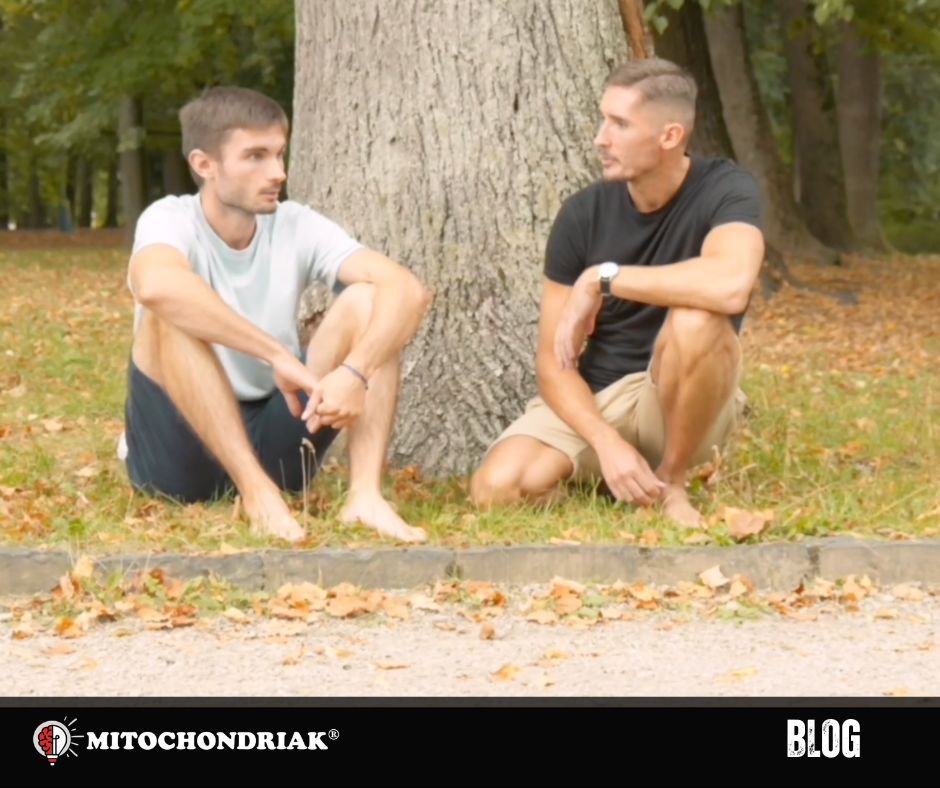
Grounded barefoot shoes Mitochondriak®, grounding even in shoes
If you want to bring grounding into your everyday life, even when you cannot walk barefoot, grounding shoes make it possible. Grounded barefoot shoes Mitochondriak® feature a graphene additive in the sole that ensures conductivity between your foot and the earth.
Unlike regular barefoot shoes, which offer "only" a wide shape and a thin sole (which is of course great for healthy walking), our shoes add another dimension: direct conductive connection with the earth. The combination of a graphene additive in the sole and an inner pigskin lining, whose properties are closest to human skin, creates a conductive chain from your foot to the ground.
Who are grounding barefoot shoes suitable for?
- For biohackers who want grounding throughout the entire day, not just during dedicated sessions on the grass.
- For people living in cities, where walking barefoot is not always possible, but sidewalks, parks, and stone surfaces allow earthing through a conductive sole.
- For anyone who wants elegant and comfortable shoes for everyday wear (to work, for a walk, for social occasions) while also enjoying the benefits of grounding.
The shoes are available in white and black, in sizes 36 to 46. The price is €175 and they are currently in stock. You can find more details in our article Why choose Grounded barefoot shoes Mitochondriak®.
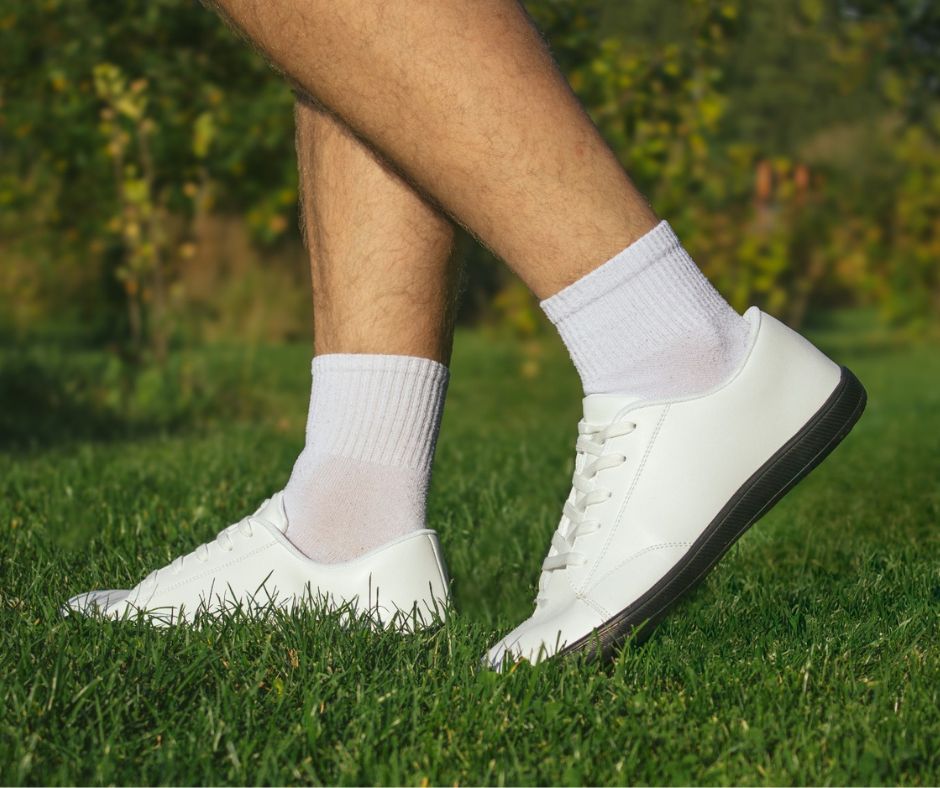
Bring grounding into every day
If grounding caught your attention and you want to experience the benefits of earthing during a regular walk, at work, or while shopping, take a look at our Grounded barefoot shoes Mitochondriak®. A graphene sole, a wide toe box, and an elegant design, all in one.
Frequently asked questions about grounding
What is grounding and how does it work?
Grounding (earthing) is direct conductive contact between the human body and the surface of the earth. When you touch grass, soil, or sand with bare skin, free electrons flow from the earth's surface into your body, acting as natural antioxidants and helping to reduce inflammation.
How many minutes a day do you need for grounding?
To start, 5 to 10 minutes a day is enough. You can gradually extend to 20 to 30 minutes. Research suggests that even short, regular earthing sessions have a positive impact on cortisol levels and sleep quality.
Does grounding work through shoes?
Not through regular shoes with a rubber sole, because rubber is an insulator. However, Grounded barefoot shoes Mitochondriak® contain a graphene additive in the sole, which allows conductive contact with the earth even while wearing shoes.
On what surface is grounding most effective?
The most effective surfaces are wet grass, soil, sand, and natural stone. Moisture amplifies conductivity. Asphalt and concrete are less conductive, but when the surface is wet, some conductivity is still present.
Can you practice grounding in winter?
Yes, but walking barefoot in winter is uncomfortable and in many places impossible. In that case, the best solution is grounding barefoot shoes with a conductive sole, or grounding through the hands (touching wet soil in the garden). In spring and summer, barefoot walking is the simplest and most effective form of grounding.
What is the difference between barefoot and grounding shoes?
Regular barefoot shoes offer a thin sole and a wide shape for natural walking, but they do not have conductive properties. Grounded barefoot shoes Mitochondriak® combine a barefoot design (wide toe box, thin sole) with a graphene conductive layer, thereby merging the advantages of barefoot walking with the benefits of grounding.
Sources and references
- Oschman, J. L. et al. (2015). The effects of grounding (earthing) on inflammation, the immune response, wound healing, and prevention and treatment of chronic inflammatory and autoimmune diseases. Journal of Inflammation Research. PMC4378297
- Koniver, L. (2022). Practical applications of grounding to support health. Biomedical Journal of Scientific & Technical Research. PMC10105020
- Kim, J. S. et al. (2024). Effects of Barefoot Walking in Urban Forests on CRP, IFNγ, and Serotonin Levels. Healthcare (Basel). PMC11640920
- Ye, M. et al. (2025). Anti-inflammatory effect of grounding mat on trimethyltin-induced neurotoxicity. PMC11898882