
.png)
Photobiomodulation is one of the most studied non-invasive methods for reducing inflammatory processes in the body. Red and infrared light can directly influence cellular signaling pathways that regulate inflammation, helping with pain, recovery, and chronic inflammatory conditions.
- Why inflammation is a defensive response that needs to be regulated, not suppressed
- How red and infrared light affects inflammatory pathways through cytochrome C oxidase and NF-kB
- Which wavelengths are most effective at reducing inflammation according to studies
- A practical guide on how to use an infrared panel to support an anti-inflammatory response
- What the latest studies say about photobiomodulation and inflammatory cytokines
What is inflammation and why do we want to regulate it?
Inflammation is the body's natural defensive response to tissue damage, infection, or stress. The immune system sends inflammatory cytokines (TNF-α, IL-1β, IL-6) to the site of injury, activating repair and eliminating pathogens. This acute inflammation is beneficial and essential for survival.
The problem arises when the inflammatory response lasts too long or becomes activated without a real cause. Chronic low-grade inflammation has been linked in research to fatigue, joint pain, slower recovery, muscle soreness, and other difficulties. The goal is not to suppress inflammation entirely but to help the body restore its inflammatory response to balance.
This is where photobiomodulation comes in, meaning therapy with red and near-infrared light. Unlike medications, it does not suppress inflammation broadly but instead modulates signaling pathways, allowing the body to distinguish more effectively between necessary acute inflammation and unwanted chronic inflammation [R].
How does photobiomodulation reduce inflammation at the cellular level?
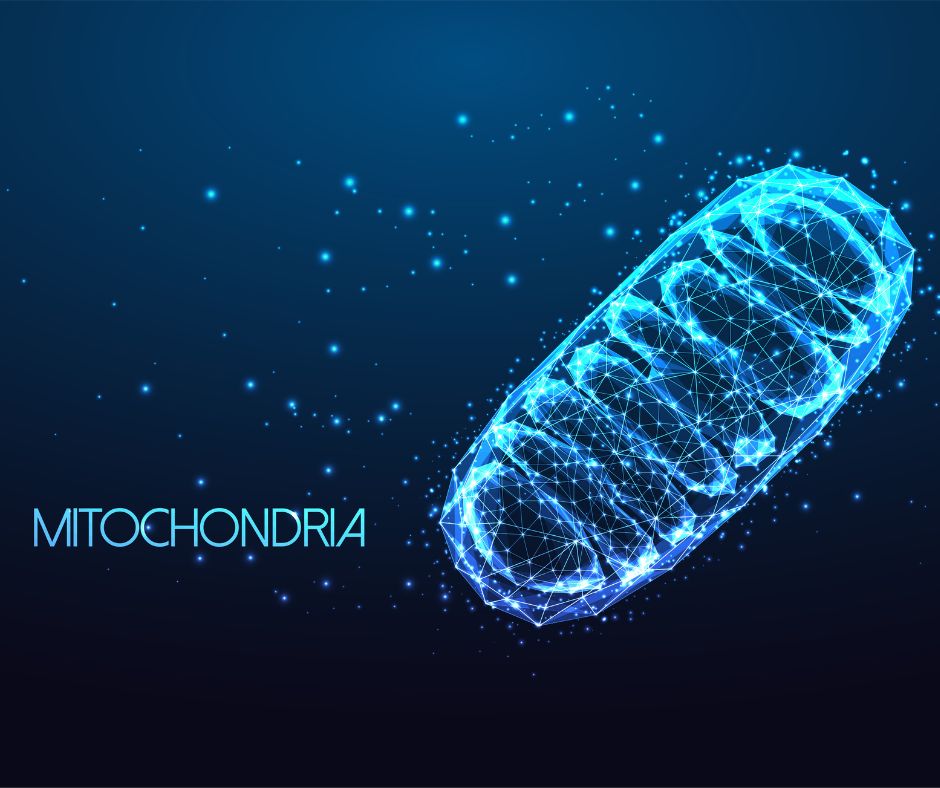
Photobiomodulation reduces inflammation through multiple mechanisms that begin in the mitochondria. Red and near-infrared light is absorbed by the enzyme cytochrome C oxidase (CCO), the fourth complex of the electron transport chain. After photon absorption, nitric oxide (NO) is released from CCO, restoring normal electron flow and increasing ATP production [R].
According to a review by Michael Hamblin from Massachusetts General Hospital (2017), photobiomodulation has a dual effect on the transcription factor NF-kB. In healthy cells, it activates NF-kB and strengthens immune readiness. In cells affected by oxidative stress and inflammation, it suppresses NF-kB, thereby reducing the production of pro-inflammatory cytokines [R].
This dual effect is crucial. Light does not act like a conventional anti-inflammatory drug that suppresses everything. Instead, it helps cells return to balance. A study published in Frontiers in Neuroscience (Shamloo et al., 2023) confirmed that pretreatment with red and near-infrared light reduced levels of pro-inflammatory cytokines and increased expression of the anti-inflammatory IL-10 at both systemic and local levels [R].
Another mechanism is the reduction of reactive oxygen species (ROS) in damaged cells. While photobiomodulation slightly increases ROS in healthy cells (serving as a repair signal), in oxidatively stressed cells it reduces ROS and activates antioxidant defense systems [R].
Which wavelengths are most effective against inflammation?
The most effective wavelengths for reducing inflammation fall within the range of 630 to 850 nm. Red light (630 to 670 nm) primarily acts on superficial tissues, skin, and muscles just beneath the surface. Near-infrared light (810 to 850 nm) penetrates deeper, reaching several centimeters into muscles, joints, and internal organs.
A review by Zhang et al. (2023) published in the International Journal of Molecular Sciences found that wavelengths in the 810 to 850 nm range are particularly effective for arthritis, as they reduce the production of pro-inflammatory cytokines and increase levels of anti-inflammatory mediators directly in joint tissue [R].
A study by Mattoso-Câmara et al. (2025) compared the effects of laser light at wavelengths of 532 nm (green) and 670 nm (red) on an inflammatory model. Both wavelengths reduced inflammation, but red light showed a significantly stronger analgesic effect [R].
The latest study by Ponnusamy et al. (2026) showed that photobiomodulation activates coordinated signaling pathways that alleviate inflammation across a broad spectrum of injuries and pathogenic patterns [R].
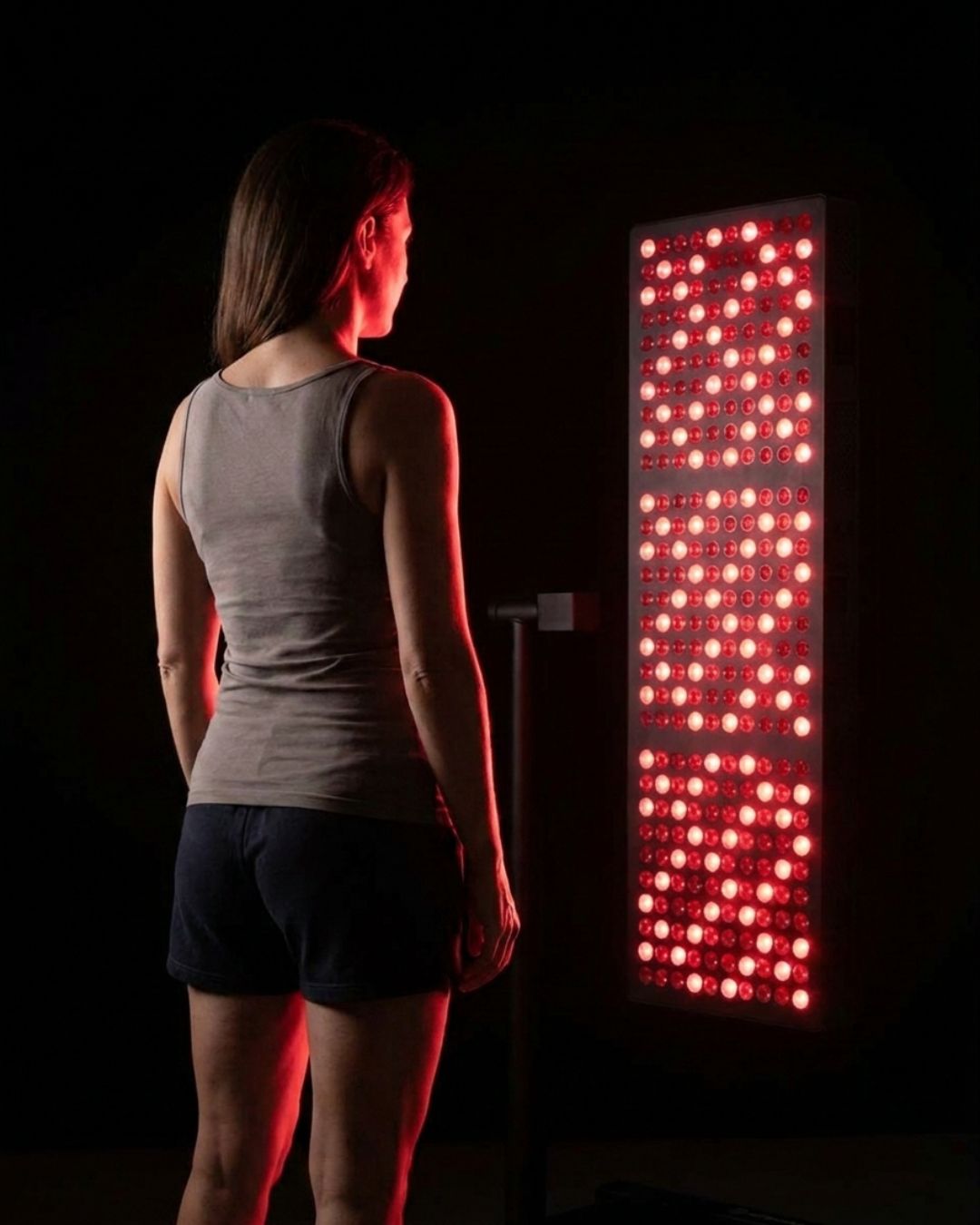
Mitochondriak® infrared panels combine wavelengths of 630, 670, 810, 830, 850, and 940 nm, covering the spectrum from superficial to deep-tissue action. This combination makes it possible to target different types of tissue in a single session.
How to use red light to reduce inflammation: a practical guide
Reducing inflammatory processes with photobiomodulation requires following just a few simple guidelines. The following protocol is based on parameters used in clinical studies and recommendations for home devices.
1. Choose the right distance
With a large panel (for example, the Mitochondriak® Maxi Upgraded), stand 15 to 30 cm from the surface of the device. The closer you stand, the higher the energy input (irradiance) delivered to the tissue.
2. Set the session duration
The optimal time for an anti-inflammatory effect is 10 to 20 minutes per area. For localized inflammation (knee, shoulder), 10 minutes is sufficient. For broader coverage across multiple areas, 15 to 20 minutes is recommended.
3. Target the area of inflammation directly
Red light acts locally. If you are dealing with muscle soreness after training, aim the panel at the specific muscle group. For joint problems, point the panel directly at the joint.
4. Stay consistent
The anti-inflammatory effect is not a one-time event. Studies show the best results with 3 to 5 sessions per week over a minimum of 4 weeks. Hamblin (2017) notes that the cumulative effect of sessions is critical for chronic inflammation [R].
5. Combine with other strategies
Photobiomodulation works best as part of a comprehensive approach. Combining it with movement, quality sleep, proper nutrition, and grounding strengthens the anti-inflammatory effect. Devices such as the Mitochondriak® mini are practical for localized therapy, for example while traveling.
Experience the anti-inflammatory power of photobiomodulation for yourself
Mitochondriak® infrared panels combine 7 wavelengths (630, 670, 760, 810, 830, 850, and 940 nm) for both superficial and deep-tissue action on inflammation, pain, and recovery.
Frequently asked questions
How quickly can photobiomodulation reduce inflammation?
Acute inflammation after an injury or training session can improve after the first session, because light immediately affects ROS levels and NF-kB activity in cells. For chronic inflammation, regular repetition is necessary. Most studies recorded measurable reductions in inflammatory markers after 2 to 4 weeks of consistent use [R].
Is photobiomodulation safe for inflammation?
Yes, photobiomodulation is considered a safe, non-invasive method. Hamblin's review (2017), cited over 1,500 times, confirms that when the correct parameters are used (wavelength, dose, time), photobiomodulation has no serious side effects. The light does not generate heat, so it does not damage tissue [R].
What is the difference between red and near-infrared light for inflammation?
Red light (630 to 670 nm) penetrates to a depth of 1 to 2 cm and acts on skin, subcutaneous tissue, and superficial muscles. Near-infrared light (810 to 940 nm) penetrates 3 to 5 cm and reaches deeper structures such as joints, bones, and internal organs. For the best anti-inflammatory effect, a combination of both bands is ideal [R].
How many sessions per week are ideal for reducing inflammation?
The optimal frequency is 3 to 5 sessions per week. For acute inflammation (for example, after an injury), it is advisable to start with daily sessions. For chronic conditions, 3 to 4 sessions are sufficient. Each session should last 10 to 20 minutes per area.
Can photobiomodulation help with autoimmune inflammation?
Preliminary studies suggest that photobiomodulation modulates the immune response and may also help with inflammation associated with autoimmune conditions. Zhang et al. (2023) documented positive results in patients with arthritis [R]. However, it is not a substitute for medical treatment but rather a complementary method.
Does skin color affect the effectiveness of photobiomodulation for inflammation?
Darker skin absorbs more light in the superficial layers, which slightly reduces penetration into deeper tissues. In practice, this means that individuals with darker skin may need slightly longer sessions (by 2 to 5 minutes) or a shorter distance from the panel to achieve the same effect.
References
- Hamblin, M.R., 2017. Mechanisms and applications of the anti-inflammatory effects of photobiomodulation. AIMS Biophysics, 4(3), 337–361
- de Freitas, L.F. & Hamblin, M.R., 2016. Proposed Mechanisms of Photobiomodulation or Low-Level Light Therapy. IEEE J Sel Top Quantum Electron, 22(3)
- Zhang, R. et al., 2023. The Mechanisms and Efficacy of Photobiomodulation Therapy for Arthritis. Int J Mol Sci, 24(18), 14293
- Shamloo, S. et al., 2023. The anti-inflammatory effects of photobiomodulation are mediated by cytokines. Front Neurosci, 17, 1150156
- Ponnusamy, S. et al., 2026. Photobiomodulation Activates Coordinated Signaling Pathways. Cells, 15(1), 88
- Mattoso-Câmara, A.R. et al., 2025. Targeting pain and inflammation: A comparative study of PBM. J Biophotonics