
.png)
Every time your muscles recover after a hard workout, or a wound closes a little faster than expected, your mitochondria are doing the heavy lifting. Photobiomodulation (PBM) is the science of nudging those tiny cellular engines with specific wavelengths of red and near-infrared light to help them make more energy. In this guide, we explain exactly how it works at a cellular level, without the hype.
- What photobiomodulation actually is and how it differs from vague "red light therapy" marketing claims.
- How red and near-infrared photons reach an enzyme called cytochrome c oxidase and boost ATP production.
- The role of nitric oxide, reactive oxygen species and redox signalling in your cells' response to light.
- What benefits are realistically supported by research, and where the limits are.
- How to use PBM safely at home, including who should be cautious.
- What is photobiomodulation and why does it matter?
- How does photobiomodulation work according to research?
- What benefits and limits can you realistically expect?
- How do you use photobiomodulation safely in practice?
- What should you watch out for and who should be careful?
- Summary: what should you remember?
- Frequently asked questions
What is photobiomodulation and why does it matter?
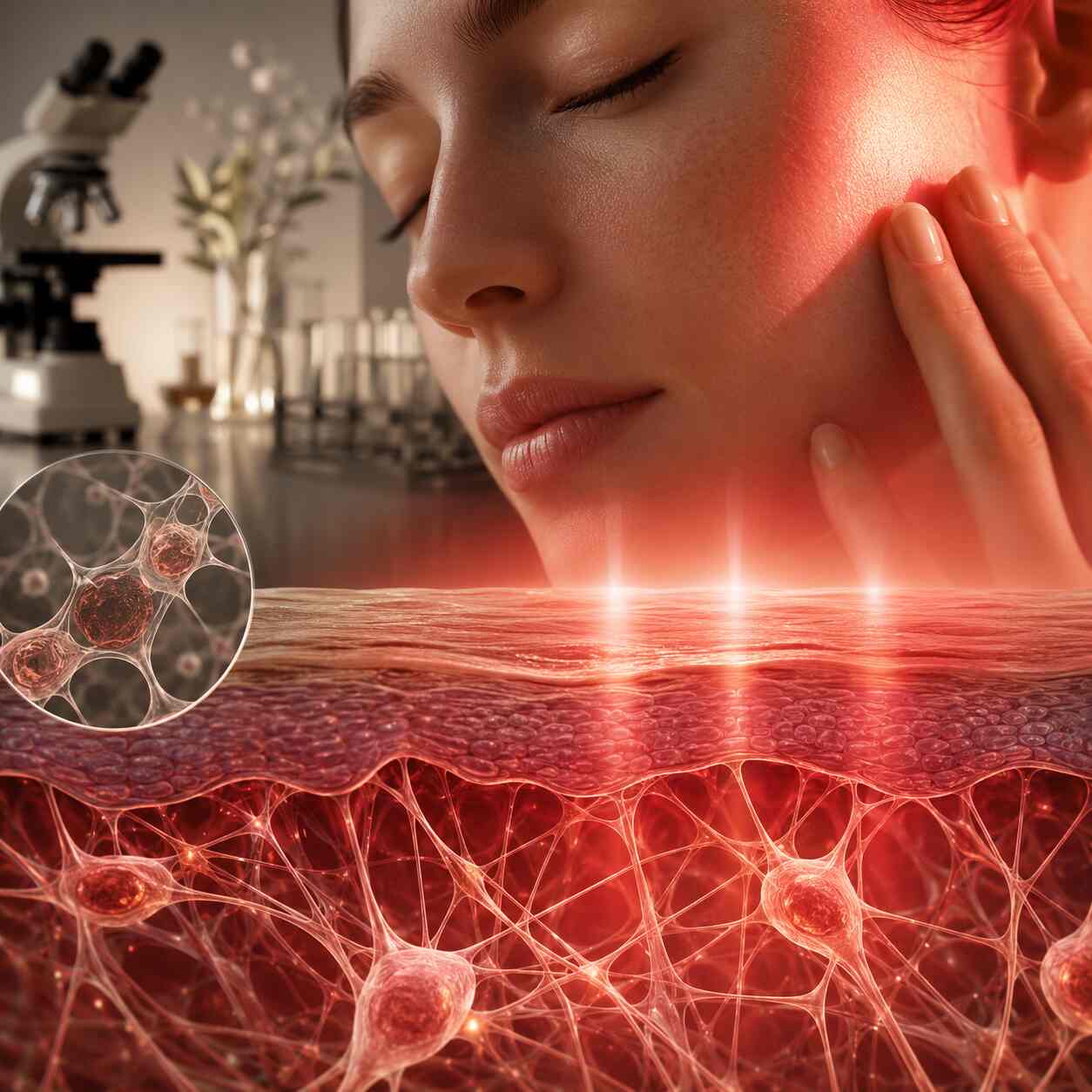
Photobiomodulation (PBM) is the use of low levels of red and near-infrared light to trigger beneficial biological changes inside cells, without generating meaningful heat. The term literally means "using light (photo) to change (modulation) biology (bio)". It matters because it works at the level of your mitochondria, the organelles that power almost everything your body does.
For decades, this field was known as low-level laser therapy (LLLT), but the name was misleading. The effect does not require a laser at all, and modern LED panels deliver the same wavelengths just as effectively. In 2015, researchers formalised "photobiomodulation" as the umbrella term to describe any non-thermal light therapy that produces a photochemical, rather than a photothermal, response.
This distinction is the whole point. Unlike a heat lamp that simply warms tissue, PBM delivers photons that are absorbed by specific molecules in your cells and converted into a signal. That signal tells the cell to make more energy, calm inflammation and repair itself. As reviewed by researcher Praveen R. Arany, this photochemical trigger is what separates genuine PBM from generic "warmth" or gimmicky gadgets [R].
You will often see PBM used interchangeably with "red light therapy". They overlap heavily, but PBM is the more precise, scientific term for the underlying mechanism. If you want a full breakdown of the terminology, we cover it in our guide on the difference between photobiomodulation and red light therapy. For the rest of this article, we will focus on what is actually happening inside your cells when the light hits them.
How does photobiomodulation work according to research?
According to research, photobiomodulation works because red and near-infrared photons are absorbed by an enzyme called cytochrome c oxidase (CCO), located in the mitochondria. This absorption kick-starts the cell's energy factory, increases ATP production and sets off a cascade of signalling that helps the cell recover and function better. It is a chain reaction that begins with a single photon.
The first step: light hits cytochrome c oxidase
The primary target, or photoacceptor, for red and NIR light is cytochrome c oxidase (CCO), the fourth complex in the mitochondrial respiratory chain. This enzyme has copper and iron centres that strongly absorb light in the 630 to 850 nm range. When photons are absorbed, one leading hypothesis is that they dislodge nitric oxide (NO) that was blocking the enzyme, essentially freeing up the engine to run properly again. If you want the deep dive on this specific enzyme, we have a dedicated glossary entry on cytochrome c oxidase.
This mechanism was mapped out extensively by the pioneering biophysicist Tiina Karu at the Russian Academy of Sciences, whose work established CCO as the key molecular switch behind the effect [R].
The result: more cellular energy (ATP)
Once CCO is activated and the inhibitory nitric oxide is released, the electron transport chain speeds up. The mitochondria pump more protons, which increases the electrochemical gradient used to synthesise adenosine triphosphate (ATP), your body's universal energy currency. In simple terms: your cells make more fuel. A cell with more available energy is better equipped to perform its job, whether that is contracting a muscle, producing collagen or clearing metabolic waste.
The signal: redox signalling and nitric oxide
The effect goes beyond raw energy. The released nitric oxide is a powerful signalling molecule that widens blood vessels (vasodilation), improving local circulation and oxygen delivery. At the same time, PBM causes a brief, controlled burst of reactive oxygen species (ROS). Rather than causing damage, these low-dose ROS act as messengers in a process called redox signalling, activating protective genes and pathways. As detailed in the comprehensive review by Michael R. Hamblin of Harvard Medical School, this is precisely how PBM produces its well-documented anti-inflammatory effects [R]. This cascade of energy plus signalling is the biological basis for everything from faster skin repair to reduced inflammation.
What benefits and limits can you realistically expect?
Realistically, photobiomodulation has the strongest research support for tissue repair, reduced inflammation, muscle recovery and skin health. Because it works by improving cellular energy, its benefits appear wherever cells are working hard to heal or regenerate. However, it is not a cure-all, and honest expectations matter more than marketing promises. The effect is real but gradual, and results depend heavily on dose and consistency.
On the well-supported side, PBM has been shown to accelerate wound healing, ease chronic and acute inflammation, and improve outcomes in musculoskeletal conditions. Athletes use it to reduce muscle soreness and support recovery, while dermatological research points to increased collagen production and better skin tone. These are not fringe claims; they are backed by decades of peer-reviewed studies summarised in reviews by Michael R. Hamblin [R].
Where the effect is more modest
Emerging areas such as brain function, mood and hair growth show genuine promise, but the evidence is younger and more variable. You may see meaningful improvements, or you may see very little, depending on the condition, the device and your own biology. It is fair to describe these applications as promising but not yet definitive.
The biphasic dose response: more is not better
One crucial limit is the biphasic dose response, often summarised by the Arndt-Schulz law. A low or moderate dose of light stimulates cells, but an excessive dose can suppress the very effect you want. This is well documented in the PBM literature reviewed by Praveen R. Arany [R]. In practice, this means longer sessions and standing closer are not automatically more effective. Respecting sensible dosing is the difference between a therapy that helps and one that does nothing.
How do you use photobiomodulation safely in practice?
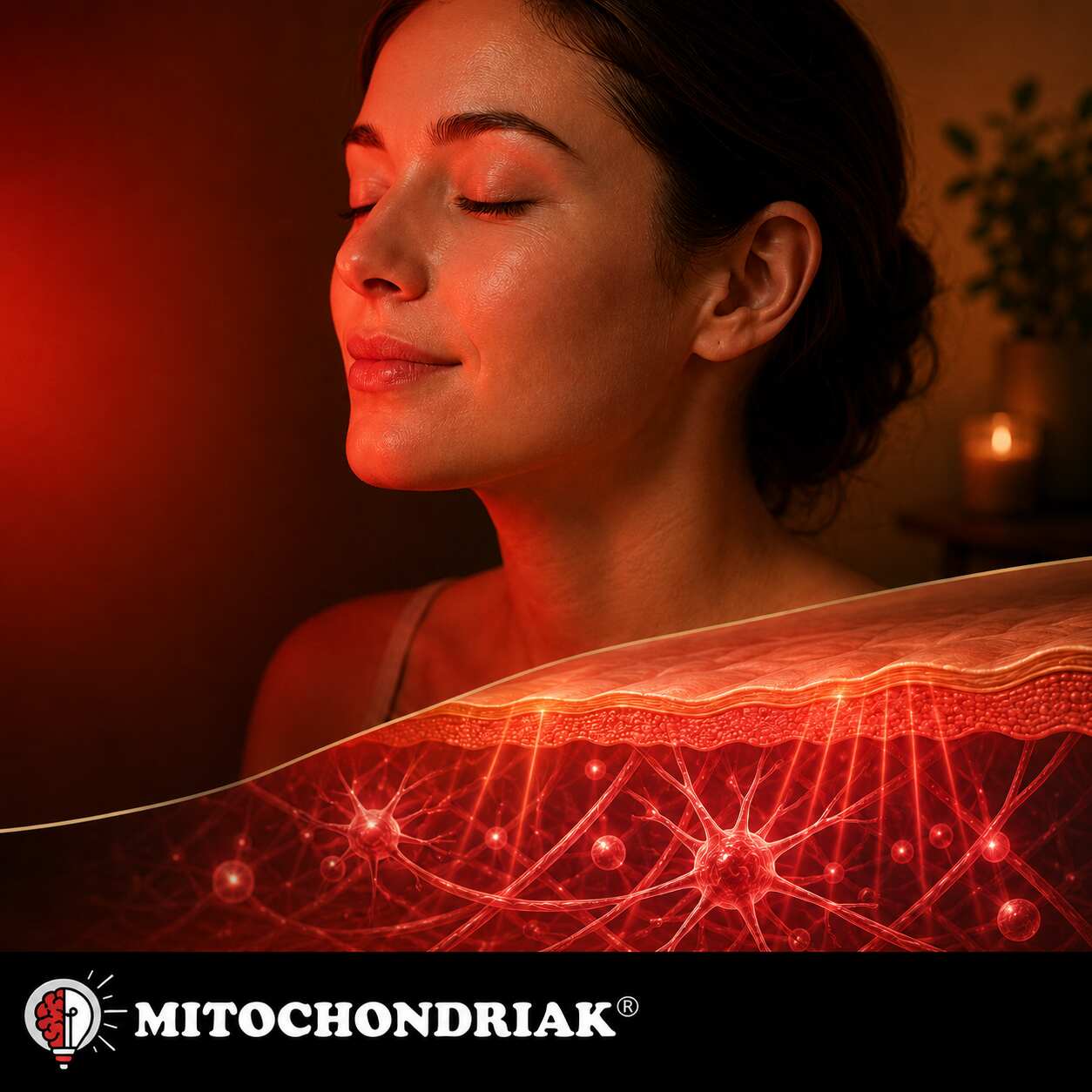
In practice, safe photobiomodulation comes down to three variables: the right wavelengths, a sensible distance and consistent short sessions. Most home protocols involve exposing the target area to a red and near-infrared panel for a few minutes, several times per week. The goal is regular, moderate dosing rather than occasional long marathons, because cellular changes accumulate over time.
The wavelength is the foundation. Effective PBM devices deliver light in the red (roughly 630 to 660 nm) and near-infrared (roughly 810 to 850 nm) ranges, because these penetrate tissue and are absorbed by cytochrome c oxidase. Red light works well on the skin surface, while near-infrared reaches deeper into muscle and joints. A quality panel that combines both, such as those in the Mitochondriak® Maxi Upgraded range, covers both surface and deep-tissue targets at once.
Distance, time and frequency
For a classic mains-powered panel, keep a distance of at least 30 to 60 cm from the body. This is important not only for correct light dosing but also to keep electromagnetic field (EMF) exposure low, since a wired panel produces more EMF the closer you stand. Sessions typically last 5 to 15 minutes per area, performed 3 to 5 times per week. Consistency beats intensity: short regular sessions outperform rare long ones.
If you are completely new to the topic, our foundational guide on what red light therapy is and how it works walks through the basics before you build a routine. Always follow the specific instructions for your device, as recommended distances and times vary between models.
Bring cellular-level light therapy into your home
Understanding the science is one thing; feeling the difference is another. A well-designed panel that delivers clinically relevant red and near-infrared wavelengths lets you support your mitochondria on your own schedule, which is exactly why we engineered the Mitochondriak® Maxi Upgraded.
What should you watch out for and who should be careful?
Photobiomodulation is considered very safe and non-invasive, with minimal side effects when used correctly. The most common issue is mild, temporary redness or warmth in the treated area. That said, a few groups should be cautious and consult a healthcare professional before starting, and there are some sensible precautions everyone should follow.
Always protect your eyes from direct, prolonged exposure to bright panels, especially with near-infrared light that you cannot fully see. People taking photosensitising medications (certain antibiotics, retinoids or St John's Wort) should be careful, as these can heighten light sensitivity. Anyone with active skin cancer or suspicious lesions in the treatment area should avoid PBM until a doctor has evaluated them.
If you are pregnant, have an active thyroid condition when treating the neck, or are managing a serious medical condition, it is wise to get personalised medical advice first. PBM is a supportive tool, not a replacement for medical care. Used sensibly, however, it has an excellent safety profile documented across an extensive clinical literature [R].
Summary: what should you remember?
Photobiomodulation is not magic, and it is not marketing fluff either. It is a well-characterised biological process in which red and near-infrared light is absorbed by cytochrome c oxidase in your mitochondria, releasing inhibitory nitric oxide, boosting ATP production and triggering protective redox signalling. The end result is cells that have more energy and a clearer signal to repair themselves and calm inflammation.
The most reliable benefits sit in tissue repair, inflammation, muscle recovery and skin health, while areas like brain function and hair growth remain promising but less certain. To use PBM well, respect the biphasic dose response: choose the right red and near-infrared wavelengths, keep a sensible distance of at least 30 cm from a classic panel, and favour short, consistent sessions over occasional long ones. Understand the mechanism, respect the dose, and let your mitochondria do the rest.
Frequently asked questions
What is photobiomodulation in simple terms?
Photobiomodulation is the use of red and near-infrared light to stimulate your cells, without heating them. The light is absorbed by an enzyme in your mitochondria called cytochrome c oxidase, which helps your cells produce more energy (ATP) and function better. In everyday language, it is a way of using specific light to give your cellular power plants a helpful nudge.
How is photobiomodulation different from red light therapy?
The two terms overlap almost completely and are often used interchangeably. "Red light therapy" is the popular, consumer-friendly name, while "photobiomodulation" is the precise scientific term for the underlying mechanism. PBM also formally includes near-infrared wavelengths, not just visible red light, so it is slightly broader and more accurate when describing what is actually happening inside your cells.
How does photobiomodulation increase ATP production?
When red and near-infrared photons reach cytochrome c oxidase in the mitochondria, they help release nitric oxide that was inhibiting the enzyme. This allows the electron transport chain to work more efficiently, pumping more protons and increasing the gradient used to synthesise ATP. The practical result is that treated cells have more available energy to perform repair and maintenance tasks.
Is photobiomodulation safe to use at home?
Yes, photobiomodulation is generally very safe when used with a quality device and sensible dosing. Keep at least 30 cm from a classic mains-powered panel, limit sessions to around 5 to 15 minutes per area, and protect your eyes from direct exposure. People on photosensitising medications, those who are pregnant, or anyone with a serious medical condition should consult a healthcare professional first.
What wavelengths are best for photobiomodulation?
The most researched and effective wavelengths sit in the red range (around 630 to 660 nm) and the near-infrared range (around 810 to 850 nm). Red light is well absorbed at the skin surface, while near-infrared penetrates deeper into muscle and joint tissue. Many effective panels combine both so they can address surface and deep-tissue targets in a single session.
How long does it take to see results from photobiomodulation?
It depends on the goal. Some people notice reduced soreness or a sense of relaxation within a few sessions, while skin changes, collagen improvements and deeper tissue benefits usually take several weeks of consistent use. Because the effect builds up gradually through repeated cellular stimulation, regular short sessions over time deliver far better results than occasional long ones.
Sources and references
- Tiina Karu. 2005. Low-level laser (light) therapy (LLLT) in skin: stimulating, healing, restoring pubmed.ncbi.nlm.nih.gov
- Praveen R. Arany. 2016. The Nuts and Bolts of Photobiomodulation pubmed.ncbi.nlm.nih.gov
- Michael R. Hamblin. 2017. Mechanisms and applications of the anti-inflammatory effects of photobiomodulation pubmed.ncbi.nlm.nih.gov
- Roberta T. L. de Paiva. 2020. Photobiomodulation Therapy: A Review of the Mechanisms of Action and Clinical Applications pmc.ncbi.nlm.nih.gov