.png)
Red light for hair is not science fiction but a research-backed method that can stimulate hair follicles and support both hair growth and density. In this article, we look at what clinical studies say about photobiomodulation and hair, and why Mitochondriak® infrared panels cover exactly the right spectrum.
- How exactly red and infrared light stimulates hair follicles at the cellular level
- Results of clinical studies that demonstrated increases in hair density by tens of percent
- Which wavelengths are most effective for hair growth and why their combination matters
- Practical recommendations for at-home red light therapy for hair
- Which Mitochondriak® infrared panels are best suited for hair therapy
How does red light help hair grow?
Red light in the 630 to 670 nm range penetrates the scalp and acts directly on hair follicle cells. It stimulates mitochondria in dermal papilla cells, thereby increasing ATP production, the cell's primary energy currency. The result is an extended growth phase of the hair (anagen) and support for new hair formation.
The mechanism is relatively straightforward. Photons of red light are absorbed by cytochrome C oxidase, a key enzyme in the mitochondrial electron transport chain. This process releases nitric oxide (NO) bound to the enzyme, restores electron flow, and boosts ATP production. Hair follicle cells thus gain more energy for division and growth. At the same time, local microcirculation improves, bringing more oxygen and nutrients to the follicles. Learn more about how mitochondria produce energy in our dedicated article.
Beyond mitochondrial stimulation, red light also modulates signalling pathways in hair follicles. Studies suggest that photobiomodulation increases the expression of growth factors (such as VEGF and FGF-7) and reduces levels of inflammatory cytokines that contribute to follicle miniaturisation in androgenetic alopecia.
What do clinical studies say about photobiomodulation and hair?
Clinical evidence supporting the efficacy of red light for hair growth is growing every year. Multiple randomised controlled trials have confirmed that photobiomodulation can increase both hair density and thickness in men and women with androgenetic alopecia.
In 2014, Jimenez et al. published a large double-blind, randomised study in which participants used an LLLT device over 26 weeks. Results demonstrated a statistically significant increase in hair density compared to the control group. [R]
Suchonwanit et al. (2019) conducted a 24-week randomised, double-blind, controlled trial on a Thai population. Both men and women with androgenetic alopecia showed significant increases in hair density with red light use, and the therapy was well tolerated with no serious side effects. [R]
A meta-analysis by Liu et al. (2019) evaluated results from multiple randomised controlled trials and confirmed that LLLT statistically significantly increases hair density in androgenetic alopecia. An interesting finding was that a lower frequency of therapy (every other day) yielded better results than daily use. [R]
A systematic review by Avci et al. (2014) from Harvard Medical School summarised the available evidence and concluded that LLLT is a safe, non-invasive alternative for promoting hair growth that works through mitochondrial stimulation and modulation of cellular signals. [R]
Which wavelengths are most effective for hair growth?
Most research has demonstrated the best results for wavelengths in the red spectrum from 630 to 670 nm. These wavelengths penetrate the scalp to a depth of several millimetres, which is precisely where hair follicles and their supplying blood vessels are located.
A 2021 study examined the effects of 650 nm red light on human hair follicles and used RNA sequencing analysis to identify the mechanisms through which red light stimulates growth. Researchers confirmed the activation of signalling pathways associated with dermal papilla cell proliferation. [R]
Wang et al. (2025) published a clinical study comparing three different wavelengths for hair photobiomodulation, including 650 nm, 1,550 nm, and 14,000 nm. While 650 nm confirmed its effectiveness, the longer wavelengths yielded interesting complementary results in deep-tissue stimulation. [R]
Mitochondriak® infrared panels contain wavelengths of 630 and 670 nm in the red spectrum, which are precisely the wavelengths that research has identified as most effective for hair follicles. Additionally, infrared wavelengths of 810 to 850 nm penetrate deeper and support overall scalp microcirculation, complementing the effect of red light.
Who is red light therapy for hair suitable for?
Photobiomodulation is suitable for both men and women who notice thinning, hair loss, or slowed hair growth. The best results in studies have been observed in androgenetic alopecia (hereditary hair thinning), but the therapy is also being investigated for other types of hair loss.
A 2025 Delphi consensus study classified photobiomodulation as a safe treatment in adults that may be effective in stimulating hair regrowth. The authors emphasised that the therapy is non-invasive, free of systemic side effects, and easily combinable with other approaches. [R]
Red light therapy for hair is suitable for:
- Men with early to moderate stages of androgenetic alopecia
- Women with diffuse hair thinning
- Anyone who wants to proactively strengthen their hair and support its density
- People seeking a non-invasive alternative without chemical treatments
It is important to note that results typically become visible after 12 to 26 weeks of regular use. Red light therapy is not an instant fix but a long-term approach that supports the body's natural regenerative capacity.
How to use an infrared panel for hair in practice?
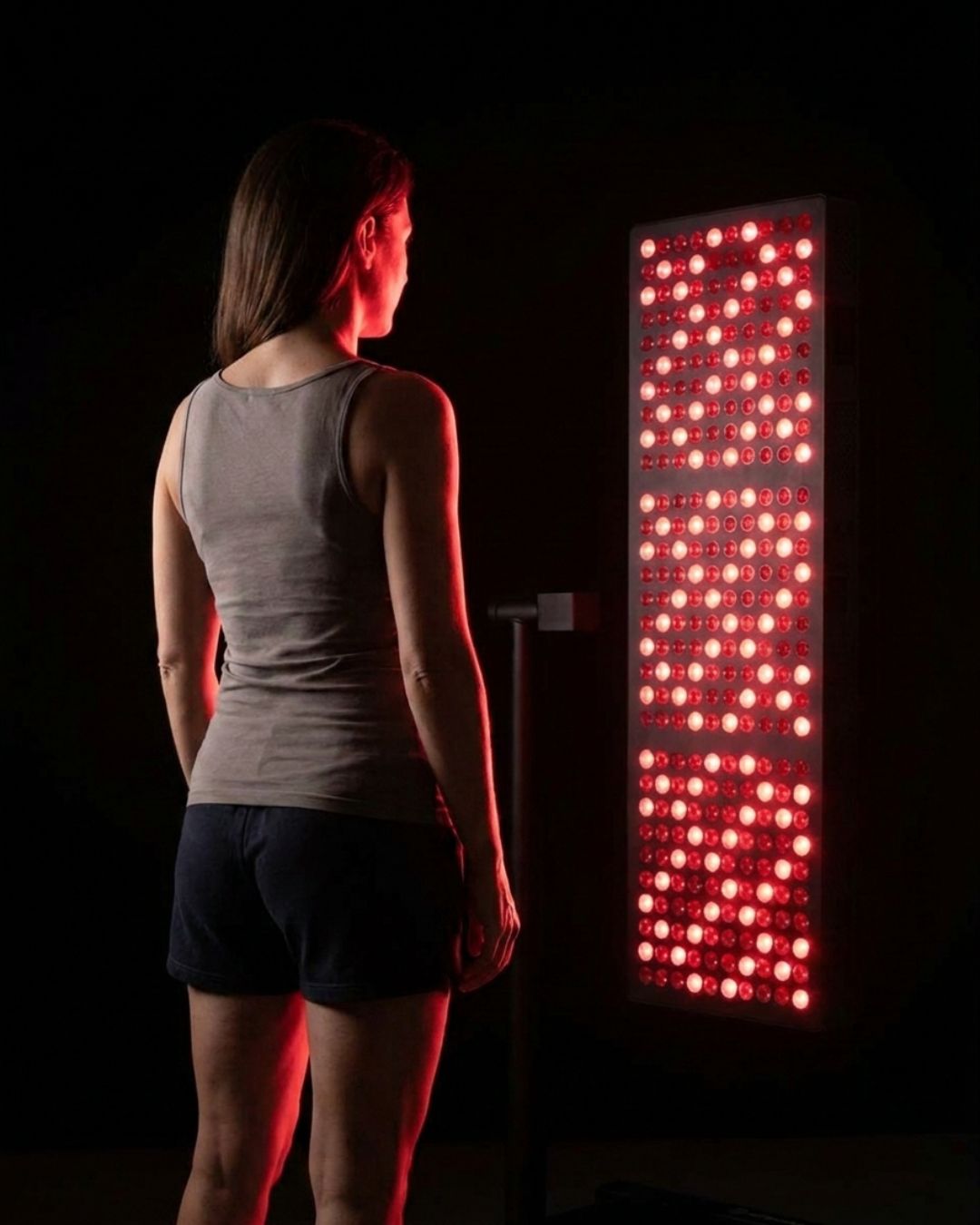
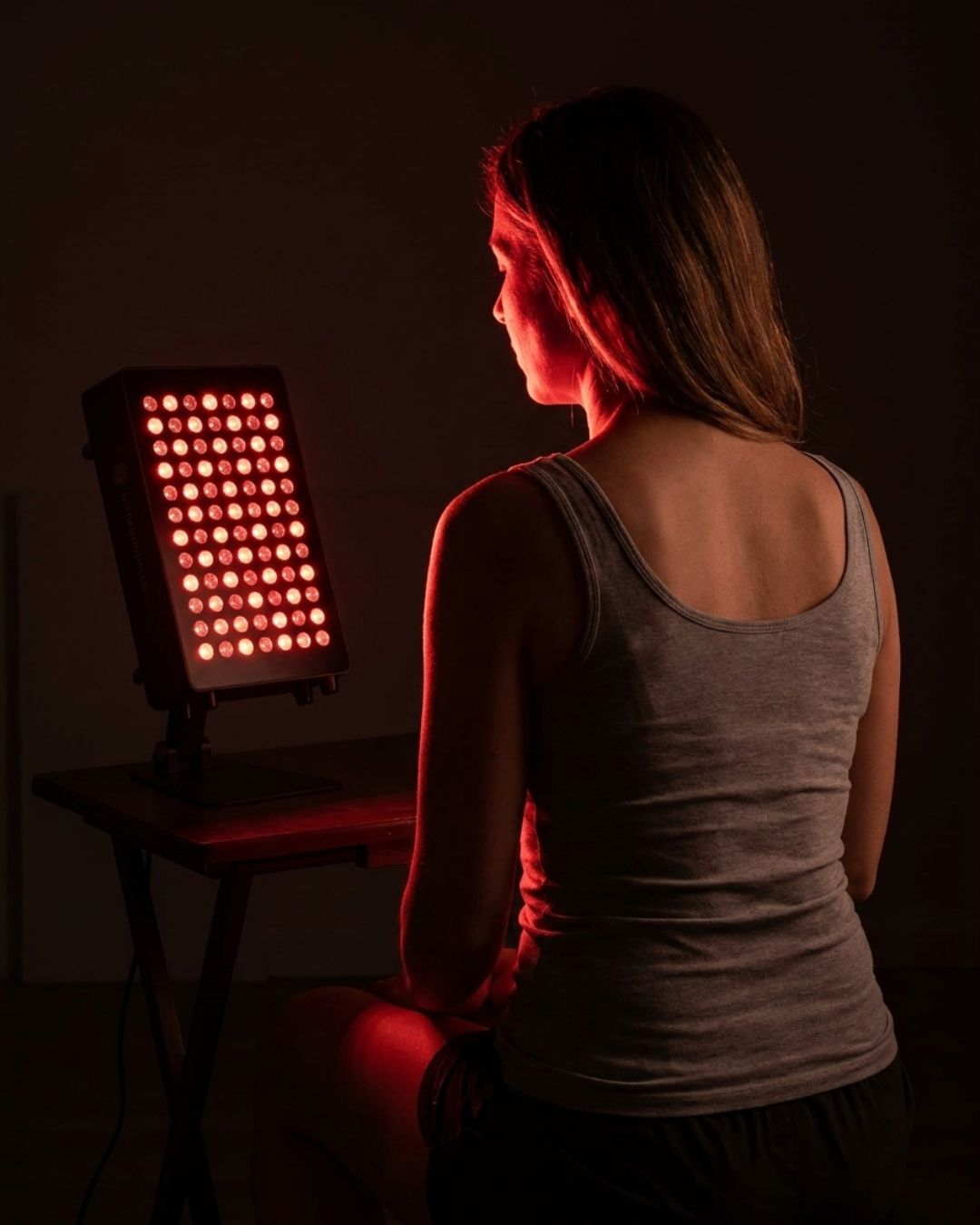
For at-home hair therapy with red light, a medium-sized infrared panel that can cover the head area at a comfortable distance is ideal. Position the panel so that the light falls on the scalp, ideally on the areas with the most noticeable thinning.
For a specific protocol, we recommend visiting the Learn section on our website, where you will find recommended distances and session times for individual Mitochondriak® devices. As a general rule, therapy is applied to the scalp at the recommended distance from the panel, ideally every other day, which aligns with the findings of the meta-analysis by Liu et al. about better outcomes at lower frequencies. [R]
Practical tips for hair therapy:
- Keep your hair clean and dry so light can better penetrate to the scalp
- Part your hair into sections so the scalp is exposed to as much light as possible
- Gradually cover different areas of the head (crown, forehead, temples)
- Be patient; initial results typically appear after 3 to 6 months
- Combine with an overall biohacking and healthy lifestyle approach
Try red light therapy for hair with Mitochondriak® infrared panels
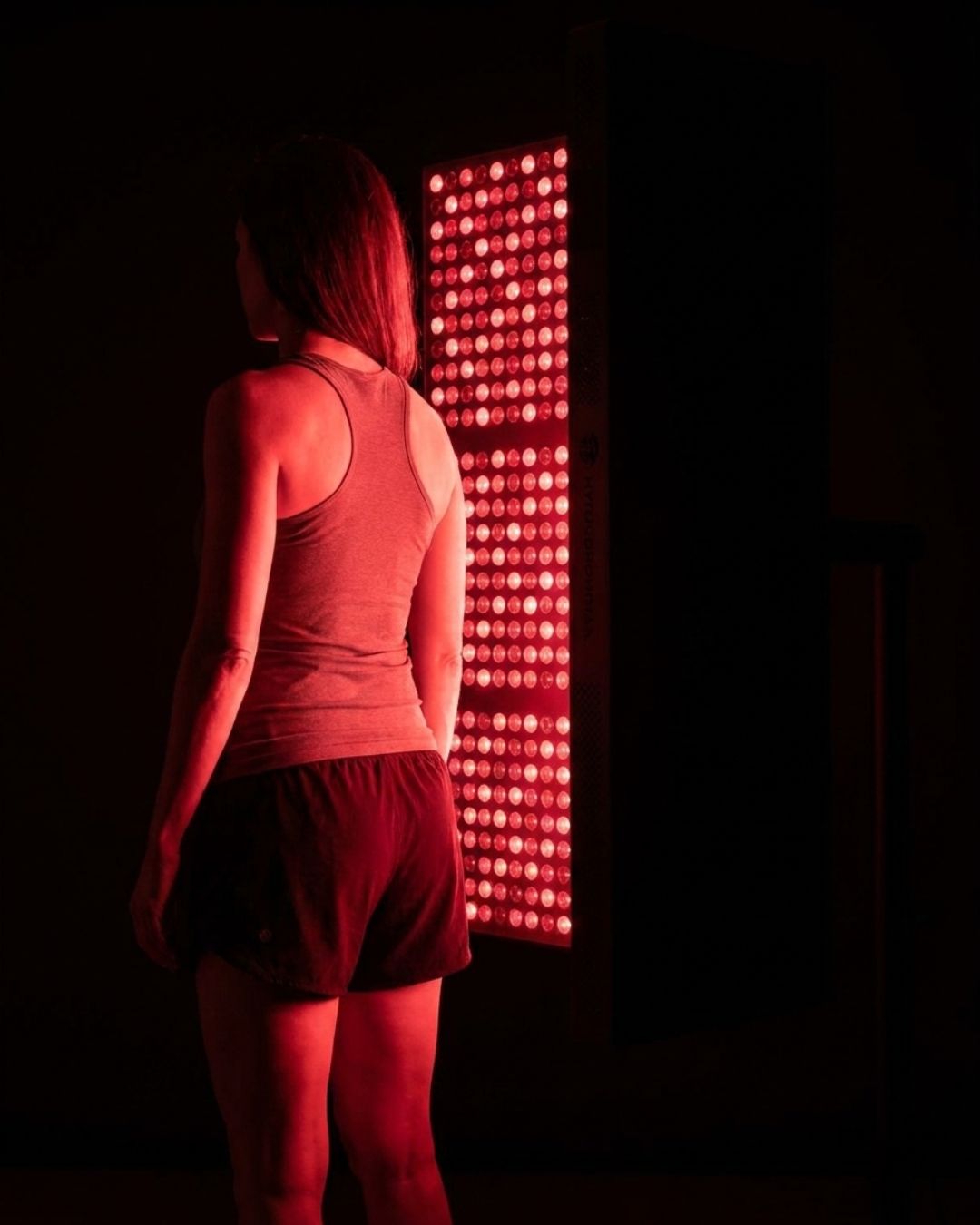
Mitochondriak® infrared panels contain wavelengths of 630 and 670 nm, which research has identified as the most effective for stimulating hair follicles. The Mitochondriak® Maxi Upgraded is our most popular device with 7 wavelengths and the power needed for effective at-home therapy.
All infrared panels are flicker-free and EMF-free at the recommended distance, and feature a timer and remote control. Explore the full range of Mitochondriak® infrared panels.
Frequently asked questions
Does red light help with hair loss?
Yes, clinical studies have demonstrated that photobiomodulation with red light can increase hair density in both men and women with androgenetic alopecia. The light stimulates mitochondria in hair follicles, increases ATP production, and extends the growth phase of the hair. Results typically become visible after 12 to 26 weeks of regular use.
What wavelengths are best for hair growth?
Research shows that red light in the 630 to 670 nm range is the most effective for stimulating hair follicles. These wavelengths penetrate to the correct depth of the scalp, where the follicles are located. Infrared light from 810 to 850 nm complements the effect by improving microcirculation.
How often should you use red light for hair?
According to the meta-analysis by Liu et al. (2019), a lower frequency (every other day) is more effective than daily use. Specific session times and distances depend on the device type. For Mitochondriak® devices, you will find recommendations in the Learn section on our website.
Is red light therapy for hair safe?
Yes. A 2025 Delphi consensus study classified photobiomodulation as a safe treatment in adults. The therapy is non-invasive, painless, and has no known systemic side effects. Red light does not produce UV radiation and does not damage the skin or hair.
Does red light work for hair in women too?
Yes. Randomised controlled trials tested photobiomodulation in both men and women and demonstrated statistically significant increases in hair density in both groups. The therapy is suitable for women with diffuse hair thinning as well as female-pattern androgenetic alopecia.
Can red light therapy be combined with other methods?
Yes, photobiomodulation can be combined with other hair care approaches. A study by Sondagar et al. (2023) demonstrated that combining LLLT with topical minoxidil produced better results than minoxidil alone. It is important to discuss combinations with a dermatologist.
Sources and references
- Avci P, Gupta GK, Clark J, Wikonkal N, Hamblin MR. Low-Level Laser (Light) Therapy (LLLT) for Treatment of Hair Loss. Lasers Surg Med. 2014;46(2):144-151. PMC3944668
- Jimenez JJ, Wikramanayake TC, Bergfeld W, et al. Efficacy and safety of a low-level laser device in the treatment of male and female pattern hair loss. Am J Clin Dermatol. 2014;15(2):115-127. PMID: 24474647
- Suchonwanit P, Chalermroj N, Khunkhet S. Low-level laser therapy for the treatment of androgenetic alopecia in Thai men and women: a 24-week, randomized, double-blind, sham device-controlled trial. Lasers Med Sci. 2019;34(6):1107-1114. PMID: 30569416
- Liu KH, Liu D, Chen YT, Chin SY. Comparative effectiveness of low-level laser therapy for adult androgenic alopecia: a system review and meta-analysis of randomized controlled trials. Lasers Med Sci. 2019;34(6):1063-1069. PMID: 30706177
- Zh Y, Cheng W, Ji Y, et al. Hair Growth Promoting Effects of 650 nm Red Light Stimulation on Human Hair Follicles and Study of Its Mechanisms via RNA Sequencing Transcriptome Analysis. Ann Dermatol. 2021;33(6):553-561. PMC8577899
- Gupta AK, et al. Platelet-Rich Plasma, Photobiomodulation, Stem Cells in Androgenetic Alopecia. Dermatol Ther (Heidelb). 2025. PMC12821594
- Wang YF, et al. Clinical Trial Comparing Three Wavelengths in Photobiomodulation for Hair Growth. 2025. PMID: 40398915