
.png)
Mitochondrial function is the single biggest lever behind how much energy you feel, how fast you recover, and how well you age. These tiny cellular engines convert food and oxygen into ATP, the fuel that powers every heartbeat, thought, and repair process. When they falter, so does everything else.
- What mitochondria actually do inside a cell and why mitochondrial function shapes your entire energy budget.
- How the electron transport chain turns food and oxygen into ATP, step by step.
- Why cytochrome c oxidase is the bridge between cellular energy and red and near-infrared light.
- What genuinely improves mitochondrial function in humans, and what only works in cell and animal studies so far.
- Who should be cautious and how to support your mitochondria safely.
- What is mitochondria function and why does it matter?
- How does mitochondria function work according to research?
- What benefits and limits can you realistically expect?
- How do you use mitochondria function safely in practice?
- What should you watch out for and who should be careful?
- Summary: what should you remember?
- Frequently asked questions

What is mitochondria function and why does it matter?
Mitochondrial function is the ability of mitochondria to convert nutrients and oxygen into ATP, the chemical energy that powers every cellular process. Strong mitochondrial function means more usable energy, faster repair, and better resilience to stress. When it declines, cells produce less energy and more damaging byproducts, which shows up as fatigue and slower recovery.
Mitochondria are often called the powerhouses of the cell, and the label is well earned. A single heart muscle cell can contain thousands of these organelles, because tissues with high energy demands (the heart, brain, muscles, and eyes) simply cannot function without a constant ATP supply. When you feel sharp, warm, and energetic, that is your mitochondria doing their job well.
What makes mitochondria unusual is that they carry their own DNA, separate from the DNA in the cell nucleus. This is a remnant of their evolutionary origin as independent bacteria that were absorbed into larger cells billions of years ago. That ancient partnership is why they still behave semi-autonomously and why they are so sensitive to their environment, including light, temperature, and nutrient availability.
The practical takeaway is simple. Almost every symptom people associate with poor health, low stamina, brain fog, slow healing, and premature aging, has a thread running back to how well your mitochondria make energy. If you want to understand the foundation of vitality, this is where it starts. For the term itself, our glossary entry on mitochondria gives a compact definition, while this article goes deeper into how the machinery actually works.
How does mitochondria function work according to research?
Mitochondria produce energy through a process called oxidative phosphorylation, which happens along the electron transport chain embedded in the inner mitochondrial membrane. Electrons stripped from food are passed down a series of protein complexes, releasing energy that pumps protons and ultimately drives the synthesis of ATP. Oxygen acts as the final electron acceptor.
To trace the full journey from a meal to usable energy, it helps to follow the fuel. Carbohydrates, fats, and proteins are broken down into smaller molecules that feed into the Krebs cycle (also called the citric acid cycle) inside the mitochondrial matrix. This cycle does not produce much ATP directly. Instead, it generates electron carriers, NADH and FADH2, which shuttle high-energy electrons to the electron transport chain.
The chain itself is a sequence of four main protein complexes. As electrons move from one complex to the next, protons are pumped across the inner membrane, building an electrochemical gradient. That stored gradient is then released through a molecular turbine called ATP synthase, which spins to attach phosphate groups and forge ATP. Douglas C. Wallace of the Children's Hospital of Philadelphia has spent decades showing how disruptions in this system underpin a wide range of metabolic and age-related conditions.
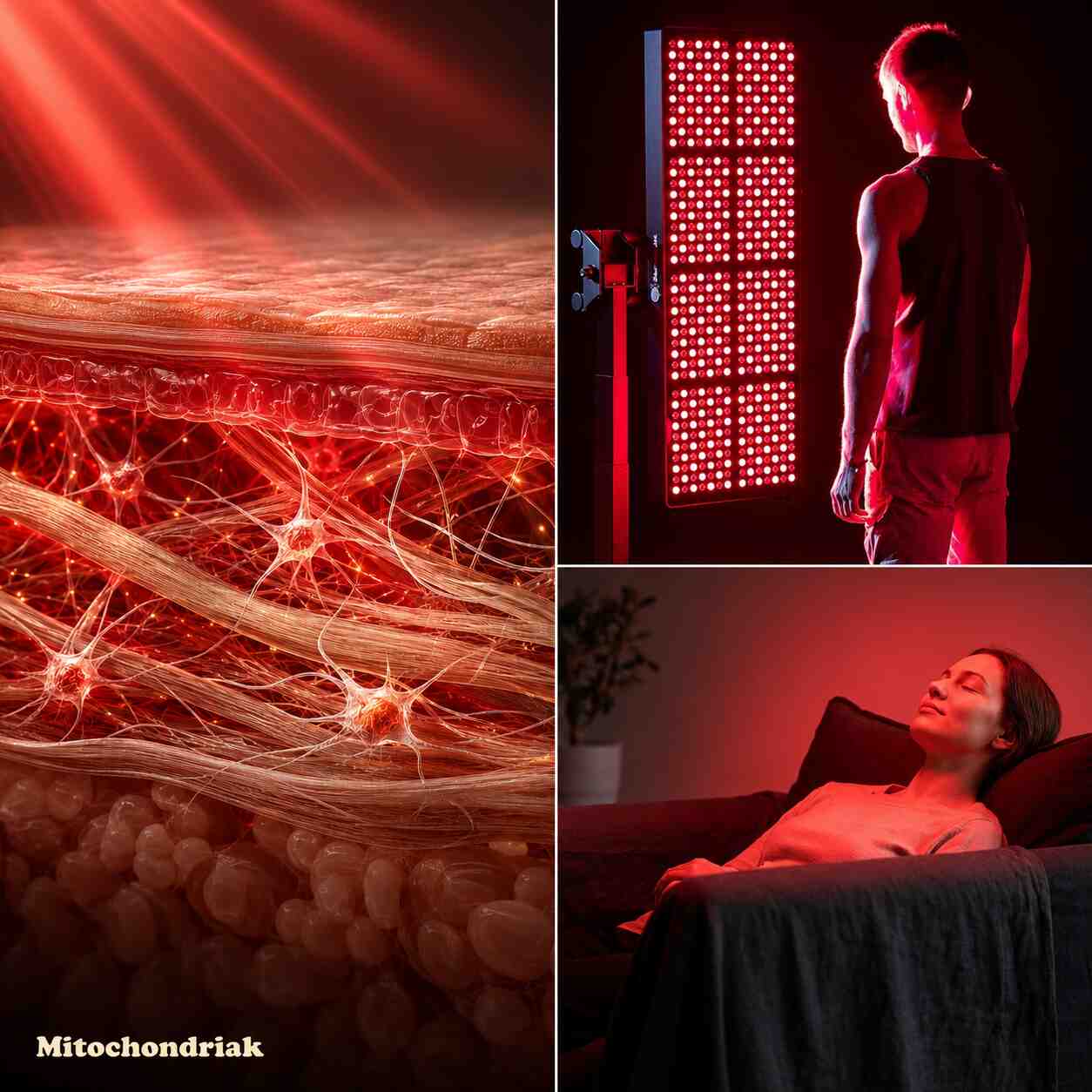
Here is where light enters the story. The fourth protein in the chain is cytochrome c oxidase (CCO), and it is far more than a passive relay. CCO is a photoacceptor, meaning it absorbs specific wavelengths of light, particularly in the red and near-infrared range. Research led by Tiina Karu and later expanded by Michael R. Hamblin at Harvard Medical School established that red and NIR light absorbed by CCO can boost electron transport and ATP output. [\[R\]](https://pmc.ncbi.nlm.nih.gov/articles/PMC3065857/) [\[R\]](https://pmc.ncbi.nlm.nih.gov/articles/PMC5523874/)
This is the mechanistic foundation of photobiomodulation, the science behind red light therapy. When a wavelength around 630 to 850 nm reaches CCO, it can help displace inhibitory nitric oxide from the enzyme, freeing it to work more efficiently. We break down this exact process in our deep dive on how red and near-infrared light works at a cellular level. For a focused explainer on the energy molecule itself, our article on how mitochondria produce energy and ATP zooms into that final step.
The result is a tidy loop. Food supplies the electrons, the electron transport chain converts them into a proton gradient, ATP synthase turns that gradient into fuel, and the right wavelengths of light can support the enzyme sitting at the heart of the whole operation. That is why supporting mitochondrial function is not one intervention but a coordinated set of inputs: nutrients, oxygen, movement, and light.
What benefits and limits can you realistically expect?
Realistically, you can expect steady, measurable gains rather than instant transformation. Supporting mitochondrial function through movement, sleep, nutrition, and light tends to improve energy, recovery, and resilience over weeks to months. The strongest human evidence sits with exercise, while red and near-infrared light shows promising but more targeted results depending on tissue and dose.
Exercise remains the most powerful lever we have. Endurance training triggers mitochondrial biogenesis, meaning cells literally build more mitochondria to meet demand. This is not a niche finding: it is one of the most reproducible results in exercise physiology, and it improves both the quantity and the quality of your cellular engines. If you do only one thing for your mitochondria, regular movement is it.
Photobiomodulation occupies an interesting middle ground. Human trials show real effects in specific contexts. A randomized controlled trial by Wunsch (2014) found that red and near-infrared light improved skin roughness and increased collagen density [R]. A single-arm trial by O'Donnell (2023) reported beneficial mitochondrial and oxygenation effects in the prefrontal cortex of older adults [R]. These are encouraging, but they are narrow in scope.
The honest limit is this: much of the mechanistic excitement around cytochrome c oxidase comes from cell and animal studies. The cellular mechanism is well described, but translating a petri dish result into a whole-body outcome is not guaranteed. Dose matters enormously, and more is not better. Too little light does nothing; too much can suppress the very response you are trying to trigger, a phenomenon known as the biphasic dose response documented by Hamblin (2017) [R].
So set expectations accordingly. Think of light as a supportive input that works best alongside the fundamentals, not as a replacement for them. A quality red light therapy device can complement good sleep and training, but it cannot outrun a sedentary lifestyle or chronic sleep deprivation.
How do you use mitochondria function safely in practice?
In practice, supporting mitochondrial function comes down to consistency across a few high-leverage inputs. Prioritize regular movement, protect your sleep, eat whole foods, get morning daylight, and use red light therapy as a targeted supplement. None of these require perfection. The goal is a repeatable daily rhythm that gives your cells the raw materials and signals they need.
Movement and metabolic stress
Aim for a mix of endurance and resistance training across the week. Endurance work is the classic driver of mitochondrial biogenesis, while resistance training preserves the muscle tissue that houses so many mitochondria. Even brisk walking counts. The signal your cells respond to is regular demand, so frequency beats occasional intensity.
Light, day and night
Your mitochondria are exquisitely sensitive to light timing. Bright daylight in the morning anchors your circadian rhythm and supports daytime energy, while blocking blue light in the evening protects the melatonin signal that governs overnight repair.
For targeted red light therapy with a classic panel, keep a sensible distance. Our devices are used from around 30 to 60 cm depending on the model, never pressed against the skin. Typical sessions run 10 to 20 minutes on the target area, and daily consistency matters more than long single sessions. Always follow the specific protocol on your device page rather than guessing.
Nutrients that feed the chain
The electron transport chain depends on cofactors your body sources from food. Prioritize protein for amino acids, colorful plants for antioxidants that buffer reactive oxygen species, and adequate B vitamins that support the Krebs cycle. Compounds like CoQ10 and NAD+ precursors are popular in biohacking circles, though human evidence for supplementation varies and whole foods should come first.
Support your mitochondria with the right wavelengths
Red and near-infrared light works at the level of cytochrome c oxidase, the exact enzyme that drives ATP production. That is why we designed our panels to deliver clinically relevant wavelengths for home use, so you can support cellular energy alongside good sleep and training.
What should you watch out for and who should be careful?
Most mitochondrial support strategies are low risk, but a few cautions apply. Overtraining, extreme diets, and excessive light dosing can backfire. If you have a diagnosed medical condition, take photosensitizing medication, or are pregnant, treat light therapy and aggressive protocols as something to discuss with a qualified clinician first, not a DIY experiment.
The most common mistake is chasing intensity. With red light therapy in particular, the biphasic dose response means there is a sweet spot: enough light to stimulate the response, but not so much that you suppress it. Sitting too close to a classic panel or running marathon sessions does not accelerate results and may reduce them. Stick to tested protocols.
Be cautious with anyone who has a serious mitochondrial disease, eye conditions, or active skin cancers, and never shine light directly into the eyes. People on medications that increase light sensitivity, such as certain antibiotics or retinoids, should be especially careful. Photobiomodulation research such as Rouhani (2024) in multiple sclerosis is promising, but these are clinical settings with supervision, not blueprints for self-treatment [R].
Finally, watch for the temptation to treat any single tool as a cure. Mitochondrial function is a systems problem. Sleep, stress, movement, and nutrition form the foundation, and light is a helpful addition on top of that foundation, not a substitute for it.
Summary: what should you remember?
If you take one idea from this article, let it be this: mitochondrial function is the quiet engine behind how you feel every single day. These organelles convert food and oxygen into ATP along the electron transport chain, and the health of that process shapes your energy, recovery, and how gracefully you age. Everything else is detail hanging off that central truth.
The good news is that the levers are practical and within reach. Regular movement builds more and better mitochondria, quality sleep and daylight timing keep your circadian rhythm aligned, and whole foods supply the cofactors your cells need. Red and near-infrared light adds a targeted layer by supporting cytochrome c oxidase directly, which is why it has earned a place in an evidence-informed routine rather than a hype cycle. Start with the fundamentals, layer light on top, and give it weeks, not days.
Frequently asked questions
What do mitochondria actually do inside a cell?
Mitochondria convert the food you eat and the oxygen you breathe into ATP, the chemical energy that powers nearly every cellular process. They also help regulate calcium balance, control programmed cell death, and generate heat. In short, they are the metabolic hub that keeps energy-hungry tissues like the heart, brain, and muscles running.
How does the body turn food and light into ATP?
Food is broken down into electron carriers that feed the electron transport chain, where a proton gradient drives ATP synthase to produce ATP. Light plays a supporting role: red and near-infrared wavelengths absorbed by cytochrome c oxidase can enhance electron transport, helping the chain work more efficiently. Both pathways ultimately support the same energy currency.
What genuinely improves mitochondrial function in humans?
Exercise has the strongest human evidence, reliably triggering mitochondrial biogenesis. Quality sleep, aligned circadian timing, and a nutrient-dense diet also matter substantially. Red light therapy shows promising human results in specific contexts, though many mechanistic claims still rest on cell and animal data, so treat it as a supportive addition to the fundamentals.
Can red light therapy really reach my mitochondria?
Yes, within limits. Red and near-infrared wavelengths (roughly 630 to 850 nm) penetrate skin and are absorbed by cytochrome c oxidase in the mitochondria. Penetration depth depends on wavelength and tissue, so effects are strongest in skin and shallow tissues. Correct dose and distance matter, because too much light can suppress the response.
How long does it take to feel a difference?
Expect weeks, not days. Building mitochondria through exercise and consistent habits is a gradual adaptation, typically noticeable over several weeks of regular effort. Red light therapy benefits also accumulate with consistent daily use rather than single sessions. Sustainable routines beat intense bursts, because your cells respond to repeated, reliable signals.
Do I need supplements to support my mitochondria?
Not necessarily. Whole foods should come first, supplying protein, antioxidants, and B vitamins that the Krebs cycle and electron transport chain depend on. Popular biohacking compounds like CoQ10 and NAD+ precursors have mixed human evidence. They may help some people, but they are not a substitute for movement, sleep, and daylight, which do the heavy lifting.
Sources and references
- Avci. 2013. Low-level laser light therapy in skin: stimulating, healing, restoring pubmed.ncbi.nlm.nih.gov
- Wunsch. 2014. A controlled trial to determine the efficacy of red and near-infrared light treatment in patient satisfaction, reduction of fine lines, wrinkles, skin roughness and collagen density increase pubmed.ncbi.nlm.nih.gov
- Hamblin. 2017. Mechanisms and applications of the anti-inflammatory effects of photobiomodulation pubmed.ncbi.nlm.nih.gov
- Frederice. 2022. Effect of Vaginal Stretching and Photobiomodulation Therapy on Sexual Function in Women With Pelvic Floor Myofascial Pain - A Randomized Clinical Trial pubmed.ncbi.nlm.nih.gov
- O'Donnell. 2023. Prefrontal photobiomodulation produces beneficial mitochondrial and oxygenation effects in older adults with bipolar disorder pubmed.ncbi.nlm.nih.gov
- Rouhani. 2024. Effects of photobiomodulation therapy on muscle function in individuals with multiple sclerosis pubmed.ncbi.nlm.nih.gov
- Tiina I. Karu. 2005. Red Light Therapy: Mechanisms and Applications pmc.ncbi.nlm.nih.gov
- Michael R. Hamblin. 2017. Photobiomodulation and Cytochrome c Oxidase: A Review pmc.ncbi.nlm.nih.gov