.png)
hypothyroidism
Hypothyroidism is a condition of reduced thyroid function in which the body cannot produce sufficient amounts of T3 and T4 hormones. In this glossary entry, you will learn what hypothyroidism is, why it develops, how it relates to mitochondria, and why photobiomodulation is among the most promising complementary approaches according to clinical studies.
- What hypothyroidism is and what its main symptoms are
- How reduced thyroid function is connected to mitochondria and cellular energy
- What clinical studies say about photobiomodulation and the thyroid
- Why Hashimoto's thyroiditis is the most common cause of hypothyroidism
- Practical tips for supporting thyroid function with light and lifestyle
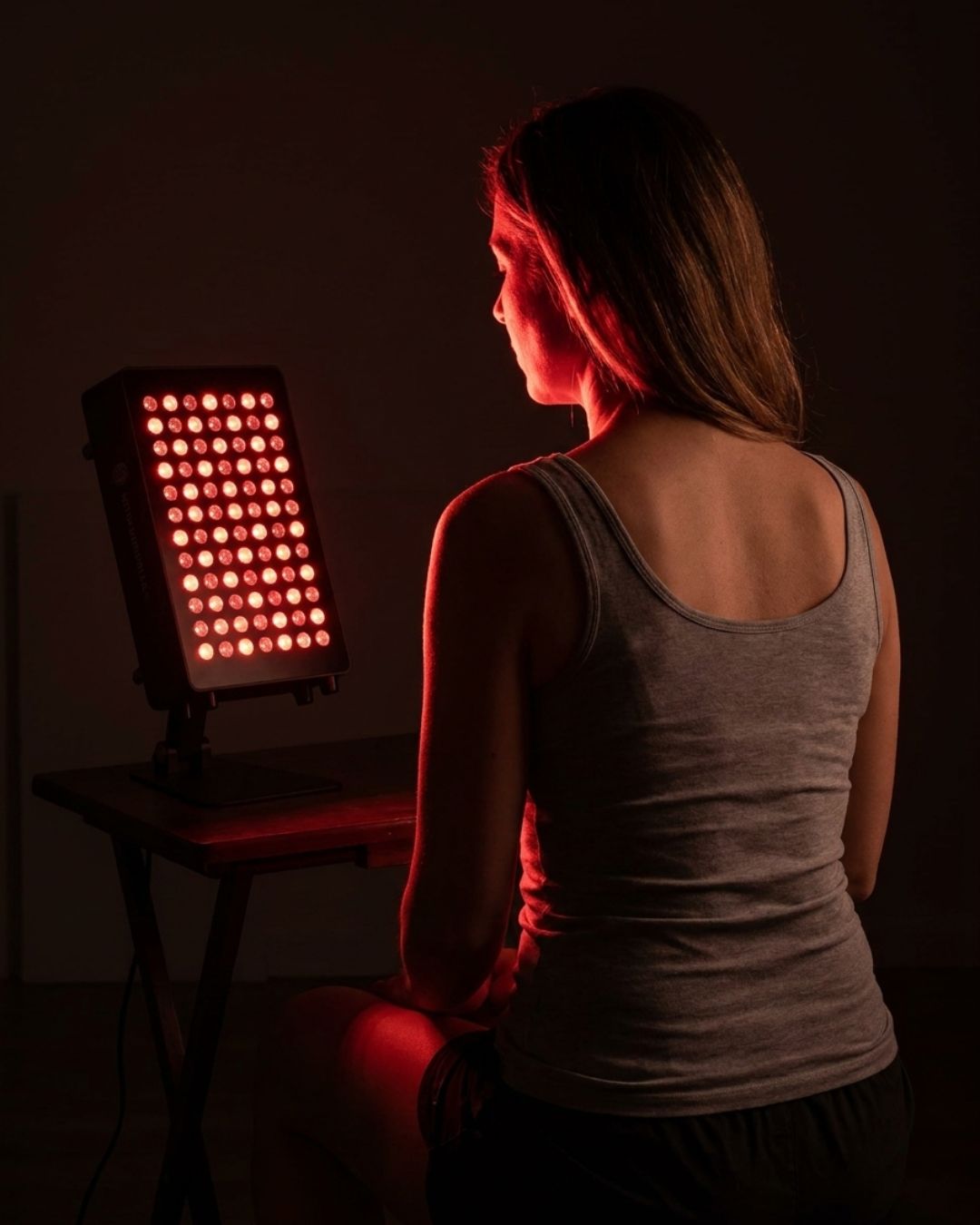
What is hypothyroidism and why does it develop?
Hypothyroidism is a condition in which the thyroid gland does not produce sufficient amounts of the hormones thyroxine (T4) and triiodothyronine (T3). These hormones regulate metabolism, energy production, body temperature, heart rate, and the function of virtually every cell in the body. According to estimates, hypothyroidism affects approximately 5% of the population, with the incidence in women being 5 to 8 times higher than in men.
The most common cause is Hashimoto's thyroiditis, an autoimmune disease in which the immune system attacks the thyroid tissue. Other causes include surgical removal of the gland, radioactive iodine treatment, iodine deficiency in the diet, or damage to the pituitary gland. Chronic inflammation, oxidative stress, and environmental factors including lack of natural light also play a significant role.
What are the most common symptoms of hypothyroidism?
The symptoms of hypothyroidism are often subtle and develop gradually over months to years. This is precisely why the condition often remains undiagnosed for a long time. The most common manifestations include chronic fatigue, weight gain, cold sensitivity, dry skin, and hair loss.
| System | Typical symptoms |
|---|---|
| Metabolism | Fatigue, weight gain, cold sensitivity, slowed metabolism |
| Skin and hair | Dry skin, brittle nails, hair loss, facial puffiness |
| Nervous system | Brain fog, slow thinking, depressive states, memory problems |
| Cardiovascular | Slowed heart rate, elevated cholesterol |
| Digestive | Constipation, bloating, slowed peristalsis |
Diagnosis is relatively straightforward through blood tests for TSH (thyrotropin), free T4, and free T3. Elevated TSH with decreased T4 is the classic picture of primary hypothyroidism.
How is the thyroid connected to mitochondria?
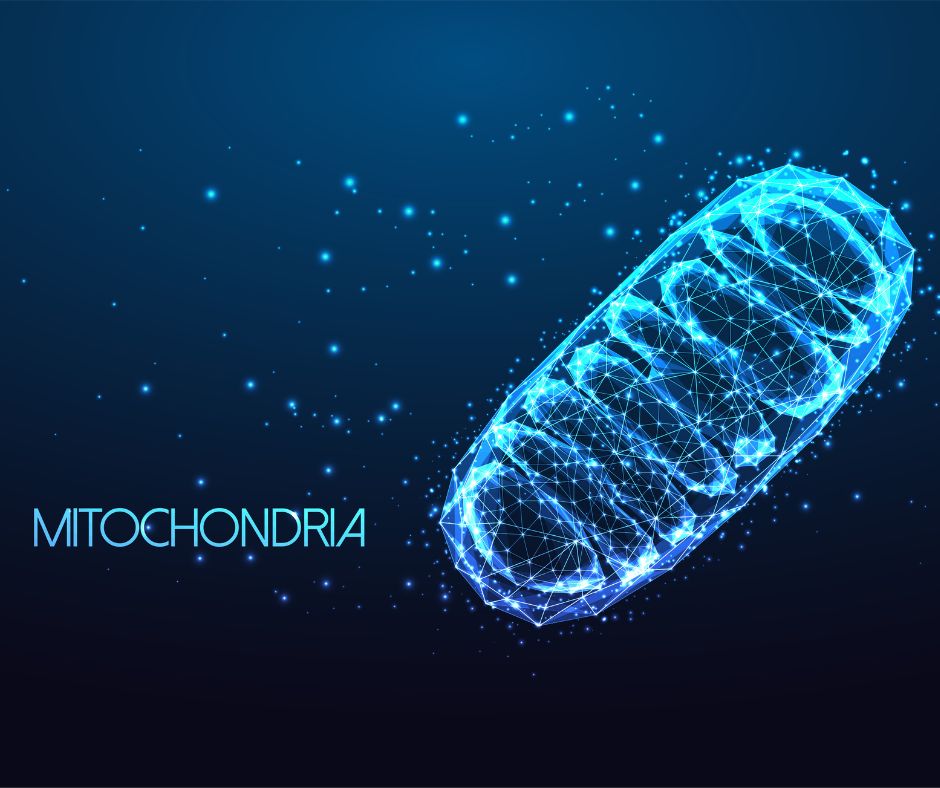
Thyroid hormones and mitochondria are inseparably linked. T3 and T4 directly regulate mitochondrial biogenesis, the creation of new mitochondria, and influence the activity of the electron transport chain including cytochrome c oxidase. When the thyroid produces too few hormones, mitochondria in cells slow down ATP (cellular energy) production.
The result is an overall energy deficit at the cellular level, which explains why people with hypothyroidism feel chronically fatigued, have a slowed metabolism, and impaired tissue regeneration. Mitochondrial dysfunction simultaneously increases the production of reactive oxygen species (ROS), creating oxidative stress that further damages thyroid tissue.
It is precisely this vicious cycle, where low hormones weaken mitochondria and weakened mitochondria prevent gland regeneration, that is one of the reasons scientists are interested in photobiomodulation as a tool that can stimulate mitochondria directly, independently of hormone levels.
Does red light help with hypothyroidism?
Yes, clinical studies are producing promising results. Photobiomodulation (PBM) with red and infrared light is among the best-studied non-pharmacological approaches to hypothyroidism, with randomized clinical trials and long-term patient follow-up.
The landmark randomized placebo-controlled study by Hofling et al. (2013) examined the effect of PBM (wavelength 830 nm) on patients with hypothyroidism caused by Hashimoto's thyroiditis. After 10 sessions, patients in the treatment group showed a reduced required levothyroxine dose and improved thyroid echogenicity on ultrasound. Some patients were able to significantly reduce their hormone dose, in some cases by as much as 50% (Hofling et al., 2013).
Long-term follow-up confirmed that these effects persist. Hofling et al. (2018) published 6-year follow-up data from the same cohort, demonstrating the safety and long-term efficacy of LLLT including reduction of TPOAb antibody levels (Hofling et al., 2018).
A more recent study by Berisha-Muharremi et al. (2023) expanded the knowledge with a combination of PBM with vitamin D and selenium. The results showed that the combined approach was more effective at restoring thyroid homeostasis than supplementation alone (Berisha-Muharremi et al., 2023).
The systematic review by Berisha-Muharremi et al. (2026) then summarized all available studies and concluded that PBM was consistently associated with reduced autoantibodies, improved thyroid hormone levels, and decreased need for levothyroxine (Berisha-Muharremi et al., 2026).
The mechanism of action lies in the stimulation of cytochrome c oxidase in the mitochondria of thyroid cells. Infrared light penetrates into the neck tissue and directly increases ATP production, reduces oxidative stress, and regulates the inflammatory response. Mitochondriak® devices contain wavelengths of 630, 670, 760, 810, 830, 850, and 940 nm, covering the 830 nm wavelength with which the key clinical studies on the thyroid were conducted.
How to support the thyroid naturally?
In addition to photobiomodulation, there are several approaches that can support healthy thyroid function. From a mitochondrial health perspective, the following are key:
- Morning sunlight sets the circadian rhythm and supports hormone production. The thyroid is sensitive to circadian signals and TSH exhibits a pronounced daily cycle
- Selenium is an essential trace element for the conversion of T4 to active T3 and for protecting the thyroid from oxidative stress
- Iodine in adequate amounts from marine sources, seaweed, and fish is the foundation for the synthesis of thyroid hormones
- Minimizing exposure to endocrine disruptors (BPA, phthalates, pesticides) that can disrupt thyroid function
Interested in red light therapy for thyroid support?
Mitochondriak® devices include the 830 nm wavelength, with which key clinical studies on the thyroid were conducted, along with 6 additional wavelengths (630 to 940 nm) for comprehensive photobiomodulation.
Frequently Asked Questions About Hypothyroidism
What is hypothyroidism and how does it manifest?
Hypothyroidism is a condition of reduced thyroid function in which insufficient amounts of T3 and T4 hormones are produced. It manifests as chronic fatigue, weight gain, cold sensitivity, dry skin, hair loss, memory problems, and slowed metabolism. It affects approximately 5% of the population, with the incidence in women being several times higher.
What is the difference between hypothyroidism and Hashimoto's thyroiditis?
Hashimoto's thyroiditis is an autoimmune disease in which the immune system attacks the thyroid tissue. It is the most common cause of hypothyroidism, but not the only one. Hypothyroidism is a broader term for reduced gland function regardless of the cause. Hashimoto's is diagnosed based on elevated TPOAb and anti-Tg antibodies.
Does red light help with hypothyroidism?
Clinical studies suggest that it does. A randomized placebo-controlled study by Hofling et al. demonstrated that photobiomodulation with infrared light (830 nm) improved thyroid function and enabled patients to reduce their levothyroxine dose. The effects persisted even after 6 years of follow-up. This is one of the best-documented effects of PBM in endocrinology.
Which wavelength should be used for thyroid therapy?
Key studies were conducted with a wavelength of 830 nm (near-infrared light), which penetrates sufficiently deep into the neck tissue. Combined devices with wavelengths in the range of 630 to 940 nm offer a more comprehensive approach, as they also cover the anti-inflammatory and regenerative effects of red light.
Can PBM replace thyroid medication?
Photobiomodulation is not a replacement for prescribed hormonal treatment. In studies, it has shown promise as a complementary approach that may help reduce the required levothyroxine dose under medical supervision. Any change in dosage must be carried out under professional guidance based on blood tests.
What is the role of selenium in hypothyroidism?
Selenium is a trace element essential for the conversion of inactive hormone T4 to active T3 through deiodinases. It also protects thyroid cells from oxidative damage as a component of glutathione peroxidase. The combination of PBM, vitamin D, and selenium demonstrated better results in the study by Berisha-Muharremi et al. (2023) than supplementation alone.
Is hypothyroidism hereditary?
Genetic predisposition plays a significant role, especially in the autoimmune form (Hashimoto's). However, the condition manifests only in combination with environmental factors such as chronic stress, lack of light, pollution, or insufficient intake of iodine and selenium.
Related glossary terms
- Hashimoto's thyroiditis – an autoimmune inflammatory disease of the thyroid, the most common cause of hypothyroidism
- Photobiomodulation (PBM) – therapy using red and infrared light to stimulate cellular processes
- TSH (thyrotropin) – a pituitary hormone that regulates thyroid activity
- Cytochrome c oxidase – an enzyme in mitochondria that red and infrared light directly acts upon
- Levothyroxine – a synthetic T4 hormone used in standard hypothyroidism treatment
Summary
Hypothyroidism is a widespread condition directly linked to mitochondrial function and cellular energetics. Clinical studies have demonstrated that photobiomodulation with infrared light can improve thyroid function, reduce autoimmune antibodies, and enable a reduction in the dose of hormonal treatment. Interested in red light therapy for thyroid support? Check out our Mitochondriak® devices.
Sources and References
- Hofling, D. B. et al. (2013). Low-level laser in the treatment of patients with hypothyroidism induced by chronic autoimmune thyroiditis: a randomized, placebo-controlled clinical trial. Lasers in Medical Science. PubMed 22718472
- Hofling, D. B. et al. (2018). Safety and Efficacy of Low-Level Laser Therapy in Autoimmune Thyroiditis: long-term follow-up study. International Journal of Endocrinology. PMC6247385
- Berisha-Muharremi, V. et al. (2023). Efficacy of Combined Photobiomodulation Therapy with Vitamin D and Selenium. Biomedicines. PMC10455109
- Berisha-Muharremi, V. et al. (2026). Photobiomodulation Therapy in Chronic Autoimmune Thyroiditis: a systematic review. International Journal of Molecular Sciences. MDPI
- Hofling, D. B. et al. (2010). Low-level laser therapy in chronic autoimmune thyroiditis: a pilot study. Lasers in Surgery and Medicine. PubMed 20662037