.png)
Seasonal depression light therapy uses bright light to ease the low mood, low energy and oversleeping that arrive with darker months. It does not cure clinical depression, but for many people it meaningfully lifts winter symptoms. In this guide you will learn what the science really shows, how to time it and where the evidence is honestly weaker.
- Seasonal affective disorder (SAD) is a recurring form of depression tied to autumn and winter, and light therapy is its best-studied treatment.
- Bright morning light works mainly by re-syncing your circadian rhythm and shifting the timing of melatonin.
- Clinical light boxes typically deliver 10 000 lux for around 30 minutes in the morning, and this is different from everyday circadian home lighting.
- Evidence is strong for classic winter SAD, but weaker and less certain for milder "winter blues" and for non-seasonal use.
- The safest home strategy is simple: a bright morning and a dim, warm evening.
- What is seasonal depression light therapy and why does it matter?
- How does seasonal depression light therapy work according to research?
- What benefits and limits can you realistically expect?
- How do you use seasonal depression light therapy safely in practice?
- What should you watch out for and who should be careful?
- Summary: what should you remember?
- Frequently asked questions
What is seasonal depression light therapy and why does it matter?
Seasonal depression light therapy is the daily use of a bright artificial light, usually in the morning, to reduce the symptoms of seasonal affective disorder (SAD). SAD is a recurring form of depression that appears in autumn and winter and lifts in spring. Light therapy eases symptoms, but it does not "cure" depression and is not a substitute for medical care.
When the days get shorter, a lot of people feel it. You wake up in the dark, you leave work in the dark, and somewhere along the way your energy quietly drains away. For some people this is a mild seasonal dip, often called the winter blues. For others it becomes something more serious. That more serious version has a clinical name: seasonal affective disorder.
SAD is not just "feeling a bit flat." According to a broad evidence review by Kelly J. Rohan and colleagues at the University of Vermont, SAD is a genuine subtype of depression with a predictable seasonal pattern, and it responds to structured treatment rather than willpower alone. [R] Typical winter symptoms include low mood, heavy fatigue, sleeping more than usual, carbohydrate cravings and a general sense of "hibernation."
Here is the key distinction that this whole article rests on. Light therapy for depression in a clinical sense means using a specific, high-intensity light box under a defined protocol. That is different from simply improving the lighting in your home, though the two ideas share the same underlying logic: your brain reads light as a signal for the time of day. When that signal is weak all winter, your internal clock drifts, and mood and sleep can drift with it.
Why does this matter so much in early autumn? Because timing is everything. From September onwards, daylight shrinks fast in northern regions, and SAD symptoms tend to build gradually rather than hit overnight. Many clinicians suggest starting a light routine before symptoms peak, which is exactly why understanding your options now, rather than in the depths of January, is worth your time.
How does seasonal depression light therapy work according to research?
Light therapy works mainly by acting on your circadian rhythm, the body's internal 24-hour clock. Bright morning light reaches specialised cells in the eye, signals the brain's master clock and helps shift the timing of melatonin release. In people with SAD, this re-synchronisation appears to be a major reason symptoms improve, alongside effects on mood-related brain chemistry.
To understand the mechanism, it helps to know how light becomes a biological message. Light entering your eyes hits the retina, where special light-sensitive cells send a signal to a tiny region of the brain called the suprachiasmatic nucleus, the master timekeeper. This is the same system that governs your energy, alertness and the release of melatonin, the hormone that makes you feel sleepy. If you want a deeper walkthrough of this system, our guide on how the circadian rhythm works and how to optimise it covers the fundamentals.
The circadian phase-shift theory
The leading explanation is the phase-shift hypothesis, developed largely through the work of researcher Alfred J. Lewy and colleagues at Oregon Health & Science University. The idea is that in many people with winter SAD, the internal clock runs "late" relative to the actual clock on the wall, so their melatonin rhythm is delayed. [R] Bright light delivered in the morning nudges this delayed rhythm earlier, which realigns the body clock with the real day and tends to lift mood.
This is why timing is not a minor detail. Classic research by Michael Terman at Columbia University found that morning light was clearly more effective than the same light given in the evening for treating SAD. [R] The same light box that helps in the morning may do little, or even work against you, if used late at night.
What the clinical evidence actually shows
Light therapy is not a fringe idea. A landmark systematic review commissioned by the American Psychiatric Association, led by Robert N. Golden, concluded that bright light treatment produced clinically meaningful reductions in depression symptom severity for people with SAD. [R] A more recent 2020 systematic review and meta-analysis by Edda Pjrek and colleagues reinforced that light therapy is an effective and well-tolerated first-line option for seasonal depression. [R]
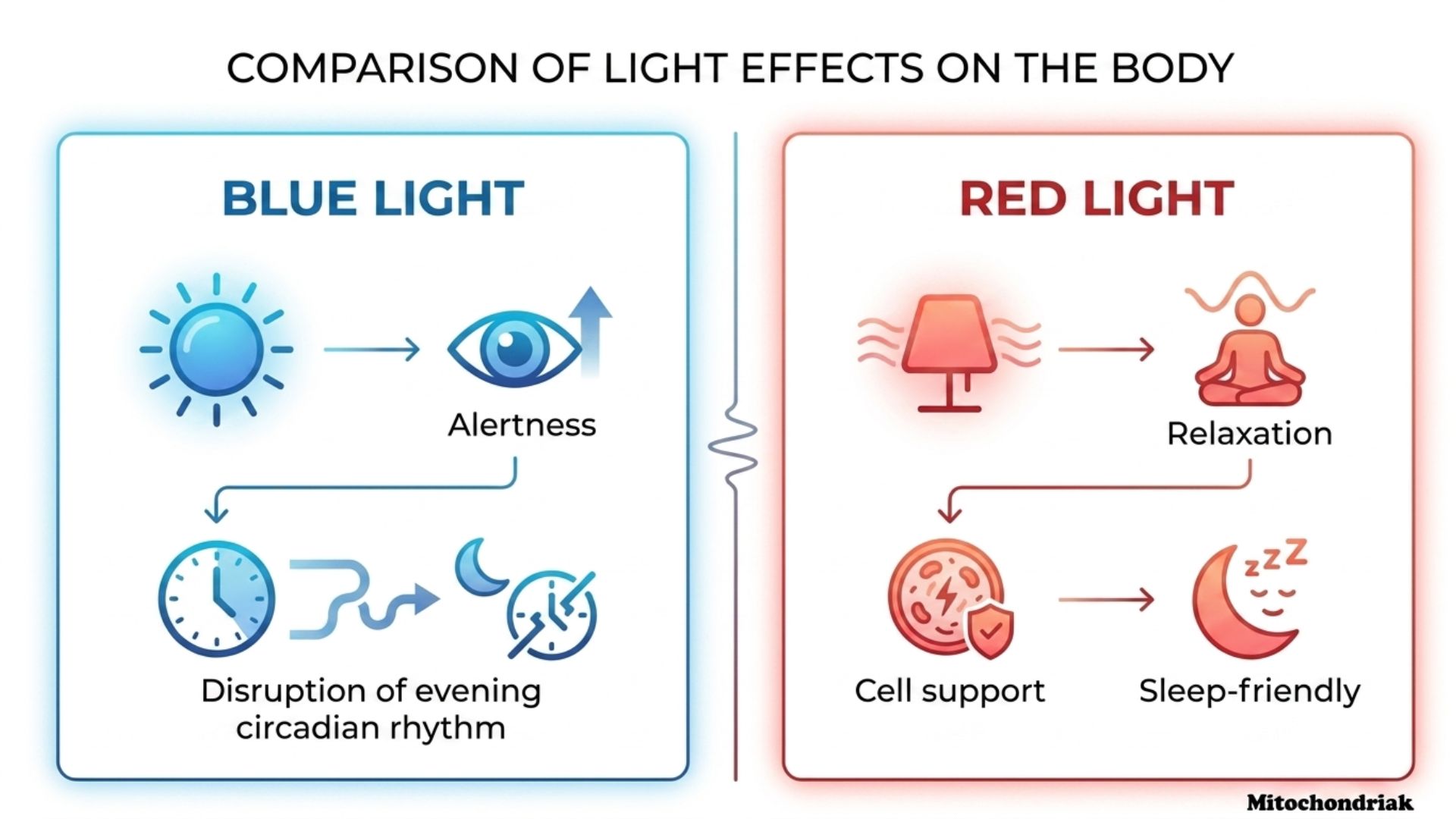
There is also a second, connected effect. Alongside resetting the clock, light therapy appears to influence serotonin activity and directly improve sleep and circadian regulation in SAD patients, as documented in earlier work by Terman's group. [R] In other words, better-timed light can help both how you feel and how you sleep, and those two things reinforce each other. The flip side of this system is the evening, where too much artificial light can delay melatonin and worsen the very rhythm you are trying to fix, which is why a dim, melatonin-friendly evening is the natural partner to bright mornings.
What benefits and limits can you realistically expect?
For classic winter seasonal affective disorder, you can realistically expect a meaningful reduction in low mood, fatigue and oversleeping within one to three weeks of consistent morning use. Many people respond well, but light therapy is not a guaranteed fix, and the evidence is honestly weaker for mild "winter blues" and for non-seasonal depression.
Let us start with the good news, because it is genuinely encouraging. In well-designed trials for winter SAD, a large share of people experience clear improvement, and the treatment is fast-acting compared with many antidepressants. The systematic review led by Robert N. Golden for the American Psychiatric Association found effect sizes for bright light in SAD that were comparable to those seen with antidepressant medication. [R] For a treatment with no drugs and few side effects, that is a strong result.
Where the evidence is strongest
The clearest benefit is for people with a textbook seasonal pattern: symptoms that arrive reliably every autumn, deepen through winter and lift in spring. This is the population studied in most trials, and it is where bright light therapy shines. The 2020 meta-analysis by Edda Pjrek and colleagues at the Medical University of Vienna confirmed that light therapy is effective and well tolerated as a first-line treatment in exactly this group. [R]
Interestingly, the benefits may reach beyond the seasons. A 2017 meta-analysis by Dhamiah Al-Karawi and colleagues looked at bright light therapy for non-seasonal depression and found evidence that it can help there too, though the picture is more mixed and often studied alongside medication. [R] This suggests light is doing something real to mood-regulating systems, not just correcting a winter-specific quirk.
Where you should keep expectations modest
Here is the honest part. The strong data is concentrated on clinically diagnosed SAD. If what you have is a mild, low-grade seasonal slump, the research is thinner and the effect is less certain. That does not mean light will not help you, it very likely still supports your rhythm, but you should not treat a fuzzy sense of "winter tiredness" as proof that a light box will transform it.
Two more limits matter. First, light therapy usually works only while you keep using it; stop in December and symptoms can return. Second, it is not a standalone cure for moderate-to-severe depression. Reviews of SAD treatment, including the overview by Kelly J. Rohan, position light therapy as one evidence-based option alongside cognitive-behavioural therapy and medication, not as a replacement for them. [R]
How do you use seasonal depression light therapy safely in practice?
The standard clinical protocol is a 10 000 lux light box used for about 20 to 30 minutes each morning, ideally within the first hour of waking. You sit close to the light with eyes open but not staring into it, letting the light reach your eyes indirectly. Consistency matters far more than intensity, so daily use through autumn and winter is the real key.
Let us turn the science into a routine you can actually follow. The most researched approach uses a dedicated light box rated at 10 000 lux. At that brightness, sessions of roughly 20 to 30 minutes are typical. Weaker devices can still help, but they usually need longer exposure to deliver a comparable dose of light.
A simple morning protocol
- Timing: Use it as early as possible after waking. Morning light is what shifts your delayed clock earlier, the effect Michael Terman's work identified as central to success. [R]
- Distance and position: Follow the device instructions, typically arm's length, with the light slightly above eye level and off to the side.
- Eyes: Keep them open, but do not look directly at the light. Read, eat breakfast or work while it is on.
- Duration: Around 20 to 30 minutes for a 10 000 lux unit, longer for dimmer devices.
- Consistency: Same time, every day, throughout the darker months.
The everyday alternative: circadian home lighting
Not everyone needs, or wants, a clinical light box. This is where the distinction from the start of the article becomes practical. A light box is a medical-style tool for treating diagnosed SAD. Everyday circadian lighting is about shaping the light in your home so your body clock gets clearer signals all day long: bright and cool in the morning, warm and dim in the evening.
These two strategies are complementary. If you already sit near a strong morning light source, you are getting some of the same benefit informally. And the evening half of the equation is just as important. Bright, blue-rich light late at night pushes your melatonin later and works directly against the rhythm you fixed in the morning, one reason the rise of artificial light at night is such a problem for modern sleep.
Build a bright morning and a dim, warm evening
Light therapy is only half the story. The other half is protecting your evening so the rhythm you set in the morning actually holds. Our range of warm, low-blue evening bulbs and gentle night lights helps you keep the second half of the day dim and melatonin-friendly, without stumbling around in the dark.
What should you watch out for and who should be careful?
Light therapy is generally very safe, but it is not risk-free. The most common side effects are mild and short-lived: headache, eye strain, nausea or feeling wired. More importantly, some people should not start it without medical guidance, especially those with bipolar disorder, certain eye conditions or on light-sensitising medication.
For most people, the downsides of a morning light session are minor and often fade after a few days of use. If you feel jittery or agitated, that can be a sign the session is too long or too early, and shortening it usually helps. If headaches persist, moving the light a little further away is a reasonable first step.
Certain groups genuinely need caution. People with bipolar disorder can be tipped toward mania or hypomania by bright light, so it should only be used under professional supervision. Anyone with an eye condition such as retinal disease, or taking medications that increase light sensitivity, should speak with a doctor or eye specialist first. And if your symptoms are severe, include hopelessness, or you have thoughts of self-harm, light therapy is not the right first move on its own, please seek proper medical help.
There is also a timing trap worth repeating. Because evening light can delay your clock, using a bright box late in the day can backfire and worsen sleep. If you have ever felt more wired after evening screen time, you already know this effect first-hand. The rule is simple: bright light belongs to the morning.
Summary: what should you remember?
Seasonal depression light therapy is one of the best-studied, drug-free tools for the darker months, and its logic is refreshingly simple. Shorter days weaken the light signals your body clock depends on, your rhythm drifts, and mood and energy drift with it. Bright light in the morning pushes that delayed clock back into place, which is why morning timing, daily consistency and adequate brightness matter so much more than any single gadget. For people with genuine winter SAD, the evidence is strong and the improvement can be fast.
At the same time, honesty helps. Light therapy is not a cure for depression, its benefits fade if you stop, and the data is weaker for mild slumps than for clinical SAD. The most sustainable approach for most people is not just one 30-minute session but a whole-day light environment: bright and energising in the morning, calm, warm and dim in the evening. That combination supports your circadian rhythm from both ends and turns light from a winter chore into a year-round habit. If symptoms are serious, treat this article as a starting point, not a substitute for a conversation with a healthcare professional.
Frequently asked questions
How long does it take for light therapy to work for seasonal depression?
Most people who respond to light therapy notice improvement within one to three weeks of consistent daily use, and some feel a lift within the first few days. The key is using it every morning rather than occasionally. If you see no change after about two to three weeks of correct use, it is worth reviewing your timing and brightness or speaking with a clinician.
What time of day is best for light therapy?
Early morning, ideally within the first hour after waking, is the most effective time. Research by Michael Terman found morning light clearly outperformed evening light for seasonal affective disorder. Morning exposure nudges a delayed body clock earlier, which is exactly the correction most people with winter SAD need. Bright light late in the evening can backfire by delaying your rhythm further.
How bright does a light box need to be?
The standard studied intensity is 10 000 lux, used for about 20 to 30 minutes each morning. This is far brighter than normal indoor lighting, which is why a dedicated device is used rather than ordinary room lamps. Dimmer devices can still help but generally require longer sessions to deliver a comparable dose of light to your eyes.
Is light therapy the same as red light therapy?
No, they are different things. Seasonal depression light therapy uses very bright, broad-spectrum white light aimed at your eyes to influence your circadian rhythm and mood. Red light therapy uses specific red and near-infrared wavelengths on the skin for other purposes. For seasonal mood, it is the bright morning light reaching your eyes that matters, not red light.
Can I just use normal home lighting instead of a light box?
Ordinary indoor lighting is usually far too dim to match a clinical light box for treating diagnosed SAD. However, improving your everyday circadian lighting, bright and cool in the morning, warm and dim at night, genuinely supports your body clock and complements a light box. Think of home lighting as everyday maintenance and a light box as targeted treatment.
Is light therapy safe to use every day?
For most people, daily use through autumn and winter is safe and is actually how it is meant to be used. Side effects like headache or eye strain are usually mild and temporary. However, people with bipolar disorder, certain eye conditions or light-sensitising medication should consult a professional first, and anyone with severe symptoms should seek medical care rather than relying on light alone.
Sources and references
- Terman M, et al.. 2001. Timing of light therapy for seasonal affective disorder pubmed.ncbi.nlm.nih.gov
- Golden RN, et al.. 2005. Light therapy for seasonal affective disorder: a systematic review and meta-analysis pubmed.ncbi.nlm.nih.gov
- Lewy AJ, et al.. 2006. The role of circadian rhythm disruption in seasonal affective disorder pubmed.ncbi.nlm.nih.gov
- Rohan KJ, et al.. 2009. Seasonal affective disorder: an overview of the evidence-based treatments pubmed.ncbi.nlm.nih.gov
- Terman M, et al.. 1990. The effects of light therapy on sleep and circadian rhythms in patients with seasonal affective disorder pubmed.ncbi.nlm.nih.gov
- Al-Karawi D, et al.. 2017. Bright light therapy for nonseasonal depression: meta-analysis of randomized controlled trials pubmed.ncbi.nlm.nih.gov
- Pjrek E, et al.. 2020. Efficacy of light therapy in the treatment of seasonal affective disorder: A systematic review and meta-analysis pubmed.ncbi.nlm.nih.gov