.png)
The red light therapy panel market is growing rapidly, but so is the number of low-quality devices with unverified parameters. In this guide, we break down every device type, five measurable criteria for choosing a quality panel, and where to buy infrared therapy panels with documented wavelengths, verified irradiance, and zero harmful flicker.
- How red light therapy works at the mitochondrial level and why specific wavelengths (630 nm, 670 nm, 810 nm, 850 nm, 940 nm) matter
- A complete overview of device types, from a portable mini panel to a half-body stackable panel
- 5 measurable criteria that separate a quality panel from a cheap imitation (flicker, irradiance, spectrum, EMF, certifications)
- Why Mitochondriak® publishes measured parameters for every device and how that differs from marketplace sellers
- A 2026 pricing overview with real prices for Mitochondriak® red light therapy panels
Why is red light therapy so popular in 2026?
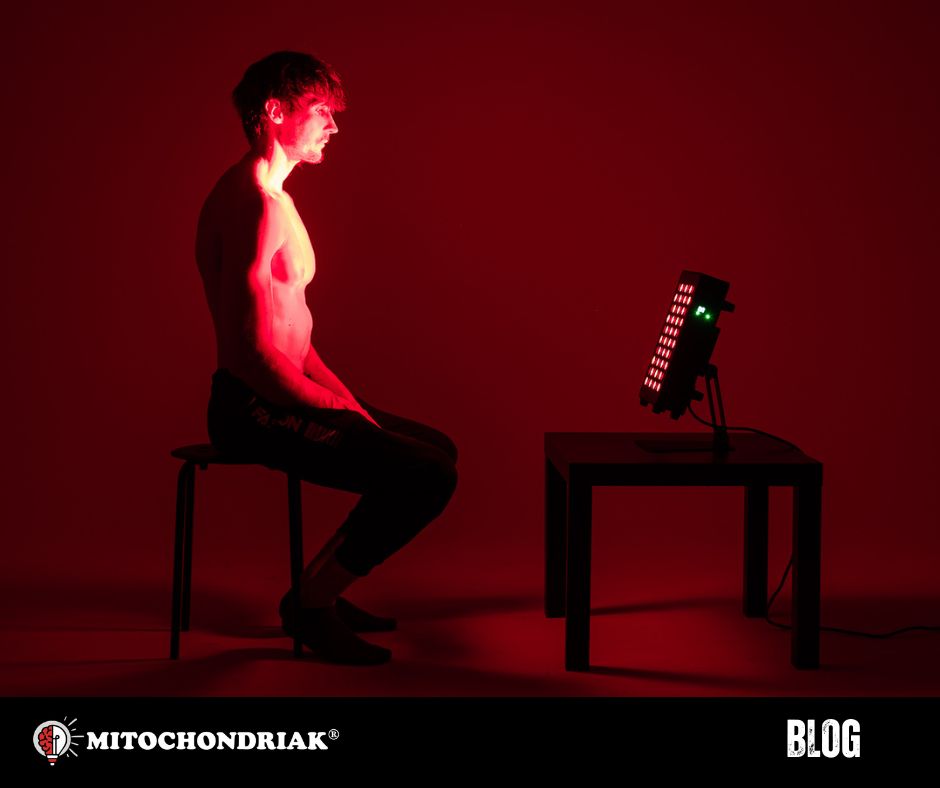
Red light therapy (RLT) uses specific wavelengths of red (630 nm, 670 nm, 760 nm) and near-infrared light (810 nm, 830 nm, 850 nm, 940 nm) to stimulate cellular processes. The primary target is ATP production inside mitochondria. It is a non-invasive method with growing scientific support that has moved from clinical centers directly into homes.
The mechanism is well documented. Photons of red and near-infrared light are absorbed by the enzyme cytochrome c oxidase (complex IV of the mitochondrial electron transport chain). The result is increased ATP production, reduced oxidative stress, and the release of nitric oxide.
Michael R. Hamblin of Harvard Medical School confirmed in his 2017 review that photobiomodulation has a positive effect on tissue regeneration, inflammation reduction, and collagen support when the correct wavelengths and dosing are applied (Hamblin, 2017).
A 2020 study by Shinhmar et al. from the UCL Institute of Ophthalmology (Glen Jeffery's laboratory) demonstrated that even brief exposure to 670 nm light improves mitochondrial function in the retina of older adults (Shinhmar et al., 2020).
The year 2026 marks a turning point. Consumers no longer want just "red light." They want measured parameters, specific wavelengths, and devices free from harmful flicker. This is where quality devices separate themselves from cheap imitations.
What types of red light therapy devices exist?
Red light therapy devices vary in size, power output, and coverage area. You can choose from compact devices for targeted local use all the way to half-body stackable panels for full-body coverage. Here is an overview of the main categories.
Local devices (face, knee, shoulder)
Small panels and therapeutic devices designed for targeted illumination of a single body area. Ideal for beginners, travel, or focused therapy on painful spots. This category includes the Mitochondriak® mini (portable, battery-powered, 12 dual LED diodes, 6 wavelengths) and the Mitochondriak® laser for precise spot therapy on joints and tendons.
Quarter-body panel (chest, back, desk)
A mid-sized panel suitable for office environments or for illuminating a larger body area. The Mitochondriak® Office Upgraded combines RED + NIR diodes across 7 wavelengths, features a touchscreen display with preset therapy programs, and fits on a desk next to your monitor.
Half-body and full-body stackable panels
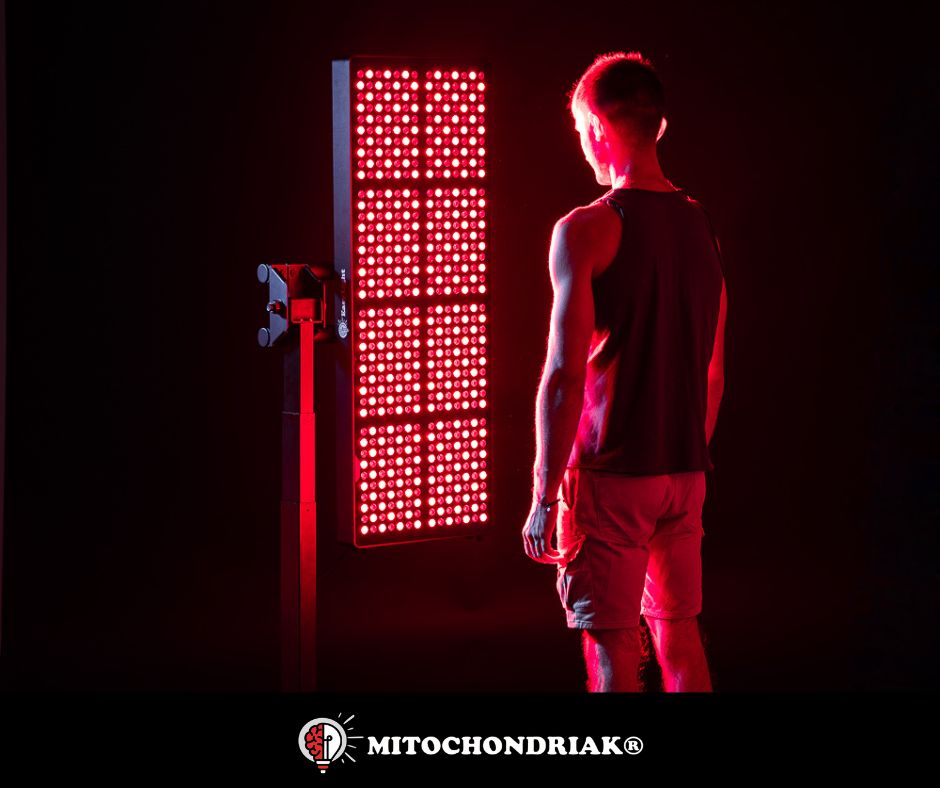
The most flexible category for home use. Two panels can be stacked on top of each other to cover the entire body. The Mitochondriak® Maxi Upgraded covers half the body; combining two units gives you complete full-body coverage. The Mitochondriak® Maxi UVB Upgraded adds UVB diodes for supporting vitamin D and melanin production alongside red and NIR therapy.
What should you look for when choosing a red light therapy panel?
A quality red light therapy panel differs from a cheap device in five measurable parameters. It is not about the brand name or the design. It is about the physics of light and what the device actually emits.
1. Wavelengths: 630, 670, 760 nm (RED) and 810, 830, 850, 940 nm (NIR)
Photobiomodulation only works at specific wavelengths. Red light at 630 nm, 670 nm, and 760 nm acts on surface tissues (skin, collagen, wounds), while near-infrared light (NIR) at 810 nm, 830 nm, 850 nm, and 940 nm penetrates deeper into muscles, joints, and bones. Mitochondriak® panels combine 7 to 9 wavelengths in a single device, setting them apart from single-wavelength panels commonly available on the market.
2. Irradiance (power per cm²)
Irradiance measures the actual light power reaching the skin, expressed in mW/cm². For a therapeutic effect, the recommended value is at least 30 to 50 mW/cm² at a distance of 15 to 20 cm from the panel. Mitochondriak® panels achieve values above 100 mW/cm² at contact distance, measured and documented for every device.
3. Flicker: the hidden problem of cheap panels
Most inexpensive LED panels flicker at a frequency of 100 to 120 Hz. The human eye cannot detect it, but the brain registers the stroboscopic effect. Long-term flicker exposure can cause headaches, fatigue, and nervous system stress. Mitochondriak® panels are engineered as flicker-free, with measured values below 1% flicker, confirmed by independent spectrometer and flicker meter readings.
4. Spectral purity and EMF emissions
A quality panel emits a clean spectrum without parasitic wavelengths. Electromagnetic emissions (EMF) at therapeutic distance should not exceed 0.5 µT. A serious manufacturer backs these parameters with actual measurements, not just marketing claims.
5. Certifications and support: specialist brand vs. anonymous marketplace
A panel from a generic marketplace may cost less, but it typically comes without measurable parameters, warranty, after-sales service, or expert advice. A specialized brand like Mitochondriak® offers CE, FCC, and RoHS certifications, warranty service, expert guidance, and transparent measurement data for every panel. That is a fundamental difference for a device you use on your body 10 to 20 minutes daily.
Where can you buy a quality red light therapy device?
In 2026, there are several ways to purchase a red light therapy panel. Not all of them are equal in terms of quality, expertise, and after-sales support.
Mitochondriak®: a European specialist in light therapy
Mitochondriak® is a European brand focused exclusively on red, infrared, and UVB light therapy devices. Unlike large generic marketplaces, Mitochondriak® offers:
- Measured parameters for every panel, including irradiance, spectrum, and flicker measurements, publicly available on each product page
- In-house research and development in collaboration with quantum biology and photobiomodulation expert Jaroslav Lachký
- A complete product range from the portable mini panel through the half-body Maxi to the multi-wavelength Maxi UVB with added UVB light
- Free expert guidance when selecting a device based on your health goal and coverage needs
- Worldwide shipping with free delivery on orders over $90
- Flicker-free technology across all panels with documented flicker below 1%
- CE, FCC, and RoHS certifications for all devices
Large marketplaces (Amazon, eBay)
On platforms like Amazon or eBay, you will find panels from various brands. The advantage is fast shipping and easy price comparison. The disadvantage: you will rarely find actual irradiance, spectrum, or flicker measurements for any panel. The assortment is generic, with the same store selling everything from supplements to fitness equipment.
Chinese marketplaces (AliExpress, Temu)
Lowest prices, but highest risk. Panels from Chinese platforms often list marketing specifications that do not match reality. Without measurable data, you have no way to verify what is actually hitting your body or what irradiance value you are receiving. Add to that: no after-sales service, unclear warranty terms, and zero expert guidance.
Why does a specialist matter?
For a device that you use on your skin and body 3 to 5 times a week, parameter transparency matters as much as price. Mitochondriak® publishes complete measurement reports, including independent spectrum and flicker tests for every model. A full overview of studies and benefits of red and infrared light therapy is available directly on the website.
How much does home red light therapy cost in 2026?
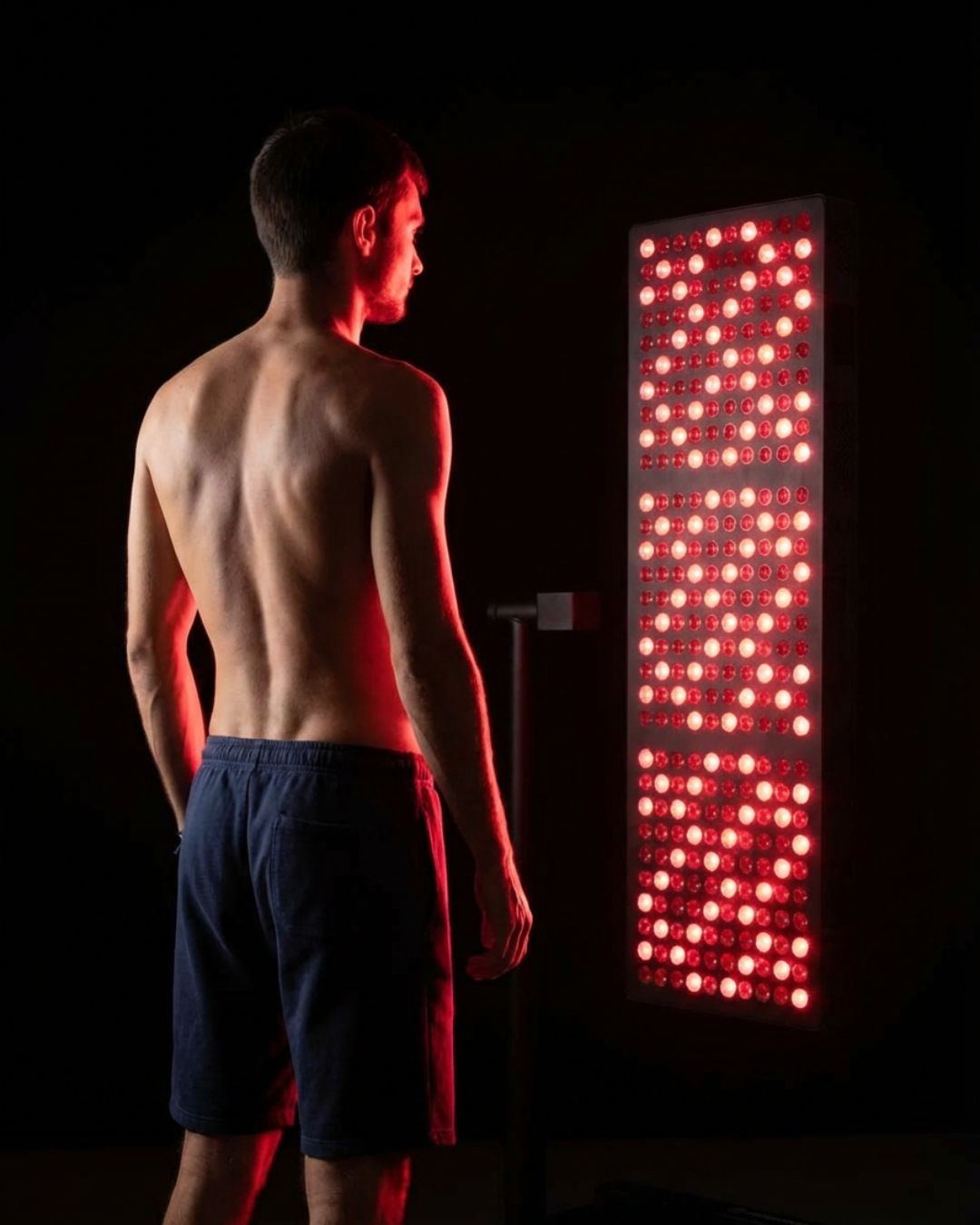
The price of a red light therapy device depends on panel size, the number and type of LED diodes, and the presence of additional features (UVB, touchscreen, preset programs). Here is a 2026 pricing overview of Mitochondriak® panels.
| Category | Device | Price (EUR) | Best for |
|---|---|---|---|
| Local (portable) | Mitochondriak® mini | from €270 | Beginners, travel, localized pain |
| Spot therapy | Mitochondriak® laser pulse | from €189 | Joints, tendons, acne, precise targeting |
| Quarter body | Mitochondriak® Office Upgraded | €699 | Office, face, chest, desk use |
| Half body | Mitochondriak® Maxi Upgraded | €1,399 | Home therapy, athletes, families |
| Half body + UVB | Mitochondriak® Maxi UVB Upgraded | €2,340 | Vitamin D, melanin, RED+NIR+Blue+UVA+UVB |
When you calculate the cost per session, a home panel is an investment that pays for itself quickly. A single red light therapy session at a clinic typically costs $20 to $50. A Mitochondriak® Maxi Upgraded at €1,399 pays for itself after roughly 30 to 70 clinic visits. Every session after that is free, anytime, from the comfort of your home.
Choose the right red light therapy panel for your needs
Whether you are looking for a compact panel for your face and joints, or a half-body solution that stacks for full-body coverage, Mitochondriak® offers devices with measured parameters, flicker-free technology, and expert guidance. Every panel comes with publicly available irradiance, spectrum, and flicker measurements.
Frequently Asked Questions
Is red light therapy safe for home use?
Yes, red and near-infrared light therapy is considered a safe, non-invasive method. Unlike UV radiation, wavelengths in the 630 to 940 nm range do not damage skin or DNA. It is important to follow the recommended distance (45 to 60 cm) and exposure time (10 to 20 minutes per body area). With a quality panel that has certified parameters, there is no risk of burns or overheating.
What is the difference between red and infrared light in a therapy panel?
Red light (630 nm, 670 nm, 760 nm) is visible and primarily acts on surface tissues: skin, collagen, minor wounds, and inflammation. Near-infrared light (NIR, 810 nm, 830 nm, 850 nm, 940 nm) is invisible and penetrates deeper into muscles, joints, bones, and the nervous system. Quality panels combine multiple wavelengths in a single device and are referred to as multi-wavelength panels.
How long and how often should you use a red light therapy panel at home?
The recommended session length is 10 to 20 minutes per body area, at a distance of 45 to 60 cm from the panel. Frequency depends on the goal: for recovery and general health, 3 to 5 times per week; for acute issues (pain, inflammation), daily use is possible. Consistency matters more than session length. Regular use delivers visible results after 4 to 6 weeks.
What size panel do I need for full-body coverage?
For full-body coverage, you can stack two Mitochondriak® Maxi Upgraded panels on top of each other. Each Maxi panel covers half the body, and two units together provide complete coverage from head to toe. For localized use on the face, knees, or shoulders, the Mitochondriak® mini or the Mitochondriak® Office Upgraded is sufficient.
Why is it important that a panel is flicker-free?
LED flicker at 100 to 120 Hz is invisible to the naked eye, but the brain processes it as stroboscopic stress. Long-term exposure can cause headaches, eye fatigue, and nervous system disruption. Mitochondriak® panels are engineered as flicker-free with documented flicker below 1%, confirmed by independent flicker meter measurements.
Can red light therapy be combined with UVB light?
Yes, combining RED + NIR + UVB is an advanced approach that stimulates mitochondria (RED/NIR) while also supporting vitamin D and melanin production in the skin (UVB). The Mitochondriak® Maxi UVB Upgraded integrates all three types of light in a single device. The UVB component should be used according to protocol, typically starting at 30 seconds and gradually increasing up to 3 minutes based on skin type.
Which wavelengths are most effective for photobiomodulation?
The most studied and clinically effective wavelengths are 630 nm, 670 nm, and 760 nm (red light) and 810 nm, 830 nm, 850 nm, and 940 nm (near-infrared light). These wavelengths are most efficiently absorbed by cytochrome c oxidase in the mitochondria, leading to increased ATP production. Mitochondriak® panels use a combination of 7 to 9 wavelengths for maximum therapeutic effect.
Sources and References
- Hamblin, M.R., 2017. Mechanisms and applications of the anti-inflammatory effects of photobiomodulation. PubMed
- Shinhmar, H. et al. (Jeffery lab, UCL), 2020. Optically improved mitochondrial function redeems aged human visual decline. PubMed
- de Freitas, L.F., Hamblin, M.R., 2016. Proposed Mechanisms of Photobiomodulation or Low-Level Light Therapy. PubMed
- Avci, P. et al., 2013. Low-level laser (light) therapy (LLLT) in skin: stimulating, healing, restoring. PubMed
- Mitochondriak®, Effects, Studies and Science behind light therapy. mitochondriak.com