
.png)
Red light therapy for arthritis and joint pain shows the most consistent evidence for osteoarthritis of the knee, where randomised trials report meaningful short-term pain relief. It uses red and near-infrared light to stimulate your cells, but it is a supportive tool, not a cure, and it never replaces medical care.
- What the evidence actually supports for arthritis and joint pain, and where uncertainty remains.
- How photobiomodulation works at the cellular level to calm inflammation.
- Why near-infrared light reaches deeper into a joint than red light alone.
- Realistic dosing per session for the knee, hand and lower back.
- Who should be cautious and when to see a doctor first.
- What is red light therapy arthritis and why does it matter?
- How does red light therapy arthritis work according to research?
- What benefits and limits can you realistically expect?
- How do you use red light therapy arthritis safely in practice?
- What should you watch out for and who should be careful?
- Summary: what should you remember?
- Frequently asked questions

What is red light therapy arthritis and why does it matter?
Red light therapy for arthritis means using specific wavelengths of red and near-infrared light, delivered by LED panels or bulbs, to help ease joint pain, stiffness and inflammation. It matters because it is a non-invasive, drug-free option that may complement standard care, especially for people who want to reduce their reliance on painkillers.
The technical name for this is photobiomodulation (PBM), and in clinical settings it has historically been called low-level laser therapy (LLLT). The two terms describe the same underlying idea: light at the right wavelength and dose can influence how your cells behave, without heating or damaging the tissue.
Arthritis is not a single condition. The two most common forms are very different beasts:
- Osteoarthritis (OA) is the "wear and tear" form, where cartilage gradually breaks down. It most often affects the knee, hips and hands.
- Rheumatoid arthritis (RA) is an autoimmune disease where your immune system attacks the joint lining, causing chronic inflammation.
This distinction is important, because the research evidence is stronger for some conditions than others. The most consistent findings come from studies on knee osteoarthritis, where the joint is relatively accessible to light. For deeper or more complex joints, and for autoimmune conditions like RA, the picture is more mixed. If you want the deeper cellular background, our guide to how photobiomodulation works at a cellular level covers the mechanism in detail.
One important boundary before we go further: this topic is often confused with using light for muscle pain and post-exercise recovery. Sore muscles and an arthritic joint are two different tissues with different research bases. Here we focus specifically on the joint itself, not general muscle soreness after training.
How does red light therapy arthritis work according to research?
According to research, red light therapy works by delivering photons that are absorbed by an enzyme called cytochrome c oxidase (CCO) inside your mitochondria. This boosts cellular energy production (ATP), improves oxygen use and helps regulate inflammatory signalling, which can translate into reduced pain and stiffness in a treated joint.
Let us unpack that step by step, because the mechanism is genuinely elegant and it is where the science is most solid.
When red and near-infrared photons reach your cells, they are absorbed by CCO, a key part of the mitochondrial energy chain. Photobiomodulation researcher Michael R. Hamblin (Harvard Medical School) has described how this absorption briefly displaces nitric oxide from the enzyme, which allows the mitochondria to produce more ATP [R]. More available energy means cells can repair and function more effectively.
Alongside the energy boost, light exposure appears to modulate reactive oxygen species (ROS) and calm the local inflammatory response. In an arthritic joint, chronic inflammation is a major driver of pain, so reducing inflammatory signalling is a plausible route to relief. This is the same anti-inflammatory pathway explored in our article on the science-backed benefits of red light therapy.
Does red light reach deep enough to affect a joint? This is the crucial practical question, and the answer depends heavily on wavelength. Not all "red light" penetrates equally.
- Red light (roughly 630 to 670 nm) is absorbed mostly in the skin and shallow tissue. It is excellent for surface concerns but has limited reach to a deep joint capsule.
- Near-infrared light (roughly 810 to 850 nm) penetrates significantly deeper, reaching into muscle, tendon and the tissues around a joint. For arthritis, NIR is the more relevant wavelength.
This is exactly why quality devices combine several wavelengths rather than relying on a single "big number". A panel that delivers a considered blend of red and near-infrared, for example 630, 670, 810, 830 and 850 nm, covers both the shallow anti-inflammatory effect and the deeper reach needed for a joint. When you compare devices, look for the specific wavelengths listed and, ideally, irradiance measured with both a solarmeter and a spectrometer at realistic distances rather than a single unexplained figure.
On the clinical side, the evidence is best summarised by systematic reviews and meta-analyses. A meta-analysis of low-level laser therapy for knee osteoarthritis found that it can reduce pain and improve function compared with placebo, particularly in the short term [R]. Broader reviews of photobiomodulation for pain reach similar conclusions across several musculoskeletal conditions [R]. Importantly, the Cochrane low-level laser therapy reviews have historically been more cautious, noting that results vary widely with dose, wavelength and study quality, which is why realistic expectations matter so much.
What benefits and limits can you realistically expect?
Realistically, you can expect modest short-term pain relief and improved function, most reliably in knee osteoarthritis. Red light therapy is not a cure and it does not regrow cartilage or reverse arthritis. Think of it as one supportive tool among several, with effects that build gradually over weeks of consistent use.
Let us be specific about what the evidence supports for each area, because overpromising helps no one.
The knee has the strongest evidence base. A systematic review and meta-analysis of low-level laser therapy for knee osteoarthritis concluded that it reduced pain and improved function versus placebo, especially in the short term [R]. Because the knee joint sits relatively close to the surface, near-infrared light has a realistic chance of reaching the tissues that matter, which is likely part of why results are more consistent here.
The lower back is the next most promising area. A systematic review and meta-analysis of photobiomodulation for chronic low back pain found reductions in both pain and disability compared with placebo [R]. The caveat is that "back pain" covers many different problems, so results are more variable than for a single, well-defined joint.
The hands are interesting because the joints are small and shallow, which theoretically suits light therapy well. Some trials of low-level laser therapy in rheumatoid arthritis of the hands have reported reduced pain and morning stiffness [R]. However, RA is an autoimmune disease, and light therapy does not switch off the underlying immune process. It may ease symptoms, but it cannot replace disease-modifying medication.
Now for the honest limits. The Cochrane reviews of low-level laser therapy have repeatedly stressed that outcomes depend heavily on dose, wavelength and treatment protocol, and that many older studies were small or of low quality. Effect sizes are often modest rather than dramatic, and benefits tend to be short-term, fading if treatment stops. Regarding regulation, several red light and laser devices hold FDA clearance for temporary relief of minor muscle and joint pain, but clearance is not the same as proof of a cure. It confirms a device meets safety and basic performance standards for a stated use, nothing more.
The practical takeaway: expect a helpful nudge, not a miracle. It works best when combined with movement, strength work and any treatment your doctor has prescribed.
How do you use red light therapy arthritis safely in practice?
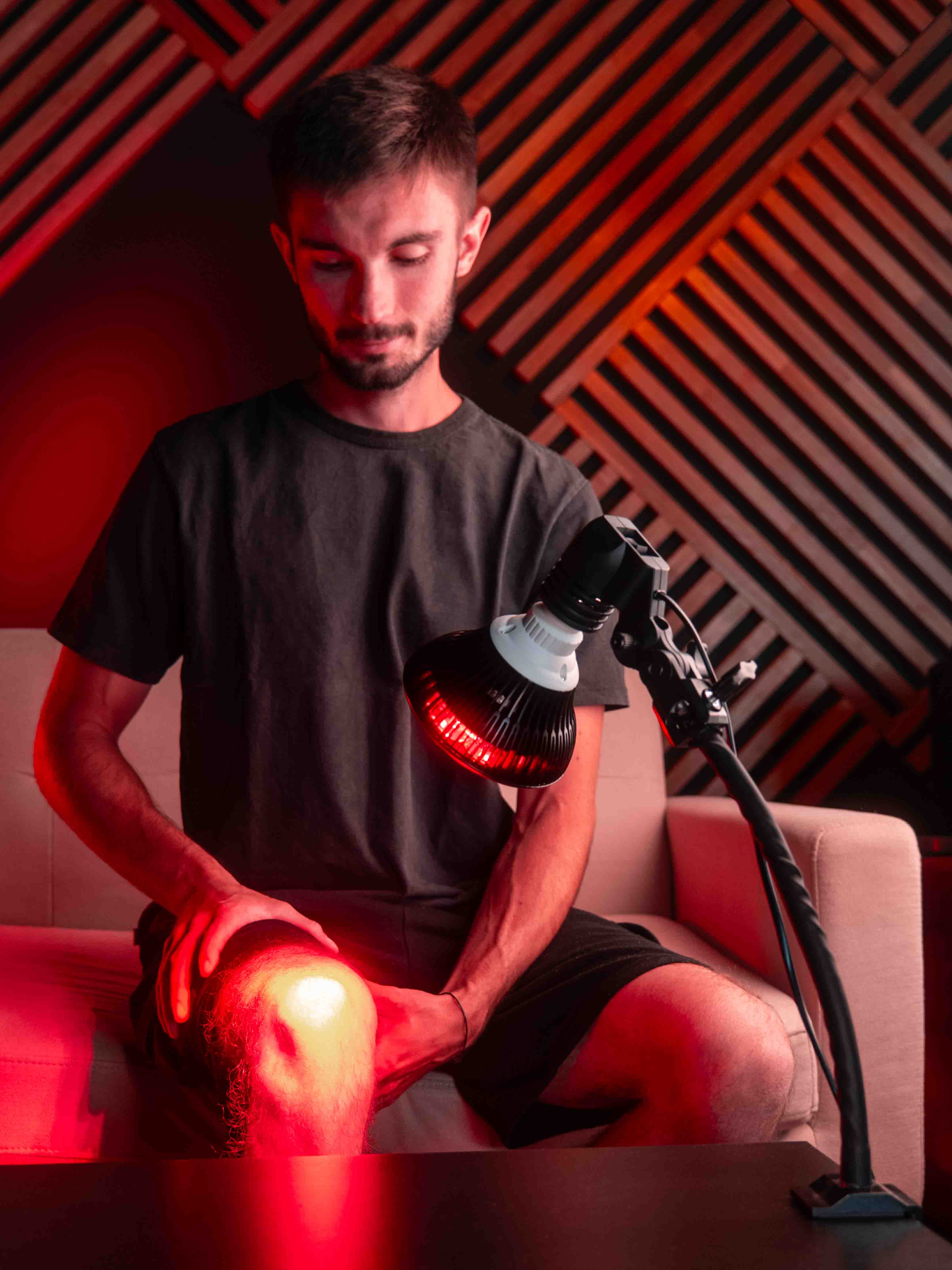
In practice, you position the device so the painful joint is evenly illuminated, treat for roughly 10 to 20 minutes per session, and repeat 3 to 5 times per week for several weeks. Consistency matters far more than any single long session. Always follow the specific distance and time guidance for your own device.
How long and how often should you treat a painful knee with red light? A sensible starting point for a knee, based on typical study protocols and device guidance, is a 10 to 20 minute session, most days of the week, for at least 4 to 6 weeks before judging the result. Joints respond slowly, so patience is essential.
Here is a simple, safe framework you can follow with any quality panel or bulb:
- Distance. For a classic mains-powered LED panel, keep it at least 30 cm from your skin. A typical treatment distance is around 30 to 60 cm. Never press a wired panel directly against the joint, both because of even coverage and because a sensible distance is preferable near mains-powered devices. Follow the exact distance stated for your specific device.
- Time. Start at 10 minutes per joint and build up to 20 minutes as it becomes comfortable.
- Frequency. Aim for 3 to 5 sessions per week. Daily use is generally fine, but rest days do no harm.
- Skin exposure. Light works best on bare skin. Clothing, and especially thick fabric, blocks a large portion of the light before it ever reaches the joint.
- Consistency. Treat the same joint regularly for at least 4 to 6 weeks before deciding whether it helps.
Wavelength choice matters for a joint. Because near-infrared penetrates deeper than red light, a device that combines both is the practical choice for arthritis rather than a red-only cosmetic panel. For a shallow joint like a finger, a smaller targeted device or bulb can be ideal, while a knee or lower back benefits from a larger panel that covers the whole area at once. If you are choosing hardware, our overview of what red light therapy can and cannot do is a useful companion, and you can browse suitable options in the red light therapy devices category.
Looking for a device that reaches the joint?
For arthritis and joint pain, the wavelength blend matters more than a single big number. A panel that combines red and near-infrared light gives you both the shallow anti-inflammatory effect and the deeper reach a joint needs.
What should you watch out for and who should be careful?
Red light therapy is considered very safe for most people, with side effects usually limited to mild, temporary warmth or redness. That said, it is not a replacement for medical care, and certain groups should check with a doctor first. If your joint pain is new, severe, swollen or worsening, get it assessed before self-treating.
Please treat the following as sensible precautions rather than scare tactics:
- See a doctor first if you have an undiagnosed joint problem, a hot and swollen joint, or a suspected infection or fracture. Light will not fix a structural problem that needs proper assessment.
- Rheumatoid arthritis and other autoimmune conditions. Red light may ease symptoms, but it does not treat the underlying disease. Keep taking prescribed medication and coordinate with your rheumatologist.
- Cancer. If you have or have had cancer, especially in the area you plan to treat, ask your oncologist before using photobiomodulation.
- Photosensitising medication. Some drugs increase light sensitivity. Check the leaflet or ask your pharmacist.
- Eyes. Do not stare into the light. Use the eye protection supplied with your device, particularly with bright near-infrared panels.
- Pregnancy. Evidence is limited, so treating over the abdomen during pregnancy is best avoided without medical advice.
The single most important point in this whole article: red light therapy is a complementary tool. It works alongside movement, weight management, physiotherapy and any medication your doctor prescribes. It does not, and should not, replace a proper diagnosis or an evidence-based treatment plan.
Summary: what should you remember?
If you take one thing away, let it be this: red light therapy for arthritis is promising and safe, but modest. The evidence is strongest for knee osteoarthritis, reasonably encouraging for chronic lower back pain, and more mixed for autoimmune conditions like rheumatoid arthritis. Across the board, benefits tend to be short-term pain relief and better function rather than a structural cure.
The mechanism is well understood and genuinely credible: red and especially near-infrared light reach your mitochondria, boost cellular energy and help calm inflammation in and around the joint. Because near-infrared penetrates deeper, it is the more relevant wavelength for a joint, which is why a combined red and near-infrared device is the sensible choice. Used consistently for 10 to 20 minutes, 3 to 5 times a week over several weeks, it may become a useful part of your routine. Just keep your expectations realistic, keep up your other treatments, and always speak to a healthcare professional about a painful joint before relying on light alone.
Frequently asked questions
Does red light therapy help with joint pain and arthritis?
It can help, most reliably with knee osteoarthritis, where randomised trials and meta-analyses report modest short-term reductions in pain and improved function [R]. Evidence for lower back pain is reasonably encouraging, while results for rheumatoid arthritis are more mixed. It eases symptoms rather than curing the condition.
How long and how often should you treat a painful knee with red light?
A practical starting point is a 10 to 20 minute session, 3 to 5 times per week, on bare skin, for at least 4 to 6 weeks before judging results. Joints respond slowly, so consistency beats intensity. Always follow the specific time and distance guidance provided for your own device.
Does red light reach deep enough to affect a joint?
It depends on wavelength. Red light around 630 to 670 nm stays mostly in the skin, while near-infrared light around 810 to 850 nm penetrates far deeper, reaching tissues around a joint [R]. For arthritis, near-infrared is the more relevant wavelength, which is why combined red and near-infrared devices are preferred.
Is red light therapy the same as treating muscle pain?
No. Sore muscles and an arthritic joint are different tissues with different research bases. This article focuses on the joint itself. If your issue is post-exercise soreness rather than joint pain, our guide on whether red light therapy helps with muscle pain is the more relevant read.
Are red light therapy devices FDA cleared for pain?
Several red light and laser devices hold FDA clearance for the temporary relief of minor muscle and joint pain and for improving local blood circulation. Clearance confirms a device meets safety and basic performance standards for that stated use. It is not, however, proof that the device cures arthritis.
Can red light therapy replace my arthritis medication?
No. Red light therapy is a complementary tool, not a substitute for medical care. This is especially important for rheumatoid arthritis and other autoimmune conditions, where prescribed medication controls the underlying disease. Keep taking your treatment and speak to your doctor before making any changes.
Sources and references
- Y. J. Wang. 2014. Efficacy of low-level laser therapy in the treatment of knee osteoarthritis: a systematic review and meta-analysis pubmed.ncbi.nlm.nih.gov
- J. J. Huang. 2015. Efficacy of low-level laser therapy in the management of osteoarthritis: a systematic review and meta-analysis of randomized controlled trials pubmed.ncbi.nlm.nih.gov
- A. M. F. de Paula. 2020. Photobiomodulation Therapy for Low Back Pain: A Systematic Review and Meta-Analysis pubmed.ncbi.nlm.nih.gov
- Michael R. Hamblin. 2017. The Nuts and Bolts of Low-Level Laser (Light) Therapy pmc.ncbi.nlm.nih.gov