.png)
Your chronotype is your body's natural preference for when to sleep and wake, and it explains why some people spring out of bed at 6 a.m. while others hit their stride at midnight. Understanding whether you are a morning lark, a night owl, or somewhere in between lets you time light, screens, and sleep to your biology instead of fighting it, especially now that September is pulling summer schedules back into line.
- What a chronotype is and how it differs from your circadian rhythm.
- How to estimate your own chronotype at home using the mid-sleep on free days method, no lab test required.
- The science behind why chronotype is largely genetic and shifts across your lifespan.
- Concrete morning light, evening light, and screen timing rules tailored to morning larks and night owls.
- Why late chronotypes benefit most from blocking evening blue light when screens are unavoidable.
- What is chronotype and why does it matter?
- How does chronotype work according to research?
- What benefits and limits can you realistically expect?
- How do you use chronotype safely in practice?
- What should you watch out for and who should be careful?
- Summary: what should you remember?
- Frequently asked questions
What is chronotype and why does it matter?
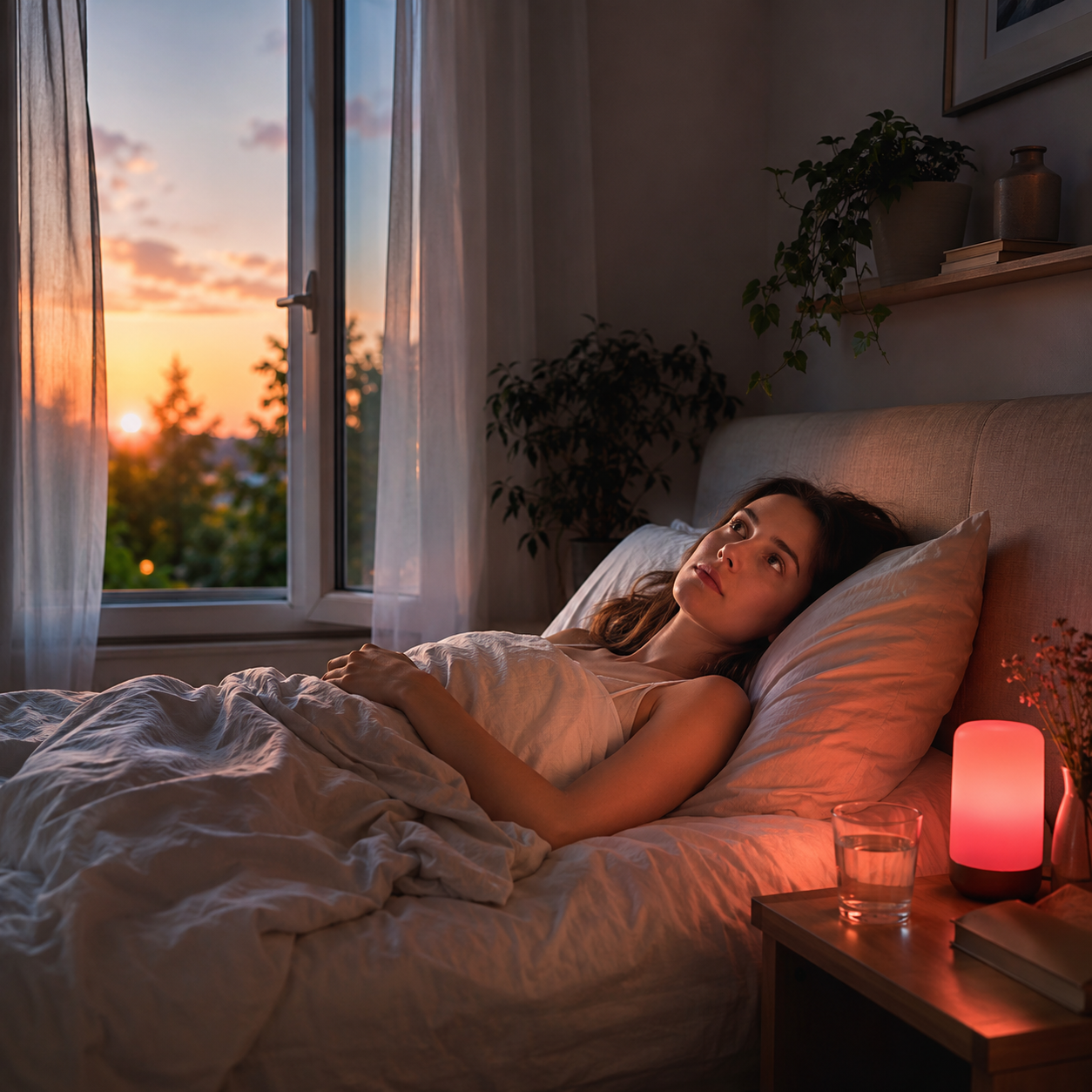
A chronotype is your individual biological tendency toward being active and alert at certain times of day. In plain terms, it is where your internal clock naturally sits: some people are wired to wake and peak early, others feel most switched-on in the late evening. Chronotype matters because it shapes your energy, mood, and sleep quality every single day.
Most people fall into one of three broad groups. Morning chronotypes, often called larks, wake early with ease and fade in the evening. Late chronotypes, the classic night owls, struggle with early mornings but come alive after dark. The majority of us sit somewhere in the middle as intermediate types, leaning slightly one way or the other.
This is not just a personality quirk. Your chronotype determines when your body releases cortisol to wake you up and when it starts producing melatonin to prepare for sleep. When your schedule clashes with your chronotype, you accumulate what researchers call social jetlag, the mismatch between your body clock and the clock on the wall. That mismatch drags on daytime performance and how rested you feel.
September is the perfect moment to think about this. After a summer of late sunsets and drifting bedtimes, school and work schedules snap back and many people suddenly feel like they are running against their own biology. Knowing your chronotype gives you a starting point for realigning gently, rather than forcing yourself into a rhythm that never quite fits.
How does chronotype work according to research?
Chronotype works through a combination of genetics, age, and light exposure that together set the timing of your internal clock. It is largely inherited, but it is not fixed for life, and daily light signals can nudge it earlier or later. The key research distinction is that chronotype is your clock's preferred position, while the circadian rhythm is the underlying 24-hour process itself.
To understand the difference, think of the circadian rhythm as a roughly 24-hour cycle that governs sleep, hormones, and body temperature in every human. Your chronotype is simply where that cycle is set for you personally, whether it runs early or late relative to the sun. If you want the full picture of the underlying cycle, our detailed guide on the circadian rhythm and how to optimize it is the natural companion to this article.
Researchers measure chronotype in two main ways. The most practical concept for you at home is mid-sleep on free days, popularised by chronobiologist Till Roenneberg through the Munich Chronotype Questionnaire (MCTQ). The idea is elegant: on days with no alarm, note the time you fall asleep and the time you naturally wake, then find the midpoint between them. An early midpoint suggests a morning type, a late one points to a night owl. The other widely used scientific tool is the Morningness-Eveningness Questionnaire (MEQ), which classifies people through a validated set of preference questions.
Genetics do most of the heavy lifting. Variations in so-called clock genes influence whether your internal timing runs fast or slow, which is why chronotype tends to run in families. Age matters too. Children are typically early types, adolescents shift dramatically later during their teens, and the tendency slowly moves back toward morningness through adulthood. This is why teenagers genuinely struggle with early school starts, a point the American Academy of Sleep Medicine has repeatedly raised in its guidance on healthy sleep timing.
Light is the master signal that keeps all of this anchored to the outside world. Morning daylight advances the clock, helping you wake and sleep earlier, while bright light in the evening delays it, pushing you later. Studies on evening exposure to blue-rich screen light have shown measurable shifts in circadian physiology and next-morning performance, which is exactly why light timing, and not just sleep effort, becomes the practical lever for working with your chronotype.
What benefits and limits can you realistically expect?
Working with your chronotype can realistically improve how quickly you fall asleep, how alert you feel in the morning, and how stable your daytime energy is. What it cannot do is turn a lifelong night owl into a natural early riser overnight. The honest goal is to reduce the mismatch between your biology and your schedule, not to erase your genetic tendency.
The most tangible benefit is smaller social jetlag. When your weekday and weekend sleep timing drift far apart, the effect on Monday morning resembles flying across time zones. By anchoring your light exposure and bedtime closer to your true chronotype, you shrink that gap and wake feeling less foggy. This is especially valuable in September, when summer freedom collides with fixed school and work starts.
You can also expect better-timed energy. A morning chronotype who front-loads demanding work before noon, or a night owl who schedules deep focus for late afternoon, is simply riding their natural alertness curve rather than pushing against it. Aligning tasks to your peak hours often does more for productivity than another cup of coffee.
The limits are equally important to state plainly. Genetics set a strong baseline, and light can typically shift your clock by a modest amount, not by many hours at will. Age moves the target too, so your chronotype at 16 is not the one you will have at 45. And no light routine replaces adequate sleep duration. If you consistently sleep too little, optimising timing will not rescue you. For evening screen use, if you cannot avoid it, blocking blue light is a practical mitigation rather than a cure. Anyone using screens late benefits from blue light blocking glasses, but they work best as one part of a wider light routine.
How do you use chronotype safely in practice?
Start by estimating your chronotype using the mid-sleep on free days method, then apply light rules that match your type. The core principle is universal: bright morning light advances your clock, and dim evening light protects your melatonin. What changes between types is how aggressively you apply each lever.
First, find your midpoint. Over a few days with no alarm, record when you fall asleep and when you wake naturally, then take the middle of that window. An early midpoint (before roughly 3:30 a.m.) leans morning, a late one (after roughly 5 a.m.) leans night owl, and anything between is intermediate. This is a rough guide, not a diagnosis, but it is enough to choose a routine.
If you are a morning chronotype (lark)
Get outside for 10 to 20 minutes of daylight soon after waking to reinforce your early rhythm. In the evening, start dimming household lights early and finish demanding tasks before you fade. Aim to switch off screens well before your naturally early bedtime, and keep the bedroom dark. Larks rarely need to fight their clock, so the priority is simply protecting the early wind-down that comes naturally.
If you are a night owl (late chronotype)
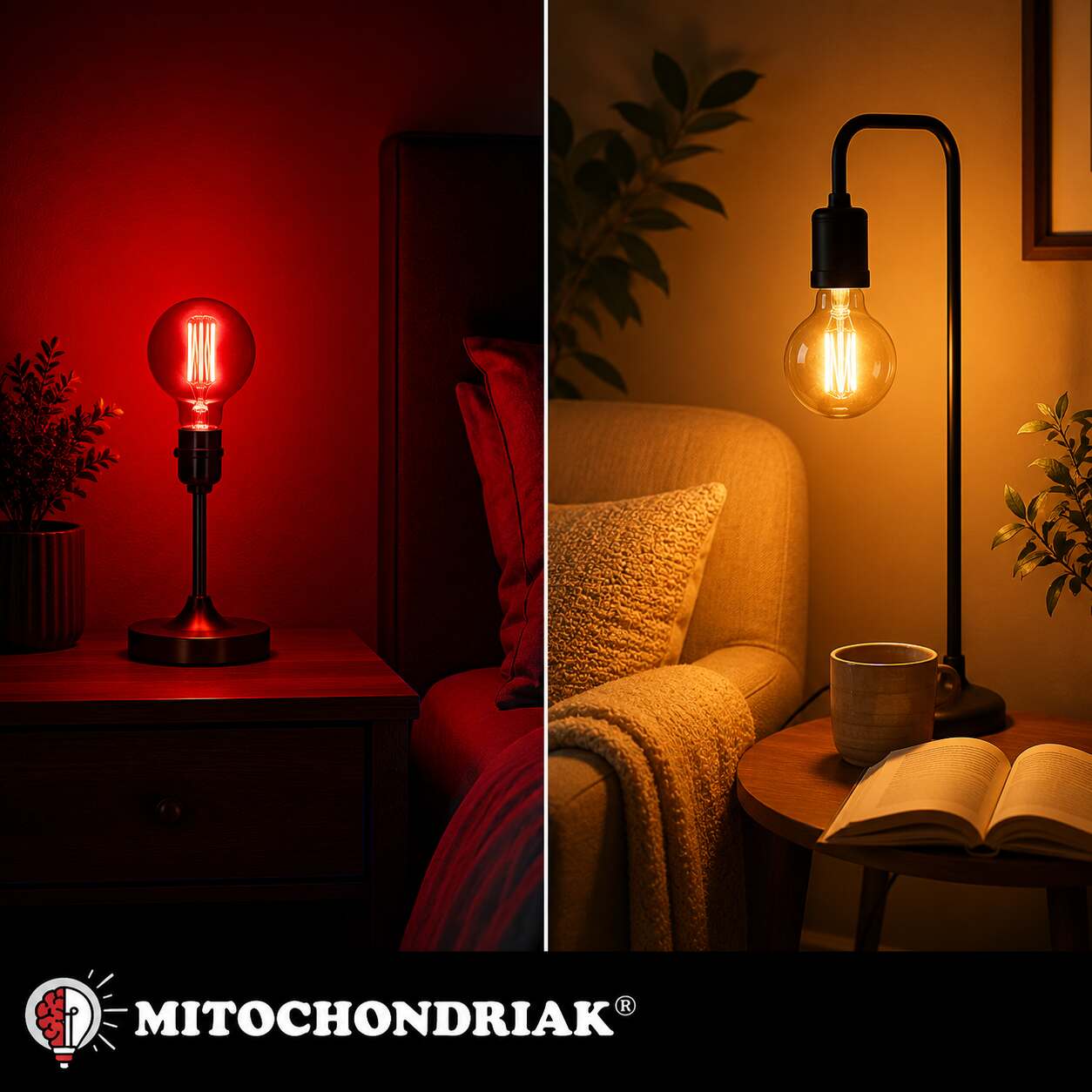
Your challenge is nudging the clock earlier without force. Chase bright light within the first hour of waking, ideally natural daylight or a bright indoor equivalent, because morning light is the strongest signal to advance your rhythm. Then guard the evening ruthlessly: dim overhead lights after sunset, switch to warm low-level lighting, and cut off bright screens at least an hour before your target bedtime. When evening screens are unavoidable, wear blue light blocking glasses to limit the blue light that suppresses melatonin. Shift your bedtime earlier gradually, by 15 minutes every few days, rather than in one jump.
If you are an intermediate type
You have the most flexibility. Keep a consistent wake time seven days a week, get morning daylight, and taper light in the evening. Consistency matters more than perfection here, because your clock is already well positioned and the main risk is letting weekend habits drag it around. If you want to support a naturally rising melatonin curve, our guide on how to raise melatonin naturally in the evening pairs well with these light rules.
What should you watch out for and who should be careful?
The main thing to watch out for is treating chronotype rules as a substitute for enough sleep or for medical care. Light timing helps you position your clock, but it cannot compensate for chronic sleep deprivation, and certain groups should be cautious or seek professional guidance before making big changes.
Do not chase an extreme early schedule if your biology and job simply do not allow it. Forcing a night owl into a 5 a.m. routine through willpower alone usually backfires into more social jetlag, not less. Shift the clock gradually with morning light and be patient. Equally, avoid bright morning light exposure combined with late-night screen use as a way to "have it both ways"; the two signals cancel out and leave your rhythm scrambled.
Some people should take extra care. Teenagers naturally run late and need later start times where possible, a point the American Academy of Sleep Medicine has stressed, so do not label a teen as lazy for a genuinely late clock. Anyone with a suspected circadian rhythm sleep-wake disorder, significant insomnia, or a condition affecting light sensitivity should consult a clinician rather than self-managing with light timing alone. Shift workers face a harder problem entirely and often need tailored strategies. This article is educational and does not replace individual medical advice.
Protect your sleep when evening screens are unavoidable
Night owls and anyone glued to a screen after dark face the same problem: blue light delays melatonin and pushes your clock even later. If you cannot switch the screens off, the next best step is to stop that blue light from reaching your eyes in the crucial hours before bed.
Summary: what should you remember?
Your chronotype is your body's built-in preference for when to sleep, wake, and feel alert, and it sits on a spectrum from early morning larks through intermediate types to late night owls. It is largely genetic, shifts predictably with age, and is anchored to the outside world by light. The practical value of knowing yours is that you can stop fighting your biology and start timing your day around it, which is exactly the reset many people need in September as summer schedules unwind.
The action plan is refreshingly simple. Estimate your type with the mid-sleep on free days method, then use light as your main tool: bright daylight early to advance the clock, and dim, warm, blue-light-free evenings to protect melatonin. Morning larks mostly need to guard their early wind-down, night owls need aggressive morning light and disciplined evenings, and intermediate types thrive on consistency. When evening screens are unavoidable, blocking blue light is the single most useful mitigation for late chronotypes. Work with your clock, respect the limits of what light can do, and give any adjustment a couple of weeks to settle.
Frequently asked questions
What is a chronotype and how do I find mine without a lab test?
A chronotype is your natural preference for when to sleep, wake, and feel alert. You can estimate yours at home using the mid-sleep on free days method: over several days without an alarm, note when you fall asleep and wake naturally, then find the midpoint. An early midpoint suggests a morning type, a late one a night owl. No lab test is required for a useful estimate.
What is the difference between a chronotype and a circadian rhythm?
The circadian rhythm is the roughly 24-hour internal cycle that governs sleep, hormones, and body temperature in everyone. Your chronotype is simply where that cycle is set for you personally, whether it naturally runs early or late. In short, the circadian rhythm is the universal process, and the chronotype is your individual timing within it.
How should a night owl time morning light exposure?
Night owls should seek bright light within the first hour of waking, ideally natural daylight or a bright indoor equivalent, because morning light is the strongest signal for advancing the body clock earlier. Combine this with strict evening dimming and gradually shift bedtime earlier by about 15 minutes every few days. Morning light plus disciplined evenings work together; one without the other is far less effective.
Can I actually change my chronotype?
You can shift it modestly, but you cannot fully override your genetics. Consistent morning light, dim evenings, and a stable schedule can nudge a late clock earlier over weeks. However, your underlying tendency remains, and age will continue to move it naturally. The realistic aim is to reduce the mismatch between your biology and your schedule, not to become a completely different type.
Why do teenagers seem to be extreme night owls?
Chronotype shifts dramatically later during adolescence for biological reasons, so most teenagers genuinely run late rather than simply staying up by choice. This is why early school start times can clash so badly with their clocks. The American Academy of Sleep Medicine has repeatedly highlighted this mismatch, so a persistently late teen sleep pattern usually reflects biology, not laziness.
Do blue light blocking glasses help if I have to use screens at night?
Yes, they can help when evening screen use is unavoidable, because they limit the blue light that suppresses melatonin and delays your clock. They are especially useful for night owls trying to shift earlier. Treat them as one practical part of a wider routine, dimming lights and cutting screens where possible, rather than a standalone fix for poor sleep timing.
Sources and references
- Roenneberg, T.. 2007. The Munich Chronotype Questionnaire (MCTQ): A method for assessing mid-sleep on free days as a proxy for chronotype pubmed.ncbi.nlm.nih.gov
- Cajochen. 2011. Evening exposure to a LED-backlit computer screen affects circadian physiology and cognitive performance pubmed.ncbi.nlm.nih.gov
- Cajochen, C.. 2011. Light exposure and its effects on sleep and circadian rhythms: a systematic review pubmed.ncbi.nlm.nih.gov
- O'Hagan. 2016. Low-energy light bulbs, computers, tablets and the blue light hazard pubmed.ncbi.nlm.nih.gov
- Ostrin, L. A.. 2017. Blue light-blocking glasses as a means to improve sleep and reduce symptoms of eye strain: a review pubmed.ncbi.nlm.nih.gov
- Shechter. 2018. Blocking nocturnal blue light for insomnia: a randomized controlled trial pubmed.ncbi.nlm.nih.gov
- American Academy of Sleep Medicine. 2015. The American Academy of Sleep Medicine (AASM) position statement on circadian rhythm sleep-wake disorders jcsm.aasm.org