.png)
UV light from infrared panels can support the production of vitamin D, melanin, and your circadian rhythm right in the comfort of your home. In this guide, we show you how to use it safely, effectively, and in line with what current science says about UVB light.
- What type of UV light Mitochondriak® infrared panels contain and why it matters for your health
- How to correctly set distance, duration, and frequency for at-home UVB therapy
- Who is UVB from a panel suitable for and who should be extra cautious
- What science says about home UVB phototherapy and its safety
- Practical tips for combining UVB with red and near-infrared light
- What is UV light in infrared panels and why is it there?
- How to set up UVB therapy at home correctly?
- Who is UVB from an infrared panel suitable for and who should be cautious?
- How to combine UV light with red and near-infrared?
- What are the most common mistakes in home UVB therapy?
- Frequently asked questions
What is UV light in infrared panels and why is it there?
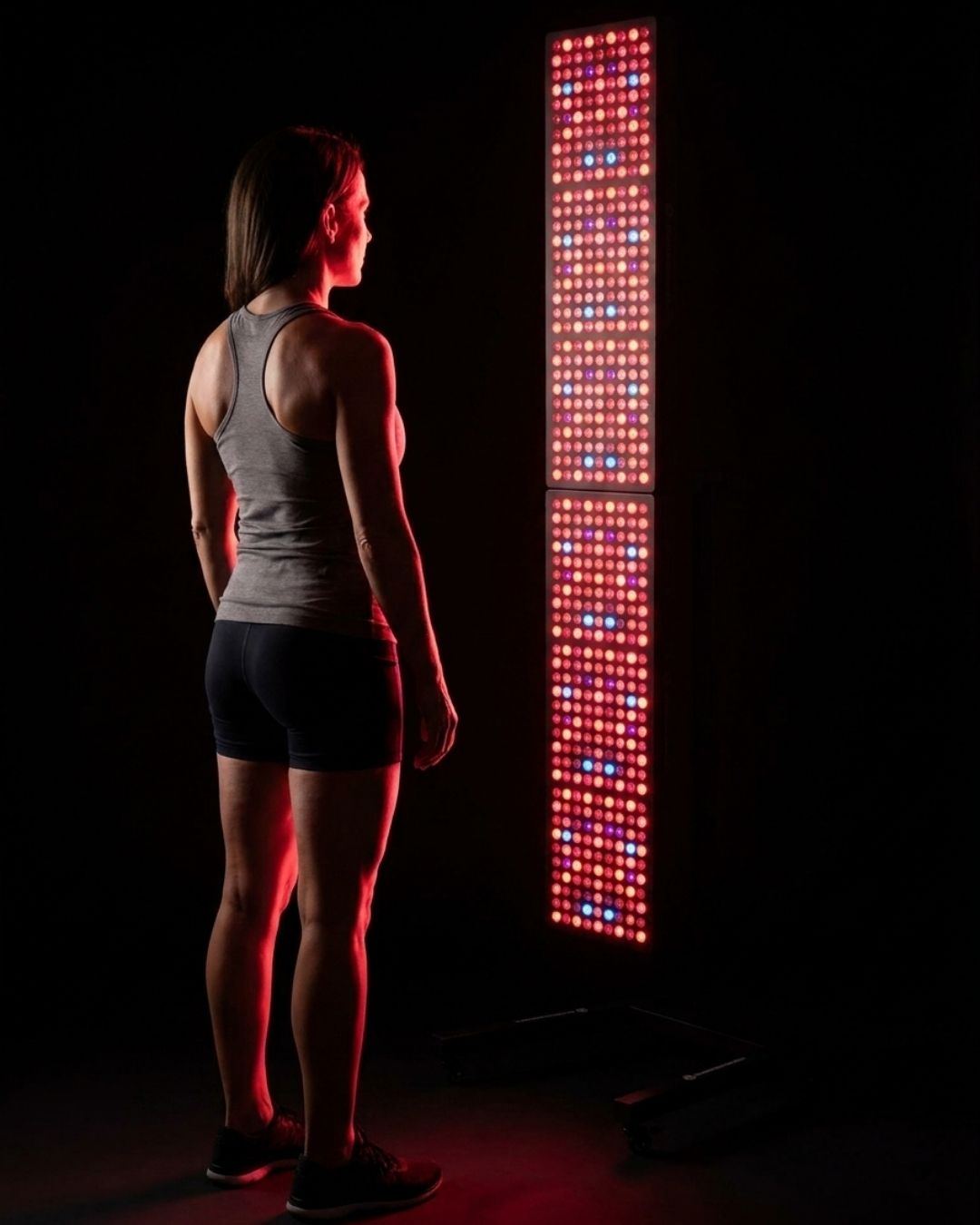
UV light in Mitochondriak® infrared panels covers wavelengths in the UVA and UVB spectrum, which stimulate vitamin D production directly in the skin, support melanin production, and activate non-visual photoreceptors in the body, such as neuropsin (OPN5). Mitochondriak® Maxi UVB Upgraded features 9 wavelengths: 295, 380, 480, 630, 670, 760, 810, 830, and 850 nm.
Most people know UVB primarily from sunlight. The problem is that at higher latitudes, sufficient UVB intensity is only available for a few months each year. During winter months, the UV index drops so low that your skin cannot synthesise vitamin D regardless of how much time you spend outside. This is precisely why Mitochondriak® developed infrared panels with added UV to fill this gap.
The 295 nm wavelength found in the Mitochondriak® Maxi UVB Upgraded falls within the most effective part of the UVB spectrum for vitamin D synthesis. UVB light acts on the skin in three key areas: it triggers the conversion of 7-dehydrocholesterol into previtamin D3, activates melanocytes to produce melanin, and according to research, also helps with certain skin conditions such as psoriasis and vitiligo. A randomised clinical trial published in 2024 confirmed that home-based UVB phototherapy is just as effective as in-office treatment, with patients showing better adherence to their therapy. [R]
Note: The Mitochondriak® Maxi UVB Upgraded is currently available for pre-order with delivery in October 2026. If you want to start red and near-infrared light therapy right away, check out the Mitochondriak® Maxi Upgraded, which is in stock and features 7 wavelengths (630, 670, 760, 810, 830, 850, and 940 nm).
How to set up UVB therapy at home correctly?
Setting up home UVB therapy correctly depends on three key parameters: distance from the panel, exposure duration, and session frequency. The general principle is: start with short exposures and gradually increase, just as you would when building a solar callus in the sun.
Step 1: Test your light sensitivity
Before using UV light on the panel for the first time, we recommend using only red and near-infrared light (RED + NIR) for several days. Turn them on and expose your forearm from a distance of 15 cm for 2 to 3 minutes. If you experience any redness or discomfort, you may be light-sensitive and we recommend consulting a specialist. If everything is fine, proceed to the next step.
Step 2: Start with short UV sessions
For larger Maxi UVB panels, we recommend starting with 30 seconds of UV light from a distance of 30 cm from your body. Monitor your skin. Mild redness is normal and desirable, but your skin should not sting, hurt, or feel uncomfortable to the touch. If no adverse reaction appears within 24 hours, you can gradually extend the time by a few seconds at the next session. The maximum is 3 minutes of UV light per session.
According to the Australian consensus on UVB phototherapy, the initial dose is typically set at 70% of the minimal erythemal dose (MED) for the given skin type and is gradually increased by 10 to 20%. [R]
Step 3: Set the frequency
We recommend turning on UV light on the device a maximum of twice per day with at least 120 minutes between uses. The standard protocol for home UVB phototherapy according to the literature is 3 sessions per week with a minimum 24-hour interval. [R] Never apply UV light on two consecutive days without monitoring your skin's response.
Step 4: Proper timing during the day
Use UV light only when there is bright daylight outside. For devices with UVB (such as the Maxi UVB), we recommend using it at least 2 hours after sunrise and no later than 2 hours before sunset. Always turn on UV light together with NIR, ideally with both red and near-infrared.
Who is UVB from an infrared panel suitable for and who should be cautious?
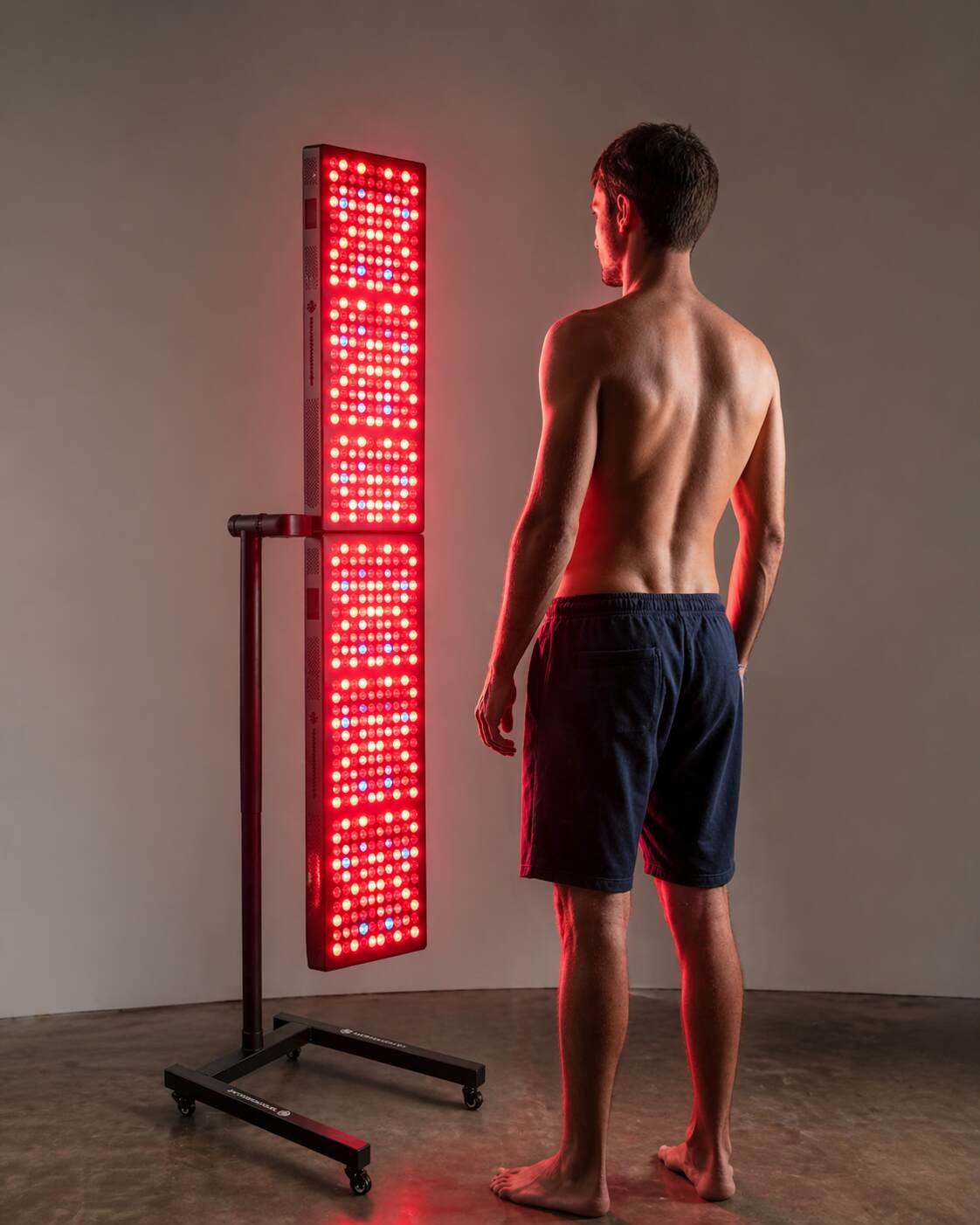
UVB light from an infrared panel is suitable for most adults who want to support vitamin D production, healthy skin, or their circadian rhythm. However, extra caution should be exercised by people with very fair skin, those taking photosensitising medications, and individuals with a history of skin conditions.
Home UVB phototherapy has been used in clinical practice since the 1990s, and its safety profile according to systematic reviews is comparable to in-office phototherapy. [R] The key to safety is following a gradual dose increase and monitoring your skin's response.
Extra caution is warranted for:
- Those taking photosensitising medications (certain antibiotics, diuretics, antidepressants)
- People diagnosed with lupus or xeroderma pigmentosum
- Those with a history of melanoma or multiple atypical moles
- Pregnancy (consult your doctor)
For the conditions listed above, we recommend consulting a dermatologist before starting home UVB therapy.
How to combine UV light with red and near-infrared?
Combining UVB light with red and near-infrared light is one of the greatest advantages of Mitochondriak® infrared panels with added UV. Mitochondriak® Maxi Upgraded features 7 wavelengths of red and near-infrared light (630, 670, 760, 810, 830, 850, and 940 nm), which help prepare the skin for UV exposure while accelerating its recovery. The Mitochondriak® Maxi UVB Upgraded adds UVB (295 nm), UVA (380 nm), and blue (480 nm) to these wavelengths.
Research shows that pre-application of red and near-infrared light in the 630 to 940 nm range can increase the skin's resistance to UV damage. This effect is related to the activation of protective mechanisms in cells, including stimulation of antioxidant enzymes and support of the skin's natural defences.
Recommended protocol for combination use:
- Turn on red and near-infrared light on the panel and set the timer for 5 to 10 minutes
- Then activate the UV mode for the designated time (30 seconds to 3 minutes depending on your progress)
- Always turn on UV light together with NIR, ideally with both red and near-infrared
This approach mirrors the logic of natural sun adaptation, where morning light is rich in red and near-infrared wavelengths and UVB arrives later, when the skin is "prepared."
What are the most common mistakes in home UVB therapy?
The most common mistake in home UVB therapy is an initial exposure that is too long. Many people assume that longer sessions will bring faster results. The opposite is true: too much UV leads to redness or even skin burns, and the body must invest energy into repairing damage instead of producing vitamin D.
Other common mistakes:
- Skipping protective eyewear: UVB light can damage the cornea and lens. During every session with the UV component, wear protective goggles, which are included with every Mitochondriak® panel.
- Too frequent application: UV therapy every day does not provide better results. Your skin needs at least 24 hours to recover between sessions.
- Ignoring skin reactions: If redness persists for longer than 24 hours after a session, reduce the dose by 25 to 50% at the next session.
- Uneven exposure: Expose your skin evenly, both front and back. Cover areas you do not want to expose (face, area around the eyes) with clothing.
- Using UV light on its own: We do not recommend turning on UV light without red and near-infrared light. Always activate UV together with NIR, ideally with RED as well.
It is also important to pay attention to your overall vitamin D status. UV therapy from a panel is a complement to natural sunlight, not a replacement. Ideally, combine UVB from the panel with regular time outdoors, especially during morning and late-morning hours, when your body naturally builds a solar callus.
Want UV light built into your infrared panel?
Mitochondriak® Maxi UVB Upgraded combines 9 wavelengths including UVB (295 nm) for vitamin D production, UVA (380 nm) for nitric oxide, and blue (480 nm) for opsins, along with red and near-infrared light (630 to 850 nm). The device is currently available for pre-order at a 20% discount with delivery in October 2026. If you want to start red and near-infrared light therapy right away, Mitochondriak® Maxi Upgraded is in stock and features 7 wavelengths (630 to 940 nm).
Frequently asked questions
Can I use UV light from the infrared panel every day?
The recommended frequency is a maximum of twice per day with at least 120 minutes between uses. Most expert protocols recommend 3 sessions per week. Daily UVB application increases the risk of skin irritation and does not provide better results for vitamin D production.
Do I need protective goggles for UVB therapy from a panel?
Yes, protective goggles with a UV filter are essential during every session when the UV component is active. UVB light can damage the cornea and lens. Goggles are included with every Mitochondriak® infrared panel. Never look directly at the device with UV turned on.
How much vitamin D does the body produce during UVB therapy from a panel?
The amount depends on skin type, exposed area, and session length. The 295 nm wavelength in the Mitochondriak® Maxi UVB Upgraded falls within the most effective part of the UVB spectrum for vitamin D synthesis. A short UVB exposure on a larger skin area (torso, legs) can stimulate vitamin D production comparable to midday sun exposure in summer.
Is UVB from an infrared panel safe for children?
Home UVB phototherapy is used in clinical practice for children as well, but always under professional supervision. For children, we recommend consulting a paediatrician or dermatologist before starting any UV therapy.
When during the day should I use UV light on the device?
We recommend using UV light from the panel only when there is bright daylight outside. For devices with UVB, at least 2 hours after sunrise and no later than 2 hours before sunset. Red and near-infrared light (without UV) can be used from sunrise to sunset.
Can I combine UVB from the panel with sun exposure on the same day?
Yes, but you need to account for the total UV dose. If you plan a longer time in the sun, skip or shorten the UVB session from the panel that day. The goal is to avoid excessive cumulative exposure.
- Koek MBG et al. (2024). Home- vs Office-Based Narrowband UV-B Phototherapy for Patients With Psoriasis. JAMA Dermatology. PMC11425190
- Kaur HS et al. (2022). Narrow-band UVB phototherapy — Australian consensus-based clinical management recommendations. Australasian Journal of Dermatology. PMC9541837
- Lim HW, Silpa-Archa N, Amadi U et al. (2014). A Practical Approach to Home UVB Phototherapy for the Treatment of Generalized Psoriasis. Dermatology and Therapy. PMC4151182
- Wong T, Hsu L, Liao W (2013). The Patient's Guide to Psoriasis Treatment. Part 1: UVB Phototherapy. Dermatology and Therapy. PMC4972735