
.png)
Your feet contain more than 200,000 nerve endings, yet most of the year you keep them locked inside thick-soled shoes. April is the month when the ground begins to warm, grass starts growing, and your body naturally craves contact with the earth. Walking barefoot is not a hipster trend, but one of the oldest and simplest biohacks we have. Starting now means that by summer your feet will be stronger, more sensitive, and ready for any terrain. In this article, we’ll show you how to transition to barefoot walking without pain, what happens inside your body, and why April is the best time of the year to begin.
Article Summary
- Why April is the best time to start barefoot walking
- What happens in your body when you walk barefoot
- How to start safely: a 4-week plan
- Where to walk barefoot and what surfaces to avoid
- Barefoot shoes as a bridge between nature and the city
- Summary
- Frequently Asked Questions
Why April is the best time to start barefoot walking
In Central Europe, ground temperature in April typically ranges from 8 to 14 °C. That’s warm enough for your first barefoot steps, but not so hot that it becomes uncomfortable. This range gently stimulates thermoreceptors in your feet and supports circulation without the risk of burns you’d get from hot summer asphalt.
There’s another key advantage most people overlook. Your muscles, tendons, and foot arches need about 6 to 8 weeks to adapt to new mechanical stress. If you start in April, your feet will be ready for longer walks, hikes, and beach days by June. If you wait until July, your first barefoot experience will likely come with blisters and sore calves.
April is also ideal for grounding (earthing). Morning dew, moist grass, and warming soil create near-perfect conditions for electron transfer. Moisture significantly improves conductivity between your body and the ground, making a short morning walk more effective than walking on dry summer grass.

What happens in your body when you walk barefoot
Direct contact between your feet and the ground activates several key biological processes at once. One of the most important is improved proprioception, your body’s ability to sense position and movement. A 2024 study found that even 3 minutes of barefoot walking increases the accuracy of sensory feedback from the feet.
Another major effect is the strengthening of intrinsic foot muscles. These small muscles support your natural arch but are barely used in conventional footwear. Research from Professor Daniel Lieberman at Harvard University shows that barefoot walking and running activate these muscles more effectively, leading to stronger and more resilient feet.
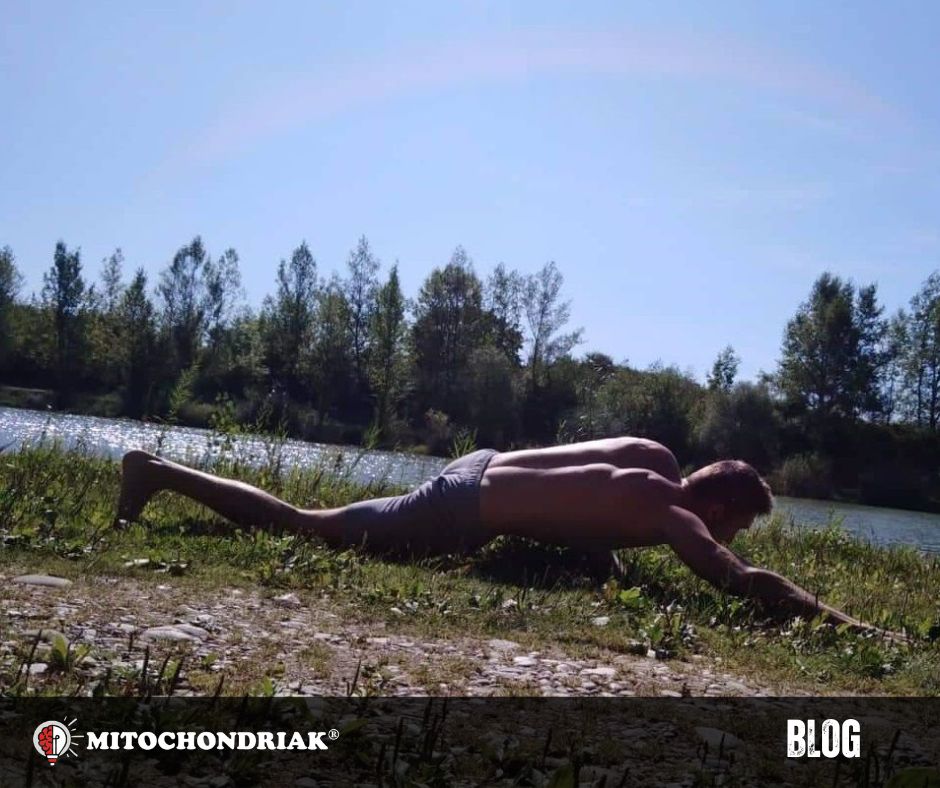
Grounding: when the earth literally supports your biology
The most fascinating mechanism, especially for us Mitochondriacs, is grounding. The surface of the Earth carries a mild negative charge. When your skin touches it, free electrons flow into your body and act as natural antioxidants. A review in the Journal of Inflammation Research suggests that grounding can normalize cortisol rhythms, reduce inflammation, improve sleep quality, and decrease pain.
Another study from 2024 found that walking barefoot in forest environments reduced levels of C-reactive protein (CRP) and increased serotonin in individuals with elevated inflammation. In simple terms, a barefoot walk in nature is a powerful, natural intervention.
How to start safely: a 4-week plan
Feet that spent the winter in insulated shoes need gradual adaptation. The most common mistake is jumping into a long barefoot walk and ending up sore for days. Your body needs time, and we, the Mitochondriacs, respect that.
Here’s a simple 4-week plan that works for most people:
- Week 1: 5–10 minutes daily on soft grass or in your garden. Focus on sensation, not distance.
- Week 2: 10–15 minutes daily. Add different surfaces like soil, sand, or forest paths.
- Week 3: 15–20 minutes daily. Try short walks in parks or meadows.
- Week 4: 20–30 minutes daily. Your feet should now handle longer walks and uneven terrain.
If you feel pain in your arches, calves, or Achilles tendon, reduce intensity. Mild muscle soreness is normal. Sharp joint pain is not.
Pro tip: morning dew on spring grass gives you double benefits. Moisture improves grounding, and the cool temperature gently trains your thermoregulation.
Where to walk barefoot and what surfaces to avoid
Not every surface is beginner-friendly. Your best options are grass, moss, sand, and forest soil. These surfaces are soft, natural, and safe.
Avoid these surfaces during your first month:
- Cold concrete or pavement, especially in the morning
- Gravel or sharp stones without preparation
- Urban asphalt with potential debris or chemicals
- Public sports fields due to hygiene risks
Ideal locations include your garden, local parks, or forest trails. If you live in a city, look for maintained green areas or plan weekend nature trips.
Barefoot shoes as a bridge between nature and the city
Let’s be realistic. You won’t spend your entire day barefoot in nature. Work, errands, and city life require protection. This is where barefoot shoes come in.
They feature thin, flexible soles and a wide toe box, allowing your feet to move naturally while still providing protection.
Mitochondriak® grounded barefoot shoes go even further. Thanks to a conductive graphene element in the sole, they allow electron transfer from the ground into your body even while wearing shoes. This means you can experience grounding benefits even in environments where barefoot walking isn’t practical.
A 2022 clinical study showed that even indirect grounding through conductive materials can reduce inflammation and improve sleep quality.
Combining barefoot walking in nature with grounded footwear during daily life is a practical strategy that allows you to stay connected to the earth almost all day.

Summary
April offers nearly perfect conditions to start barefoot walking. The ground is warm but not hot. Your body has time to adapt before summer. Morning dew enhances grounding. Start slowly and progress weekly. Avoid harsh urban surfaces early on.
When barefoot walking isn’t practical, use Mitochondriak® grounded barefoot shoes to maintain connection with the earth. Within weeks, you’ll notice better stability, improved sleep, and a deeper sense of calm.
Frequently Asked Questions
What are the benefits of walking barefoot compared to regular shoes?
Walking barefoot activates more than 200,000 nerve endings in your feet, strengthens the intrinsic foot muscles, and improves proprioception. Traditional shoes with thick soles dampen these signals, which can lead to weaker foot muscles over time. In addition, direct contact with the ground enables grounding, the transfer of free electrons that can help reduce inflammation and improve sleep.
Is it normal for my feet or calves to hurt when I start walking barefoot?
Mild muscle soreness in your feet, calves, or Achilles tendon during the first two weeks is completely normal, similar to starting a new workout routine. Your body is adapting to a new type of load, and the discomfort usually fades quickly. Sharp pain in your joints or heels, however, is a sign that you are overloading. In that case, reduce your walking time by half and progress more gradually.
Where can I start walking barefoot if I live in a city?
Your best options are parks with grass, your own garden, a balcony with plants, or weekend trips into nature. Avoid cold concrete, urban pavement, gravel, and public sports fields. If you don’t have access to natural surfaces, an alternative is Mitochondriak® grounded barefoot shoes, which allow you to benefit from grounding even through the sole.
How long does it take for your feet to adapt to barefoot walking?
You’ll notice the first improvements, such as better stability and sensitivity, within 1 to 2 weeks of regular practice. Full adaptation of muscles and tendons typically takes around 6 to 8 weeks. That’s why starting in April is ideal, by June your feet will be ready for longer hikes and summer walks on the beach.
Is barefoot walking suitable for children and older adults?
For children, barefoot walking is completely natural and supports healthy foot development. The more time kids spend barefoot, the better. Older adults should be more cautious, especially if they have balance or vascular issues. People with diabetes should consult a doctor before walking barefoot, as reduced sensitivity in the feet increases the risk of unnoticed injuries.
How can I stay grounded if I can’t walk barefoot?
A practical solution is Mitochondriak® grounded barefoot shoes with a conductive graphene element in the sole, which allows electrons to transfer from the ground into your body even while wearing shoes. At home, you can use grounding mats or step onto a balcony with plants. Even 10 to 20 minutes of daily contact with the earth can provide measurable benefits such as reduced inflammation and improved sleep.