Free worldwide shipping (orders over 90 USD)
Pre-sale 2026 of Maxi UVB Presale HERE
By clicking "Agree" you consent to the use of all cookies. You can specify your preferences by clicking "Settings". More information here.
.png)
The first 30 minutes after waking up are not just a routine - they are the biological setup for your entire day. Most of us spend them staring blankly at our phones, in a dim bedroom, without a single ray of natural light. And yet these are the very minutes when your brain and hormonal system are waiting for one specific signal that triggers the whole biological program.
Cortisol, circadian rhythm, energy for the whole morning, and the quality of your sleep that night - all of it is decided before you even make your first coffee. In this article, I will explain what happens in your body immediately after waking up and how you can use this biological potential instead of wasting it.
Cortisol in the first minutes after waking is your ally, not your enemy. Right after waking up, the body triggers a phenomenon scientists call the Cortisol Awakening Response, or CAR. Within 30 to 60 minutes after waking, cortisol levels rise by 50 to 100 percent compared to nighttime values. This increase is not random and it is not stress. It is a carefully programmed biological preparation for the day ahead.
This cortisol peak performs several key functions at once.
Morning cortisol is a biological signal telling every cell in your body: it is time to wake up and get to work. The problem begins when this signal is weak, delayed, or sent at the wrong time. And this is exactly where morning light plays a decisive role.
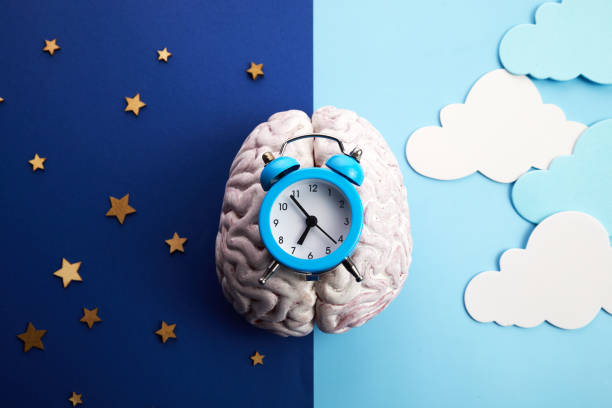
The suprachiasmatic nucleus (SCN) is a tiny paired structure about the size of a grain of rice, located in the hypothalamus. Despite its modest size, it controls virtually your entire biological day. It is the body’s master circadian clock, coordinating hormone secretion, immune function, metabolism, and the sleep-wake cycle.
The SCN receives light information directly from the retina through special cells containing the photopigment melanopsin, known as intrinsically photosensitive retinal ganglion cells (ipRGCs). These cells are especially sensitive to the blue-green part of the spectrum and send the signal via the retinohypothalamic tract directly to the SCN.
When the SCN receives a morning light signal, it triggers a cascade of hormonal reactions. It coordinates the hypothalamus-pituitary-adrenal axis (the HPA axis), which amplifies the cortisol peak. At the same time, it signals the pineal gland to suppress nighttime melatonin production, thereby preparing the conditions for deep sleep - but only 14 to 16 hours later. Cortisol also serves as a secondary synchronizing signal for peripheral biological clocks in all organs: the liver, heart, muscles, and intestines. [R]
Morning light is the strongest biological reset available to us every day, and it is free. Natural morning sunlight reaches an intensity of 10,000 to 100,000 lux. Typical indoor lighting at home usually ranges between 100 and 300 lux, which means it is 30 to 100 times weaker than outdoor light. That difference is not trivial.
A 2023 systematic review that analyzed 12 clinical studies with a total of 337 participants confirmed that exposure to bright light in the morning significantly increases cortisol secretion compared to dim-light conditions. [R] Another study involving 20 healthy adults showed that bright morning light at an intensity of 10,000 lux directly affects the adrenal glands through a polysynaptic neural pathway running from the eye through the SCN all the way to the adrenal glands. [R]
That is why morning sunlight, rich in the full visible spectrum including shorter wavelengths but also longer ones such as red and infrared, is ideal for resetting the circadian rhythm. Red and infrared light do not aggressively stimulate cortisol, but they are still an important stimulus for hormones, mitochondria, and our production of ATP and water as well (we will talk more about that in the practical section).

If you wake up and spend your first hour in a dim apartment wrapped in a blanket with your smartphone, your circadian rhythm does not receive the signal it needs. The cortisol response remains weak or delayed. Instead of a healthy morning peak, your body starts producing cortisol later in the day, when it should already be falling.
The consequences are not immediate, but they are cumulative.
And here is the subtle part: melatonin will arrive later in the evening because its morning suppression was never triggered by the right light. The result? You struggle to fall asleep, and the whole cycle shifts by an hour or two. Day after day.
Long-term disruption of the morning light signal, for example through night-shift work, a consistently indoor lifestyle without morning outdoor exposure, or chronic phone scrolling instead of stepping outside after waking, is associated with disruption of the entire metabolic, immune, and hormonal rhythm. It is not just fatigue. It is systemic dysregulation.
The good news is that the change does not have to be radical. Small, consistent steps taken every day in the same way are enough, and results usually begin to show within two to three weeks.
Not after breakfast, not after your first coffee - either before them or alongside them. Just 10 to 20 minutes outside in morning light is enough for the SCN to receive a sufficiently strong light signal. Do not put on sunglasses at this time, because the light needs to enter through the eyes, not only through the skin. Cool morning light without direct sunshine works too - intensity matters more than warmth.
The blue glow of a smartphone screen in the first minutes after waking is not biological morning light. It is noise, and in the transition state between sleep and wakefulness the brain can interpret it as a false signal. For the first 20 minutes, keep your light diet as natural as possible. Scrolling can wait. Your biological clock cannot.
A morning walk, even for just 10 minutes, combines the light signal with physical activity. Together, the two amplify the cortisol peak and set your hormones up for an energetic day. You do not need a full workout. Movement and light - that is the whole recipe.
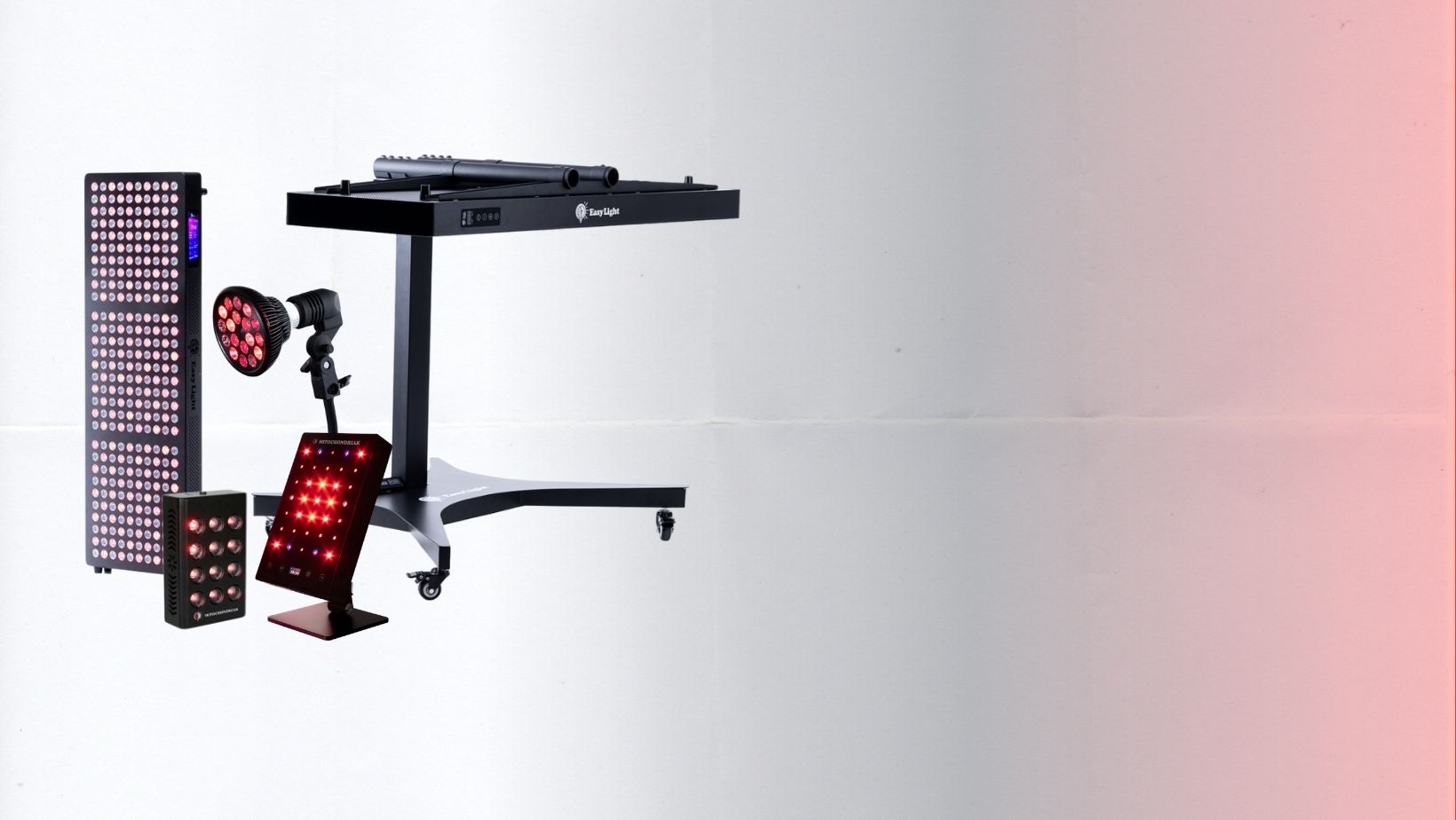
There are days when it is dark, stormy, or freezing outside and morning sunlight is simply not available. In those situations, red and infrared light therapy (photobiomodulation) offers biologically complementary support. Red and near-infrared wavelengths (630 to 940 nm) directly stimulate mitochondrial ATP production through the photoreceptor cytochrome c oxidase, supporting cellular energy production without aggressively stimulating cortisol through melanopsin cells.
Morning red light therapy with a Mitochondriak® device can therefore become a stable part of your morning routine, supporting cellular energy even when outdoor conditions are not helping. We explained how mitochondria produce ATP in more detail in a separate article.
The other side of the same coin: if you want strong cortisol in the morning, your body needs to know in the evening that night is coming. Overhead white lighting, phones, and tablets after sunset delay melatonin and shift the entire circadian rhythm. Blue light blocking glasses or red bulbs in the bedroom in the evening are a natural complement to the morning protocol. The whole system works as one interconnected whole.
Cortisol in the morning is not a stress hormone you should fear. It is your biological starter. And morning light is the fuel that starts it properly. The first 30 minutes after waking are the most direct input you have into your own circadian rhythm, every single day, without any special equipment.
If you start your day in darkness, with a smartphone, in a closed apartment, the signal never arrives. If you step outside, let light enter through your eyes, and give your body 10 minutes of movement, you set your biological clock for the whole day. It is a free biohack with results supported by research.
Want to support cellular energy in the morning as well, especially when the season or the weather does not favor outdoor light? Explore our Mitochondriak® red light therapy devices, designed for everyday biological support of your morning routine, regeneration, and recovery throughout the day.
The Cortisol Awakening Response (CAR) is a physiological phenomenon in which cortisol levels rise by 50 to 100 percent within the first 30 to 60 minutes after waking. This peak prepares the body and brain for the demands of the day by mobilizing energy, setting metabolism, and regulating immune activity. A weak or delayed cortisol peak in the morning is associated with fatigue, reduced concentration, and poorer sleep quality later that night.
Typical indoor lighting ranges from about 100 to 300 lux. Natural outdoor morning light reaches 10,000 to 100,000 lux. That difference is biologically significant: the SCN needs a sufficiently strong light signal to trigger a full hormonal response, including amplification of the cortisol peak. Dim artificial lighting at home is simply not enough for reliable circadian rhythm setting.
For a reliable circadian effect, even 5 to 10 minutes outdoors in the morning without sunglasses can be enough. In summer, when light intensity is high, even less may be sufficient. In winter or under overcast skies, 20 to 30 minutes is usually recommended. Consistency is the key: daily morning light has a greater biological effect than occasional long exposures.
Yes, directly. Morning light suppresses residual melatonin and properly sets the SCN. As a result, melatonin rises at the right time in the evening, falling asleep becomes more natural, and deep sleep begins sooner. Morning light and evening light hygiene are two sides of the same biological coin, and one works less effectively without the other.
Red and infrared light therapy (photobiomodulation) works through a different mechanism than natural morning light. It does not suppress melatonin and it does not aggressively stimulate cortisol through retinal melanopsin cells. Instead, it directly supports mitochondrial ATP production and cellular energy, which makes it a useful complement to your morning routine, not a direct replacement for sunlight. For circadian rhythm setting, natural light entering through the eyes is still essential. Red light therapy complements it from the perspective of cellular energy and regeneration.