
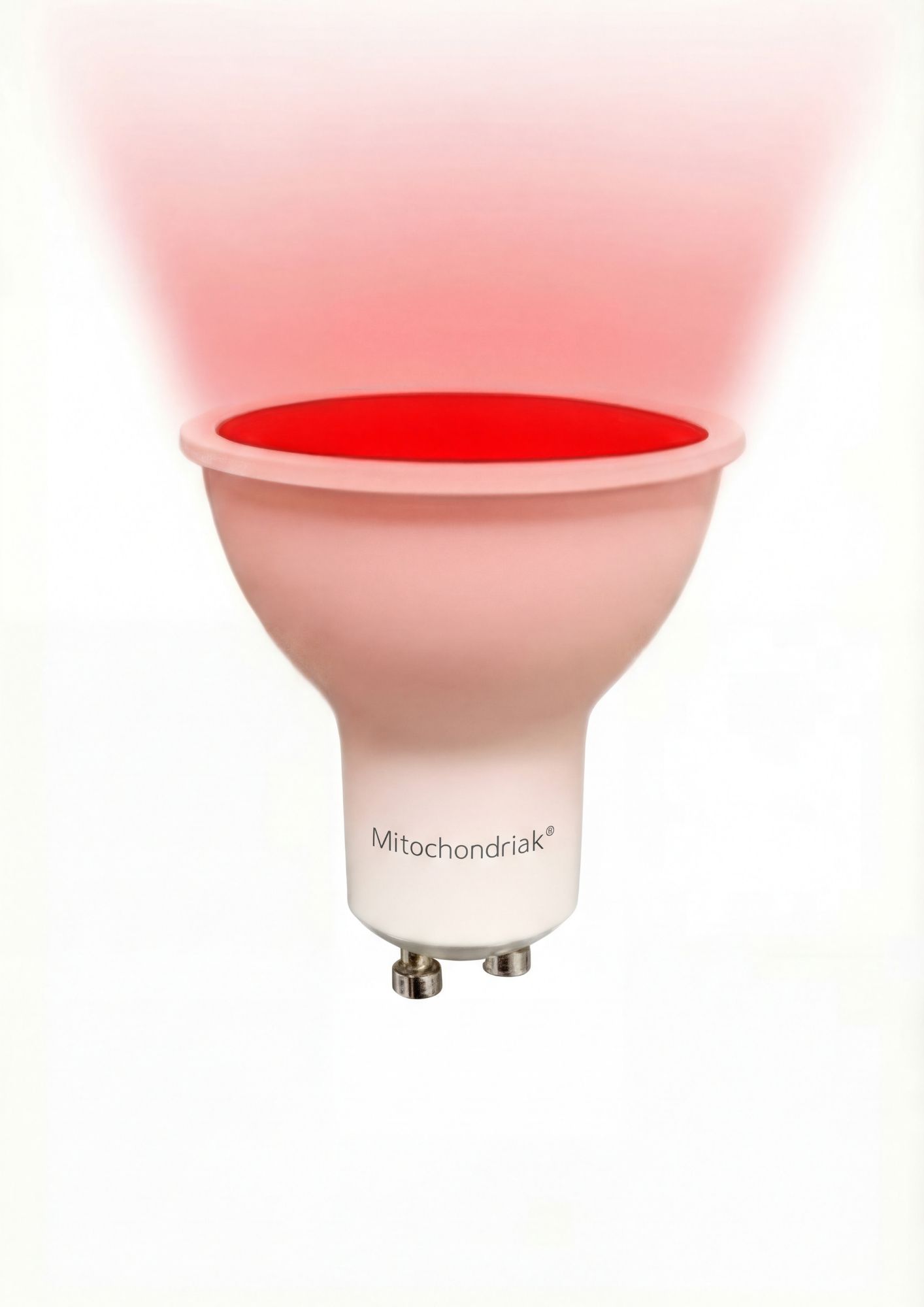
Evening red bulb Mitochondriak® Gu10





Related products


Product detailed description
Improve your sleep with a safe red light bulb that emits no blue light.
Our new, practical indoor bulb with warm red light for better, uninterrupted sleep. The bulb is flicker-free, fits a GU10 base, and is energy-saving (5 W), so it suits every household. It’s ideal mainly in the evening for bedrooms, living spaces or hallways, for both adults and babies.
The bulb emits no blue or green light and is practically flicker-free (flicker index 0.01, measured). In the evening it does not suppress melatonin and supports uninterrupted sleep and a natural circadian rhythm. The bulb is a great alternative to our red E27 bulb or red E14 bulb.
.jpg)
We don't guess, we measure. We measured the spot bulb in a dark room with two certified spectrometers at 30 cm on the beam axis. The spectral peak sits at 633 nm.
- Blue light below 500 nm: practically 0 %
- Signal to the body clock: 71× weaker than an ordinary white LED at the same lux
- Illuminance at 30 cm on the beam axis: 2,814–3,341 lx
- Flicker: flicker-free, flicker index 0.01
The GU10 concentrates light into a beam, so it belongs in ceiling and spot fittings, further from the eyes.
Technical data: GU10 base, 5 W, luminous flux approx. 140 lm, AC 110–240 V, not dimmable, lifespan 25,000–50,000 hours. All parameters are listed in the Specification tab.


Let’s STOP artificial blue light — especially in the evening!
Exposure to natural daylight helps regulate (and reset) our circadian rhythm and supports alertness, while darkness and the absence of blue light in the evening signal the body to start producing melatonin, the hormone that regulates sleep.
That’s why it’s important to pay attention to appropriate lighting not only during the day but also in the evening (or at night if you get up).
Thanks to its practically flicker-free light (flicker index 0.01, measured), our GU10 red light bulb provides calming evening lighting — an ideal choice at home after sunset.

Simply place the bulb into GU10 spot fixtures and enjoy a cozy evening atmosphere.
- Use it in the last 2–3 hours before bedtime instead of common cool-white LEDs that emit blue light.
You can combine it with blue-light-blocking glasses or the Mitochondriak® RED motion sensor to create the perfect atmosphere at home and enjoy quality sleep.
Read more about the impact of blue light on sleep in this article. And if you’re interested in more practical tips to improve your sleep beyond red light therapy, check out this article.

WHAT’S INCLUDED (IN THE BOX):
- 1× Mitochondriak® GU10 red light bulb
- 1× Box
- ✔️ Better sleep
- ✔️ Satisfaction guarantee (Return within 30 days)
- ❌ No blue or green light


WHY SHOULD WE BLOCK BLUE LIGHT?
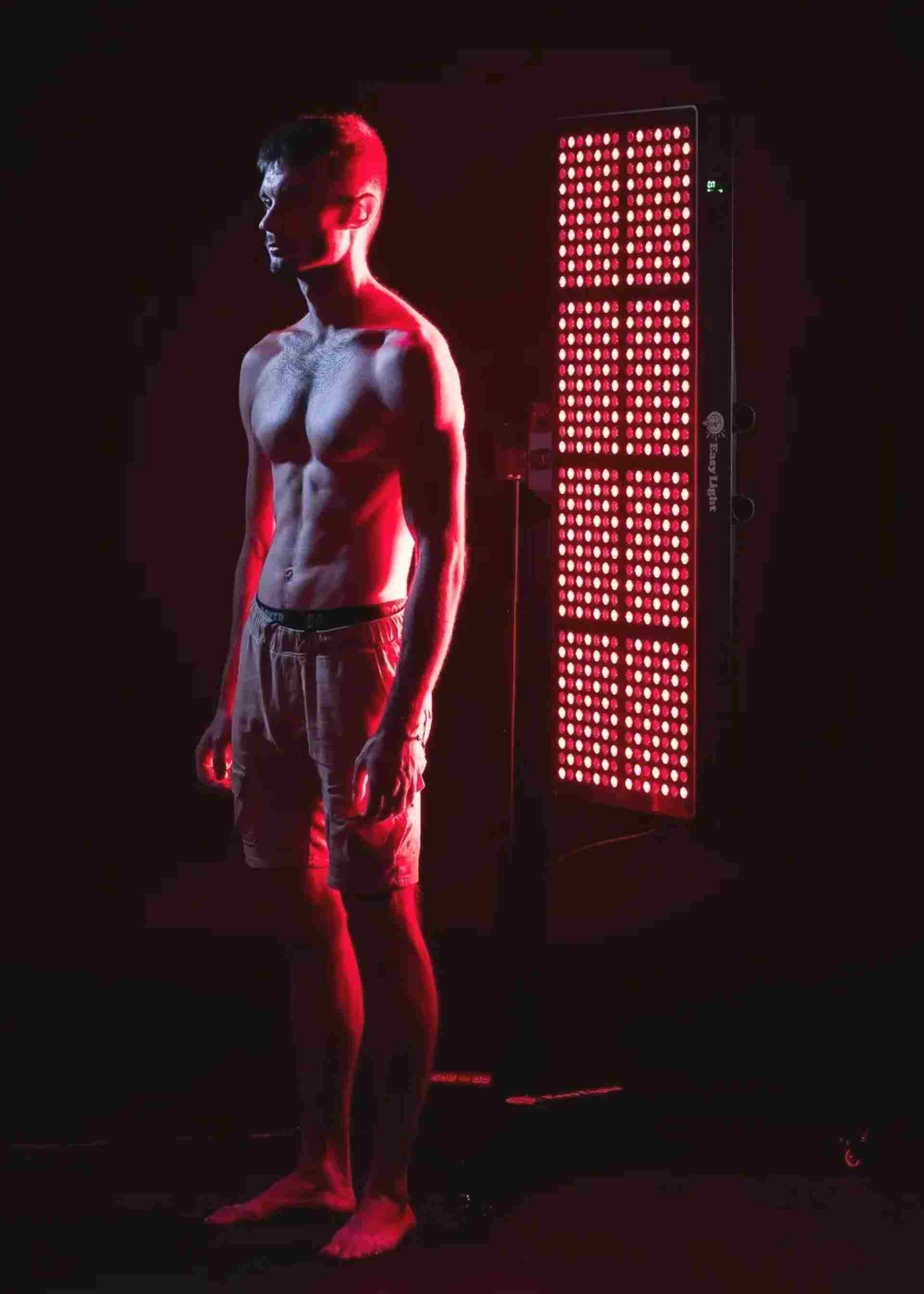

Do you often watch TV late into the night or work at your computer? Maybe your eyes feel tired or your sleep feels worse. Screens and many modern light sources emit a high share of blue light. We cannot avoid it completely, but in the evening we can reduce it, for example with blue light blocking glasses, that can help relieve eye fatigue, preserve your melatonin levels, and improve your circadian rhythm as well as sleep quality.
If you are interested in reducing the negative effects of artificial blue light in your household, try the Mitochondriak® indoor lighting solutions. Your home atmosphere can also be improved with Mitochondriak® red light therapy devices which use red and near-infrared light.
Are you curious about the many ways red light therapy can help you? Circadian rhythm, sleep quality and a healthy light environment are among the topics we explain in detail. You'll find more information on the effects of red light on human body on our blog.
Additional parameters
| Category: | Indoor lighting solutions |
|---|---|
| Warranty: | 2 years |
| Weight: | 0.25 kg |
| EAN: | 0726529982626 |
| Model: | Evening red bulb Mitochondriak® GU10 |
| ? Spectral peak (measured): | 633 nm (red) |
| ? Blue light below 500 nm (measured): | practically 0 % (the measured 0.06 % is the spectrometer's background noise) |
| ? Signal to the body clock (circadian rhythm, CIE S 026): | 71× weaker than an ordinary white LED at the same lux |
| ? Flicker (measured): | flicker index 0.01, fluctuation below 3 % – practically flicker-free |
| ? Base: | GU10 |
| ? Power: | 5 W |
| Voltage: | AC 110–240 V, 50/60 Hz |
| ? Spectral width FWHM (measured): | 76 nm (604–679 nm) |
| ? Dominant wavelength (measured): | 613 nm |
| ? Light above 620 nm (measured): | 79 % of energy |
| ? Blue and green light below 550 nm (measured): | practically 0 % (the measured 0.07 % is the spectrometer's background noise) |
| ? Illuminance (measured): | 2,814–3,341 lx at 30 cm on the beam axis |
| ? Irradiance 380–780 nm (measured): | 19.3–20.4 W/m² at 30 cm |
| ? CIE 1931 chromaticity (measured): | x 0.674 / y 0.324 |
| ? Colour purity (measured): | 99 % |
| ? Luminous flux: | approx. 140 lm (laboratory report 136.6 lm) |
| Dimming: | not dimmable |
| Lifespan: | 25,000–50,000 hours |
| ? Intended use: | evening ceiling and spot lighting, the last 2–3 hours before sleep |
| ? Measurement: | Mitochondriak Lab, 21 Oct 2026, 2 spectrometers, 30 cm, dark room |


5 Steps to Build a Solar Callus and Avoid Getting Burned by UV Light
Hormone melatonin is made by mitochondria by light
What is mitochondria, how they produce energy, and how to support them
Product rating
Be the first who will post an article to this item!
Brand Mitochondriak® offer LED devices for RED, NIR and UV light therapy, stylish blue light blocking glasses & safe indoor blue light free lighting solutions, suitable even for children, which protects your sleep, performance and circadian rhythm! We also offer stylish barefoot grounded shoes for better reconnecting with nature in our modern world!
Mitochondriak® mission is to support your mitochondria, health, sleep, energy and performance. We are leader in light therapy. Make our light enviroment better together.