Free worldwide shipping (orders over 90 USD)
Pre-sale 2026 of Maxi UVB Presale HERE
By clicking "Agree" you consent to the use of all cookies. You can specify your preferences by clicking "Settings". More information here.
.png)
The skin is not just a “cover” of the body. It is a large sensor of light and energy that directly communicates with our mitochondria – small “engines” in our cells that produce energy for the entire body. When mitochondria function well, the skin regenerates, heals, and looks healthy. When they don’t, problems such as acne, eczema, or rosacea may appear.
And this is where light and the circadian rhythm come into play. Many skin problems today are linked to the environment we live in. People spend most of their time indoors under artificial light, get little sunlight, and are exposed to blue light from screens in the evening. This disrupts the circadian rhythm – the internal biological clock that regulates cell regeneration, hormone production, and mitochondrial function.
.jpg)
Learn more about what the circadian rhythm is.
When the circadian rhythm is disrupted:
The result may be redness, skin sensitivity, inflammation, or chronic skin conditions such as rosacea. Rosacea is a chronic inflammatory skin condition that most often appears on the cheeks, nose, forehead, or chin.
Typical symptoms include:
The exact cause of rosacea is not fully known, but scientists mainly associate it with:
Our body is evolutionarily adapted to the full spectrum of sunlight. The sun contains many wavelengths – from infrared through visible light to UV. In particular, red and infrared light play an important role:
Photons of red light can penetrate the skin and interact with the enzyme cytochrome c oxidase in mitochondria, thereby improving energy production in cells. However, it is also important when we receive light. Morning sunlight in particular helps set the biological clock and supports the production of hormones that regulate body regeneration. At night, the body releases melatonin. It is not just a sleep hormone. It is one of the strongest antioxidants in mitochondria, helping repair damaged cells and reduce inflammation.
If the circadian rhythm is disrupted, the body produces less melatonin and skin regeneration worsens. If a person spends a lot of time indoors or little time in the sun, red and infrared light can be a suitable supplement.
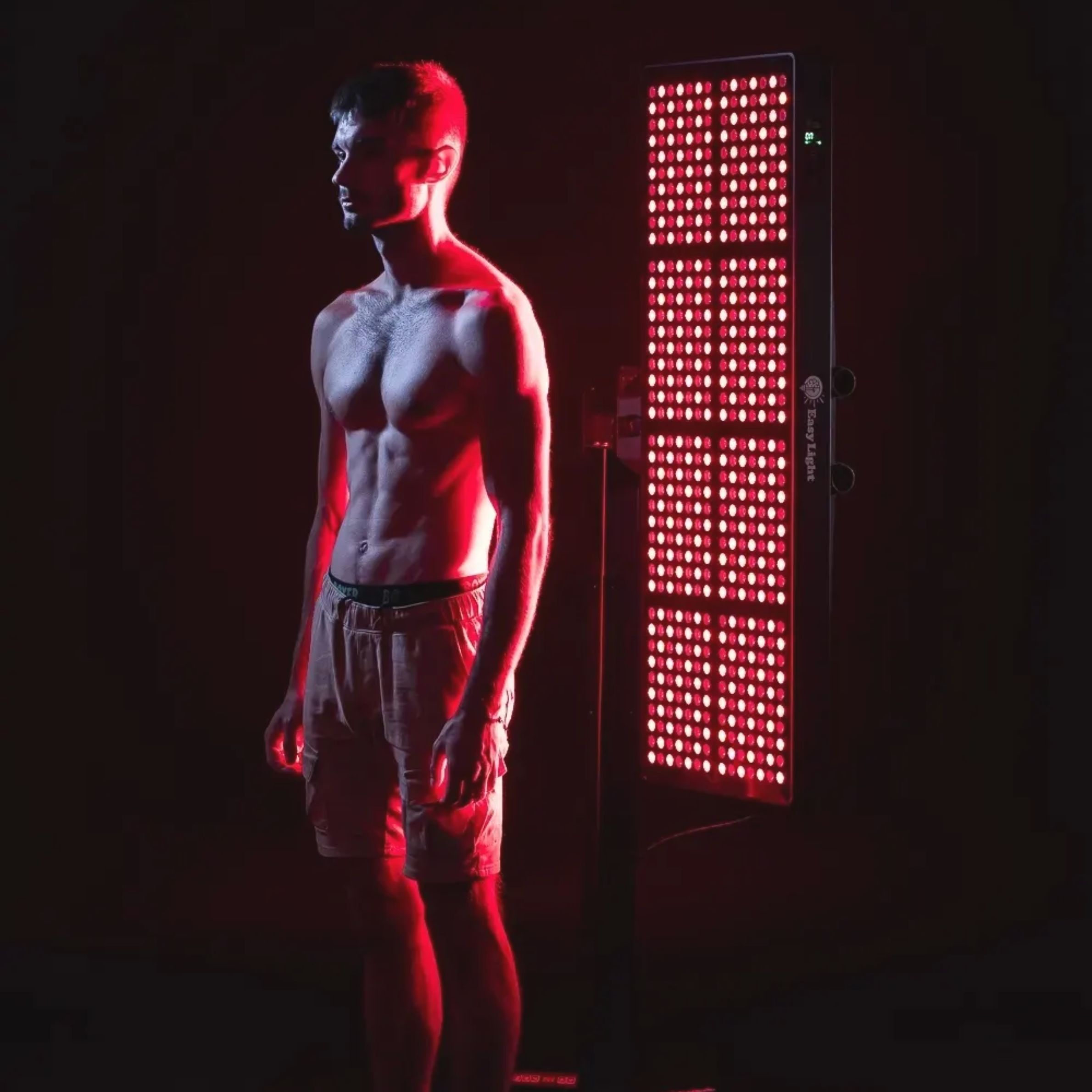
Red light therapy may help:
Red light mainly affects the surface layers of the skin, while infrared light penetrates deeper into tissues and supports cellular regeneration. Many skin problems today are not only related to cosmetics or genetics. The environment, light, and circadian rhythm also play a major role. When mitochondria receive the right signals from light, they produce more energy, inflammation decreases, and the skin can regenerate more effectively.
Our tip: You can find more information about how red light helps in skincare on our blog.
Several scientific studies show that red and infrared light therapy may have positive effects on the skin:
.jpg)
.jpg)
.jpg)