.png)
Red light therapy has been proven to reduce muscle soreness after exercise and accelerate recovery. Dozens of clinical studies confirm that applying light with wavelengths between 630 and 1000 nm reduces inflammatory markers, lowers creatine kinase levels (a marker of muscle damage), and helps you return to full performance faster. The mechanism does not work through heat, but directly at the mitochondrial level, where it stimulates ATP production. In this article, we will explain how it works, how to use it correctly, and what science says about it.
Article Summary
- Why athletes use red light therapy
- How photobiomodulation works at the cellular level
- What science says about muscle recovery and red light
- Main benefits for active individuals
- How to apply the therapy correctly: protocol for athletes
- How to choose the right panel
- When to avoid red light therapy
- Frequently asked questions
- Summary
Why athletes are increasingly turning to red light therapy
Photobiomodulation, or therapy using red and near-infrared light, utilizes LED diodes that emit light in a precisely defined spectrum: most commonly 630 to 760 nm (red light) and 810 to 1000 nm (near-infrared light, NIR). These wavelengths penetrate the skin, subcutaneous tissue, and muscle tissue, where they act directly on cellular mitochondria. The application is painless and has no side effects when recommended protocols are followed.
In recent years, thanks to affordable panels, photobiomodulation has expanded from professional recovery centers into the homes of both recreational and performance athletes. If you are interested in the broader context of recovery, sleep, nutrition, and advanced methods, we have prepared a complete guide to muscle recovery for 2026 for you.
How photobiomodulation works at the cellular level
The mechanism of action is now well understood. When photons of red and NIR light reach the muscle, three key things happen:
1. Stimulation of mitochondria and ATP production
The light is absorbed by cytochrome c oxidase, an enzyme in step IV of the mitochondrial respiratory chain. The result is increased production of ATP (adenosine triphosphate, the energy currency of every cell). Damaged muscle cells have more energy available for repair and restoration of contractile proteins.
2. Reduction of oxidative stress and inflammatory markers
After intense training, free radicals are generated in the muscles and microscopic inflammation occurs—this is what causes DOMS (delayed onset muscle soreness). Photobiomodulation reduces levels of inflammatory markers, including interleukin-6 (IL-6) and TNF-alpha, and supports the cell’s antioxidant defense.
3. Improved microcirculation via nitric oxide
Red light stimulates the release of nitric oxide (NO), which dilates blood vessels. Improved circulation accelerates the removal of metabolic waste (lactate, ammonia) and enhances the delivery of oxygen and nutrients to the muscles. The result is less pain, reduced muscle stiffness, and a faster return to full performance.
What science says about photobiomodulation and muscle recovery
Research in the field of photobiomodulation has seen significant growth over the past 15 years. Here are the key findings from clinical studies and meta-analyses:
A randomized, double-blind, placebo-controlled study involving 50 healthy men compared photobiomodulation with cryotherapy alone. Photobiomodulation used as a standalone method led to complete restoration of muscle performance to baseline within 24 hours after eccentric exercise. Cryotherapy alone did not differ from placebo. [R]
A randomized clinical trial involving 28 top-level soccer players tested three different doses of pre-exercise photobiomodulation (810 nm). A dose of 50 J significantly increased maximal voluntary contraction and reduced creatine kinase (CK, an enzymatic marker of muscle damage) as well as IL-6 compared to placebo. [R]
A meta-analysis of 24 randomized controlled trials in athletically active individuals confirmed that regular application of photobiomodulation significantly improves lower limb strength at 24 hours, 48 hours, 96 hours, and even 8 weeks after exertion, while simultaneously reducing pain index, CK, and IL-6. [R]
What is important: results are most pronounced with regular application 3 to 5 times per week and with the correct combination of wavelengths (red and NIR used together).
Main benefits of photobiomodulation for active individuals
If we summarize the scientifically supported benefits of red light therapy for athletes, they include: faster recovery after strength, endurance, and interval training, significant reduction of DOMS within 24 to 72 hours after exertion, lower risk of injury due to improved muscle elasticity and circulation, faster healing of minor injuries and tendon inflammation, support of mitochondrial biogenesis (creation of new mitochondria in muscle cells) with long-term use, and improved sleep quality, as red light does not suppress melatonin production like blue light. Red light therapy is not a miracle—it is a scientifically supported tool that fits into a broader recovery framework alongside sleep, nutrition, and hydration.
How to apply the therapy correctly: a practical protocol for athletes
When to apply
Before training (5 to 10 minutes), photobiomodulation prepares the muscles for performance and increases blood flow. After training (10 to 20 minutes), it accelerates recovery and reduces inflammation. In the evening, at least 2 hours before sleep, it supports nighttime recovery and melatonin production in mitochondria.
Duration and frequency
The optimal duration of one session is 10 to 20 minutes per muscle group. For active athletes, the ideal frequency is 4 to 6 times per week. In case of injury or acute pain, it can be used daily.
Distance from the panel
A distance of 45 cm from the panel surface ensures deeper light penetration into muscle tissue, which is ideal after training. A distance of 50 to 80 cm covers a larger area of the body and is suitable for full-body protocols or preventive use.
What to keep in mind
Always apply to bare skin, as clothing filters most of the therapeutically relevant light. Use protective goggles included in the package. Drink enough water before and after application, as photobiomodulation stimulates cellular metabolism and slightly increases fluid demand.
How to choose the right Mitochondriak® panel
For athletes, we recommend focusing on two main parameters. The first is a combined spectrum: red light at 630, 670, and 760 nm primarily acts on the skin and superficial muscles, while near-infrared light at 810, 830, 850, and 940 nm penetrates deeper into muscle tissue and joints. The combination of these wavelengths is significantly more effective for recovery than each one individually. The second parameter is panel size based on your goal.
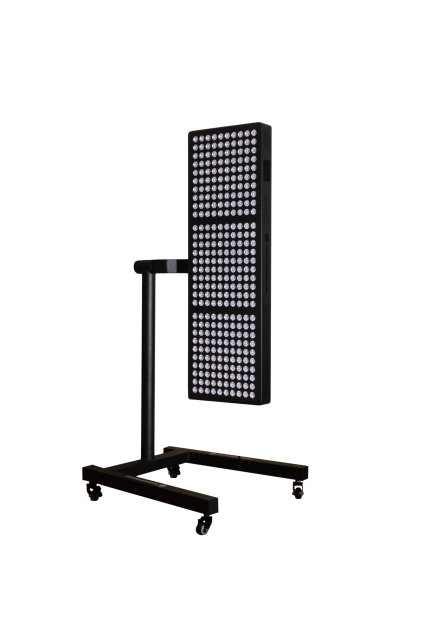
For local treatment (knee, elbow, shoulder, calf), we recommend the Mitochondriak® Mini. To cover a larger area, such as the entire back or thighs, the Mitochondriak® Maxi (new version) is ideal. For a full-body protocol after demanding training blocks, the 2 units of Mitochondriak® Maxi (new version) is designed. If you are unsure which to choose, our product selection guide can help.
Important technical parameters when choosing: irradiance should be at least 100 mW/cm² at a distance of 15 cm, the panel should have eliminated flicker, and low EMF levels for daily use. Our Mitochondriak® devices meet these criteria and are available with a 2-year warranty and a 30-day satisfaction guarantee.
When to avoid red light therapy
Photobiomodulation is generally very safe, but there are situations where caution is recommended. Consultation with a doctor is advised during pregnancy, in cases of active cancer, photosensitive skin, or when taking photosensitive medications (some antibiotics, retinoids). For fresh tattoos, we recommend waiting at least 2 to 4 weeks. In case of eye conditions, always use protective goggles. In other cases, photobiomodulation is suitable for any active individual.
Frequently asked questions
How quickly does photobiomodulation work?
The first effects—reduced muscle soreness and improved sleep—are usually noticeable after 1 to 2 weeks of regular use. Significant and measurable improvements in recovery appear after 3 to 4 weeks with a frequency of 4 to 6 times per week.
Can you overdose on red light therapy?
When following the recommended protocol (10 to 20 minutes per area), the risk is minimal. Longer applications over 30 minutes have not shown additional benefits in studies and do not cause harm, but the biological effect is comparable to shorter protocols.
Can I use red light therapy every day?
Yes, daily use is safe and is even recommended for highly active individuals during injury or intensive training periods.
Is photobiomodulation the same as an infrared sauna?
No. An infrared sauna uses thermal infrared radiation in the far-infrared range and works by heating the body. Photobiomodulation uses specific wavelengths of red and infrared light that act directly on mitochondria without producing excessive heat. The biological mechanism and clinical effects are fundamentally different.
Does red light therapy work for joints and tendons?
Yes, near-infrared light (NIR) penetrates deeper into tissues than red light and helps with knee pain, elbow pain, Achilles tendon issues, and tennis elbow. For targeted local joint treatment, we recommend the Mitochondriak® Mini Infrared Panel.
Summary
Photobiomodulation works directly in the mitochondria of muscle cells: it stimulates cytochrome c oxidase, increases ATP production, reduces inflammatory markers, and improves microcirculation via nitric oxide. Clinical studies confirm shorter recovery times, reduced muscle soreness, and faster restoration of muscle strength after exertion. Regular application for 10 to 20 minutes, 3 to 5 times per week, on bare skin using a combination of red and infrared light delivers the best results.
If you want to include photobiomodulation in your recovery routine, explore our Mitochondriak® infrared panels with preset recovery programs and a touchscreen display.