.png)
Training creates the stimulus, but recovery creates the result. Muscles repair, rebuild and become more resilient after exercise, when sleep, nutrition, circulation and mitochondrial energy production provide the conditions for adaptation. Neglect this phase and even a well-designed training programme can lead to persistent soreness, declining performance and overtraining.
- Why muscle recovery is part of training rather than an optional activity between sessions.
- What happens during the acute, repair and supercompensation phases after exercise.
- How recovery time changes according to training intensity and volume.
- Why sleep, nutrition, hydration and balanced movement remain the four foundations.
- How photobiomodulation supports mitochondrial ATP, circulation and muscle recovery.
- How to use the Mitochondriak® Maxi Upgraded according to its verified recovery protocol.
- Why is recovery the foundation of performance?
- What happens inside muscles after training?
- How long does muscle recovery take?
- Which four pillars determine recovery?
- Which advanced recovery methods are useful?
- How does red light support muscle recovery?
- Which mistakes slow recovery?
- How can you build a practical recovery routine?
- Frequently asked questions
- What should you remember?
Why is recovery the foundation of performance?
Muscle does not become stronger during the workout itself. Exercise creates mechanical tension, energy depletion and microscopic tissue disruption. The adaptation happens afterwards, when the body restores ATP, repairs contractile structures and prepares the muscle for a similar future load.
Training is therefore the question. Recovery is the biological answer.
When recovery matches the training load, performance can improve through:
- Muscle protein synthesis and repair of damaged fibres.
- Restoration of ATP and glycogen used during exertion.
- Mitochondrial adaptation and improved energy capacity.
- Connective tissue remodelling in tendons and supporting structures.
- Nervous-system recovery and restoration of coordination and force production.
When the training stimulus is repeated before these processes have progressed sufficiently, fatigue accumulates faster than adaptation.
The result may include persistent soreness, declining strength, poorer sleep, irritability, reduced motivation and a higher risk of injury. A demanding week of training can be productive. A demanding month without adequate recovery usually is not.
Overtraining is not simply feeling tired after one hard session. It is a longer-term imbalance between training stress and recovery capacity. Before that point, athletes often pass through a phase of functional or non-functional overreaching in which performance and wellbeing begin to decline.
What happens inside muscles after training?
Muscle recovery is a sequence of overlapping biological phases rather than one passive waiting period. Energy restoration begins immediately, inflammation and tissue repair follow, and longer-term adaptation continues for hours or days.
Phase 1: Acute recovery during the first 6 hours
Immediately after training, ATP and phosphocreatine stores are reduced, glycogen may be depleted and the nervous system remains activated. Blood flow to the exercised tissue stays elevated while the body begins restoring energy and maintaining cellular homeostasis.
The muscle also receives signals created by mechanical tension, calcium movement, reactive oxygen species and changes in the AMP to ATP ratio. These signals help determine which repair and adaptation pathways will be activated.
Phase 2: Inflammation and repair from approximately 6 to 48 hours
This is the period in which delayed onset muscle soreness, known as DOMS, commonly develops. Soreness often peaks approximately 24 to 48 hours after unfamiliar or eccentric exercise.
Inflammation is not automatically the enemy. A controlled inflammatory response helps remove damaged material and coordinates tissue repair. The problem arises when inflammation is excessive, prolonged or repeatedly amplified by inadequate sleep and another hard session.
Muscle protein synthesis increases, satellite cells participate in repair and mitochondria work to restore the ATP needed for cellular rebuilding.
Phase 3: Adaptation and supercompensation
During the following days, the muscle can return to its earlier capacity and gradually surpass it. Contractile proteins are rebuilt, glycogen is restored and signalling associated with mitochondrial biogenesis may increase.
Mitochondrial biogenesis means increasing the number and functional capacity of mitochondria within the tissue. This adaptation is particularly important for endurance, repeated training and resistance to fatigue.
The timing of supercompensation is not identical for every person or every workout. A light run and a high-volume leg session do not create the same recovery curve.
How long does muscle recovery take?
Recovery time depends on the exercise type, volume, intensity, training experience, sleep, nutrition and the muscle groups involved. The same workout can require different recovery periods in a beginner and an adapted athlete.
| Type of exercise | Approximate recovery window | What influences it most |
|---|---|---|
| Light aerobic activity | 12 to 24 hours | Duration, temperature and current conditioning |
| Moderate endurance training | 24 to 48 hours | Glycogen depletion and total volume |
| Strength training | 48 to 72 hours | Eccentric load, volume and training experience |
| HIIT or repeated intervals | 36 to 72 hours | Nervous-system load and glycogen use |
| Competition or extreme endurance load | 5 to 7 days or longer | Tissue damage, sleep loss, travel and systemic stress |
These ranges are practical estimates, not fixed medical limits. Recovery should also be evaluated through performance, soreness, mood, sleep and range of motion.
Sharp pain, visible swelling, bruising, instability or major loss of strength may indicate injury rather than normal recovery.
Which four pillars determine recovery?
Advanced methods only work well when the foundations are already present. Photobiomodulation, sauna, cold exposure and massage can support recovery, but they cannot permanently compensate for inadequate sleep, insufficient nutrition or excessive training load.
1. Sleep and circadian rhythm
Sleep is the most powerful recurring recovery period available to an athlete. During sleep, the nervous system changes state, metabolic demands shift and tissues gain time for coordinated repair.
Morning daylight and darkness after sunset help organise melatonin, body temperature and the sleep-wake rhythm. A stable circadian signal is therefore part of recovery, not merely part of sleep hygiene.
Practical foundations include:
- 7 to 9 hours of sleep for most recreational athletes.
- A consistent sleep schedule rather than large daily shifts.
- Natural light after waking to reinforce biological daytime.
- A dark bedroom and reduced artificial blue light in the evening.
- A cool sleeping environment adapted to personal comfort.
For a detailed sleep framework, read our article on practical ways to improve sleep quality.
2. Nutrition
Food provides the amino acids needed to rebuild tissue and the electrons and hydrogen used by mitochondria to produce ATP. Protein intake matters, but energy availability and meal quality matter as well.
General protein ranges commonly used in sports nutrition include:
- 1.2 to 1.6 g per kg of body weight for many recreational athletes.
- 1.6 to 2.2 g per kg for strength athletes focused on hypertrophy.
- 1.4 to 1.8 g per kg for endurance athletes during demanding training.
These are general ranges rather than an individual prescription. Total energy intake, body composition goals, kidney health and training phase should also be considered.
Mitochondriak® places food within the wider context of light and season. Nutrition is not isolated from circadian biology. Eating during the active part of the day and avoiding large late-night meals helps align metabolism with the biological clock.
3. Hydration and electrolytes
Hydration influences blood volume, temperature regulation, nutrient delivery and muscle function. During long or intense exercise in heat, replacing sodium and other electrolytes may be useful, especially when sweat loss is high.
Water in biology is not merely a neutral liquid. Water molecules interact with proteins, membranes and charged surfaces, creating organised hydration layers. Infrared energy and mitochondrial metabolism are part of this wider intracellular water environment.
A universal recommendation to drink a fixed number of litres is less useful than observing thirst, exercise duration, climate, sweat rate and urine colour.
4. Active and passive recovery
Active recovery means low-intensity movement that does not create another substantial training load. Walking, easy cycling, gentle swimming and mobility work can increase circulation and reduce the subjective feeling of stiffness.
Passive recovery means genuine rest. It is particularly valuable after extreme exertion, during illness, after poor sleep or when symptoms of overreaching appear.
The goal is not to remain active at any cost. The goal is to choose the form of recovery that matches the current state of the body.
Which advanced recovery methods are useful?
Advanced recovery methods can influence soreness, circulation, mobility and perceived readiness, but their value depends on timing and the athlete's goal. A technique that is useful after competition may not be ideal after every hypertrophy session.
Stretching and mobility
A dynamic warm-up is generally more appropriate before exercise than prolonged static stretching. It raises tissue temperature and prepares the joints through the ranges needed for the workout.
Static stretching after training may feel pleasant, but long-term mobility usually improves through consistent, targeted range-of-motion work rather than one brief stretch after a session.
Massage and foam rolling
Massage can reduce the perception of soreness, improve relaxation and temporarily increase range of motion. Foam rolling and percussion devices provide accessible alternatives, although they do not replace diagnosis or treatment of an injury.
Cold exposure
Ice baths and cold-water immersion can reduce soreness and may be useful after competition, tournaments or congested training schedules.
However, immediate cooling after every resistance-training session may suppress part of the inflammatory and anabolic signalling involved in hypertrophy. Athletes prioritising muscle growth should therefore avoid treating cold immersion as a mandatory post-workout ritual.
Sauna and heat
Sauna promotes heat adaptation, circulation and relaxation. It can complement endurance training and may support cardiovascular conditioning when introduced gradually.
Heat also represents an additional stressor. A dehydrated athlete who has completed a very demanding session may need food, fluids and rest before another intense exposure.
How does red light support muscle recovery?
Photobiomodulation uses red and near-infrared photons to influence mitochondrial and cellular signalling without deliberately damaging or strongly heating the tissue. In muscle research, it has been studied before exercise, after exercise and across repeated training periods.
Mitochondriak® panels combine red wavelengths at 630 and 670 nm with near-infrared wavelengths at 760, 810, 830, 850 and 940 nm.
One leading mechanism involves cytochrome c oxidase, or CCO, in Complex IV of the mitochondrial respiratory chain. Light absorption may influence electron transport, nitric oxide, mitochondrial membrane potential, ATP and controlled redox signalling.
For recovering muscle, the proposed practical effects include:
- More available ATP for energy-demanding repair processes.
- Improved nitric-oxide signalling and local circulation.
- Modulation of inflammation rather than complete suppression of adaptation.
- Lower markers of muscle damage in some clinical protocols.
- Improved return of strength or endurance after demanding exercise.
A meta-analysis of 24 randomised controlled trials in physically active people reported benefits for muscular performance and recovery, including changes in creatine kinase and inflammatory markers. Another randomised trial comparing photobiomodulation and cryotherapy found that PBM restored performance more effectively than cryotherapy alone in the tested protocol.
A systematic review and meta-analysis including 37 studies and 586 participants also evaluated the effects of photobiomodulation on muscular performance and endurance.
These findings do not mean that every lamp, dose or protocol produces the same result. Photobiomodulation follows a biphasic dose response. Too little may do nothing, while excessive exposure may reduce the expected benefit.
Is it better to use red light before or after training?
Both approaches can be useful, but they serve slightly different goals. Pre-exercise use is commonly studied for performance, endurance and protection against exercise-induced damage. Post-exercise use is intended to support repair and reduce soreness.
| Timing | Primary goal | Suitable context |
|---|---|---|
| Before training | Preconditioning, endurance and protection | Key workouts, competition and repeated effort |
| After training | DOMS, tissue repair and return of performance | Regular strength and endurance recovery |
Verified recovery protocol for Mitochondriak® Maxi Upgraded
For muscle recovery with the Mitochondriak® Maxi Upgraded, use the current verified product guidance:
- Distance: approximately 30 to 60 cm from the panel.
- Duration: approximately 10 to 20 minutes for muscle recovery.
- Application: expose the target area directly on bare skin.
- Programme: use the preset recovery programme or follow the current manual.
- Intensity: begin conservatively and increase only when well tolerated.
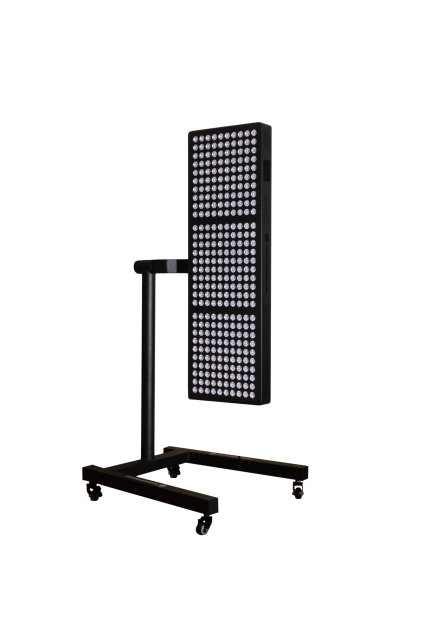
The Maxi illuminates approximately half of the body at once and can be used for full-body exposure in two positions. Its seven wavelengths, touchscreen, independent RED and NIR control and preset recovery programme make it suitable for large muscle groups such as the legs, back and chest.
For local areas such as a shoulder, knee or elbow, the Infrared panel Mitochondriak® mini for therapy is a more compact option. Because it is battery-powered, its protocol and recommended distance differ from a classic mains-powered panel and should be followed according to its own current manual.
For a more focused article comparing pre-workout and post-workout use, continue to red light and recovery after exercise.
Support recovery at the mitochondrial level
Mitochondriak® Maxi Upgraded combines seven red and near-infrared wavelengths with adjustable intensity, touchscreen control and a preset recovery programme for large muscle groups.
Which mistakes slow recovery?
Most recovery problems are not caused by a missing advanced technique. They are caused by repeatedly ignoring basic signals from the body.
- Underestimating sleep. Another supplement cannot permanently compensate for irregular sleep, bright evening light and a disrupted circadian rhythm.
- Stacking too many intense sessions. High-intensity training creates a larger recovery demand and should not dominate every workout.
- Eating too little protein or total energy. Repair requires amino acids and sufficient energy availability.
- Ignoring persistent warning signs. Elevated resting heart rate, declining performance, repeated illness and loss of motivation may signal excessive load.
- Recovering only when pain appears. Recovery works best as a daily system rather than an emergency response.
- Ignoring psychological stress. Work pressure, conflict and poor sleep add to the same total stress burden as training.
Training load should reflect the whole life of the athlete, not only the written programme.
How can you build a practical recovery routine?
A useful recovery routine should be simple enough to repeat and flexible enough to match the training week. More tools do not automatically produce better recovery.
Recovery routine for a recreational athlete
- Sleep: aim for approximately 7 to 9 hours with consistent timing.
- Morning light: go outdoors after waking.
- Protein: distribute sufficient protein across the active part of the day.
- Movement: include walking or easy mobility on recovery days.
- Rest: schedule at least one complete rest day when the training load requires it.
- Photobiomodulation: use the verified protocol for the specific panel, not a generic dose copied from another device.
Recovery routine for an advanced athlete
- Monitor performance trends rather than reacting to one isolated metric.
- Periodise intensity and include lower-load sessions.
- Use morning light and evening darkness as part of the training plan.
- Use targeted nutrition according to the training block and competition schedule.
- Apply photobiomodulation consistently before or after selected sessions.
- Work with a coach, physiotherapist or doctor when pain, illness or declining performance persists.
Important: Persistent pain, sudden loss of strength, swelling, bruising or symptoms lasting longer than expected may indicate injury. Red light therapy can support recovery, but it does not replace diagnosis or professional treatment.
Frequently asked questions
How do I know whether a muscle has recovered fully?
A muscle is likely ready for another hard session when tenderness has largely resolved, normal range of motion has returned and strength feels close to baseline. Heart rate variability can provide additional context, but it should be interpreted against your own long-term average rather than used as a universal pass or fail score.
Can I train while I still have DOMS?
Mild soreness does not always require complete rest. Light movement or training a different muscle group may be appropriate. Severe soreness, restricted movement, swelling or sharp pain are reasons to delay intense loading and consider assessment by a physiotherapist or doctor.
How long does muscle recovery normally take?
Recovery depends on training type, volume, intensity, sleep, nutrition and individual fitness. Light activity may require around 12 to 24 hours, while demanding strength or interval sessions often require 48 to 72 hours. Extreme competition can take several days.
Does red light therapy support muscle recovery?
Research suggests that photobiomodulation can support muscle performance recovery and may reduce markers such as creatine kinase and interleukin-6 when an appropriate dose is used. It works best as an addition to sleep, nutrition and sensible training load, not as a replacement for them.
Should red light be used before or after exercise?
Both approaches are used. Pre-exercise photobiomodulation is commonly studied for performance and protection against exercise-induced muscle damage, while post-exercise use focuses on soreness and recovery. The best timing depends on the goal and the protocol for the specific device.
How should the Mitochondriak® Maxi Upgraded be used for recovery?
For muscle recovery, use the verified product guidance: expose bare skin from approximately 30 to 60 cm for about 10 to 20 minutes. The panel also includes a preset recovery programme. Start conservatively and follow the current product manual.
Are ice baths always good after strength training?
No. Cold exposure can reduce soreness, but immediate post-exercise cooling may also blunt some signalling associated with hypertrophy. Athletes focused on muscle growth should avoid treating routine ice baths as mandatory directly after every strength session.
What should you remember?
Recovery is active biological work. Mitochondria restore ATP, muscle fibres rebuild damaged structures and the nervous system prepares for the next training stimulus.
Sleep, nutrition, hydration and balanced movement form the foundation. Photobiomodulation can add a targeted mitochondrial signal, but it works best when the foundations are already in place and the dose matches the specific device.
Train hard when the plan calls for it. Recover with the same intention.
Sources and references
- Vanin AA et al. Effects of low-level laser therapy on muscular performance and soreness recovery in athletes: a meta-analysis of randomised controlled trials. PubMed PMID 34428975.
- De Marchi T et al. Phototherapy for improvement of performance and exercise recovery: comparison with cryotherapy in healthy men. PubMed PMID 27624781.
- Systematic review and meta-analysis of photobiomodulation and muscular performance involving 37 studies and 586 participants. PubMed PMID 35802348.
- Ferraresi C, Huang YY, Hamblin MR. Photobiomodulation in human muscle tissue: an advantage in sports performance? PubMed Central PMC5167494.
- Ferraresi C et al. Effects of light-emitting diode therapy on muscle hypertrophy, gene expression, performance, damage and delayed-onset muscle soreness. PubMed Central PMC5026559.