Free worldwide shipping (orders over 90 USD)
Pre-sale 2026 of Maxi UVB Presale HERE
By clicking "Agree" you consent to the use of all cookies. You can specify your preferences by clicking "Settings". More information here.
.png)
Why do you have low energy even when you “eat healthy”? The real cause of fatigue lies in mitochondria, light, and water
Do you feel like you’re doing everything right, yet you still lack energy?
You eat “healthy,” supplement vitamins, try to sleep well — and yet you still feel tired, flat, without spark or motivation.
At this point, many people start looking for the problem in diet, hormones, or psychology. But the real cause is often elsewhere — in the mitochondria and in the type of light your body is exposed to.
What are mitochondria and why do they determine your energy?
Mitochondria are small energy engines found in every cell of your body.
Their role is to produce:
This energy is then used by the brain, muscles, heart, and immune system.
When mitochondria function well:
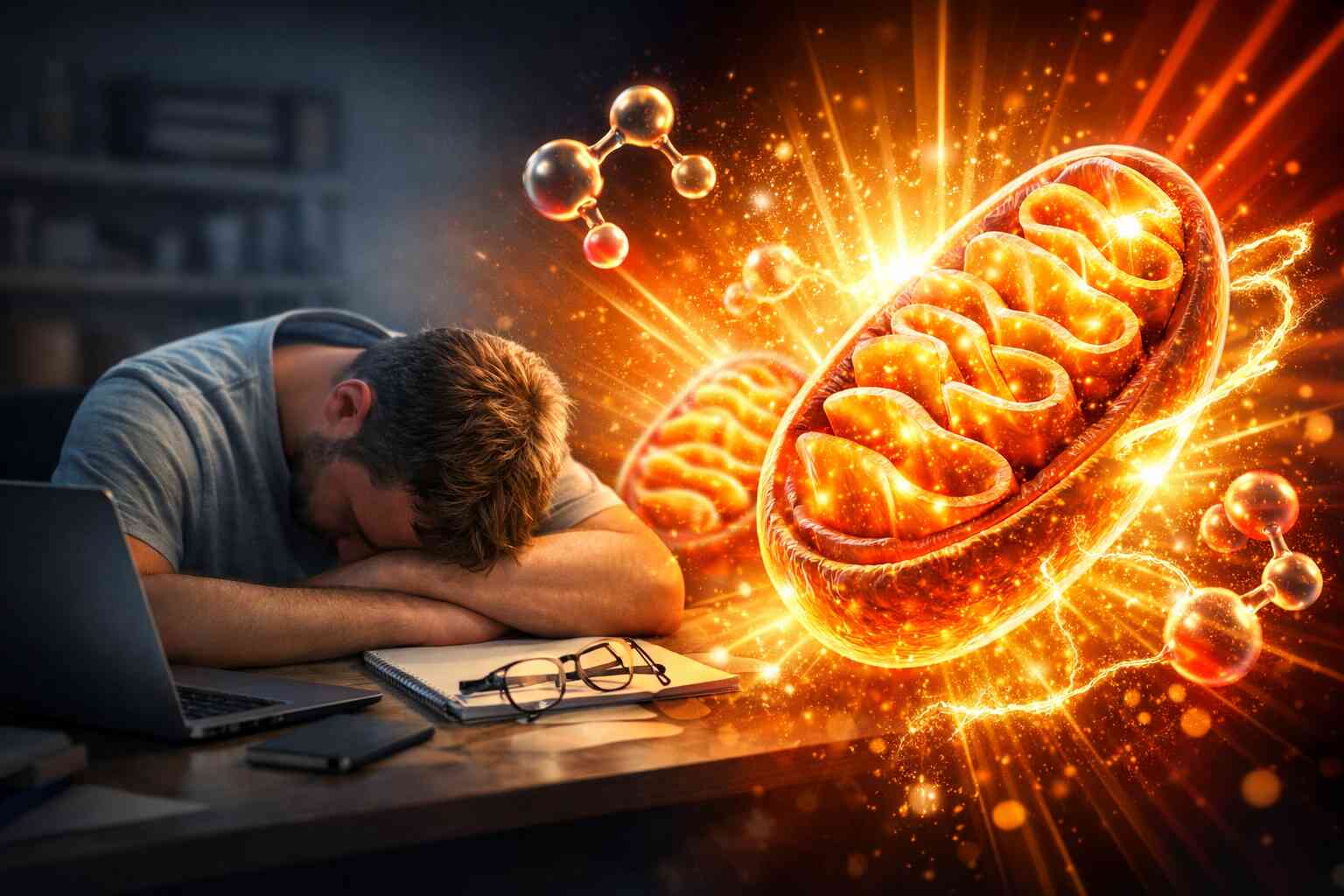
When mitochondria don’t function properly, the body switches into an energy-saving mode. The result is fatigue, brain fog, irritability, poor recovery — and over time, health problems.
What is ATP and why can’t you produce it efficiently without light?
ATP is often described as “energy from food.” In reality, ATP is the result of energy conversion, not the source of energy itself.
Mitochondria produce ATP using:
And it is precisely light that modern life has disrupted the most.
You can have a perfect diet, but if your mitochondria:
they will generate less ATP from the same food. That’s why two people can eat the same meal — one feels energized, the other exhausted. The difference isn’t calories. The difference is the environment.
Light as the main regulator of mitochondria
Mitochondria are extremely sensitive to light. This is no coincidence — life on Earth exists because of the sun.
Morning natural light:
Red and infrared light:
This water is essential for healthy cells, proper hydration, and redox balance.
How modern life damages mitochondria
Modern lifestyle works directly against human biology:
The result?
Mitochondria receive conflicting signals. The body no longer knows whether it’s day or night.
Over time:
Fatigue slowly becomes the “new normal.”
Why fatigue is not a lack of motivation
Fatigue is not a psychological issue. It is a biological signal that cells lack energy. When mitochondria:
the brain automatically reduces performance, motivation, and drive. Not because you are weak — but because the body is protecting itself.
How to support mitochondria naturally
The solution isn’t extremes — it’s a return to biology:
When you restore the correct signals, the body begins to repair itself. Energy doesn’t appear overnight like caffeine — it becomes stable, deep, and long-lasting.
The true source of energy is not on your plate
Food is just material. Light is instruction. Mitochondria are where it’s decided whether that material becomes energy — or fatigue. When you understand mitochondria, you understand your body. And you stop fighting against yourself.
If what you’re reading resonates with you — and if you feel the desire to explore, learn, and share this perspective — you naturally become part of a movement that has the potential to change how people understand health and energy.
If this way of thinking resonates with you, you’re in the right place.
If not, that’s perfectly fine.
Mitochondriak is not a club you sign up for. It’s not an identity you need to defend.
Mitochondriak is a direction. Everyone can walk this path at their own pace, in their own way, and when the time is right. In the end, it’s not about reaching the destination — but enjoying the journey.
If our way of thinking resonates with you, help us spread the idea of light-based nutrition. Tag us on social media.
#Mitochondriak